



A postage due stamp is the exception in a hobby built on prepayment. An ordinary stamp is bought and stuck on an envelope before it is posted, proof that the sender has already paid for the journey. A postage due stamp works the other way round: the post office applies it after the letter arrives, to collect money the sender never paid in the first place. It is philately’s odd one out, a stamp designed not to move mail but to tax it.
The idea began in France, which solved the problem in 1859 by issuing the world’s first official postage due stamps, affixed at the delivery office before a letter went out to the person who owed the money. Other postal administrations followed at their own pace over the decades after. From 1907 the Universal Postal Union set a common international rule for what to charge: not simply the missing postage, but usually double it, a small disincentive built into the system itself.
What makes postage due stamps worth a look is not only the mechanics behind them, but the stamps themselves: plain, functional, and precisely for that reason full of quirks that collectors have chased for well over a century. Below is how the system worked, why these stamps look so different from everything else in an album, and five postage due stamps, none of them the priciest in the field, that show why.
Discover all in our:
What is a postage due stamp? Philately’s odd one out
Credit: Paul Fraser Collectibles
How a postage due stamp actually worked
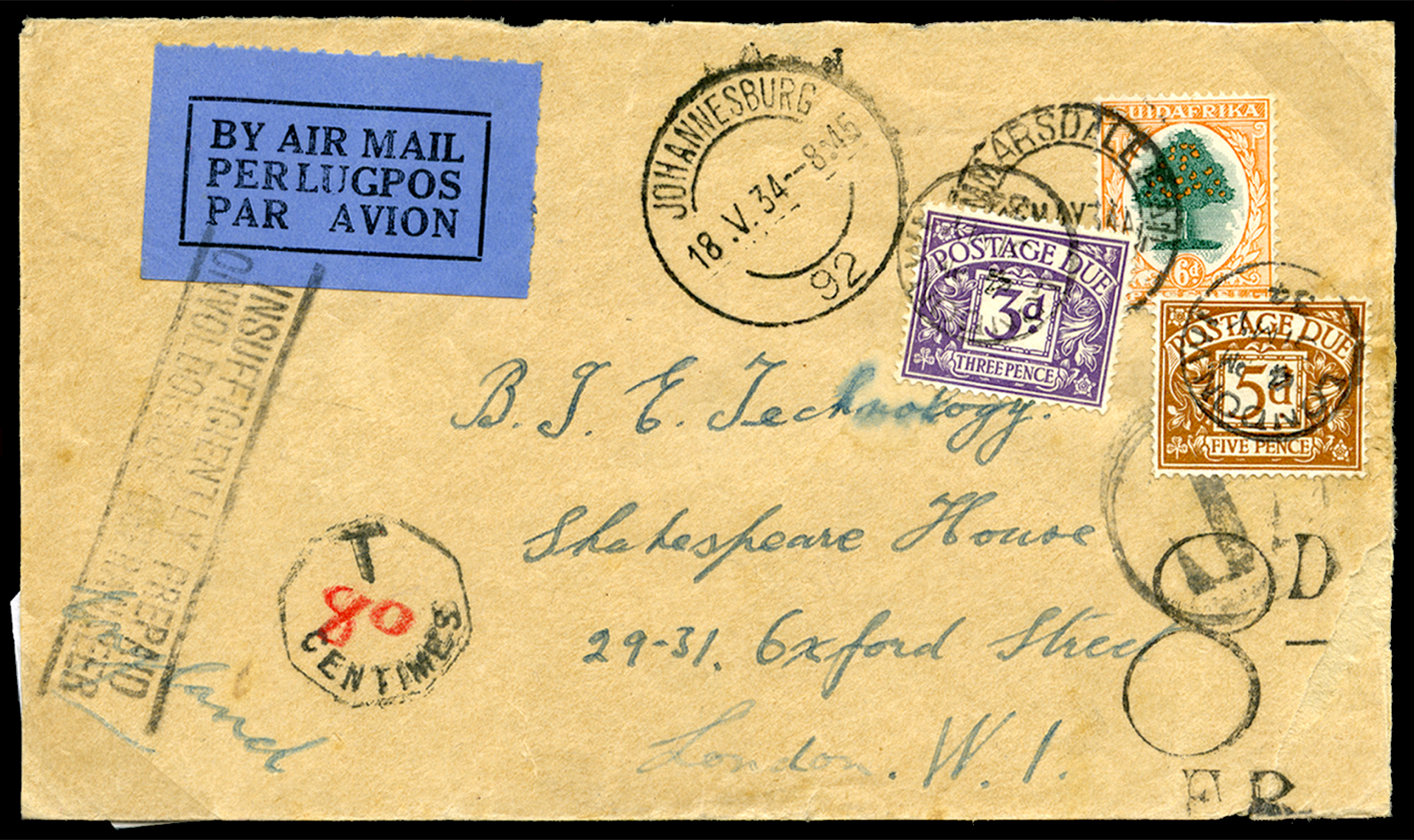
When a letter arrived without enough postage, the delivery office did not simply return it. It worked out what was owed, marked the envelope, and let the postman collect the difference from the recipient. A 1934 airmail cover from South Africa to Oxford Street, London, shows the process in full: struck “Insufficiently Prepaid”, with handstamps reading “T/80/Centimes” and “8d/F.B.” working the shortfall out through the Universal Postal Union’s reference currency before converting it to pence. The 8d due was collected on delivery using a 5d brown and a 3d violet postage due stamp, both cancelled at a London sorting office on 31 May 1934.
Countries adopted postage due stamps at their own pace after that. Great Britain issued its first in 1914, 55 years after France, and used them until they were withdrawn in 2000; the United States discontinued its own in 1986.
Philately’s odd one out
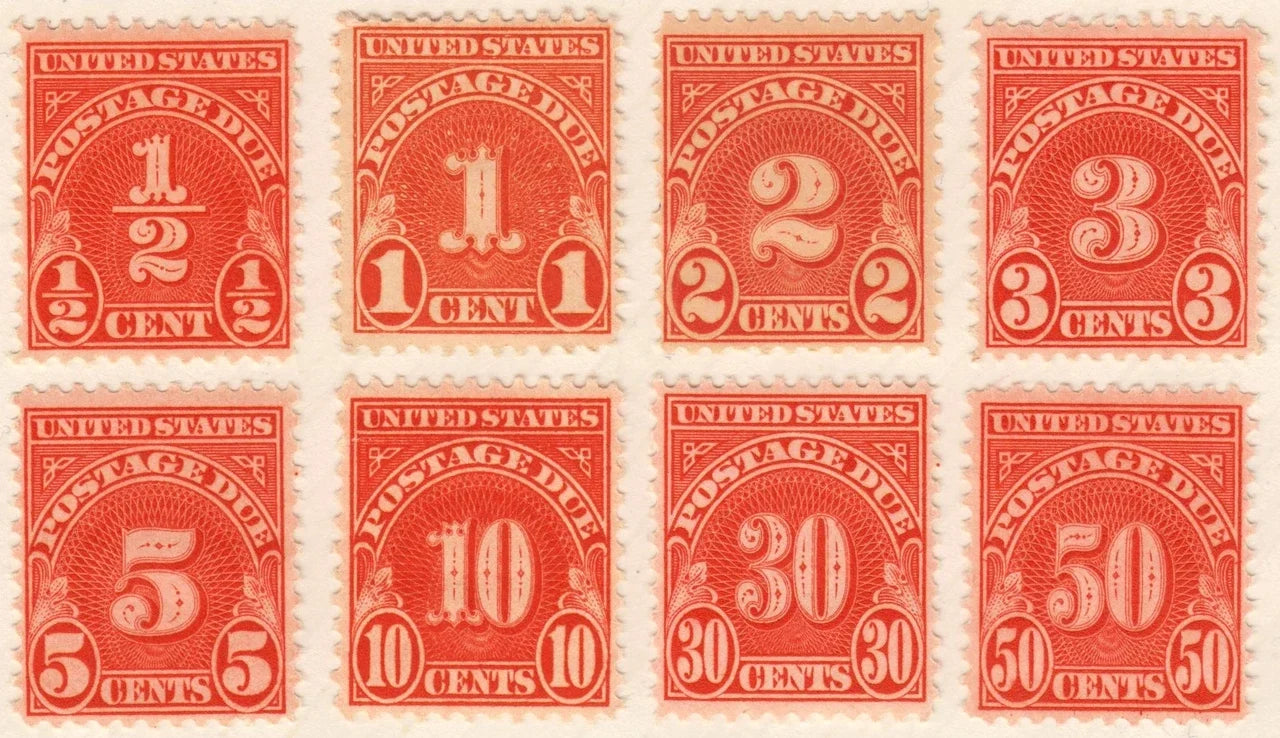
Almost every other stamp in a collection carries a country’s name, a monarch’s head or a national symbol prominently on the front. A postage due stamp usually carries none of that. The design convention that developed worldwide after 1859 was a large numeral showing the amount owed, with a word such as “due”, “postage due” or “porto” alongside it, and the country’s own identity often left off the stamp entirely.
That anonymity produced a genuine oddity. When the Irish Free State began overprinting British stamps “Rialtas Sealadach na hÉireann” after 1922, its postage due stamps were left alone. An auction house’s own catalogue record shows why: an envelope from Cahir to Dun Laoghaire, 27 April 1923, still carries plain, unoverprinted British 1d and 2d postage dues, used anomalously in Ireland until 1925, because a stamp with no king’s head and no country name needed no overprint. Catalogues still mark the category apart: Stanley Gibbons prefixes every postage due with the letter D, and collectors have long filed the whole shelf of unglamorous back numbers under “back of the book”, postage dues being its plainest example.
Five postage due stamps worth chasing
None of the five below is the costliest item ever to carry the word “due”. Each shows a different way a functional, overlooked stamp can turn into something a specialist dealer sees only once in years.
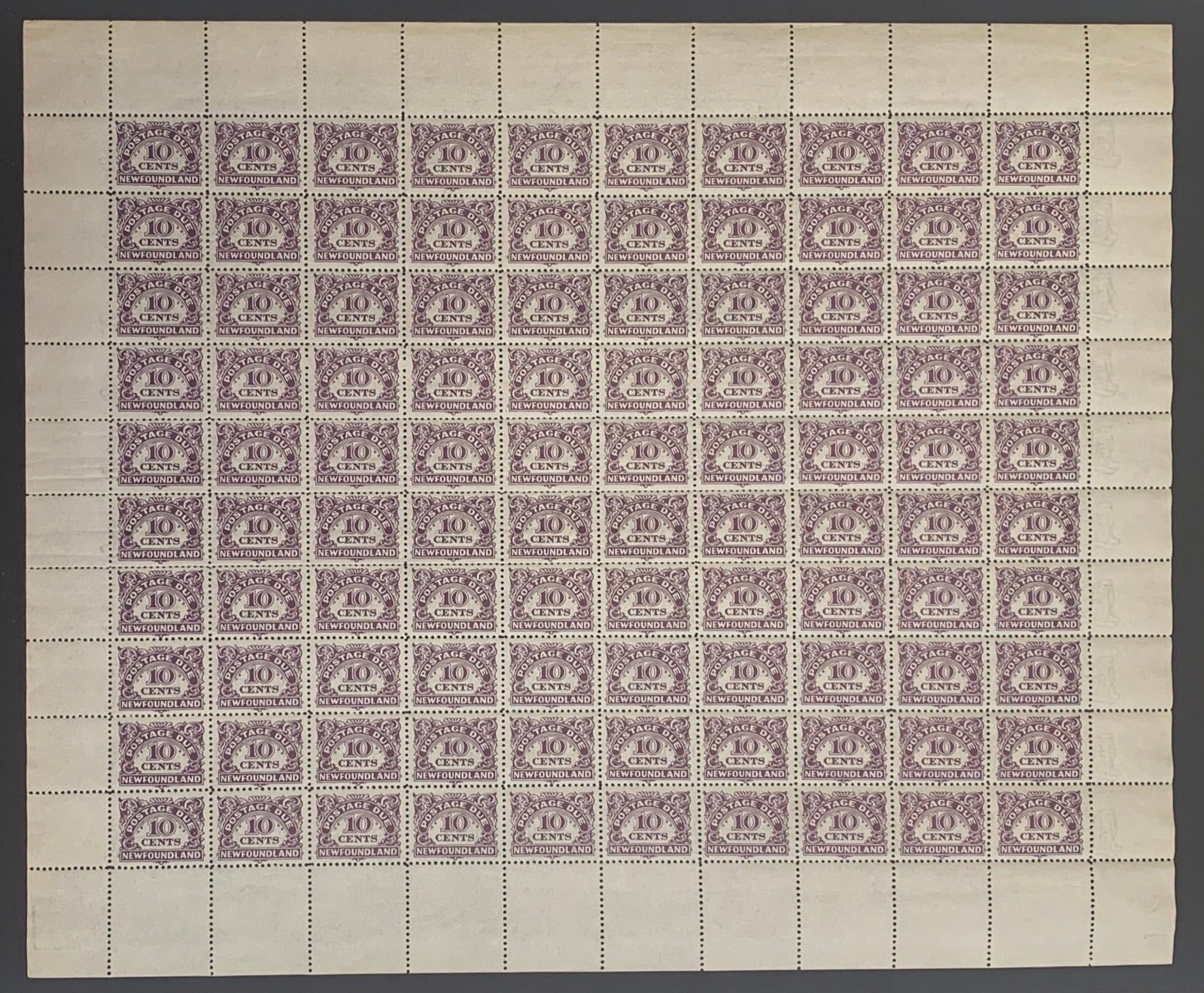
Credit: Paul Fraser Collectibles
Newfoundland’s 1939-49 10c violet postage due went to press with a slip on the printing stone: two positions on the plate spell the value “LUE” instead of “DUE”. A complete unmounted mint sheet of 100 showing the flaw at both positions is priced by Paul Fraser Collectibles at £795, well under the Stanley Gibbons catalogue valuation of £2,064 or more for the pair of varieties, a reminder that a catalogue figure and an asking price are two different numbers.
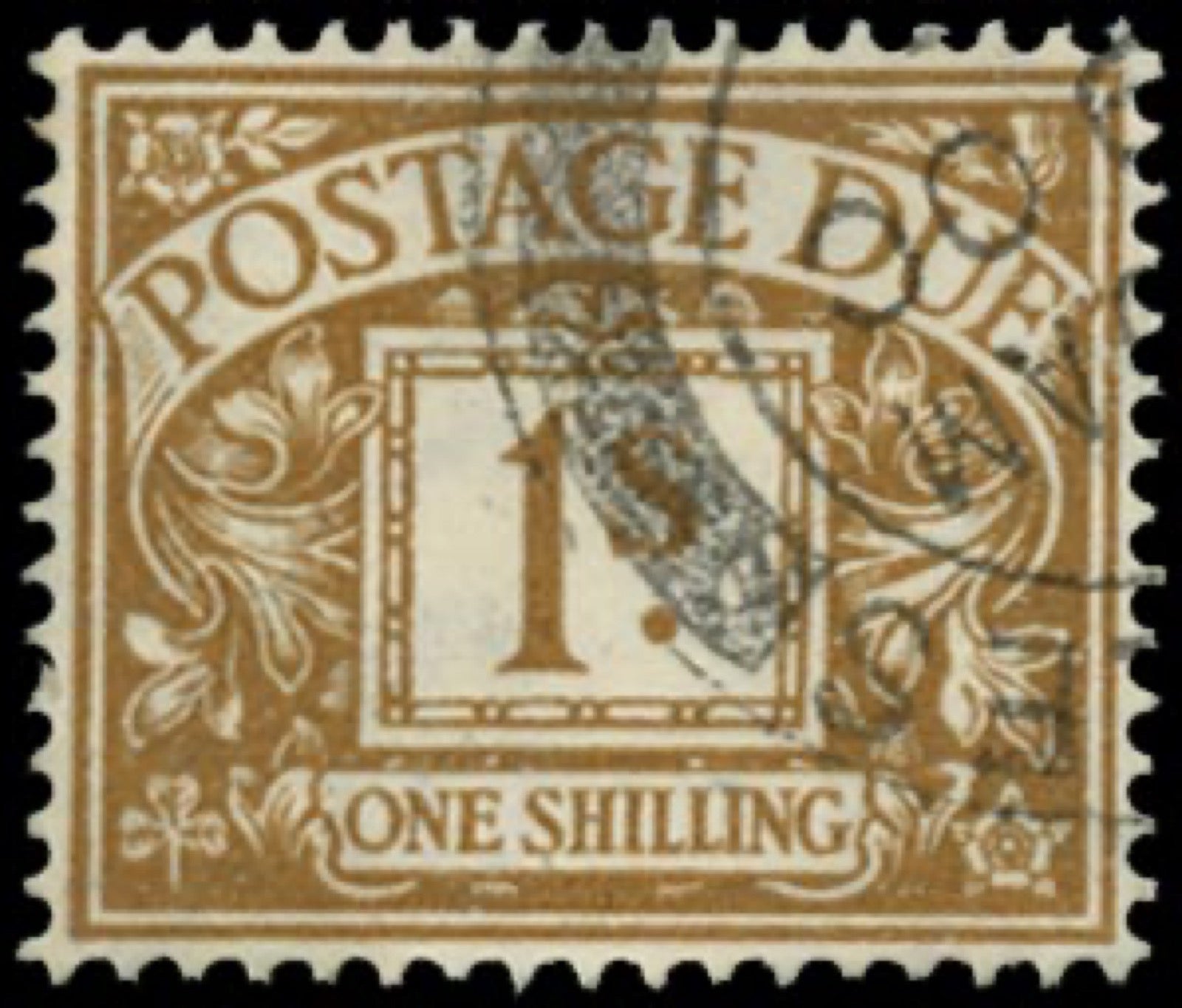
Credit: Stanley Gibbons
Great Britain’s 1951 1s ochre postage due is about as plain as the category gets, yet a sideways inverted watermark turns an ordinary stamp into something a specialist dealer sees only rarely. Stanley Gibbons, offering a used example at £1,950, described it as the first they had handled in over 20 years, a reminder that plain and common are not the same thing in this corner of philately.
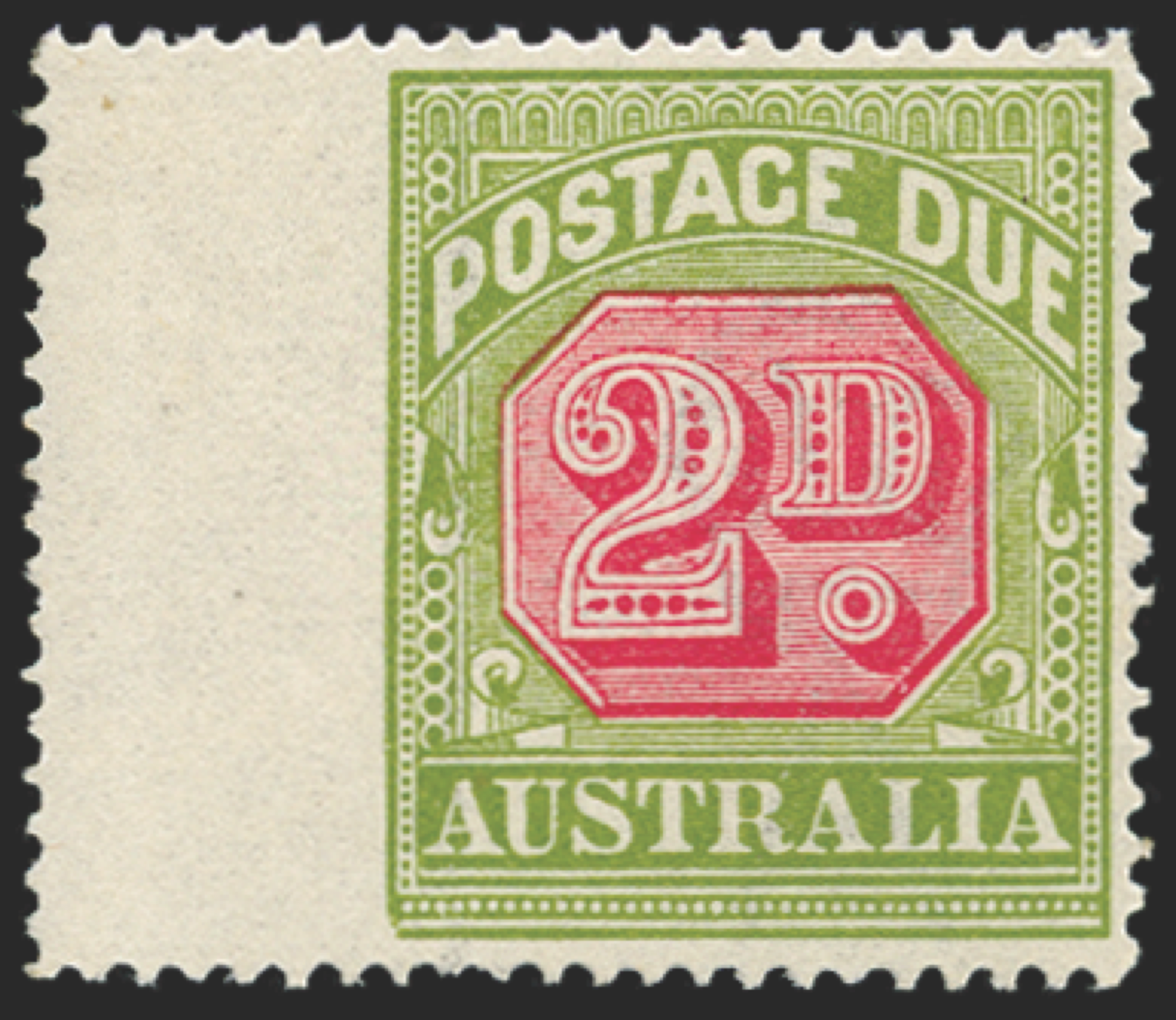
Credit: Paul Fraser Collectibles
Australia’s 2d carmine and yellow-green postage due of 1922-30 is meant to be perforated on every side. On one plate, the first row of perforations on the right pane was omitted, leaving around 30 examples imperforate between the stamp and its gutter margin. Paul Fraser Collectibles lists one, carrying an additional constant plate flaw, at £725.
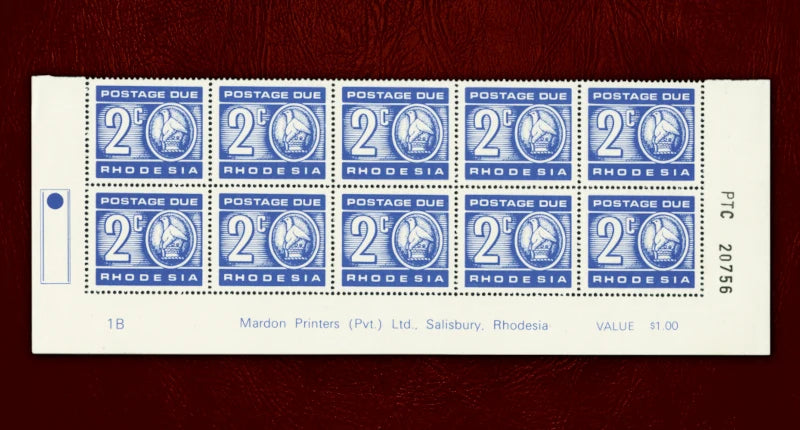
Credit: Paul Fraser Collectibles
Rhodesia’s 1970-73 2c ultramarine postage due block carries an error that has nothing to do with the printed design at all: the gum went down on the wrong side of the sheet. A lower marginal block of ten, complete with its plate number and sheet number, was offered by Paul Fraser Collectibles at £475, against a Stanley Gibbons catalogue value of £500 or more.
Credit: ebay
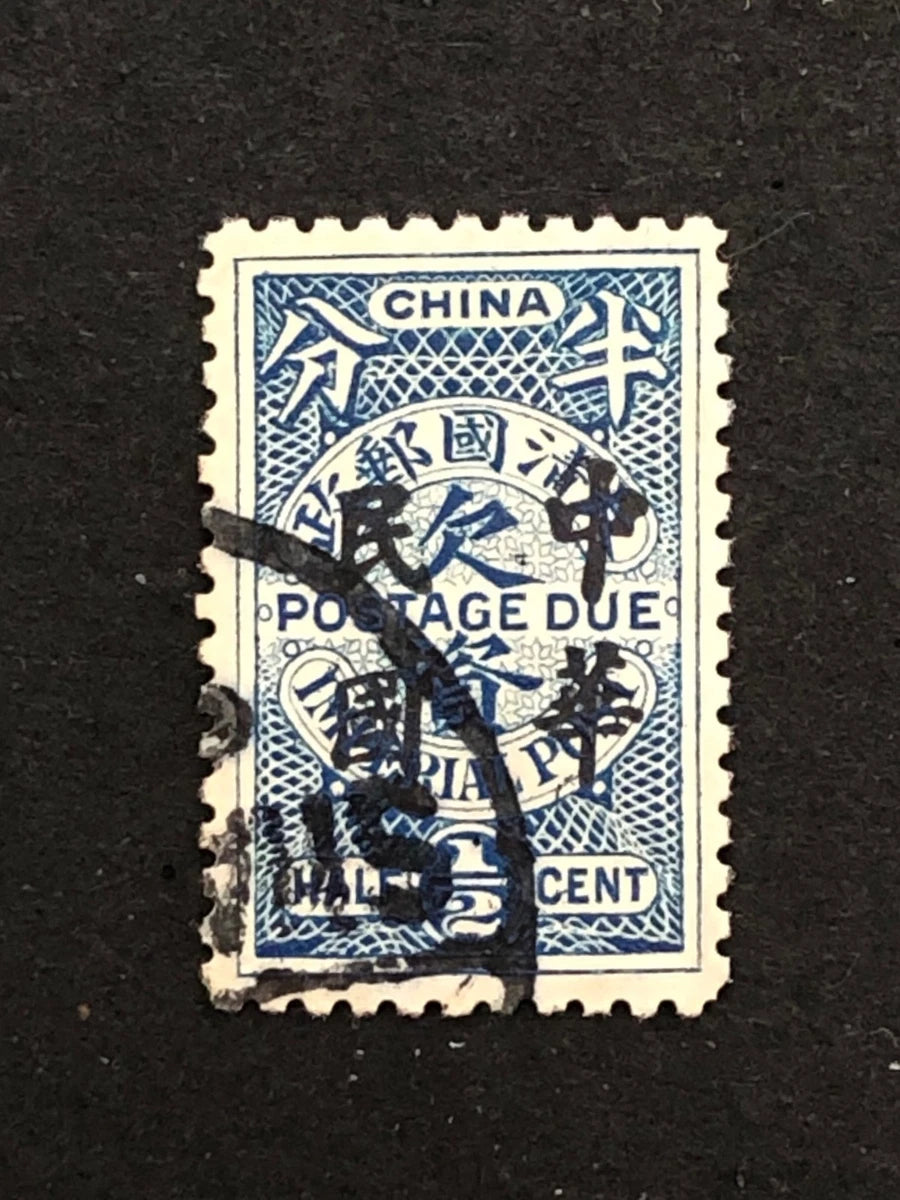
China’s 1913 1c blue postage due, printed in London by Waterlow & Sons, is normally perforated between every stamp on the sheet. A vertical pair missing that perforation, with an interpane margin at the left, was priced by Paul Fraser Collectibles at £3,000, described by the dealer as the first example of the error they had ever handled.
Why the plainest stamps in the album reward the closest look
Prices for genuine postage due rarities mostly sit in the hundreds and low thousands of pounds, not the six and seven figures that classic rarities such as inverted centres or unique imperforates command elsewhere in the hobby. That holds for a category designed to be ignored, plain enough that a country often did not bother naming itself on the stamp, and it has still produced printing slips, watermark errors and a postal anomaly an auction house was cataloguing a century later.
That accessibility is exactly why dealers point newcomers towards postage dues rather than away from them. The category ran for well over a century, from France’s first issue in 1859 to Great Britain’s last in 2000, all of it catalogued, most of it inexpensive, and every plain, numeral-faced stamp in it still carrying the story of a letter that arrived without quite enough postage on it.