



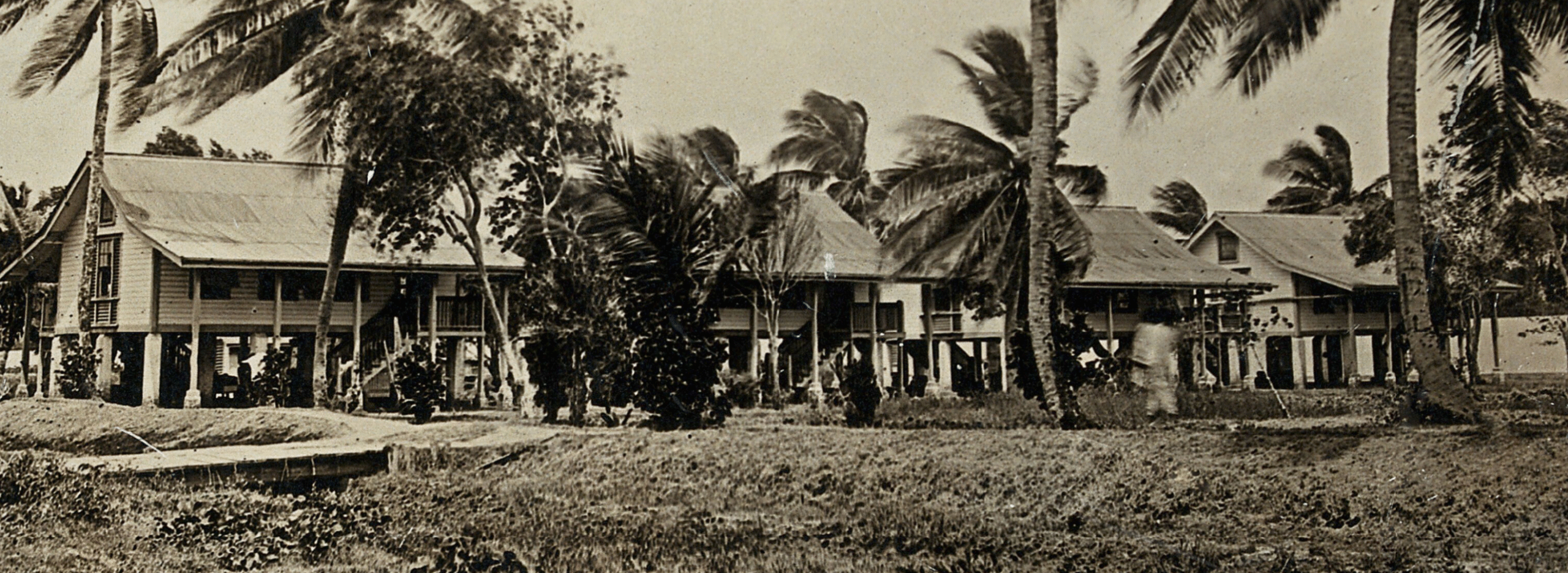
The British Guiana 1c magenta is a scrap of printed paper the size of a thumbnail, cut into an uneven octagon and stained a colour closer to plum than pink. It is also the only one of its kind ever found. It last changed hands at Sotheby’s in New York in June 2021, for around £5.9 million ($8.3 million), which by weight makes it one of the costliest objects anyone has ever agreed to buy and sell.
It was never meant to be valuable. It was run off on a hand press in Georgetown in 1856 because the proper stamps had not arrived from London, and for nearly two decades nobody thought to keep it. A schoolboy found it among his uncle’s old letters in 1873 and sold it for six shillings, preferring some foreign stamps in a shop. That is its entire manufacturing history: one sheet, cut apart with scissors, of which one piece of the lowest denomination survived.
What followed is a chain of ownership through a French count, a textile magnate, a dealer syndicate, a convicted killer and finally a shoe designer, each sale a new record. This guide follows that chain, explains why collectors kept paying more, and works out the arithmetic that makes it, gram for gram, one of the most valuable objects on the planet.
Discover all in our:
Why the British Guiana 1c magenta is worth millions
Credit: Wikimedia Commons, public domain
A postmaster’s shortage in 1856
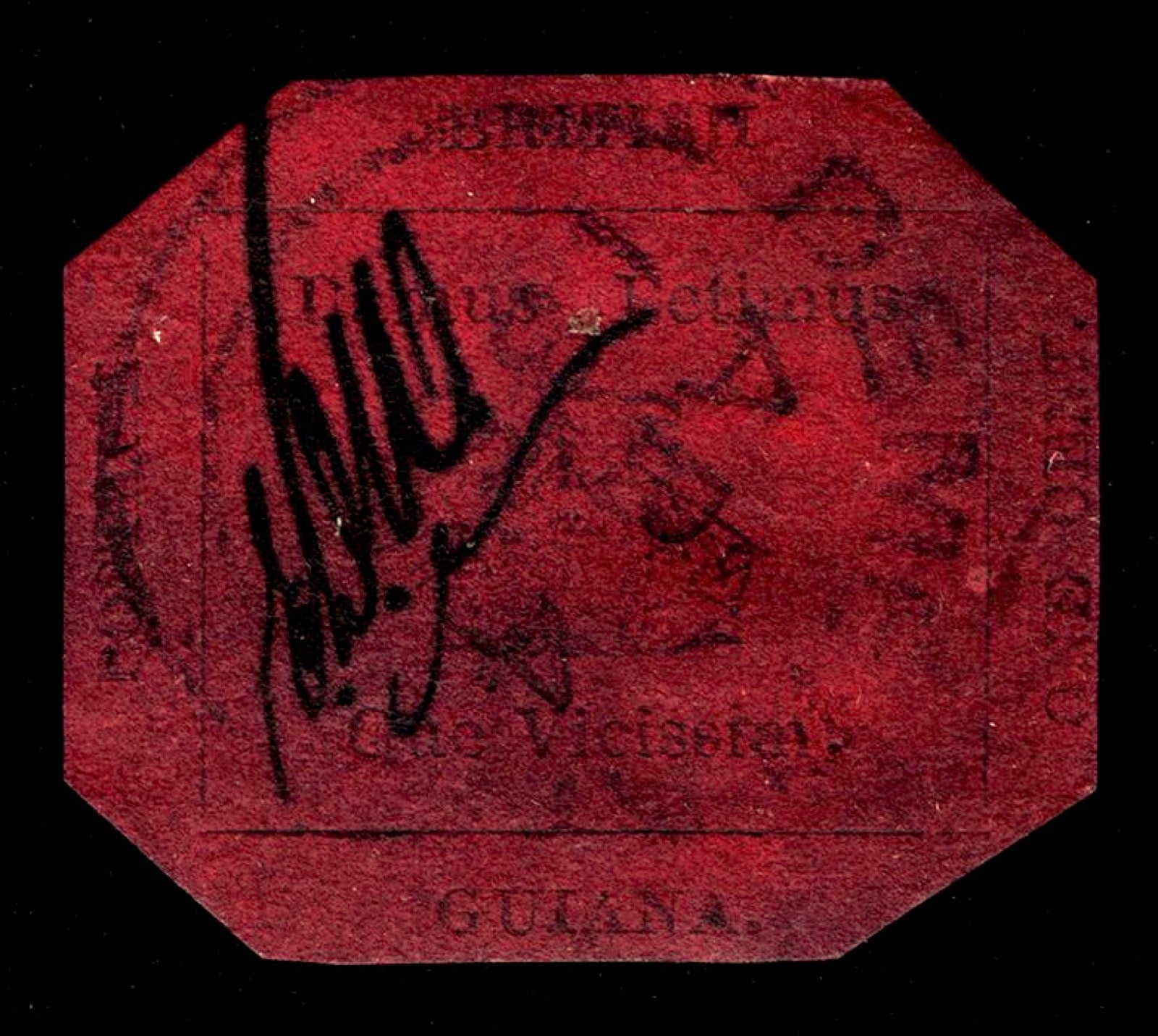
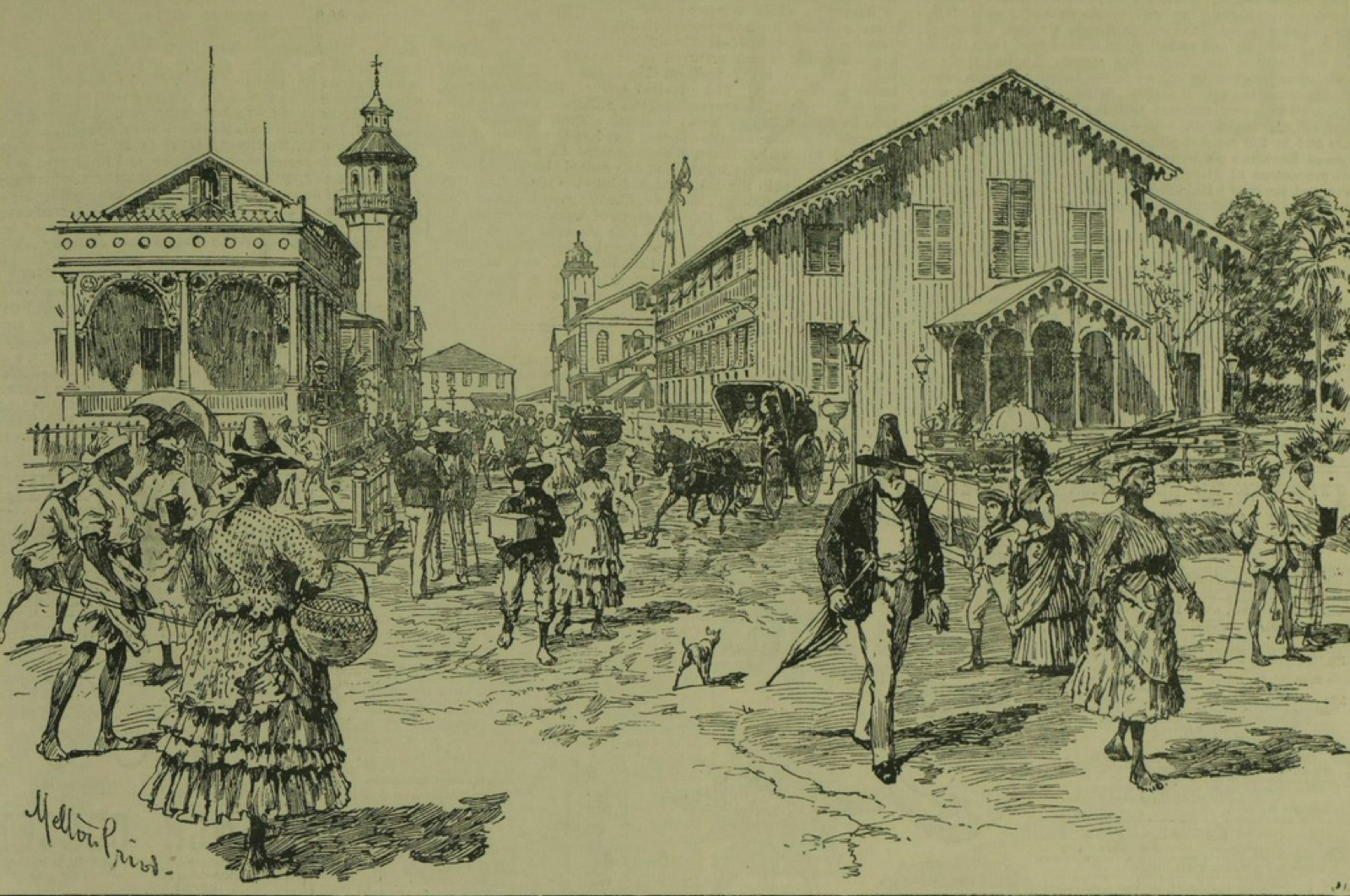
British Guiana, now Guyana, ordered its postage stamps from London, and in 1856 the shipment was late. The colony’s postmaster, E.T.E. Dalton, asked local printers Joseph Baum and William Dallas to strike an emergency batch: a 4 cent stamp for ordinary letters and a 1 cent for newspaper wrappers, both printed in black on magenta paper and cut apart by hand rather than perforated.
The design was plain: a three-masted ship, the colony’s Latin motto, and four ruled lines round the edge. A clerk, Edmund Wight, added his initials against forgery. Several 4 cent stamps have since turned up. Of the 1 cent, printed for cheaper, disposable mail, exactly one has ever been recorded.
Credit: Melton Prior (1845 to 1910), public domain via Wikimedia Commons
A schoolboy’s find, a count’s obsession
In 1873 a 12 year old collector, Louis Vernon Vaughan, was going through his late uncle’s papers and came across the stamp. He thought little of it. Battered, dull and heavily postmarked, it was not what a boy assembling an album wanted, so he sold it for six shillings to buy prettier foreign stamps instead.
Within five years it belonged to Count Philipp von Ferrary, an obsessive collector who spent a fortune building the most complete stamp collection ever assembled. Ferrary died in 1917, and his collection, willed to a Berlin museum, was seized by France as war reparations and auctioned in Paris. The 1 cent magenta made 300,000 francs in 1922, about $32,500, a new record reportedly bid against three European kings.
The buyer was Arthur Hind, an American textile manufacturer, and the pattern held: each reappearance at auction outsold the last. Robert A. Siegel’s rooms took it to $280,000 in 1970 and $935,000 in 1980, the latter to the chemical heir and convicted murderer John du Pont, who kept it for 34 years.

Credit: Unknown author, public domain via Wikimedia Commons
How a single stamp reaches eight figures
Most rare stamps have a finite population, a handful or a few hundred survivors, and collectors compete to own one of them. The 1 cent magenta offers no such choice: anyone assembling a complete run of classic world rarities either owns this piece of paper or does not, and for close to a century that has meant a straight contest between the few people wealthy enough to want the only copy there is.
Provenance did the rest. Each owner, from a French count to an American industrialist to a du Pont, added a chapter to the story, until the history became as much a part of the price as the stamp itself. At Sotheby’s in June 2014, the shoe designer Stuart Weitzman paid £5.6 million ($9.48 million), four times any other single stamp.
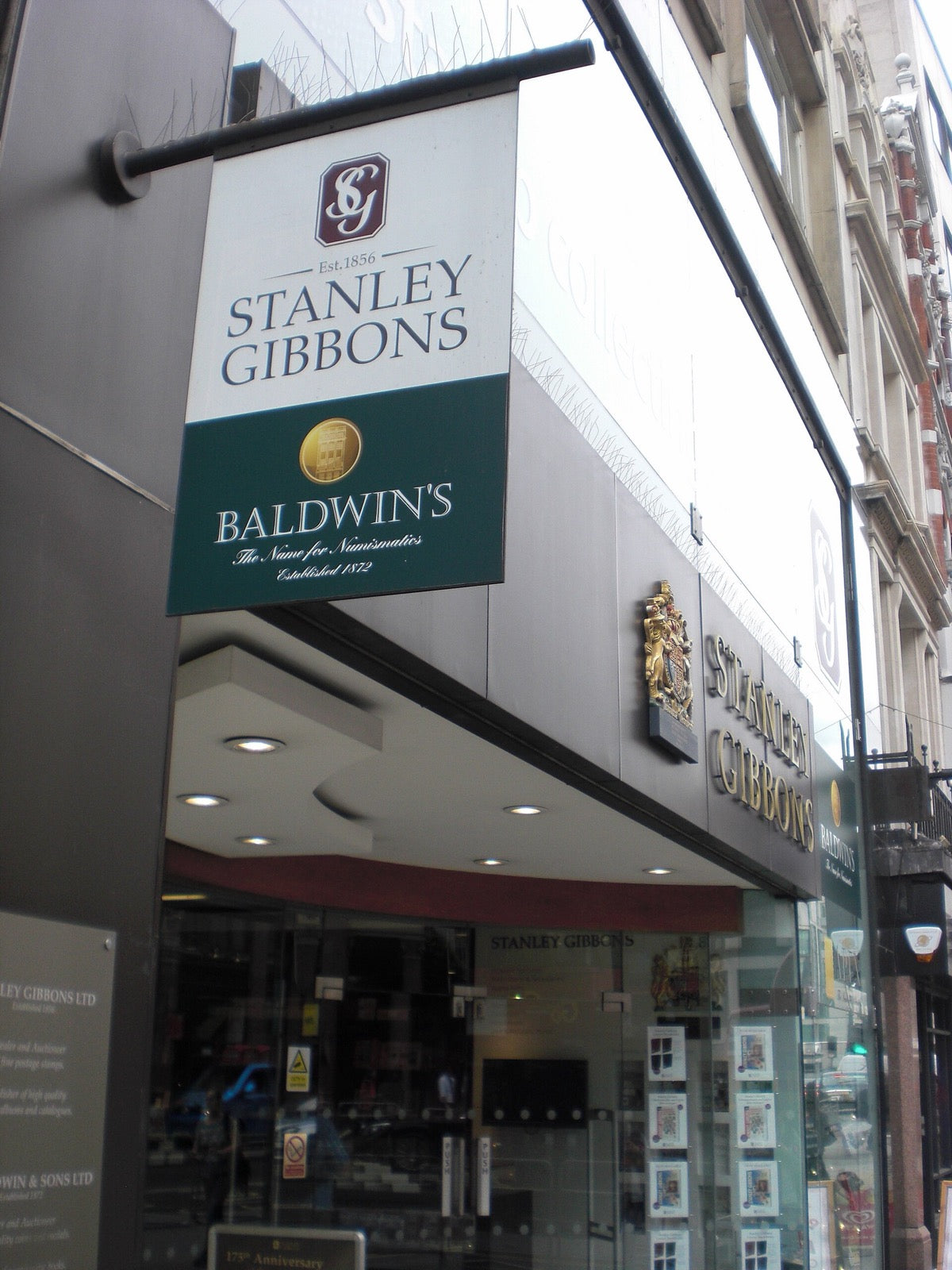
That record did not hold. Weitzman resold it in June 2021 against an estimate of $10 million to $15 million, and it made £5.9 million ($8.3 million) to the dealer Stanley Gibbons, the first time it had sold for less than the sale before.
Credit: Michael Romanov via Wikimedia Commons (CC BY-SA 4.0)
Weighing the world’s costliest scrap of paper
After buying the stamp, Stanley Gibbons put it on a set of coin scales. Its head of Commonwealth stamps, George James, said the company “weighed it on a number of coin balances” and arrived at one twentieth of a gram, 0.05g. Divide the £5.9 million sale price by that weight and the stamp works out at roughly £117 million a gram, around $166 million.
Set against other notoriously expensive materials, that is not close. Gold trades at around £98 a gram. The finest natural diamond, at full retail, runs to tens of thousands of pounds a gram. Californium-252, a radioactive isotope made for medical use, has been priced at £7 million to £19 million a gram, still short.
The honest caveat: the stamp is not quite alone at the top. Endohedral fullerenes, carbon cages built to trap a single atom, have been costed at £103 million to £118 million a gram, overlapping its own figure, and a gram of antimatter, if anyone could store one, would run into the tens of trillions. Neither has ever been bought and sold as a finished object at that price. What the 1 cent magenta holds is the record for the most expensive single object of any kind genuinely traded at auction, priced by weight.
A record built on scarcity, not size
Nothing about the 1 cent magenta explains its price except that there is only one of it, and everyone who might want it knows exactly what it is. The 4 cent stamp from the same 1856 printing survives in several examples and sells for a fraction as much, though the design, paper, printer and year are identical. What the market has paid for, across six sales and 150 years, is the certainty that no rival copy will surface, and a provenance list of who, in each generation, had the means and the will to own the one thing nobody else could.
That is also why the 2021 sale matters as much as 2014. A unique object can still sell for less than the market expected, because rarity sets a floor for interest, not a ceiling on price. The 1 cent magenta remains, on any measure of price against weight, in a category by itself, whether or not its next owner pays more than Stanley Gibbons did.