




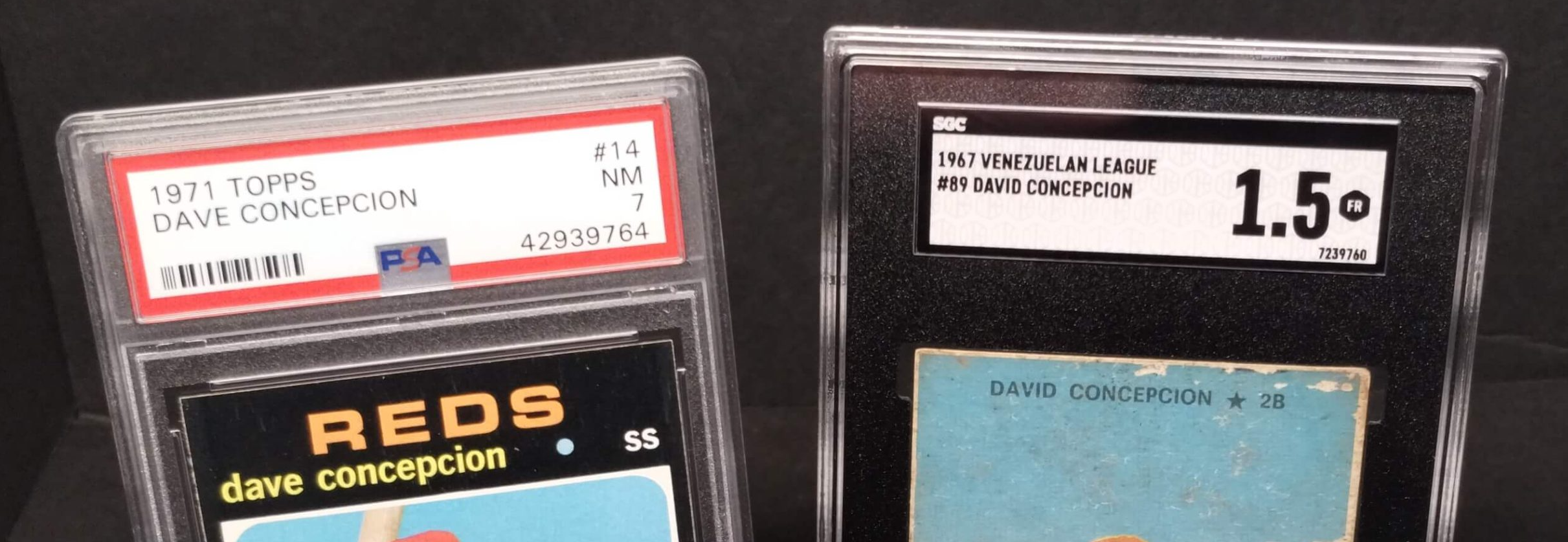
PSA vs. SGC grading is not just a question of which slab looks better on a shelf. Professional Sports Authenticator (PSA) and Sportscard Guaranty Corporation (SGC) both authenticate and grade the same trading cards, on broadly similar numeric scales, yet a collector who sends an identical card to each company can pay a different fee, wait a different number of weeks, and end up holding a card that a bidder is prepared to pay noticeably more, or less, for under the same numeric grade.
That last point catches out a lot of newcomers, who assume any third-party grade is interchangeable (an “8” is an “8”, whichever company issued it) and pick a grader on price or speed alone. Auction archives tell a different story. The same card, graded to the same numeric tier by each company and sold through the same specialist auction house, has changed hands for very different sums, which makes the choice of grader part of a choice about who ends up sitting across the bidding table.
This guide sets out how PSA and SGC grade a card, what each company’s current submission fees and turnaround tiers look like, and what a small, genuinely comparable set of real sales says about the gap that can open up between them.
Discover all in our:
Graded trading cards: PSA vs SGC
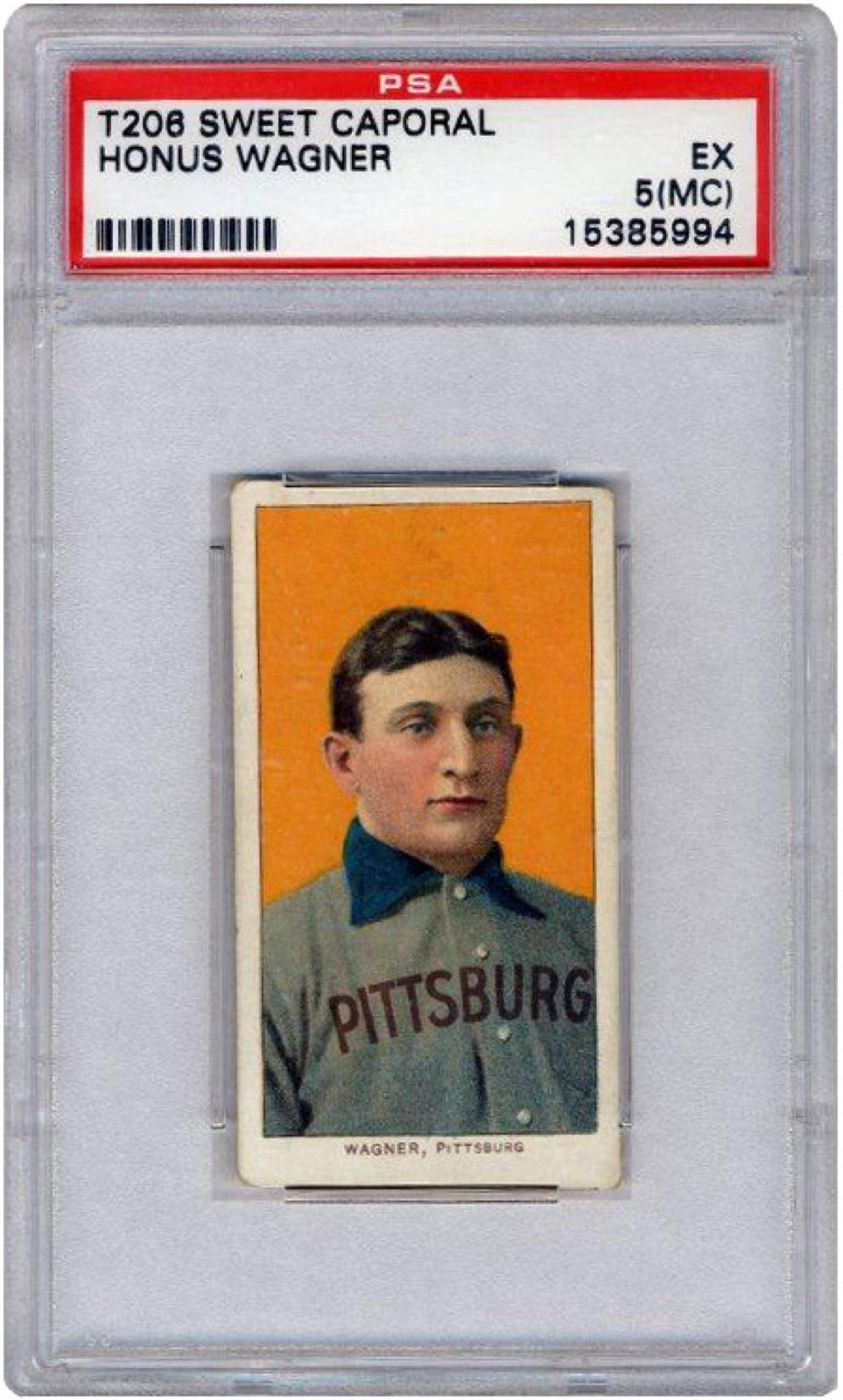
Credit: Uncredited baseball card artist, public domain via Wikimedia Commons
How PSA and SGC grade a card
PSA’s numeric scale runs up to a Gem Mint 10, which the company’s own grading standards define as “a virtually perfect card”, with “four perfectly sharp corners, sharp focus and full original gloss”, and centering held to within roughly 55/45 on the front and 75/25 on the reverse. There is no PSA grade above 10.
SGC’s scale carries the same numbers but runs in half-point steps all the way through, and then splits the very top into two separate tiers. “SGC uses a scale which eliminates the grades known as ‘tweeners’,” the company states, listing a Gem Mint 10 and, above it, a Pristine 10 described as a “virtually flawless” card with “50/50 centering… four sharp corners… no visible wear under magnification.” A PSA Gem Mint 10 and an SGC Gem Mint 10 sit on the same rung of each company’s own ladder; an SGC Pristine 10 sits a rung higher than anything PSA currently issues.
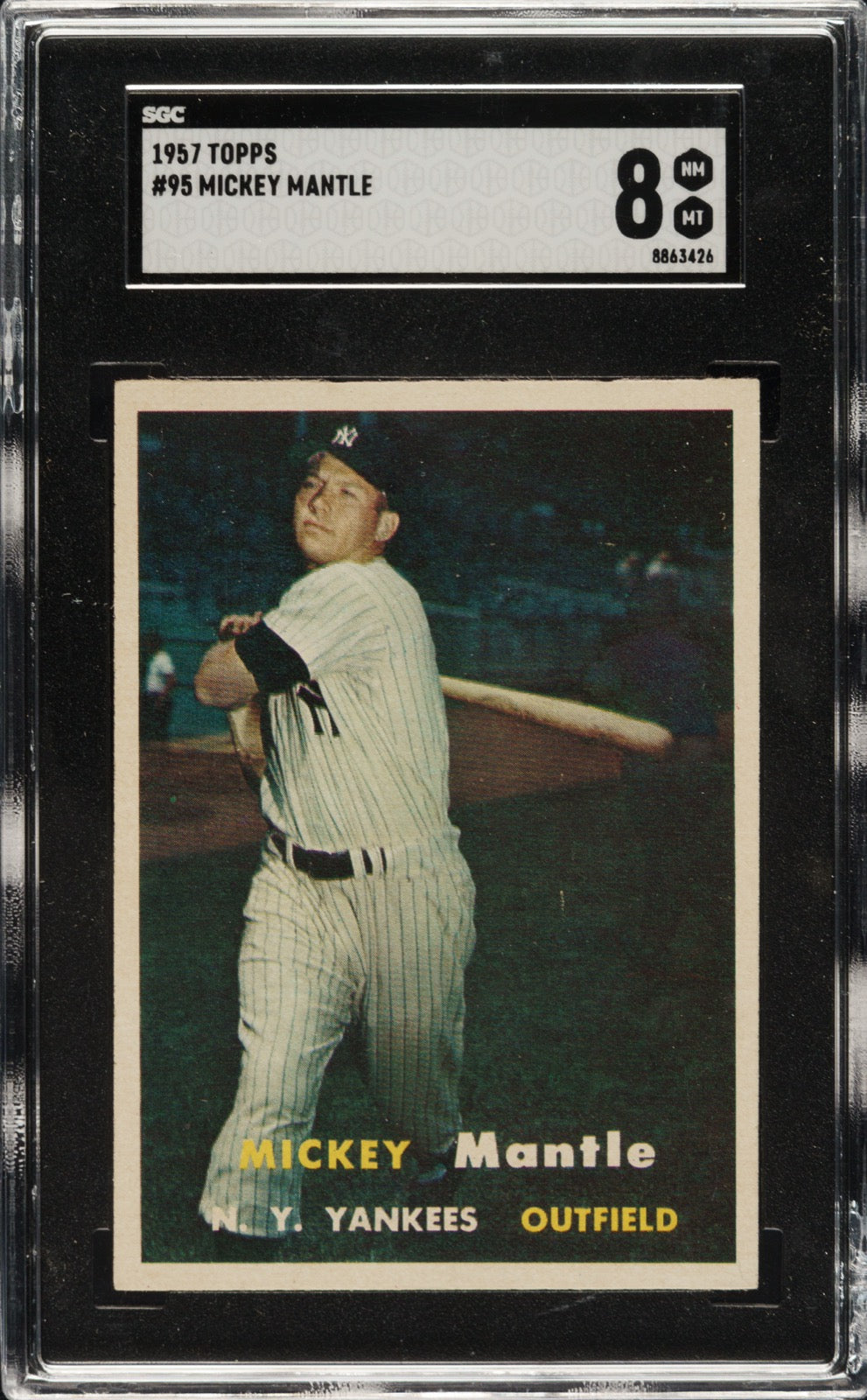
Credit: Robert Edward Auctions
What the submission fee buys
The two companies price entry-level grading very differently. PSA’s cheapest tier, Regular, costs £59 ($79.99) per card, covers cards valued up to $1,500, and currently carries an estimated turnaround of 70 to 80 business days. SGC’s equivalent standard tier, also capped at a $1,500 declared value, costs £37 ($50) and is quoted at 40-plus business days: cheaper, and on paper faster, than PSA’s slowest tier.
The comparison changes shape further up the price list. PSA’s fastest option, Premium+, costs £738 ($999) or more per card, covers declared values up to $25,000, and is quoted at five to seven business days. SGC’s fastest tier, its 2-to-3 business day expedited service, becomes available once a card’s declared value passes $3,500 and costs £111 ($150) at that level, rising to £2,770 ($3,750) for cards declared up to $100,000 or more, with a further £277 ($375) added for every extra $10,000 of value beyond that. At almost every declared value the two companies both cover, SGC’s fastest advertised service beats PSA’s fastest by several days, at a lower fee.
Same card, same number, different price
The clearest illustration is not a hypothetical. Robert Edward Auctions has sold the 1957 Topps #95 Mickey Mantle, the key card of its set, in both PSA and SGC holders, at the same numeric grade, within the past few years. Graded NM/MT 8 by SGC, one example made £7,186 ($9,000) in February 2025; a second SGC example from the same tier made £6,297 ($8,100) in the summer of 2024. Graded NM-MT 8 by PSA, the same card made £14,123 ($19,065) in September 2025, and £11,136 ($14,400) in the spring of 2022. That is roughly double the SGC price at an identical numeric grade, sold through the identical auction house.
Move up a whole grade and the gap widens again on its own terms: a PSA Mint 9 example of the same 1957 Mantle made £139,194 ($180,000) at the same auction house, also in the spring of 2022. None of this proves a fixed percentage premium across the hobby (it is one card’s real sale history, not a market index), but it shows that the grade number alone does not settle what a card is worth. The name on the holder settles the rest.
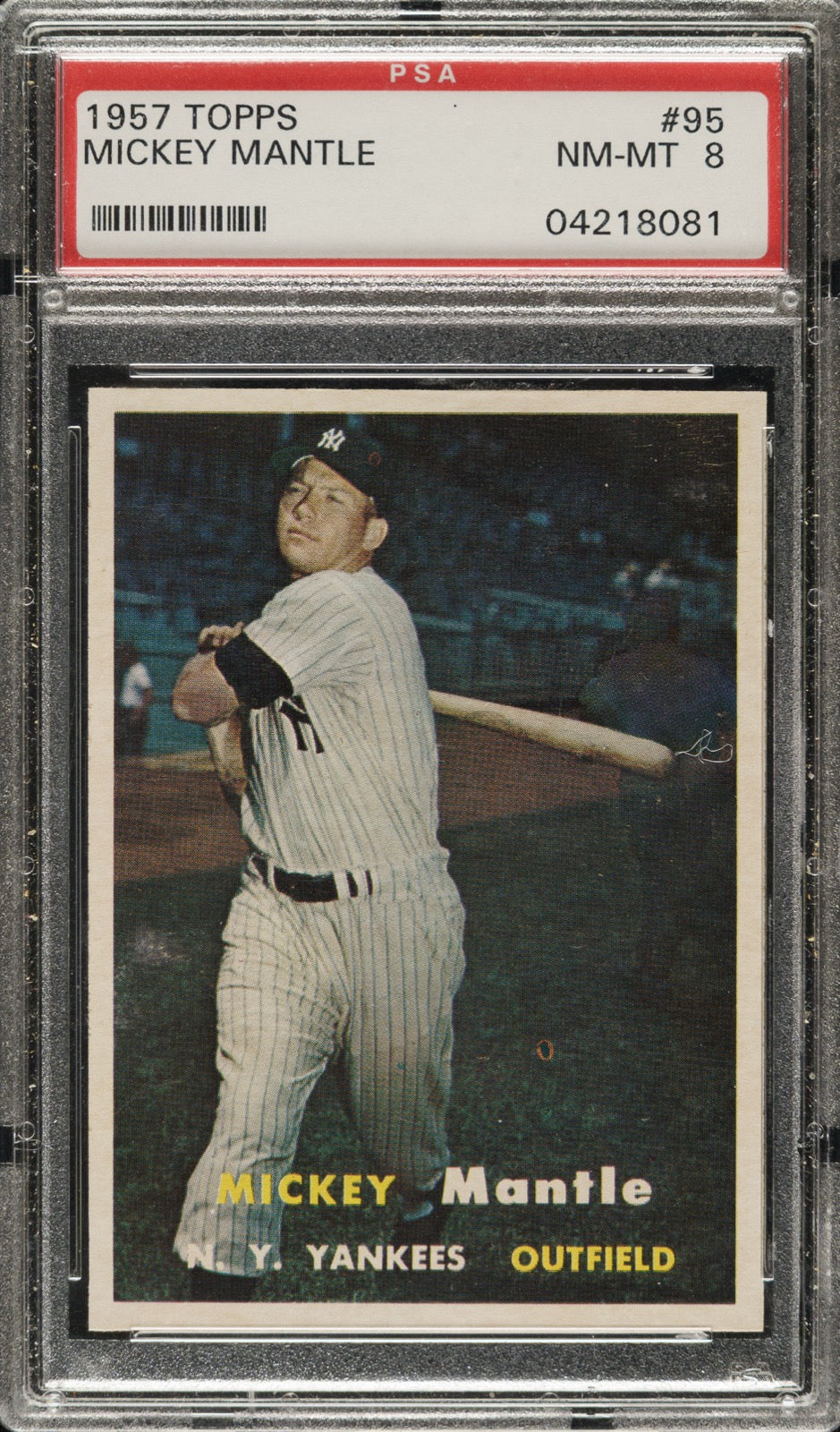
Credit: Robert Edward Auctions
What a population report tells a bidder
Both companies publish population reports: a running count of how many examples of a given card have been graded at each level. A bidder checking one before an auction closes is not only confirming that a card is genuine; they are checking how many other examples exist at the same grade or higher, which is why the figures move as more submissions arrive and are only ever a snapshot on the day they were checked, not a fixed fact about the card.
Exactly why one company’s population figure for a given card and grade differs from the other’s is not something a single count can explain on its own: it reflects decades of individual submission choices by individual owners, not a public record of relative grading volume between the two firms. What a bidder can rely on is the date the figure was last refreshed, and the fact that a thin population at the grade on offer is one of the reasons a card in that particular holder attracts competing bids in the first place.
Why the slab is part of the sale price
None of this makes SGC the wrong choice, or PSA the only sensible one. A collector who pays £37 ($50) to have a modest common card graded, rather than £59 ($79.99), has made a perfectly reasonable decision if resale value was never the point of grading that card. What the Robert Edward Auctions sales above show is something more specific for a card truly bought and sold as an investment: on this evidence, the company named on the holder tracked with roughly double the price at an identical numeric grade.
The practical lesson, for a bidder and for a collector deciding where to send a card before it goes to auction, is to treat the grading company as part of the card’s specification rather than a footnote to it. Checking a submission fee schedule takes minutes. Checking what the same numeric grade from each company has sold for, on an auction house’s own record, takes only a little longer. It is the only way to know, rather than guess, which slab is going to do more work in the bidding room.