



Selling a stamp collection is not something most people do more than once, which is exactly why it so often goes badly. An executor working through an estate, a collector clearing space, or someone who has simply lost interest in an album built up over decades, all arrive at the same point: material gathered over years needs to become cash, and neither the seller nor their family usually has any real experience of that market.
The instinct is to reach for the nearest buyer, or to assume that adding up every catalogue price in the album gives an honest total. Neither approach tends to end well. A Stanley Gibbons or Scott catalogue number is a reference, not a receipt, and the gap between what a collection is listed at and what it actually fetches can be wide enough to reshape a family’s expectations of an estate.
This guide sets out what to establish first: what you actually have, why a catalogue figure and a cash offer are two different things, how to get a collection properly assessed, the routes open to a seller, and the timelines and pressure tactics worth knowing about in advance.
Discover all in our:
Selling a stamp collection: what to know before you sell
Credit: bomont57, public domain via Wikimedia Commons
Working out what you actually have
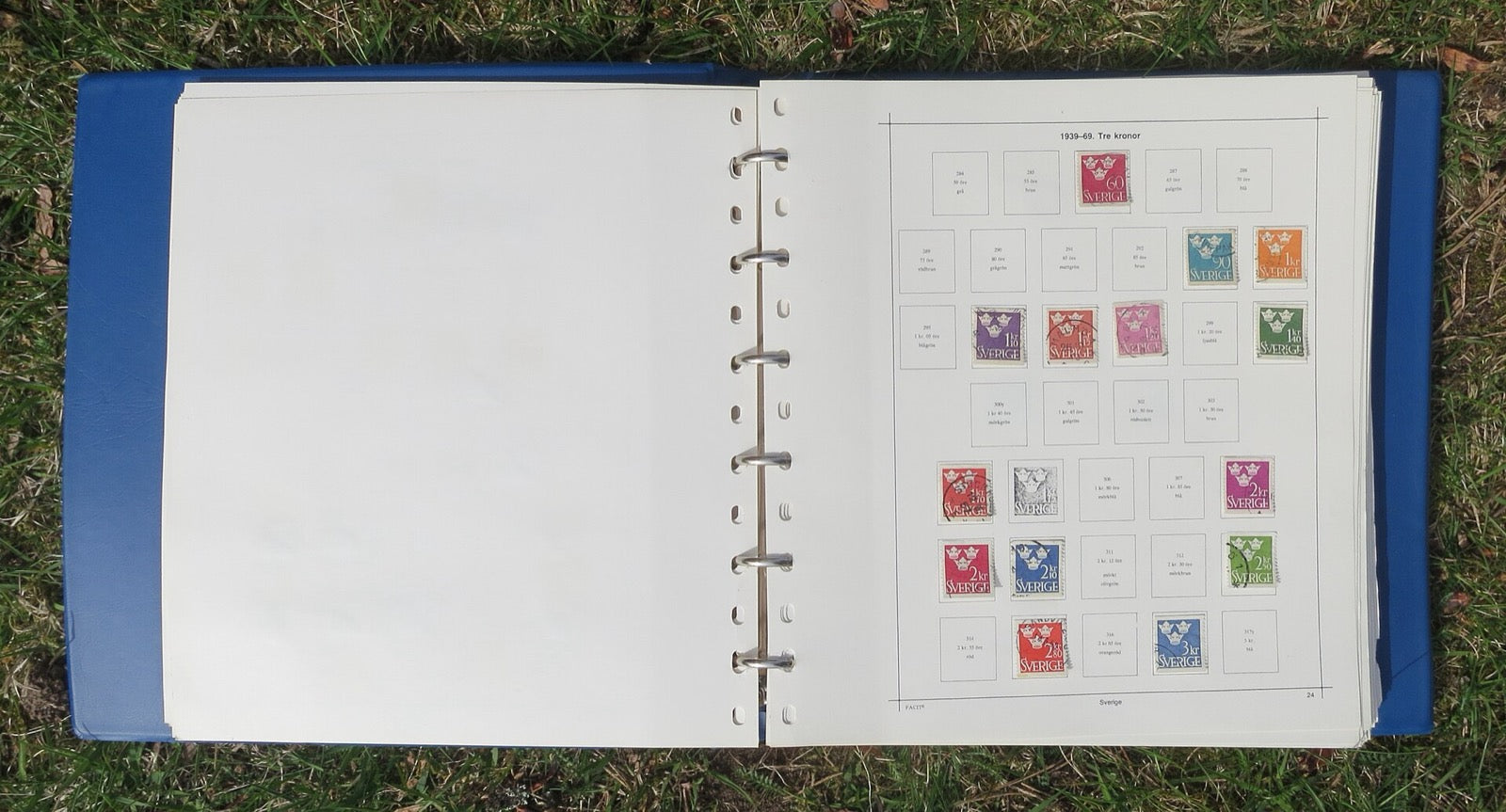
Before a collection is offered to anyone, it needs an inventory. The American Philatelic Society’s advice to executors and heirs is blunt: look first for any instructions, insurance schedule or list the original owner left behind, since those documents point to what the collector judged significant. Where nothing survives, the collection has to be worked through in person; a description given over the phone or by email is not something a dealer can act on.
Storage matters as much as content at this stage. Albums left in an attic or a damp basement lose value before anyone gets round to selling them: humidity and heat damage gum and paper, and an album stored on its side rather than upright can let the pages press together until stamps stick to the leaf beneath. A collection worth selling is worth moving to a cool, dry room before it is worth cataloguing.
Credit: R. Henrik Nilsson via Wikimedia Commons (CC BY 4.0)
Why the catalogue total is not a cheque
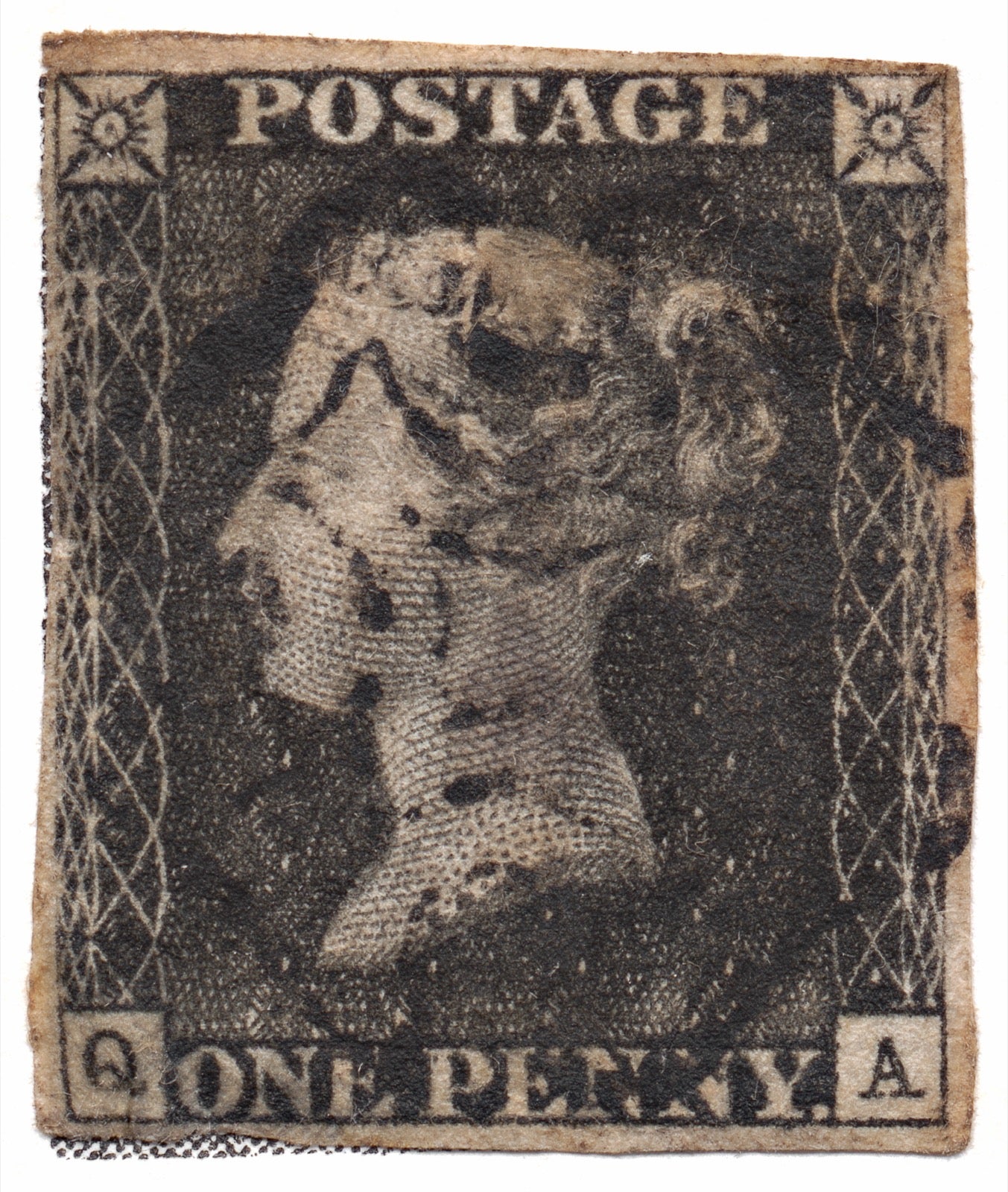
Every catalogue number in an album exists to identify a stamp precisely, not to state what a buyer will pay for it. Catalogue prices are compiled as retail reference points and routinely sit above what the same stamp fetches in the room, and the gap persists even among stamps everyone recognises. A Penny Black in good to fine used condition currently changes hands for roughly £40 to £400, while an unused example, with its original gum, can run from around £1,250 to several hundred thousand pounds depending on shade, margins and centring. Two stamps sharing a catalogue number and a 180-year issue date can be worth wildly different amounts. Treat a catalogue as a way of naming a stamp, never as a valuation.
Credit: freestock.ca, public domain via Wikimedia Commons
Getting it properly assessed
A formal appraisal is not always necessary, and it is not free: expect to pay by the hour, and agree in advance whether the figure produced is resale value or replacement value for insurance. Most collections are overwhelmingly common material, so an appraiser will spend most of their time on a small number of items rather than producing a full inventory.
For anything genuinely significant, a certificate is worth the outlay before it goes near a saleroom. The Royal Philatelic Society London’s Expert Committee has issued opinions since 1894, and its fees run on a sliding scale tied to catalogue value, rising to £1,300 above £100,000. A certificate confirms a stamp is what it claims to be, and becomes part of its saleable history.
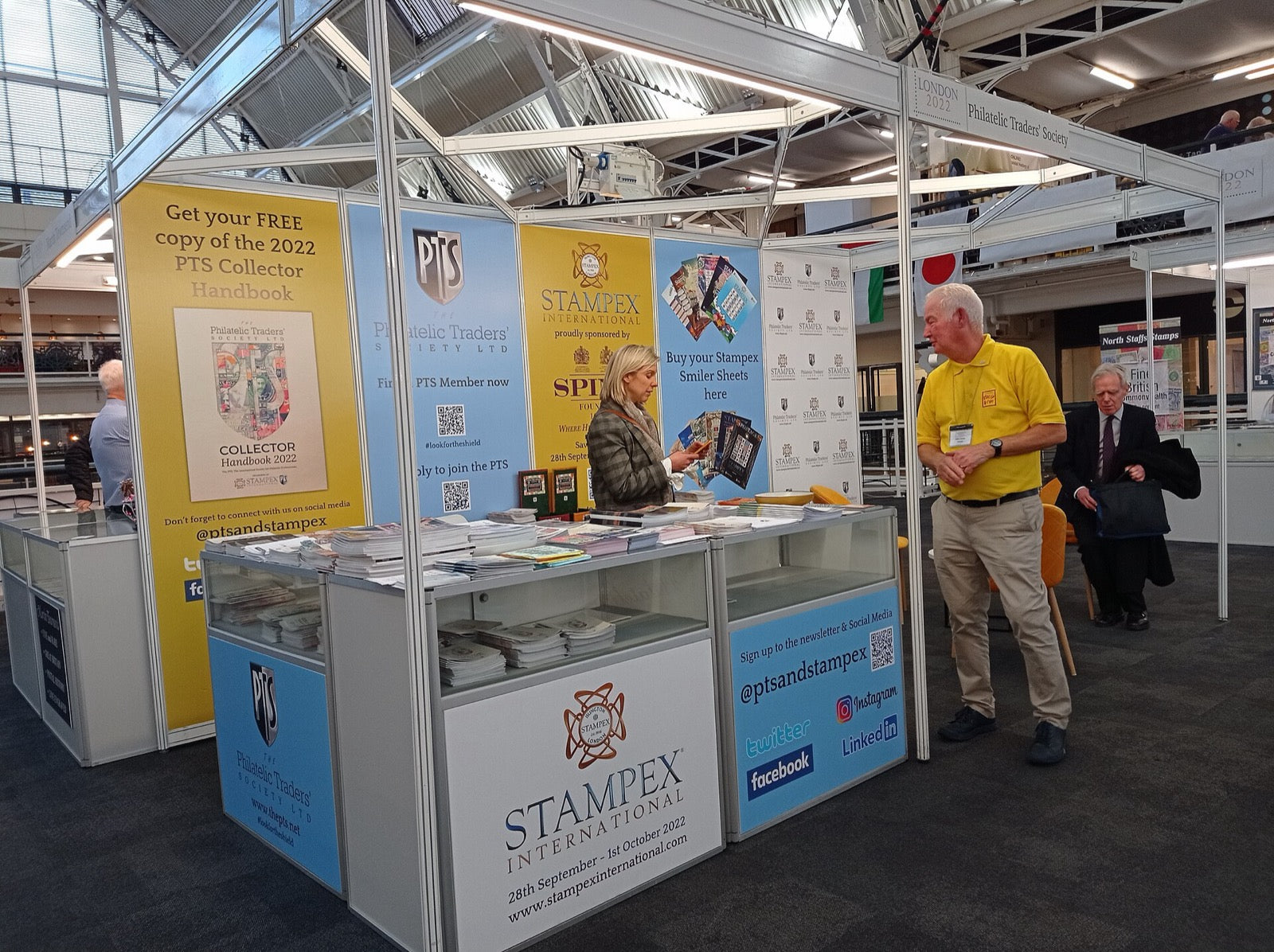
Before choosing anyone to work with, check they belong to a recognised trade body. The American Philatelic Society, the American Stamp Dealers Association and the National Stamp Dealers Association all maintain codes of ethics for their members, which rules out the least accountable end of the market.

Credit: Philafrenzy via Wikimedia Commons (CC BY-SA 4.0)
Choosing your route to market
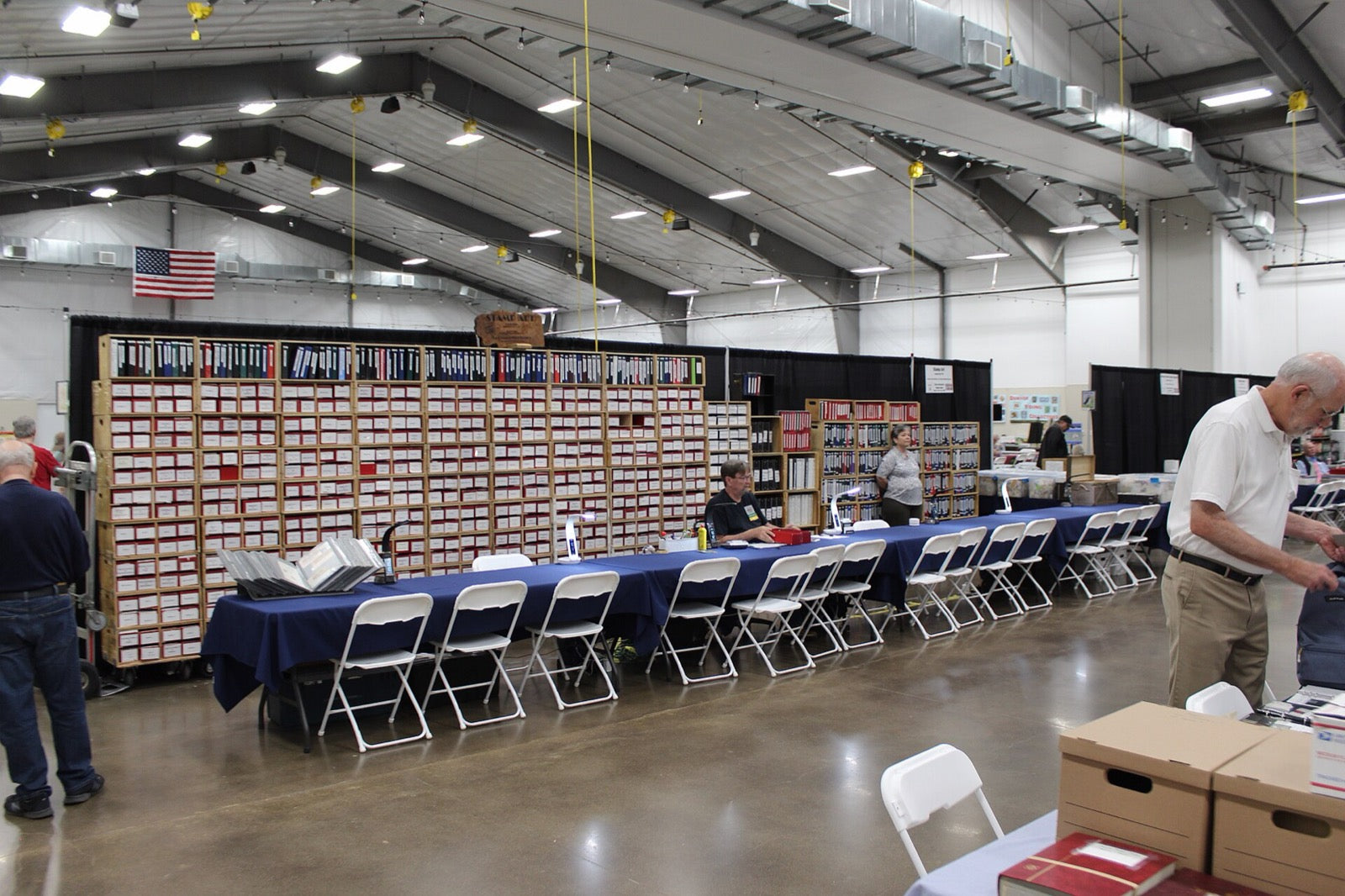
There is no single correct way to sell, and the right route depends on value. A useful rule of thumb keeps everyday, moderately priced material in dealer territory: a dealer buys to resell to their own customers and prices accordingly. Anything worth considerably more is generally better suited to public auction, where a well-publicised sale reaches thousands of collectors and dealers directly, often producing a stronger price than a single buyer would offer.
A collection rarely has to be sold as one lot. Splitting it between specialists can pay off: a dealer who focuses on a single country or region will typically outbid a generalist for material in their field, and a postal history specialist will pay more for covers than a dealer trading mainly in loose stamps. Some auction houses run the whole process for a consignor, from cataloguing a collection through to marketing a sale to their own bidder base, which suits anyone who would rather hand the work over than break a collection up.
Credit: Philafrenzy via Wikimedia Commons (CC BY-SA 4.0)
Timelines, offers and not being rushed
Speed and price tend to trade off against each other. A dealer buying a collection outright can usually pay immediately; a public auction, by contrast, can take three months or more to return payment once a lot has sold, since bidders pay before the house settles with the seller. Neither route is wrong, but a seller who needs the money quickly and one prepared to wait for the strongest price are making two different decisions.
Whichever path is chosen, get more than one opinion before committing to it. An offer that has to be accepted immediately is a reason to walk away, not a reason to hurry: a fair offer should comfortably stand for 30 days. Heirs selling an inherited collection are advised to take that time, since a decision made before the sentimental weight of a collection has settled is one that tends to get regretted later.
Credit: Mikepascoe, public domain via Wikimedia Commons
Why the patient seller usually does best
None of this requires expertise the average seller lacks. An inventory, a realistic read on catalogue value versus cash value, one credible assessment and a comparison between at least two offers cover most of what separates a good outcome from a disappointing one, and none of those steps costs much more than time.
What costs money is skipping them: selling to the first buyer who calls, taking a catalogue total at face value, or letting a specialised collection be absorbed into a general house-clearance sale. A collection built up over years deserves the same unhurried approach it took to assemble.