



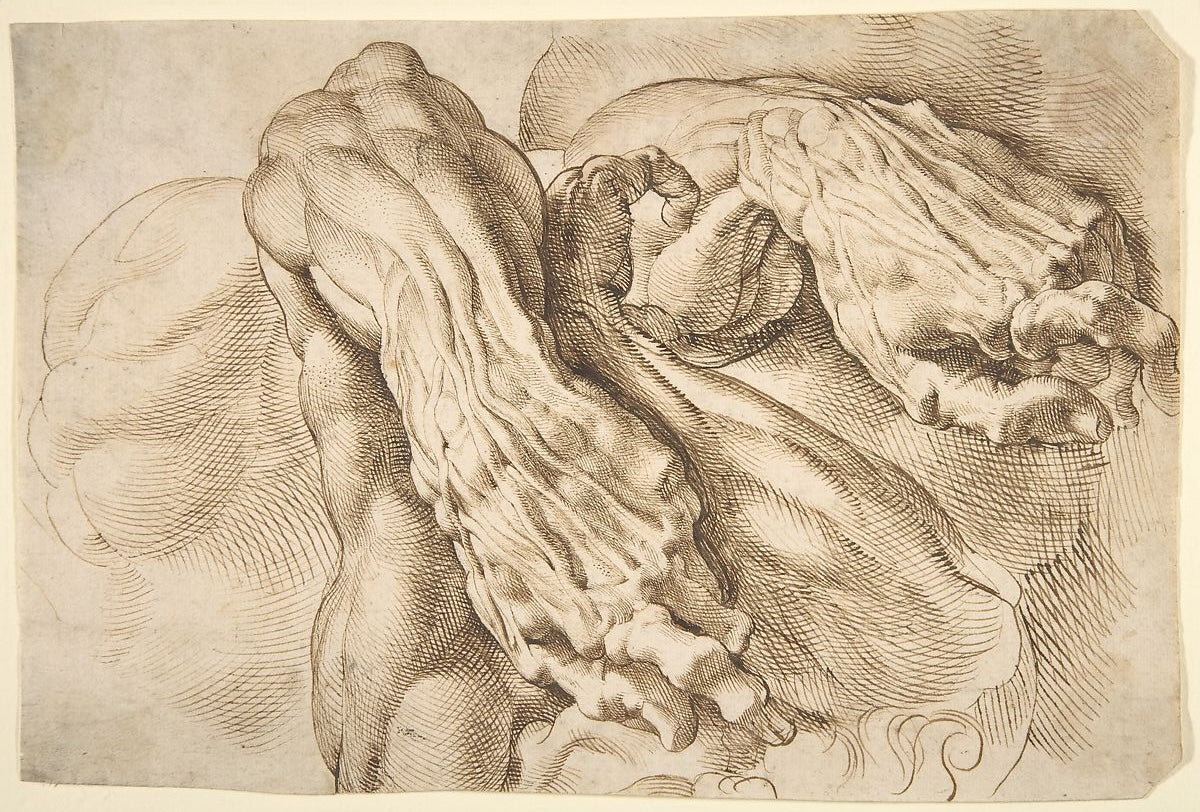
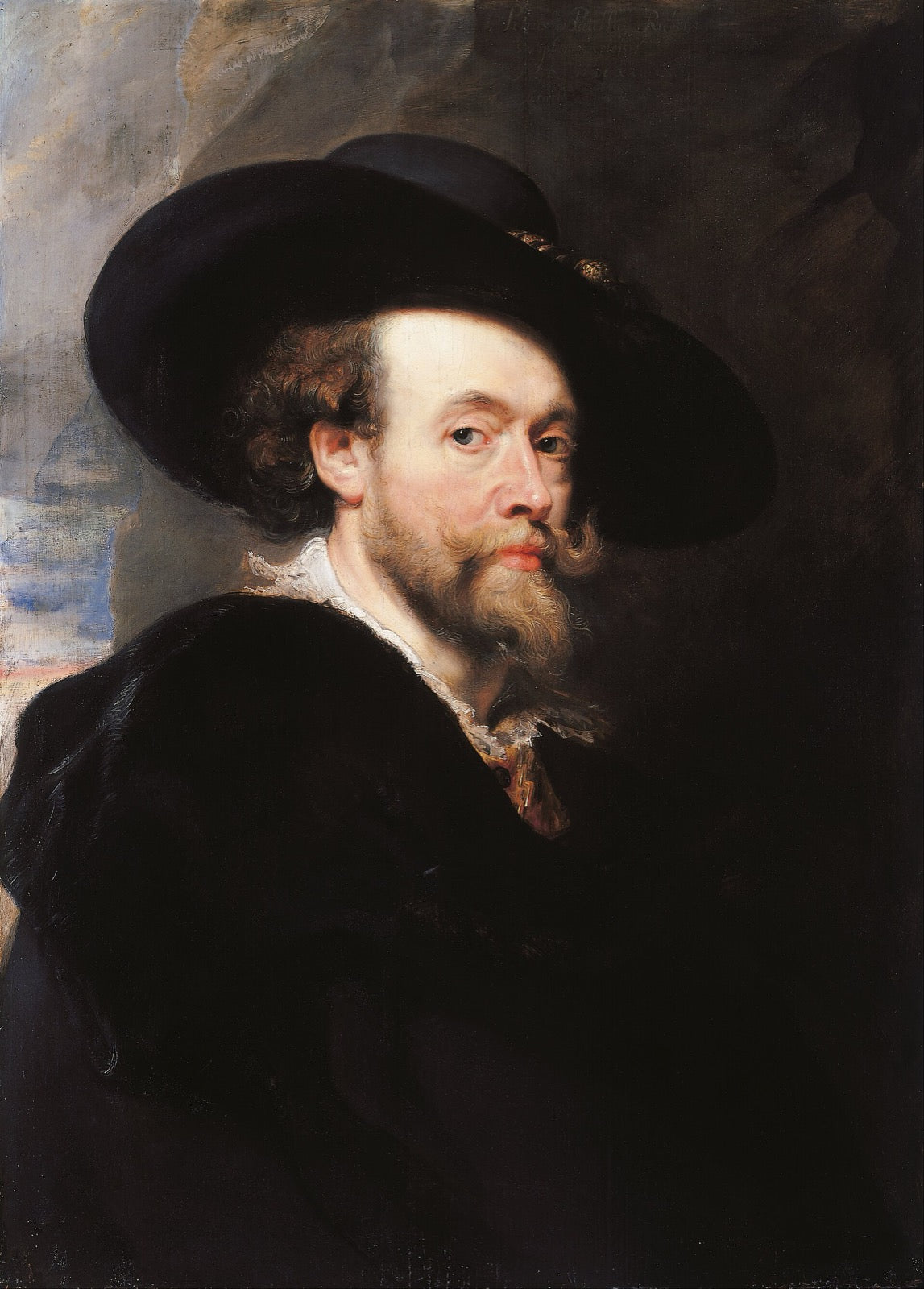
Rubens etchings are a curious thing for a new collector to search for, because Peter Paul Rubens, the Flemish master whose Antwerp studio dominated European painting for three decades, is barely known as a printmaker. From around 1619 he built one of Europe’s first organised reproductive print businesses instead: specialist engravers, working under his supervision, turning his paintings and drawings into images sold across the Continent.
This matters for anyone starting out, because the phrase “a Rubens etching” rarely means what it sounds like. Only a handful of prints carry any claim to his own hand, and the museum holding the strongest candidate still describes it with caution. Almost everything else marked “after Rubens” is an engraving made by someone else, under contract, from his design. Working out which is which comes before condition, paper or price.
The market reflects that split. Engravings by Rubens’s workshop team still appear at Bonhams, Sotheby’s and Christie’s, generally in four figures rather than the millions his paintings and drawings command. This guide sets out who actually made these prints, how Rubens built and protected the business behind them, and what to check before buying one.
Discover all in our:
Rubens etchings 101: A beginner’s guide to the Flemish master’s rare prints
Credit: Peter Paul Rubens, public domain via Wikimedia Commons
The one etching that might be by Rubens himself
The starting point for the “Rubens etching” question is a small print of Saint Catherine of Alexandria, shown with the spiked wheel and sword of her martyrdom. It carries an inscription reading “P. Paul Rubens fecit”, made by Rubens, and is dated to around 1620. Princeton University Art Museum, which holds an impression, notes that only three etchings by Rubens’s own hand are known today, and that this is the only one to survive in more than a single impression. Even so, the museum catalogues it only as “attributed to” Rubens. The plate measures 30 by 19.8 centimetres, smaller than almost anything his workshop engravers later produced.
The 1619 privilege that started the print business
By 1619, Rubens had grown frustrated with unauthorised copies of his paintings circulating as cheap prints, and secured legal privileges, an early form of copyright, covering his designs in the Spanish Netherlands, the Dutch Republic and France. He then hired printmakers to turn his compositions into authorised engravings and woodcuts, working from intermediate drawings prepared in chalk and reworked in ink, wash, gouache and oil paint. Those who imposed too much of their own style were dropped in favour of ones willing to imitate his effects on copper.
Vorsterman and Pontius: two engravers, one difficult handover
Lucas Vorsterman joined the workshop around 1618 and was Rubens’s only engraver between 1619 and 1621. The arrangement ended badly in 1621, in a dispute traced to Vorsterman adding his own dedications to the prints, raising the question of who owned the rights to an image Rubens had designed. Vorsterman later moved to England and, on returning to Antwerp, engraved 22 of the 80 plates in Anthony van Dyck’s Iconography.
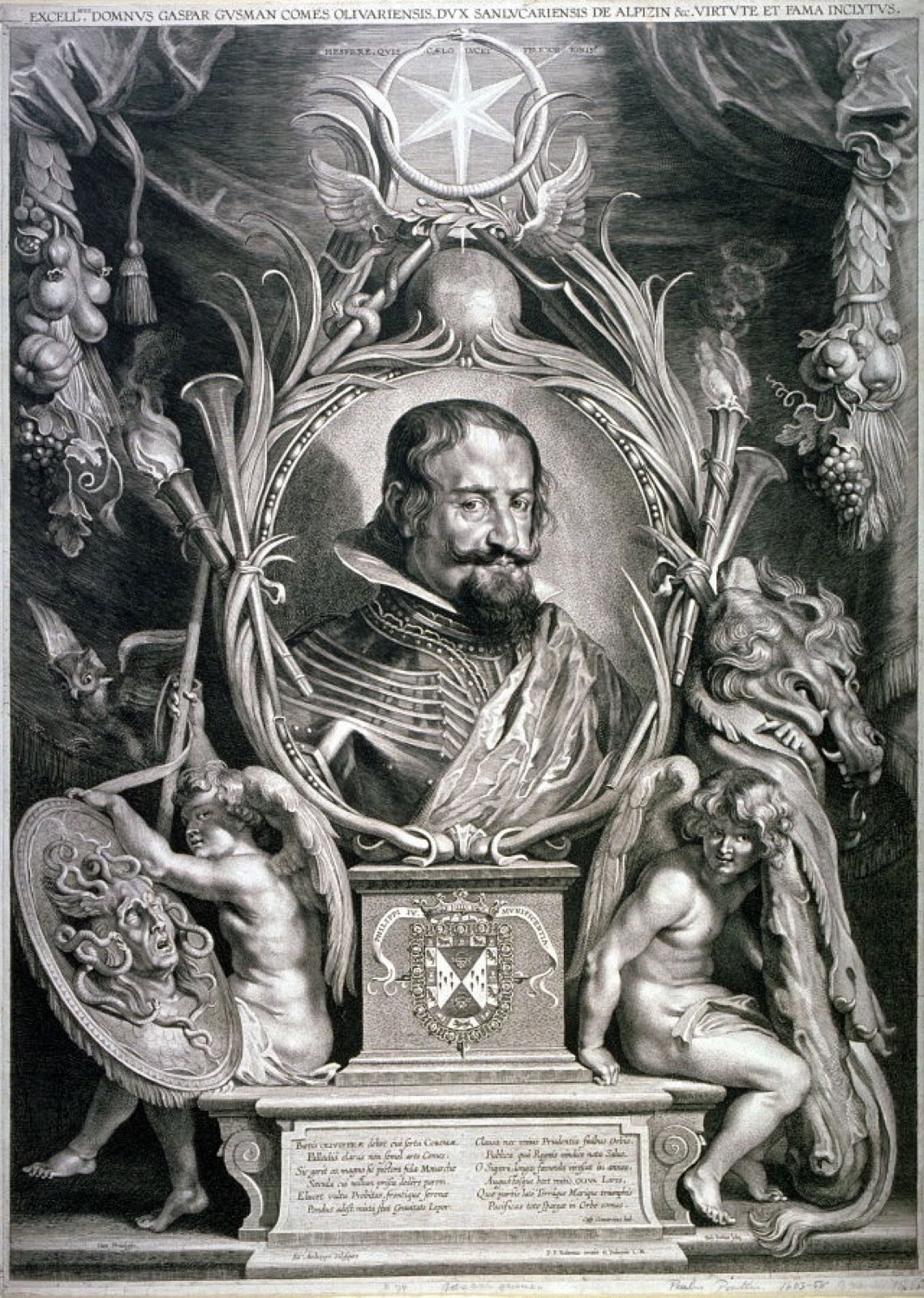
Paulus Pontius, trained under Vorsterman, took over as principal engraver from 1624 and lodged in Rubens’s own house until 1631, allowing close supervision. He went on to produce 42 plates after Rubens’s designs, including the 1626 Portrait of Gaspar de Guzman, Count of Olivares.
Credit: Paulus Pontius / Peter Paul Rubens, public domain via Wikimedia Commons
The Bolswert brothers and Rubens’s landscapes
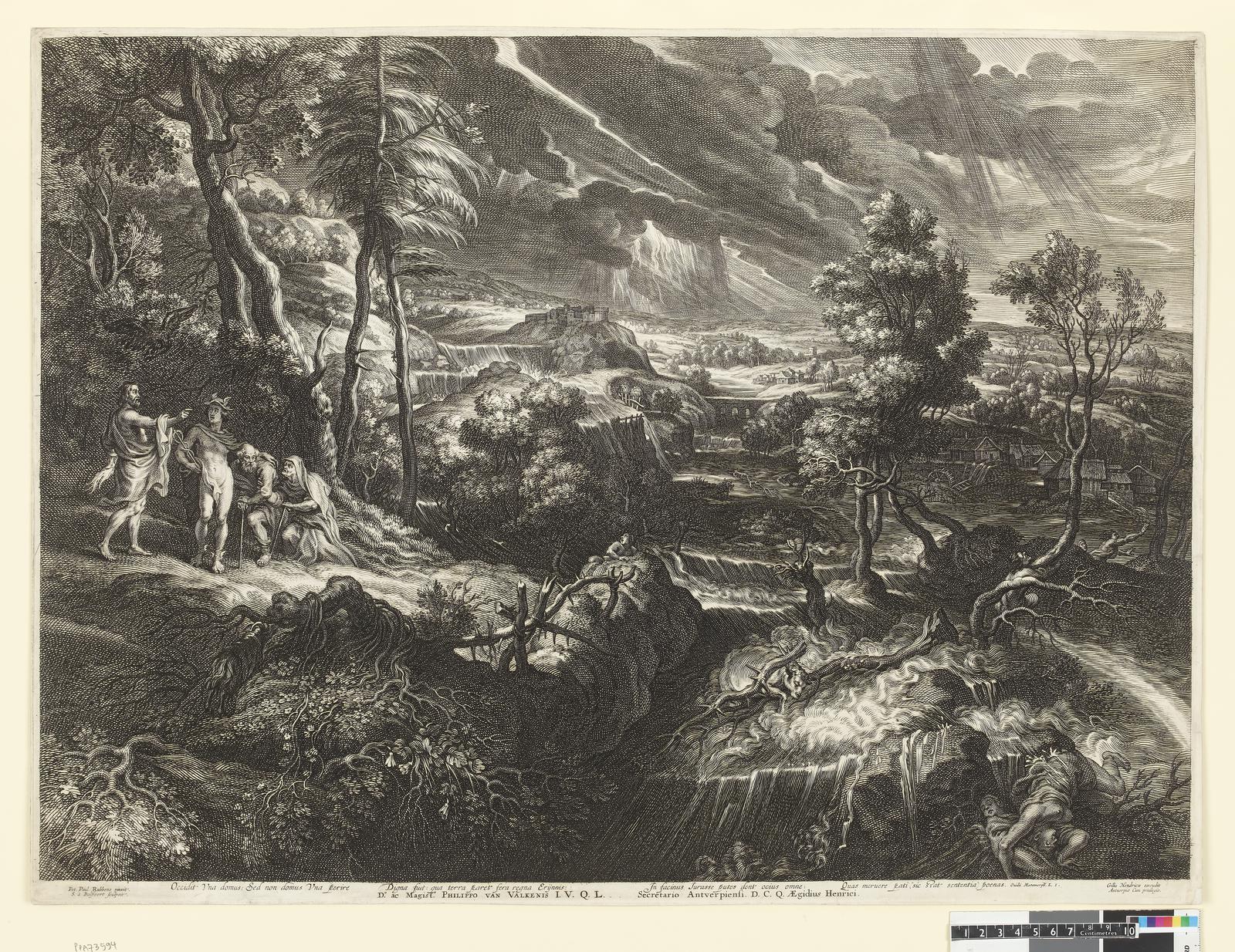
Landscapes were handled separately, by the brothers Boetius and Schelte à Bolswert. When Boetius died in 1633, Schelte took his place, engraving after Rubens until, and beyond, the artist’s death in 1640. He worked exclusively with the graver rather than drypoint, producing what one cataloguer called exact transcripts of the paintings he copied. Between them, the Bolswerts produced six large landscape plates, including Philemon and Baucis and the Shipwreck of Aeneas, plus twenty smaller landscapes and twelve animal hunts, among them the Lion Hunt, which still turns up at auction under Schelte’s name.
Credit: British Museum, London
Jegher and the return of the woodcut
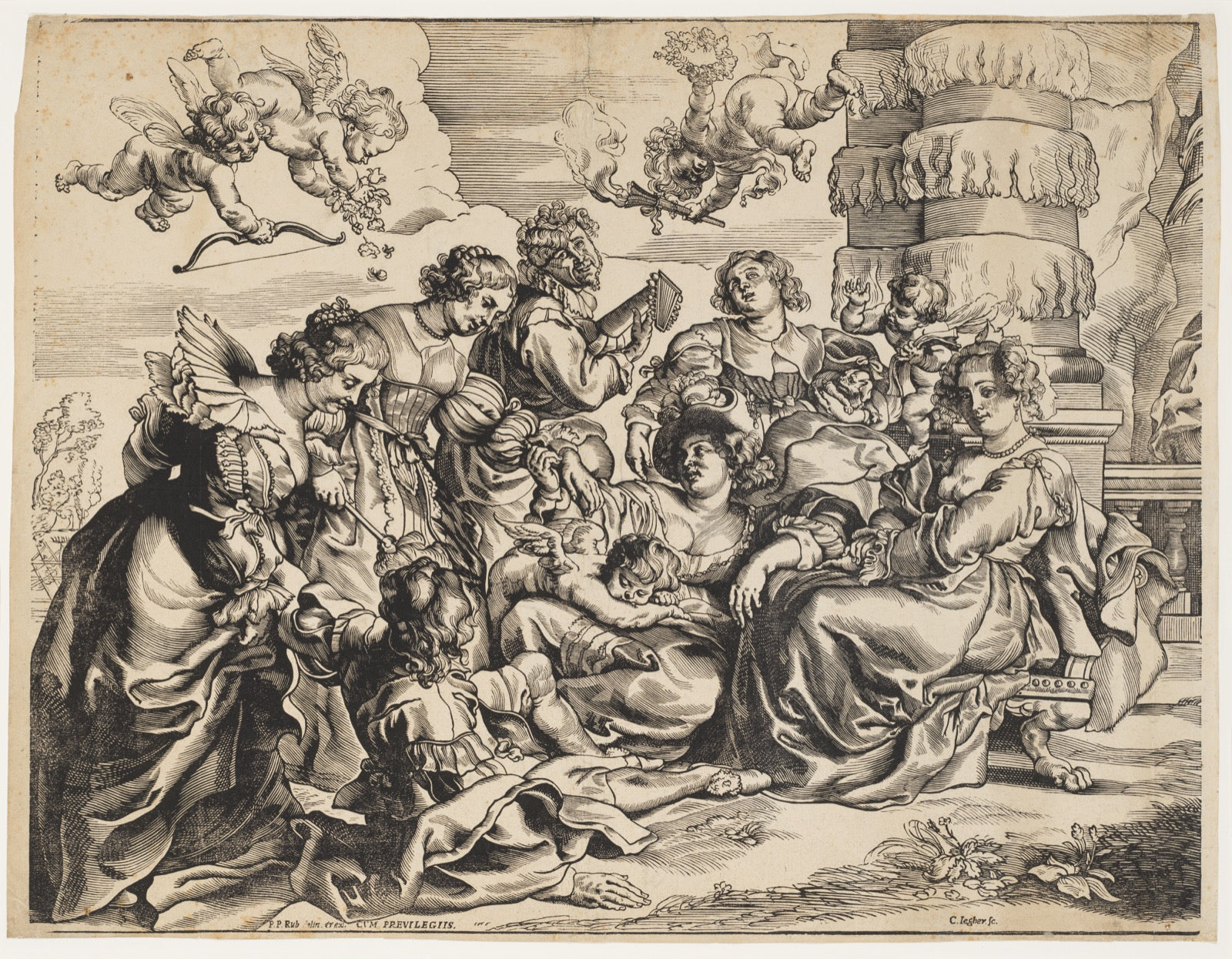
Rubens revived an older technique through his partnership with the woodcutter Christoffel Jegher, active between about 1633 and 1636. Jegher’s reputation rests on nine large woodcuts made with Rubens, who supplied drawings that Jegher finished and cut in reverse onto the block. The results, among them the Garden of Love and Susanna and the Elders, show a boldness of line better suited to woodcut than the finer tonal work of an engraving, and mark the last phase of Rubens’s print campaign before his death in 1640.
Credit: The Metropolitan Museum of Art, New York
What to check before buying a print after Rubens
For a beginner, the practical work starts with reading the catalogue description carefully. A print described as “after Peter Paul Rubens”, or naming the engraver, Vorsterman, Pontius, Bolswert or Jegher, is a workshop reproduction, not an autograph piece, and should be priced accordingly. Auction houses reference these plates by their number in Hollstein’s standard catalogue of Dutch and Flemish prints, worth quoting to a dealer. Beyond attribution, check the strength of the impression, whether the margins are trimmed close to the plate mark, and whether a watermark shows when the sheet is held to the light.
What these prints sell for today
Prices sit well below what Rubens’s paintings and drawings command, keeping the category accessible. At Bonhams in June 2023, an engraving of the Fall of the Rebellious Angels after Rubens, made around 1700 by the later engraver Richard van Orley, sold for £2,560 including premium. Closer to Rubens’s own lifetime, Sotheby’s estimated a Lion Hunt engraved by Schelte à Bolswert, Hollstein 298, at £1,500 to £2,500 when it came up for sale in December 2021. Values move with condition and the engraver’s name, but four figures is the realistic range for most workshop engravings.
Why the engravers’ paper trail keeps prices grounded
None of this makes Rubens prints a lesser field to collect in. If anything, the near absence of an autograph etching sharpens what a beginner is buying: the work of named, skilled engravers operating under contract, on a business model Rubens invented in the 1619 privilege and ran for two decades. Vorsterman’s dispute over dedications, Pontius’s years in Rubens’s own house, the Bolswerts’ landscapes and Jegher’s return to the woodcut are each documented and traceable, in a way few other seventeenth-century printmaking operations are.
That documentation is also why prices hold steady rather than spike. A cataloguer can name the engraver, cite the Hollstein number and date the plate with confidence, so a four-figure engraving after Rubens is a considered purchase, not a gamble on attribution. For a beginner starting out with Old Master prints, that combination of clear evidence and modest cost is hard to find elsewhere.