



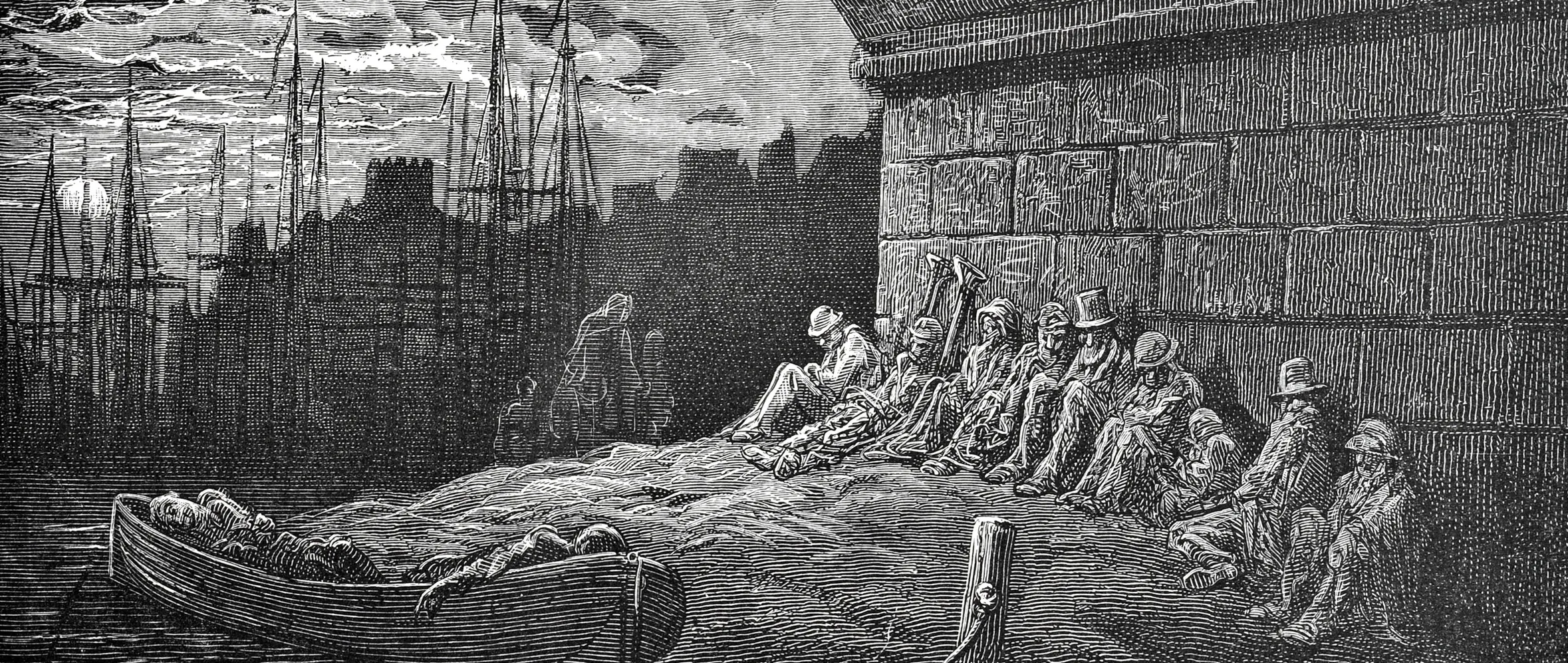
Gustave Doré etchings, in the strict printmaking sense, barely exist. The Strasbourg-born illustrator, who lived from 1832 to 1883, produced more than 10,000 designs in his lifetime, almost all of them wood engravings cut onto printing blocks by teams of block-cutters rather than plates he etched himself. What survives from that output, and what still unsettles viewers today, runs from his engravings for Dante’s Inferno, in print by 1860, to the final commission he did not live to see published: Edgar Allan Poe’s The Raven.
At the height of his career, around 40 block-cutters worked at once translating his drawings into wood, and his most successful designs were then copied by an electrotype process onto cylinder presses, so the same image could run in Paris, London and New York simultaneously. That scale of reproduction is why “etching” survives as trade shorthand for anything bearing Doré’s name: printing blocks, preparatory drawings, individual plates and bound volumes all pass through the same saleroom, whatever the correct term for the medium in front of the cataloguer.
That range shows up in what actually changes hands. Bonhams sold two wood-engraved printing blocks from the Doré Bible for US$6,120 in 2021, a signed ink-and-wash drawing for £3,750 in 2015, and a worn copy of the compilation volume known as the Doré Gallery for just £129.25 in 2006. This guide sets out the works that built Doré’s reputation for the uncanny, and the market that has grown up around what remains of them.
Discover all in our:
Gustave Doré etchings: the visionary illustrator’s most haunting prints
Credit: DCHNwam, public domain via Wikimedia Commons
Dante’s underworld, and Milton’s fallen angels
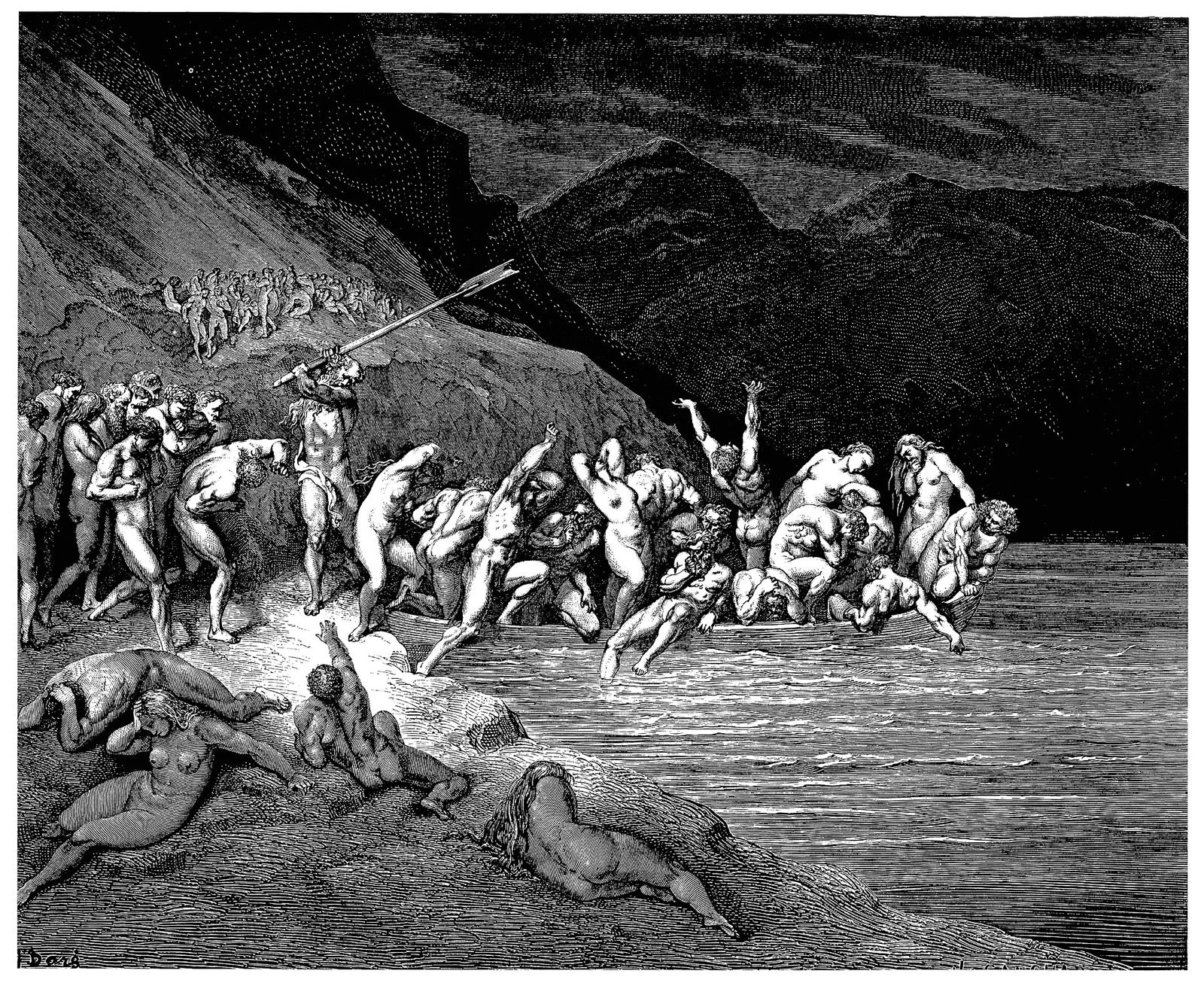
Doré’s engravings for Dante Alighieri’s L’Enfer, the Inferno volume of the Divine Comedy, ran to 75 illustrations and had reached print by 1860. They are still the images most people picture when they imagine Dante’s hell, and they opened a run of classic-literature commissions that made Doré’s name across Europe: Cervantes’ Don Quixote in 1863, then John Milton’s Paradise Lost in 1866, both illustrated in the same unforgiving style.
Credit: Gustave Doré, public domain via Wikimedia Commons
A Bible written like a nightmare
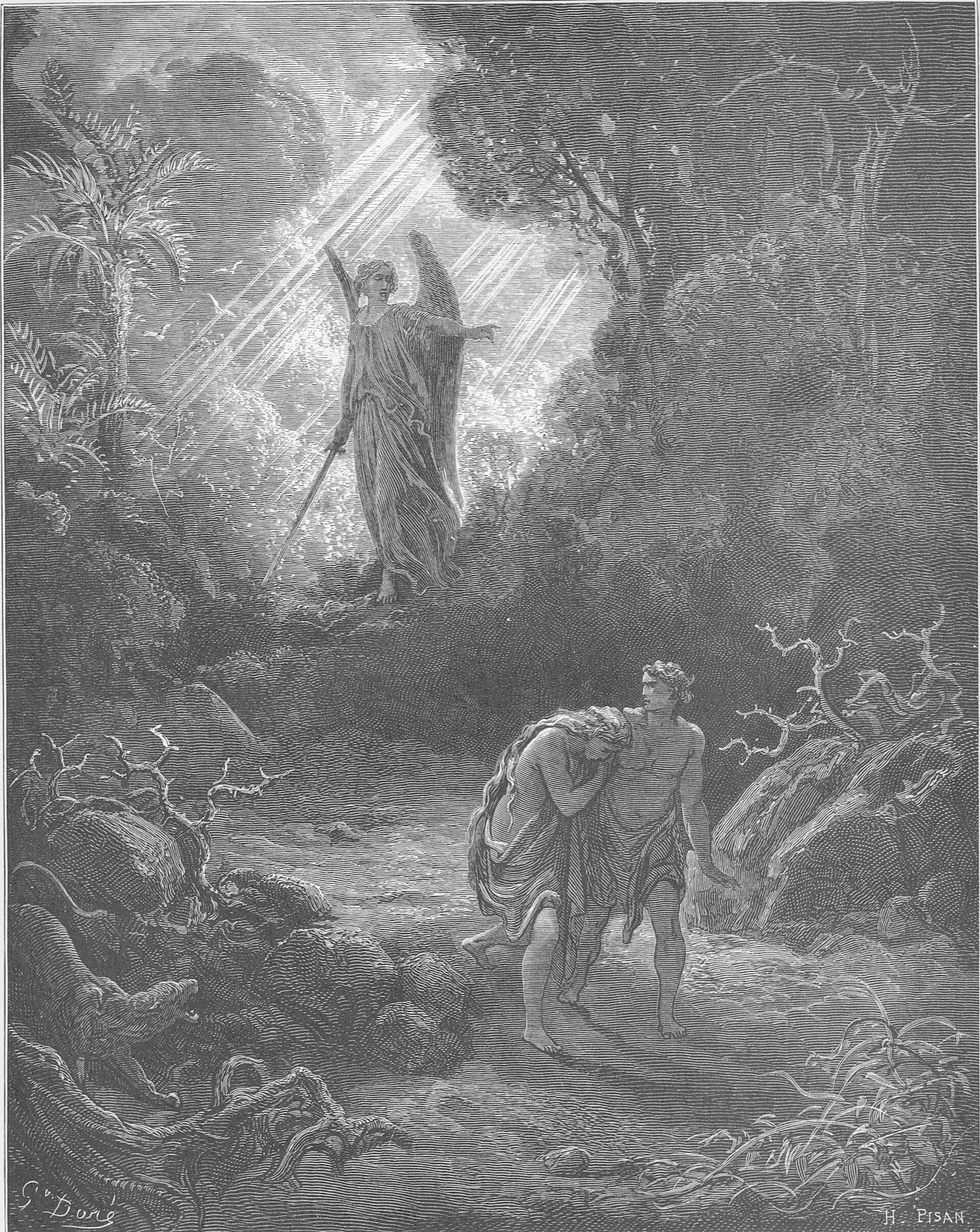
Doré’s most consequential commission was a new illustrated Bible. His 241 wood engravings for La Grande Bible de Tours, 139 from the Old Testament and 81 from the New, were published in 1866 as a large folio edition, simultaneously in France by Mame and in Britain by Cassell. His biographer has described the Old Testament plates as depicting “the God of Wrath: of massacres and murders, decapitations and avenging angels”, a register far removed from Sunday-school illustration.
Two of the objects that carried those images through the print run still turn up at auction. A metal stereotype plate for The Death of Agag, showing Samuel’s execution of King Agag, carried an estimate of £1,000 to £1,500 at Bonhams in 2019. A pair of wood-engraved printing blocks, cut for Adam and Eve Driven out of Eden and Jesus Blessing the Children, made US$6,120, about £4,470, at Bonhams in New York in 2021. Blocks like these rarely survive: publishers usually broke them up or scrapped them once a run ended, rather than pay to store them.
Credit: Gustave Doré, public domain via Wikimedia Commons
Hugo’s monster from the deep
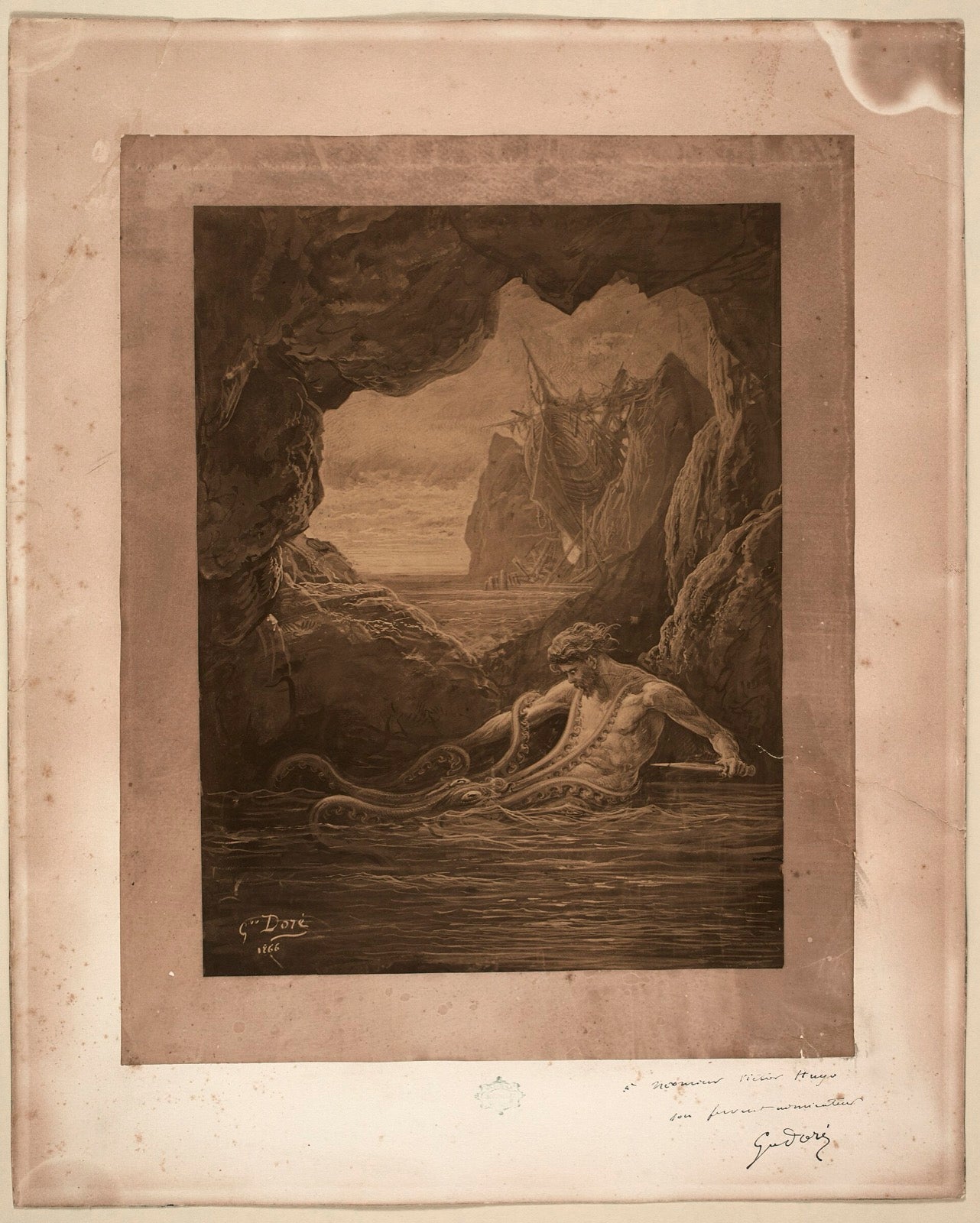
Doré also supplied at least one striking illustration for the English edition of Victor Hugo’s Les Travailleurs de la Mer (Toilers of the Sea): a gouache of Gilliatt, the novel’s hero, wrestling a giant octopus, signed and dated 1866. Sotheby’s offered the original artwork, heightened with white and measuring 70.5 by 49.5cm, in a 2024 sale of nineteenth-century European paintings, with an estimate of US$10,000 to US$15,000, about £7,920 to £11,880. It had previously belonged to the Wadsworth Estate in New York before passing into a private American collection.
Credit: Gustave Doré, public domain via Wikimedia Commons
A final commission he never saw published
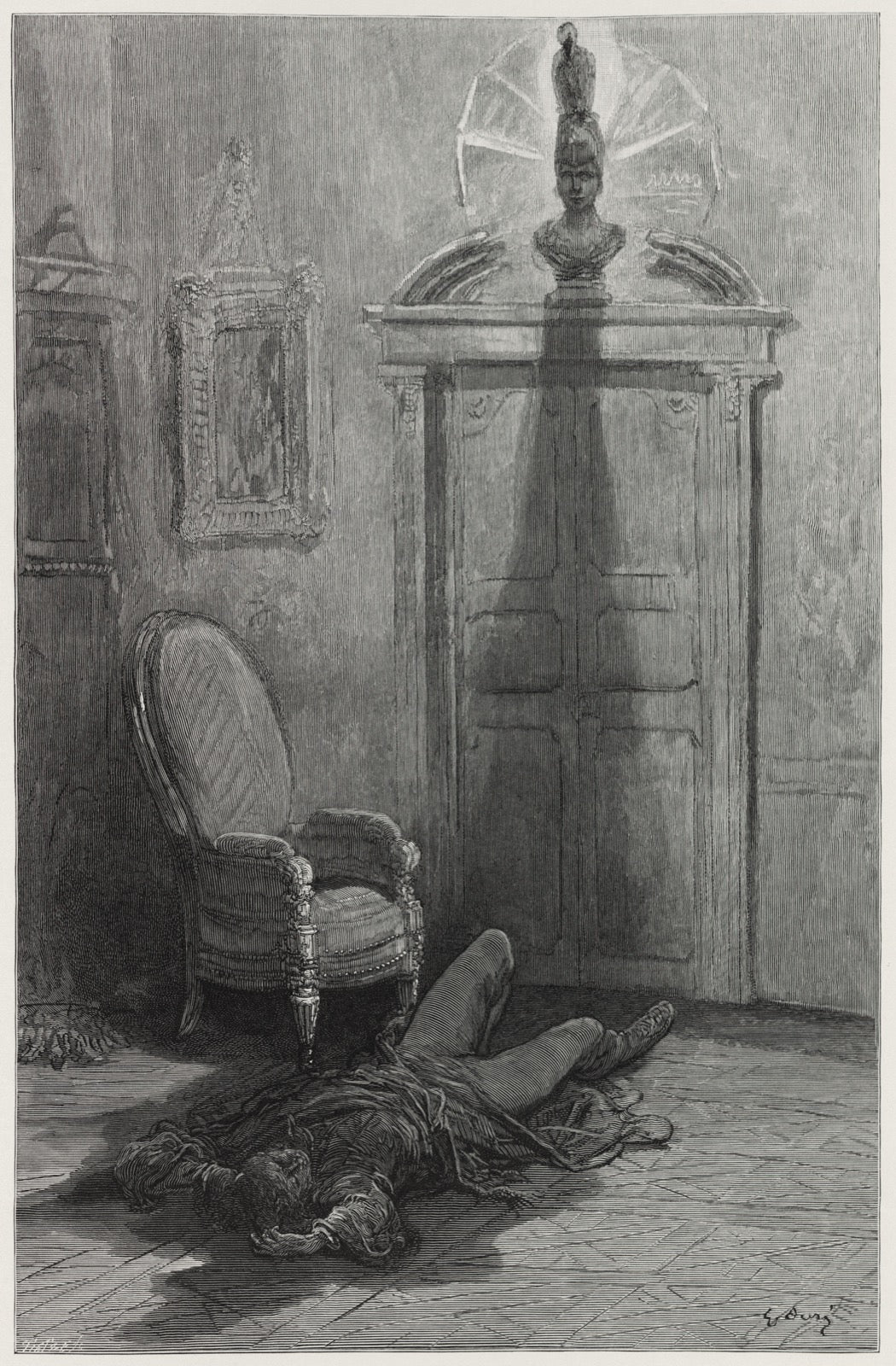
Woodcuts for Edgar Allan Poe’s The Raven close Doré’s catalogue of illustrated books. His own list of works dates the commission to 1883 and 1884, either side of his death in Paris on 23 January 1883. The finished book was published independently by Harper & Brothers in New York the following year; Doré did not live to see it in print.
Credit: Gustave Doré, public domain via Wikimedia Commons
What collectors pay for Doré today
The spread across these categories is wide. A well-thumbed copy of the Doré Gallery, a compilation of his most reproduced engravings bound as one volume, made just £129.25 including premium in a 2006 Bonhams book sale. An autograph drawing costs far more: a pen, ink and wash woodland scene, signed and dated 1872, sold for £3,750 at Bonhams in 2015, roughly thirty times the book’s price for a single sheet in Doré’s own hand.
Printing blocks, plates and unique works on paper sit in between, priced less for subject matter than for scarcity. The Bible blocks made US$6,120, about £4,470, in 2021. The Death of Agag stereotype carried an estimate of £1,000 to £1,500 in 2019. The Gilliatt octopus gouache was estimated at US$10,000 to US$15,000, about £7,920 to £11,880, in 2024, the highest figure of the four precisely because it is a unique signed drawing behind one of Doré’s most reproduced images, rather than a multiple struck from it.
Why scarcity, not fame, sets the price on Doré’s darkest work
Doré’s images are among the most widely reproduced in nineteenth-century print, which is exactly why the rare survivals now cost more than the famous scenes themselves. Millions of readers met his Inferno, his Bible and his Raven through electrotype plates run off simultaneously in several countries; almost none of those readers ever saw a printing block, a working drawing or an artist’s proof. It is that handful of surviving objects, not the ubiquitous printed page, that Bonhams and Sotheby’s now put under the hammer.
The images have also outlived their original commissions. Théophile Gautier praised Doré in his own lifetime for giving, as he put it, “mysterious and deep vitality to chimeras, dreams, nightmares”, and H. P. Lovecraft later credited Doré’s Rime of the Ancient Mariner illustrations as an influence on his own formative years. A market built on scarce blocks and lone drawings is, in the end, still trading on the same unease that made Doré’s name in the first place.