



Old master prints, the etchings and engravings produced by European printmakers from the fifteenth century to the early nineteenth, are having an unusually busy year. A Rembrandt drypoint broke the auction record for any print of the period in December 2025, in a market where the trade’s biggest annual fair had already logged its highest attendance in years. Between the two, a category once left to connoisseurs has started turning up in searches from people who have never bought a print before.
Unlike a painting, an old master print was never a single object. Rembrandt or Dürer could pull dozens, sometimes hundreds, of impressions from one copper plate, and the plate often kept working long after the artist died. That is what confuses new buyers: two impressions can carry the same signature and subject, yet a sharp, richly inked early pull and a flat, worn late one from the same plate can be separated by ten times the price. The print never lies about which one it is, but reading that evidence takes practice.
That gap is only part of why the market has moved. According to Artnet News, buyers across the wider prints category are shifting away from contemporary work and towards historically significant material, with half of all prints and multiples lots at Artnet Auctions between 2020 and 2025 going to first-time buyers. Here is a closer look at how old master prints are made, valued and collected right now.
Discover all in our:
Old master prints are suddenly hot: why searches just jumped
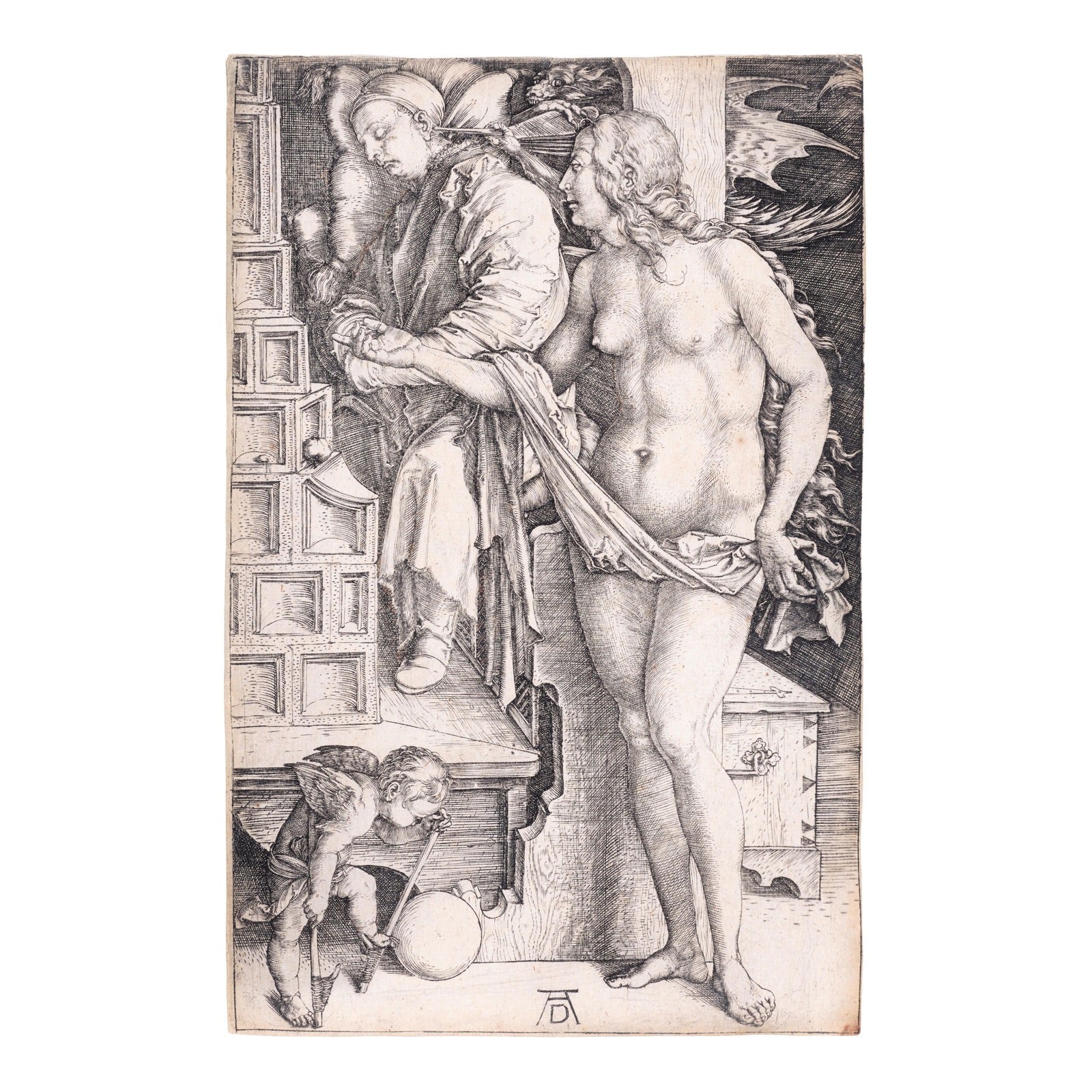
What counts as an old master print
Christie’s dates the category from the birth of European printmaking in the fourteenth century to the end of the eighteenth or early nineteenth, using Francisco de Goya, described by the house as “the last Old Master and the first modern artist”, as a natural cut-off point. Bonhams draws much the same boundary. The earliest prints were woodcuts, a relief technique in which the printed lines are carved standing up from a wooden block. Engraving and etching work the opposite way: both are intaglio methods, in which the design is cut or bitten into a metal plate and the ink sits in the grooves rather than on the surface. It is this intaglio side of the trade, the engravings of Albrecht Dürer and Martin Schongauer and the etchings of Rembrandt and Goya, that accounts for most of the recent activity.
Credit: Bonhams
The sale that put the category back in the news
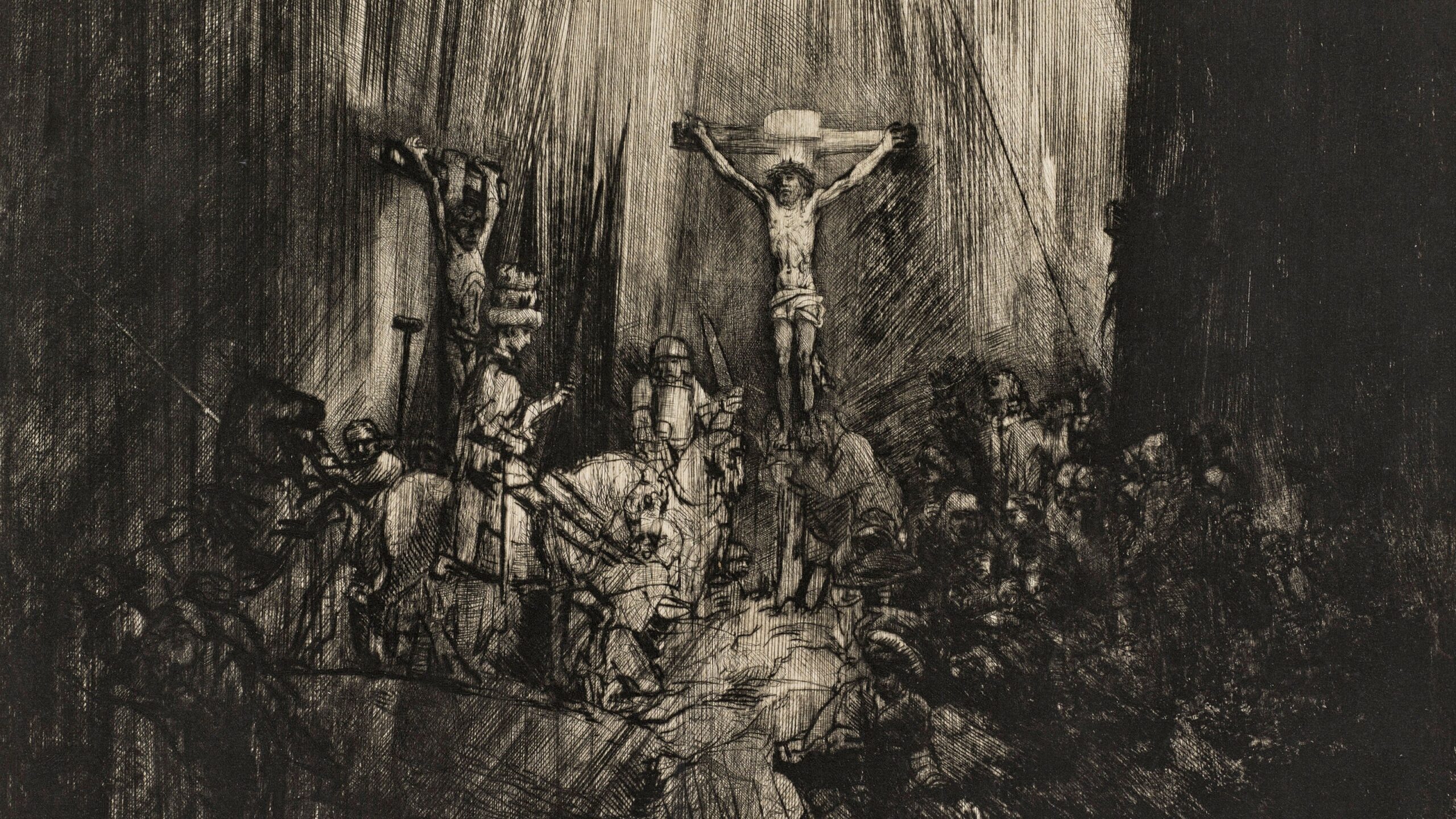
The clearest single trigger was a sale in London. On 3 December 2025, Christie’s offered part of the Rembrandt print collection assembled by the American entrepreneur Sam Josefowitz, more than a hundred works built up over decades. According to Artnet News, the top lot, a small drypoint portrait of Arnout Tholinx, an inspector of Amsterdam’s Medical Colleges, made £3.1 million, a new auction record for any old master print, and the sale as a whole totalled £8.6 million. Christie’s specialist Tim Schmelcher called it, in a statement reported by Artnet, “a landmark achievement” affirming “the extraordinary strength of the prints market”. It was, Artnet reported, the last impression of that portrait remaining in private hands, the rest held by the Rijksmuseum, the British Museum, the Louvre and New York’s Morgan Library.
Credit: Christie’s
A broader shift, not just one sale
The Tholinx sale was dramatic, but it sits inside a longer move. Artnet’s own price data shows Modern prints, a category built on historic printmakers rather than living artists, totalling $72.8 million at auction in 2024 against $55.6 million for contemporary work, a gap that has widened since contemporary prints peaked at around $133 million in 2021. Conner Williams, head of prints and multiples at Artnet Auctions, put it plainly: “While there’s been a clear tapering in demand for more contemporary prints, enthusiasm for historical material remains both vibrant and steadfast.” Attendance backs this up: the IFPDA Print Fair in New York drew a record 21,000 visitors in 2025, a 14 per cent rise on the year before, with VIP registrations up 57 per cent, according to Artnet News.
What moves the price
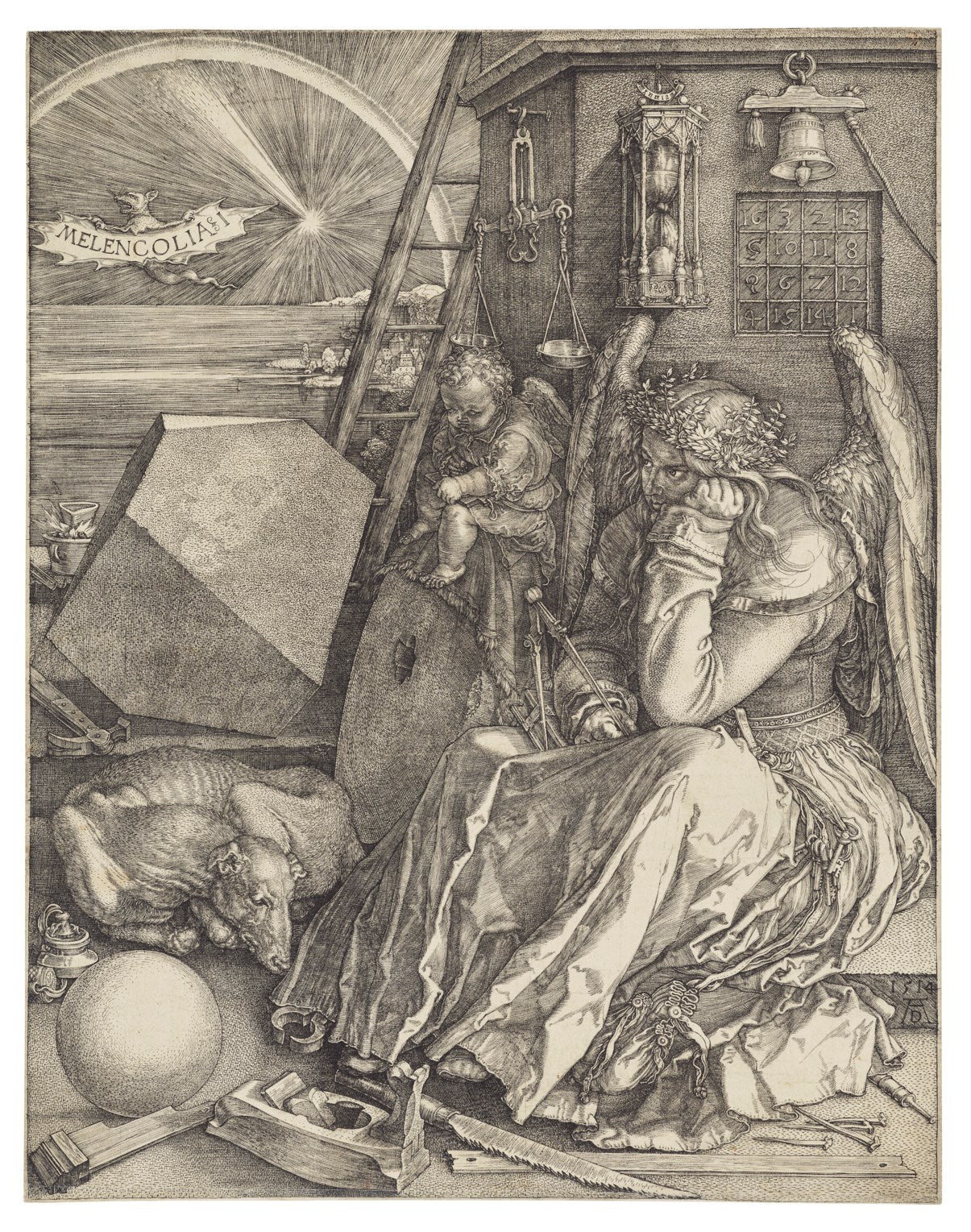
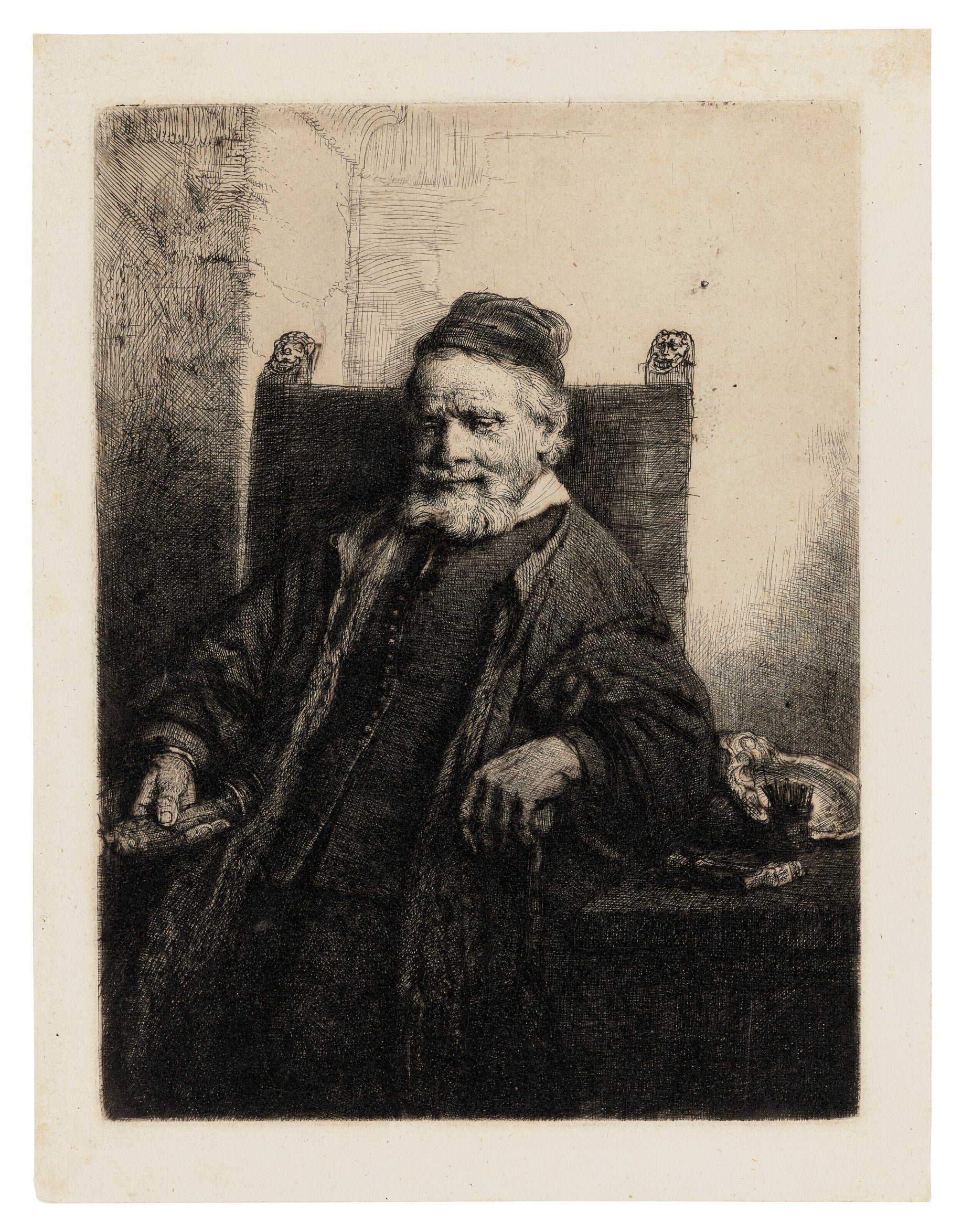
Age and condition decide most of the difference in price. Christie’s specialist Tim Schmelcher describes a fine early impression of Dürer’s 1514 engraving Melencolia I, sold for £201,600 on 2 July 2024, as looking “silvery, yet warm, with strong yet subtle contrasts and great clarity”; a later pull from the same worn plate looks flat by comparison. The effect shows clearly in Rembrandt’s 1656 etched portrait of the goldsmith Jan Lutma: a superb first-state impression made £302,400 at Christie’s on 7 December 2023, while a second or third-state impression of the same image, printed after Rembrandt reworked the background, carried an estimate of only £50,000 to £70,000 at a later sale. Paper matters too. Dürer generally used stock watermarked with a bull’s head until around 1520, and early Rembrandt etchings from the 1640s tend to appear on paper carrying a fool’s cap mark, dating an impression from the sheet alone even without a signature.
Credit: Christie’s
Getting into the market without a museum’s budget
None of this requires a museum’s resources. Bonhams’ own specialists note that prices for old master prints “can range from a few thousand to hundreds of thousands”, and the house’s own results bear that out: a strong engraved impression of Dürer’s Nemesis made $51,200, and his engraving of Adam and Eve reached $114,800, both including premium. Christie’s reports that the scarcity of fine early Dürer and Rembrandt impressions is itself pushing collectors towards less famous names. Daniel Hopfer and Hendrick Goltzius, printmakers overshadowed by the two giants for four centuries, are now, in the house’s words, “increasingly sought-after”, their prices still catching up with their reputations.
Credit: Christie’s
The scarcity behind the sudden interest
The Tholinx record and the record fair attendance point to the same underlying fact. Christie’s own guide states plainly that while Dürer and Rembrandt still dominate the market in lots offered and prices achieved, fine early impressions of their work “have become quite scarce”. That scarcity, more than the £3.1 million headline figure, is arguably the real story behind the sudden interest.
It is also why the interest has not stayed confined to seven-figure lots. Bonhams points to entry prices running from a few thousand pounds into six figures, and Christie’s expects buyers who cannot compete for a fine Dürer to bid up Hopfer and Goltzius instead. With half of all prints and multiples lots at Artnet Auctions going to first-time buyers over the past five years, the surge looks less like a headline and more like a market absorbing newcomers it was not built for.