



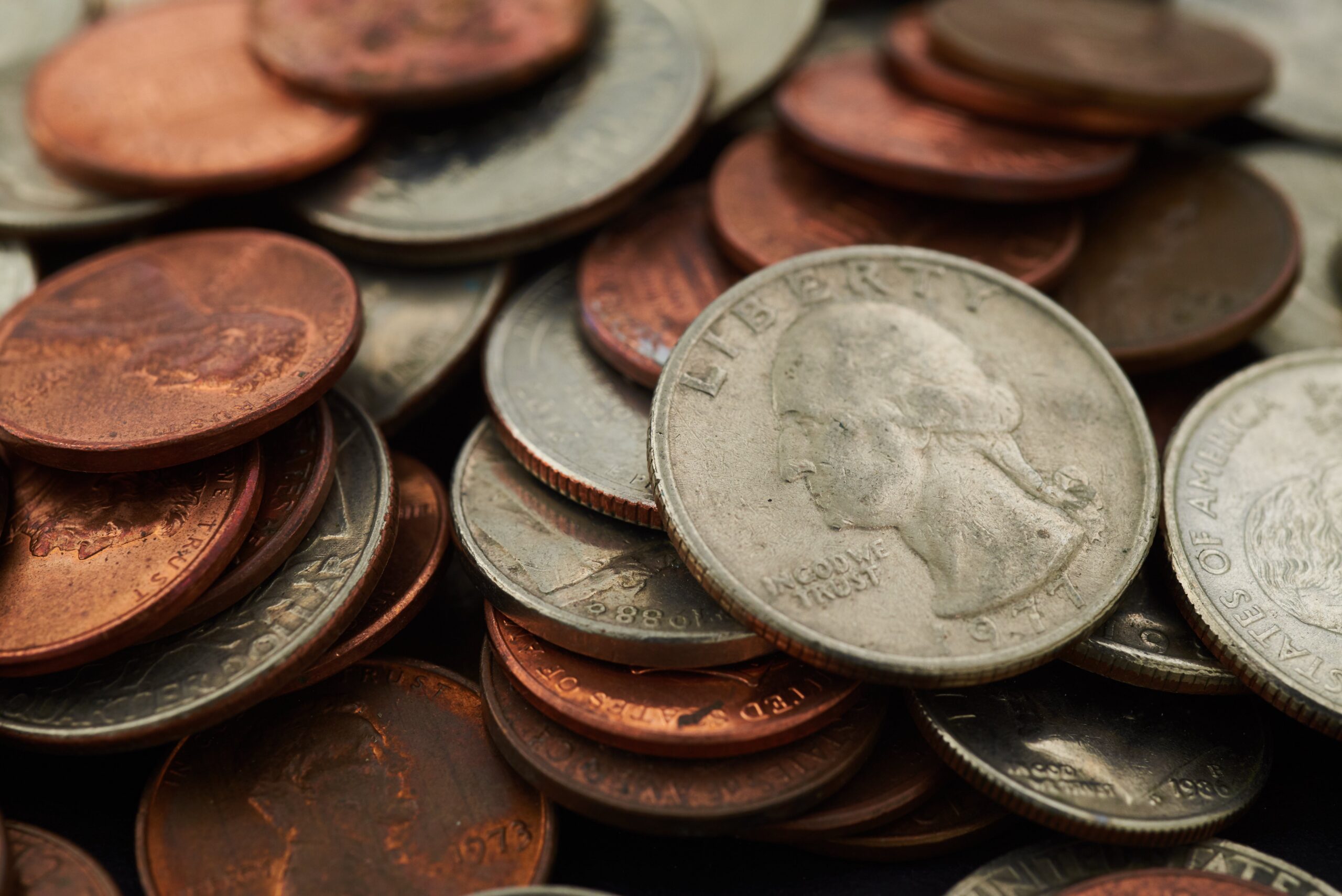
Most nickels pass through our hands without a second thought, each valued only at face value. Yet among them hide coins worth far more, sitting in coin jars, piggy banks and still in circulation. Unlike ultra-rare coins locked away in museum cases, these are pieces that ordinary people still find every day.
During the Second World War, nickel became vital for armour plating and military equipment. Congress authorised the US Mint to change the five-cent coin’s composition. From October 1942 through 1945, nickels were made from an alloy containing 35% silver. Each of these war nickels holds precious metal worth more than five cents.
The most practical collecting does not focus on million-dollar rarities but on coins you might actually hold. A darker-coloured nickel from the war years, a date that looks slightly off, or an unusually sharp strike can all signal extra value. The thrill comes from the real possibility that the next nickel you receive could be worth pounds instead of pence.
Discover all in our:
Rare nickels worth far more than 5 cents
Credit: eBay
Silver war nickels (1942-1945): the most findable valuable nickels
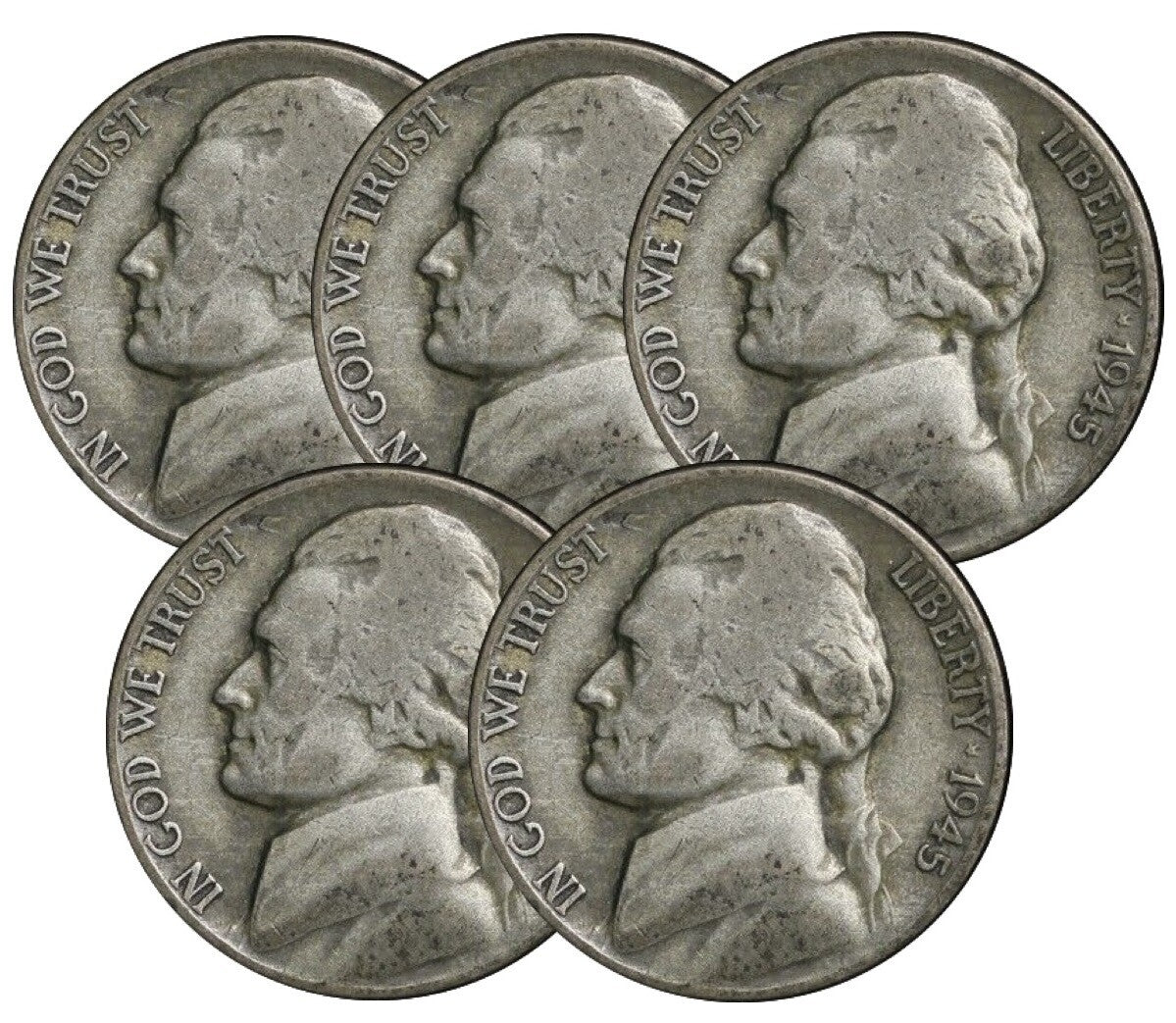
Silver War Nickels offer the best chance of finding genuine value in everyday pocket change. Minted between 1942 and 1945 with 35% silver content, each coin contains precious metal that makes it worth far more than five cents.
Nickel was a critical strategic material during the Second World War, needed for armour plating, ammunition and military equipment. Under the Second War Powers Act of 1942, Congress authorised composition changes. From October 1942 to 1945, the US Mint struck nickels from 56% copper, 35% silver and 9% manganese instead of the standard 75% copper and 25% nickel alloy.
Each war nickel contains exactly 0.05626 troy ounces of pure silver. At current silver prices, this gives each coin roughly £1.30-£1.50 in silver content alone. Circulated examples typically trade for £1.20-£2.40, while uncirculated common dates bring £6-24 or more.
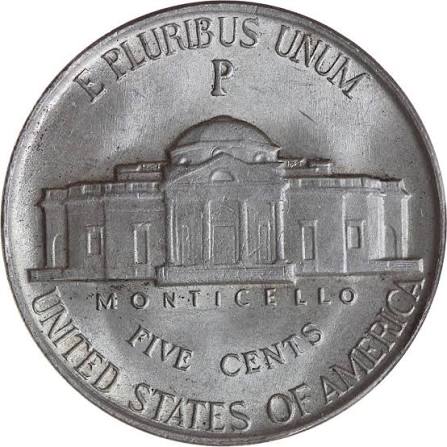
How to identify a war nickel: Flip the coin to the reverse. If you see a large mint mark letter P, D or S directly above the dome of Monticello, it is a 35% silver war nickel. Standard Jefferson nickels have a smaller mint mark to the right of Monticello or no visible mint mark for Philadelphia coins.
War nickels often develop a distinctive dark grey or greenish tint over time due to the manganese in the alloy. This is normal toning, not damage. The oversized mint mark was a deliberate design choice by the Mint to make identification easy.
Credit: Wikimedia Commons
Where to find them: War nickels still appear in bank rolls, estate sales and old coin collections. Their darker appearance often makes them stand out from standard nickels. Coin roll hunting remains one of the best ways to find them in circulation.
The 1950-D Jefferson nickel: low mintage key date
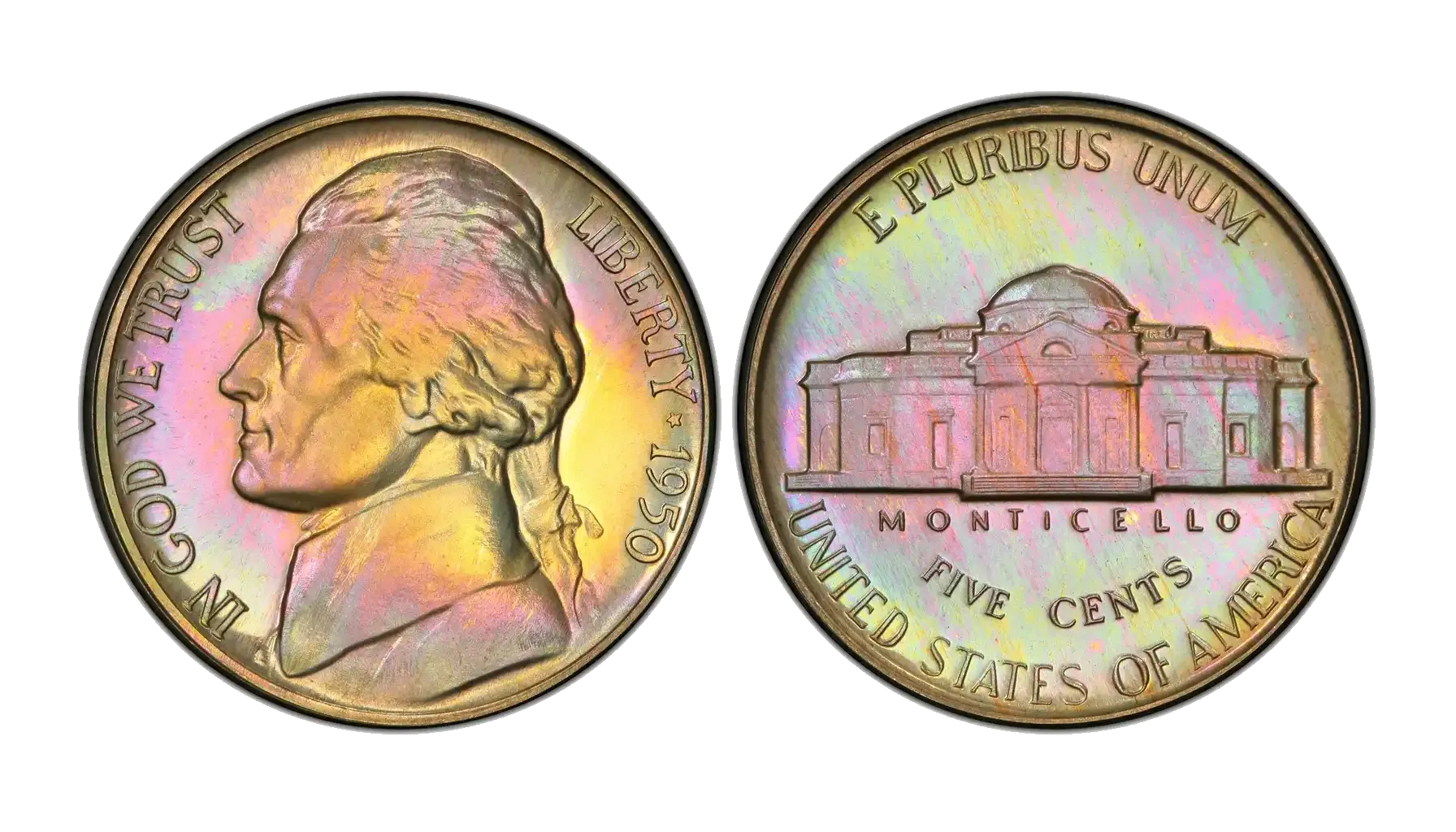
The 1950-D Jefferson nickel has the lowest mintage in the entire Jefferson nickel series at just 2,630,030 pieces. The Denver Mint struck the coins in summer 1950 after existing stocks proved sufficient for most of the year, and no further orders came in for the remainder of 1950.
The 1950-D became widely known due to heavy promotion by coin dealers in the 1960s, who marketed it as a modern rarity. Thousands of bags were hoarded, taking much of the mintage out of circulation. Today, it is genuinely difficult to find a 1950-D in pocket change, though examples do still surface.
Value: In circulated condition, a 1950-D Jefferson nickel is worth £2.50-£100. Gem uncirculated certified examples trade for £25-35.
How to identify: Look for the date 1950 and a D mint mark to the right of Monticello on the reverse.
Credit: Wikimedia Commons
1949-D Jefferson nickel: the semi-key date
The 1949-D Jefferson nickel is another low-mintage issue that commands a premium. The 1949-D D over S variety, where a D mint mark was punched over an S, is particularly valuable, ranging from £130-450 depending on condition.
Value: Regular 1949-D nickels in circulated condition trade for £2.50-£100. The D over S variety, identifiable by the underlying S visible beneath the D, can be worth significantly more.
Full steps Jefferson nickels: sharp strike premium
Any Jefferson nickel can become more valuable with the Full Steps designation. This applies to coins where Monticello’s steps on the reverse show at least five complete, unbroken steps. Full Steps coins are approximately four times rarer than their non-designated counterparts.
The Full Steps designation can significantly increase value. A common date Jefferson nickel in high grade without Full Steps might trade for £20-30. The same coin with Full Steps designation could bring £80-200 or more.
Why Full Steps are scarce: The design places Monticello’s steps opposite Jefferson’s high-relief portrait. Striking pressure and die condition must be perfect to fully bring up these fine details.
Buffalo nickels (1913-1938): the classic design era
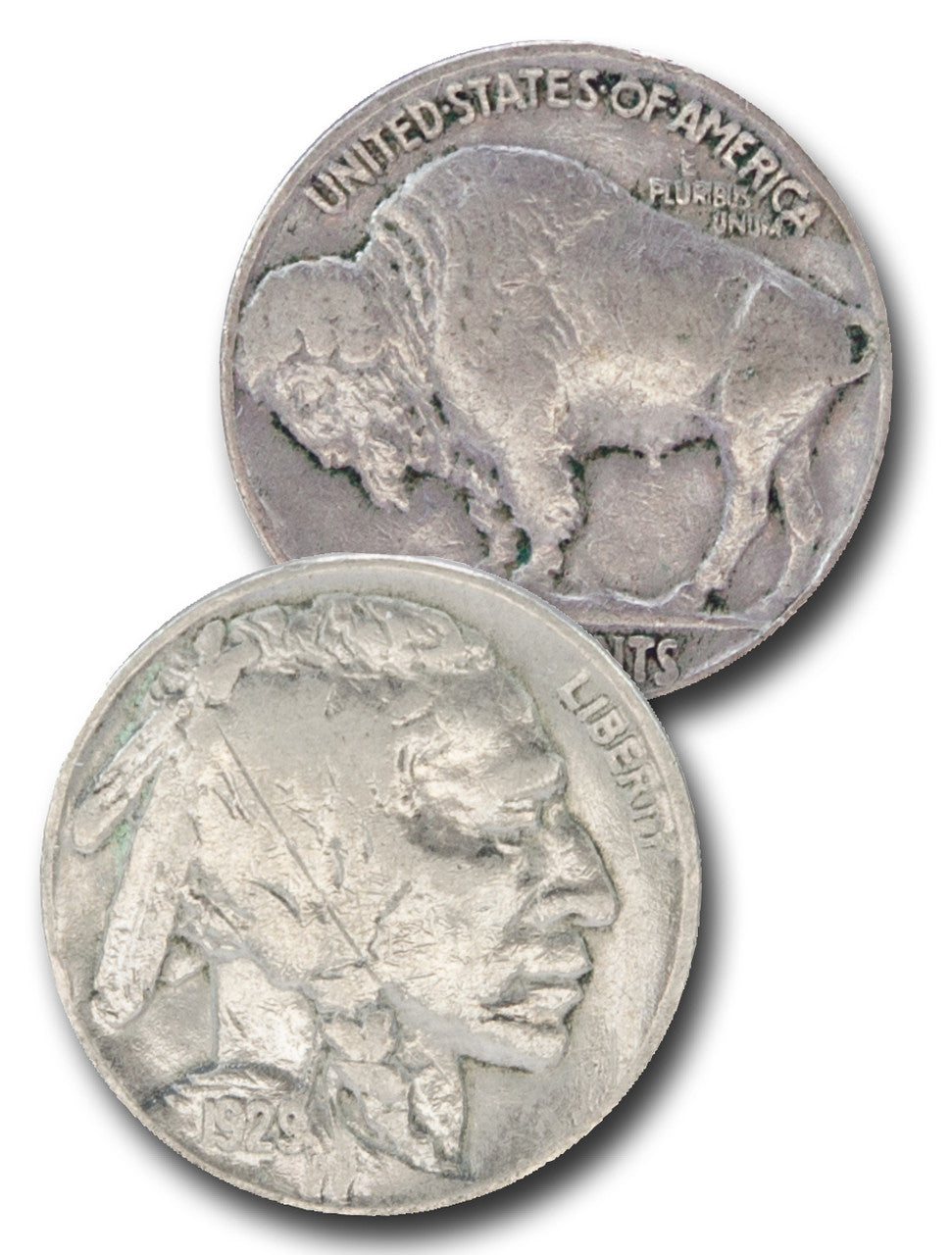
Buffalo nickels, designed by sculptor James Earle Fraser, feature a Native American profile on the obverse and an American bison on the reverse. While most are worth modest premiums in circulated condition, the series includes some of the most famous error coins in US numismatics.
Credit: Wikimedia Commons
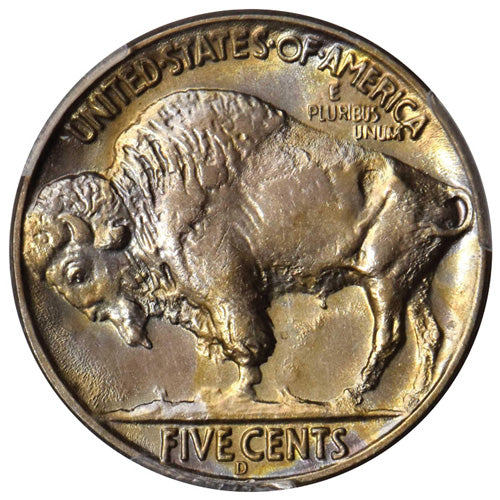
1937-D 3-legged Buffalo nickel: A mint worker over-polished a damaged die, accidentally removing the front right leg of the buffalo. Average value is around £500, with uncirculated examples bringing £2,000-4,500. Due to its fame, many counterfeits exist, so authentication is essential.
1936-D 3 1/2 leg Buffalo nickel: Similar error where over-polishing removed detail from the buffalo’s front foreleg. Values range from £600 in average circulated condition to £15,000+ in gem uncirculated.
Credit: Wikimedia Commons
Note: While Buffalo nickel errors are fascinating, they are rarely seen in circulation. Most Buffalo nickels found today are common dates worth modest premiums above face value.
How to search for valuable nickels
Coin roll hunting: Purchase rolls of nickels from banks and examine each coin. War nickels with their large mint marks above Monticello are the easiest to spot.
Estate sales and inherited collections: Many valuable nickels were saved by previous generations. Old coin jars often contain war nickels and key dates.
Flea markets and car boot sales: Dealers sometimes sell coins by the pound. Careful examination can reveal hidden gems.
What to look for:
- 1942-1945 dates with large mint mark above Monticello (war nickels)
- 1950-D or 1949-D dates (key/semi-key dates)
- 1913-1938 dates (Buffalo nickels)
- Unusually sharp strikes on Jefferson nickels (potential Full Steps)
Grading and authentication
For coins worth more than £50, professional grading becomes important. Services like PCGS and NGC examine coins, assign numerical grades from 1 to 70, and seal them in tamper-evident holders.
Why grading matters: A raw 1950-D nickel might sell for £10. The same coin graded MS-65 by PCGS could bring £30-40. For Full Steps coins or rare varieties, the difference is even more dramatic.
Cost considerations: Grading typically costs £20-40 per coin plus postage. For coins worth under £100, grading may not be justified.
Storage and care
Proper storage preserves both appearance and value. War nickels, with their silver content, can develop toning over time, which is normal and accepted by collectors.
Storage tips:
- Use individual holders for any coin worth more than melt value
- Avoid PVC-containing holders
- Store in a low-humidity environment
- Never clean or polish coins
- Handle coins by the edges only
For bulk storage of war nickels, original bank-wrapped rolls are acceptable.