
Knowing how to sell old coins for the most money starts with a single piece of discipline: finding out what you actually have before you let a single coin leave your hands.
The market for rare coins has rarely looked stronger. Stack’s Bowers Galleries closed 2025 with more than $325 million in prices realised across over 134,000 lots, an 18% jump on the previous year’s record. Heritage Auctions, the world’s largest collectibles auctioneer, took in more than $470 million in coin and currency sales alone over the same period, with its World & Ancient Coins department posting its highest total ever at $153.7 million. Strong prices are good news for sellers, but only if the coins reach the right buyer in the right condition, sold through the right channel. Get any one of those wrong and even a genuinely valuable coin can end up selling for a fraction of what it’s worth.
Start with an honest inventory
Most people who inherit or rediscover a coin collection have no real sense of what’s in it. Before approaching anyone, sort what you have and note the basics: country, date, denomination and any mint mark. Free tools such as the crowd-sourced catalogue Numista, alongside price guides and dealer “pop reports” from the major grading services, will tell you roughly where a coin sits in the market before you ever show it to a buyer. This costs nothing, and it means you walk into any conversation with a dealer or auction house able to tell a genuine rarity from an ordinary circulated coin.
Credit: RawPixel
The one rule almost every source agrees on
Do not clean your coins. It is, by a wide margin, the most common and most damaging mistake sellers make. What collectors and graders value is original surface and natural toning built up over decades, sometimes centuries; even gentle cleaning strips that away and often leaves fine scratches that a trained grader spots immediately. Guidance across the trade is consistent that cleaning typically cuts a coin’s value by 50% to 90%, not improves it. If a coin genuinely needs conservation, that is a job for a professional service, and even then it’s rarely worth the cost for anything but the most valuable pieces.
Decide whether grading is worth the outlay
Third-party grading from the two most respected services, the Professional Coin Grading Service (PCGS) and the Numismatic Guaranty Corporation (NGC), authenticates a coin and seals it in a tamper-evident holder with a numerical grade attached. It costs anywhere from $20 to $150 per coin depending on turnaround speed, and graded coins consistently sell for 10% to 50% more than an ungraded equivalent of the same quality, because a buyer no longer has to take the seller’s word for the condition. As a rule of thumb, professional grading tends to be worth it for coins independently valued at $500 or more; for common, low-value coins the grading fee alone can exceed what the coin would fetch. PCGS tends to command slightly higher prices for US coins, while NGC is generally the more established name for world coins, though both are equally respected by serious buyers.
Match the coin to the right buyer
Where you sell matters as much as what you’re selling.
Local coin shops are the fastest route to cash, often completed in a single visit, but they buy at wholesale rates to leave room for their own resale margin. Expect an offer somewhere between 50% and 70% of retail value, and always get quotes from more than one shop before accepting.
Online direct buyers and marketplaces sit in the middle: some, like mail-in bullion buyers, will send a free appraisal kit and make an offer you’re free to reject, while others operate as consignment platforms that photograph, catalogue and market coins on your behalf for a percentage of the sale, typically around 20%.
Major auction houses are the best route for anything genuinely rare or valuable, generally coins worth $500 or more individually. Firms such as Heritage Auctions and Stack’s Bowers employ expert numismatists to catalogue and photograph each lot and market it to a global base of collectors, and competitive bidding between two or more determined buyers can push a price well past what a single dealer would ever offer. The trade-off is time and fees: consigning to auction typically takes four to eight weeks from acceptance to payment, seller commissions usually run 5% to 15% on top of the buyer’s premium, and many major sales carry five- or six-figure minimum consignment values. GreatCollections, a newer online-focused auction house that specialises in PCGS- and NGC-certified coins, has taken a different approach by dropping seller commissions altogether, meaning consignors keep the full hammer price while buyers cover the premiums instead.
Get more than one opinion
Credit: Victoria Museums
Never accept the first offer you’re given, and be prepared to walk away if the price feels wrong or the buyer feels evasive. Reputable dealers expect to be shopped around and will not pressure you to decide on the spot. Treat a first quote as a starting point for comparison, not a final number.
Presentation, patience and timing
A large, mixed collection of common-date coins often sells better broken into smaller, themed lots than offered as one job lot, since focused lots attract collectors trying to complete a specific set rather than buyers looking for a bulk discount. Clear, well-lit photography showing both faces of the coin matters more than most sellers expect, since online buyers are judging condition largely from the image. If you’re selling through an online auction, timing the listing’s end for a period of high site traffic, such as Sunday evenings, tends to draw more active bidders than a listing that closes midweek or over a holiday weekend.
Know the red flags
Rare coins attract counterfeiters and pressure sellers alongside genuine buyers. Watch for anyone offering a price that seems too good to be true, since a “dealer” reselling a convincing fake can still profit even at half the going rate for a genuine coin. Be wary of unsolicited cold calls, high-pressure tactics designed to close a deal before you can compare offers elsewhere, and slabs claiming PCGS or NGC certification; both services let you verify a certification number directly on their own websites in seconds, so do it before you trust the holder. A poor rating with the Better Business Bureau, or a pattern of negative reviews on sites such as Trustpilot, is as reliable a warning sign here as in any other trade.
Credit: Public Domain Image
A market working in sellers’ favour
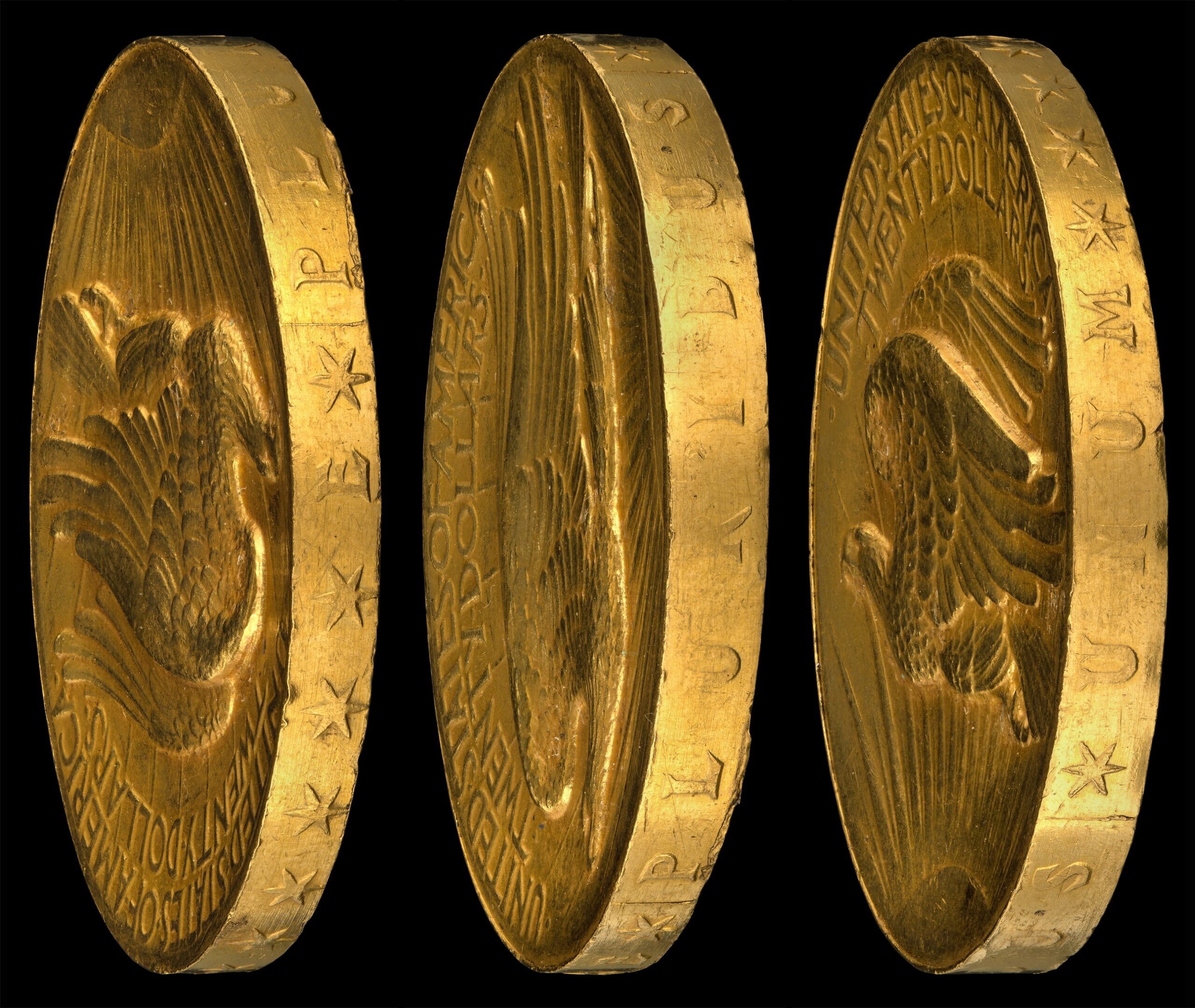
None of this changes the fundamentals: rarity, condition and documented history decide what a coin is worth, exactly as they did when Eric Newman’s NGC-graded collection realised more than $23 million at a single Heritage sale, or when a single 1927-D Saint-Gaudens Double Eagle brought $3.84 million in 2025. What has changed is the strength of demand behind those fundamentals. With Heritage and Stack’s Bowers both posting record years running into the hundreds of millions of dollars, and the top five PCGS-graded coins sold at auction in 2025 alone totalling $13.56 million, nearly double the year before, sellers who do the groundwork, resist the urge to clean or rush, and choose the right channel for what they hold are selling into one of the strongest markets in years.