



Old quarters worth money turn up far more often than most people realise, usually mixed in with ordinary change from a till, a car park machine, or a jar on top of the fridge. The Washington quarter has been in continuous production since 1932, when it was struck to mark the bicentenary of George Washington’s birth, and in the near-century since then a handful of dates, errors, and metal changes have quietly turned some 25-cent coins into something worth holding onto.
The vast majority of quarters in circulation are exactly what they appear to be: face value, nothing more. What separates a genuine find from a jar of loose change is provenance and rarity rather than age alone: a coin struck from 90% silver before 1965, a die that slipped and left an extra mark behind, or a year when so few quarters were made that survivors are scarce even decades later.
None of the coins below require a lucky discovery of a unique, million-pound rarity. They are the sort of thing that genuinely can still turn up in a handful of change, an inherited coin jar, or a childhood collection tucked in a drawer. Here is what is actually worth checking for.
Discover all in our:
Old quarters worth money: check your change before you spend it
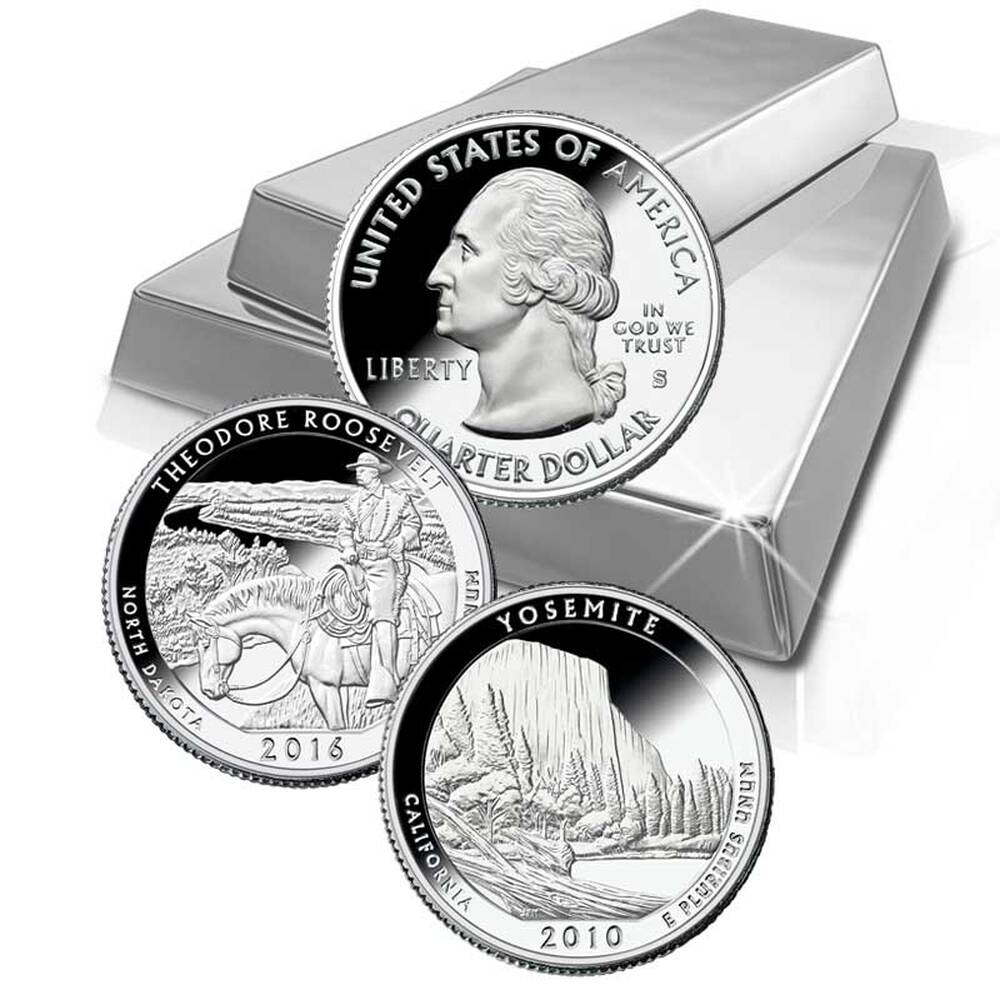
Silver quarters: the easiest genuine find
Every US quarter dated 1964 or earlier was struck from 90% silver, 10% copper, rather than the copper-nickel clad mix used since 1965. Heritage Auctions’ own reference guide for collectors notes that circulated examples from this period trade for roughly the value of the silver they contain, rather than face value, because the metal alone is worth many times 25 cents. With silver trading at around $58 a troy ounce in late July 2026, a single silver quarter’s melt value works out at roughly £7.85, using the July 2026 exchange rate of about $1.34 to the pound, considerably more than the 25p it will buy at face value. These coins are still occasionally spent by people who do not realise what they are holding, which makes them the most realistic “found in change” candidate on this list.
Credit: pscoins
Error quarters: when the mint gets it wrong
In February 2005, Heritage Auctions flagged a genuine minting oddity that had been circulating for months before anyone noticed: some 2004-D Wisconsin state quarters carry what looks like an extra leaf on the ear of corn on the reverse, sitting either low or high against the husk. Heritage’s own write-up recorded that each scarce variety was already commanding three-figure retail prices within a year of discovery, and auction records for coins in the popular MS65 grade have carried wholesale reference bids of around £131 for the “Extra Leaf High” variety and £93 for “Extra Leaf Low”. Both varieties were first spotted in ordinary pocket change around Tucson, Arizona, which is exactly the kind of accidental discovery collectors hope to repeat.
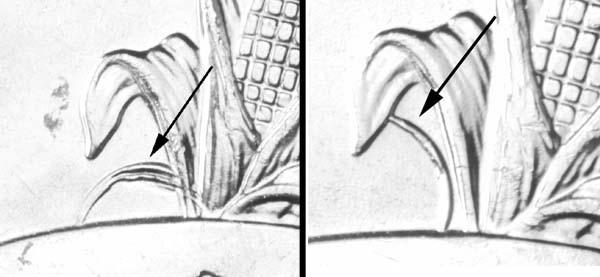
Credit: Snopes
Key dates from old collections: 1932-D and 1932-S
The first year of the Washington quarter also produced its two scarcest dates. The Denver and San Francisco mints struck only 436,800 and 408,000 quarters respectively in 1932, against 5.4 million from Philadelphia, because collecting quarters was not yet a popular hobby and the low mintages went largely unnoticed at the time. According to a valuation quoted on Heritage Auctions’ own site, a 1932-D in mid-range Mint State condition (MS60) was valued at around £540, rising to roughly £14,300 in a true Gem MS65 grade, while the 1932-S ran from about £270 to £4,160 across the same range. Heritage notes that most survivors were already pulled from circulation by 1960, so a genuine find today is far more likely to turn up in an inherited jar of old coins or a forgotten childhood collection than in a modern till.
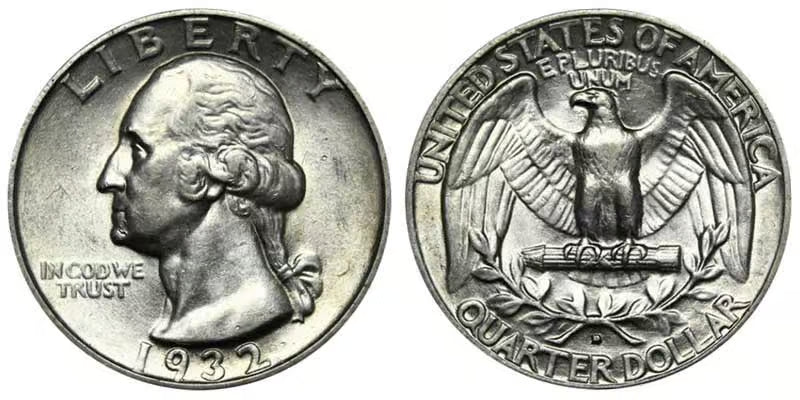
Credit: Bullion Exchanges
Everyday errors worth a second look
Beyond named varieties, the ordinary minting process still throws up smaller errors that can affect any date, including quarters. An off-centre strike, where the coin blank was not properly seated in the press, typically retails for £0.75 to £7.45 depending on how far off-centre the strike sits and whether the full date is visible. A more subtle error is an unplated clad coin, where the nickel layer never made it onto the outer surface, leaving the quarter looking distinctly copper-toned rather than silvery; these typically fetch £3.75 to £15. Neither error requires any specialist knowledge to spot: just a slightly closer look at everyday change than most people bother to give it.
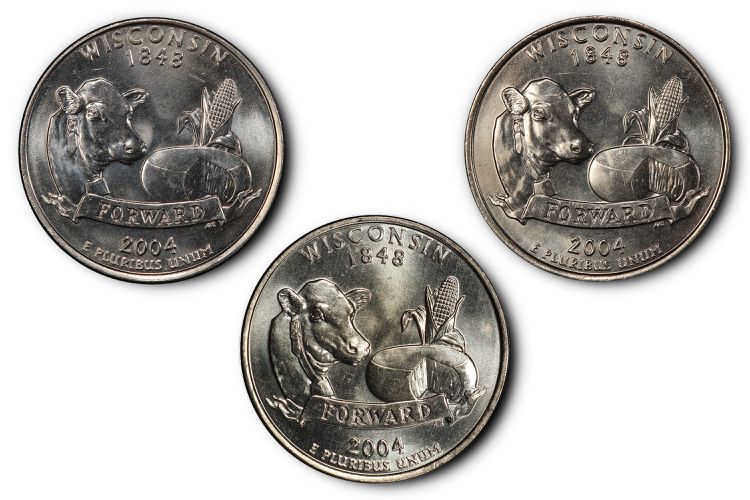
Credit: Heritage Auctions
What connects all of these coins is that none of them needed to be rare from the start. A silver quarter was ordinary currency until the metal itself became worth more than the coin’s face value. A Wisconsin quarter was meant to look exactly like millions of others until a flawed die slipped an extra mark into the design. Even the 1932 key dates were simply a quiet mint that nobody paid much attention to at the time. Value, in other words, tends to arrive later and by accident, which is precisely why old change is still worth a look.
For anyone who wants to start checking, a magnifying glass, a decent list of dates and varieties, and a bit of patience go a long way. Look at the date first, the mint mark second, and the fine detail of the design last. Resist the urge to clean anything found, since cleaning a coin destroys the original surface that collectors and grading services value most.