



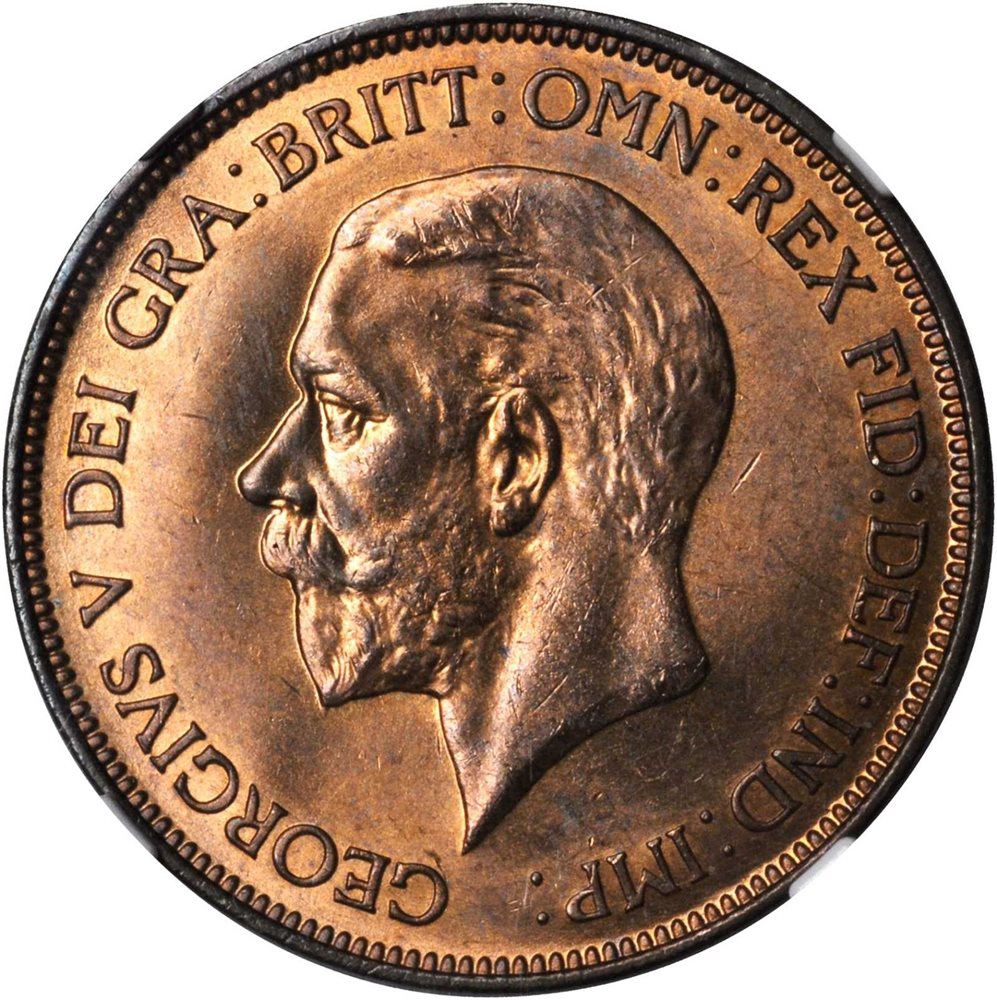
British pennies can be worth a fortune, and serious collectors have been on the hunt for the rarest ones for generations. Our coinage evolved with each new monarch, through economic ups and downs and constant changes in how coins were made, and along the way some true rarities slipped into circulation. The pennies that really fetch money today usually have something special—a scarce mint date, a production error, or an unusual design feature. From Edward VII right through to George VI’s post-war years, a select few pennies stand apart from the rest.
The pennies in your pocket today bear little resemblance to the old copper coins that collectors actually want. Most 20th century pennies are still common, but find the right date, mintmark or production mistake and that old copper coin could be worth far more than its face value. The key is knowing what to look for and spotting those small but crucial differences that turn an ordinary coin into a rare one.
The word is spreading about which British pennies hold real value, and more collectors than ever are now searching for the scarcer dates from George V and George VI’s reigns. People are discovering hidden gems in old jars, inherited collections, and even their everyday change. These are ten British pennies that you might genuinely stumble across in the wild.
Discover all in our:
British pennies worth money: rare dates and errors to look for
1. 1902 Penny Low Tide (Verified auction record: £115)
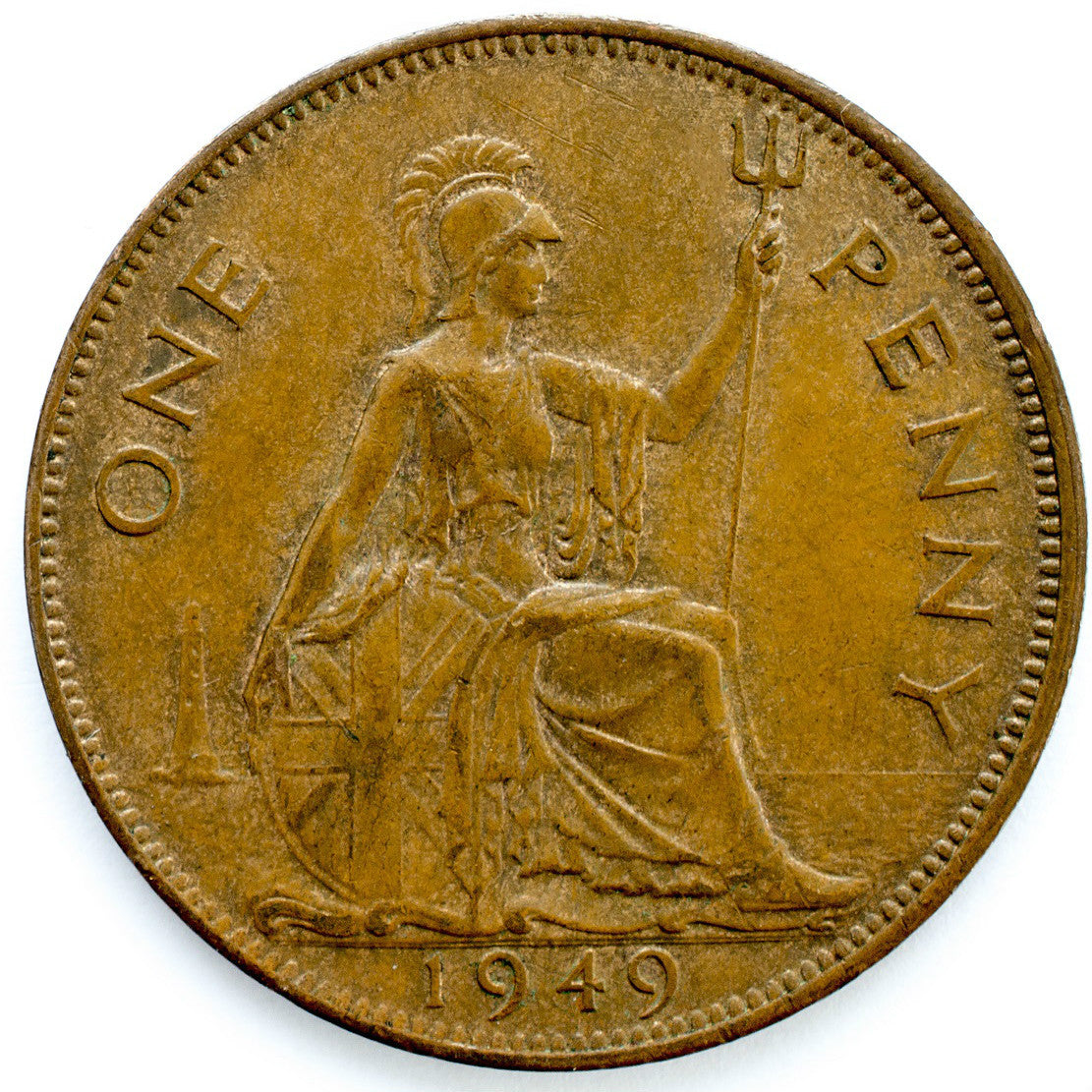
This Edward VII penny has the low tide variety, where Britannia stands with noticeably less water around her than on the standard coins. The difference comes from die polishing at the Royal Mint, creating this scarcer version. A PCGS-certified MS64BN example went for $144 at Stacks Bowers, roughly £115 at the time. The coin still shows sharp detail on both the king’s portrait and the Britannia reverse.
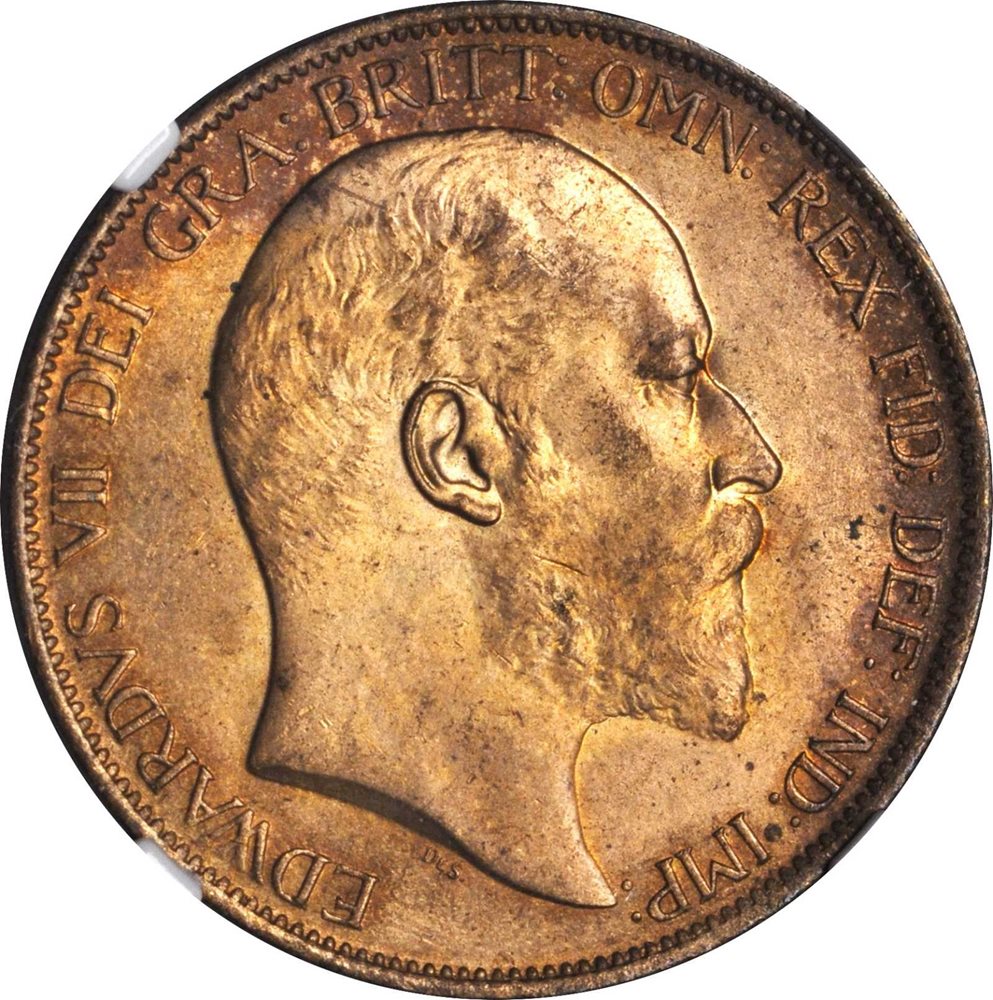
2. 1912-H Penny Heaton Mint (Verified auction record: £230)
The H mintmark on the 1912 penny tells you it came from the Heaton Mint in Birmingham, one of the private companies that helped the Royal Mint during busy periods. With just 16.8 million struck, these are harder to find than the London-minted versions. A Stacks Bowers auction saw an MS66RB example sell for $288 (about £230), and you will find the H to the left of the date on the back.
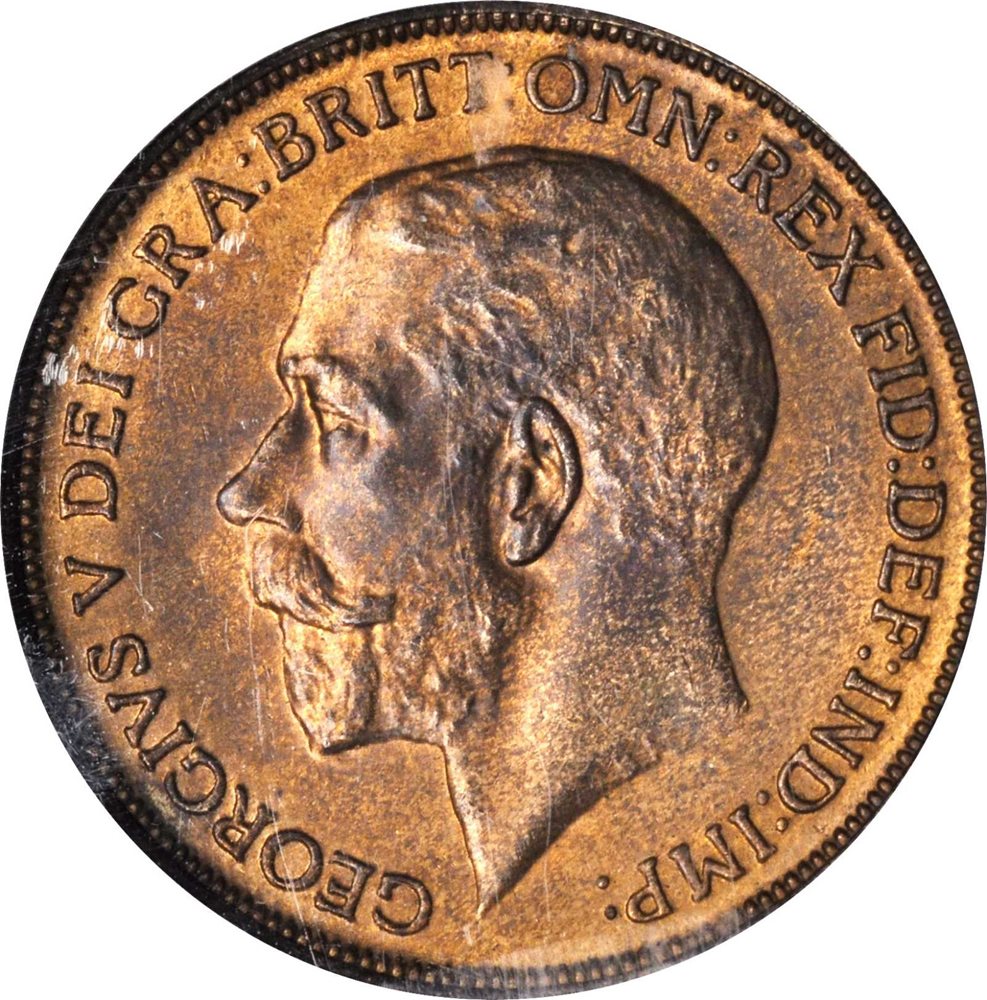
3. 1919-H Penny Heaton Mint (Verified auction record: £384)
Another Heaton product, the 1919-H penny commands strong prices in top condition. An NGC MS63BN coin sold for $480 at Heritage Auctions back in April 2018, which works out to roughly £384. Look for the small H in the exergue below the date. The Royal Mint farmed out production to meet demand that year, and only 4.5 million of these 1919 pennies were made.
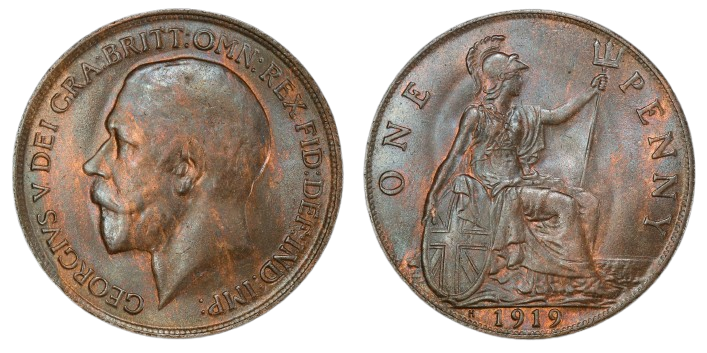
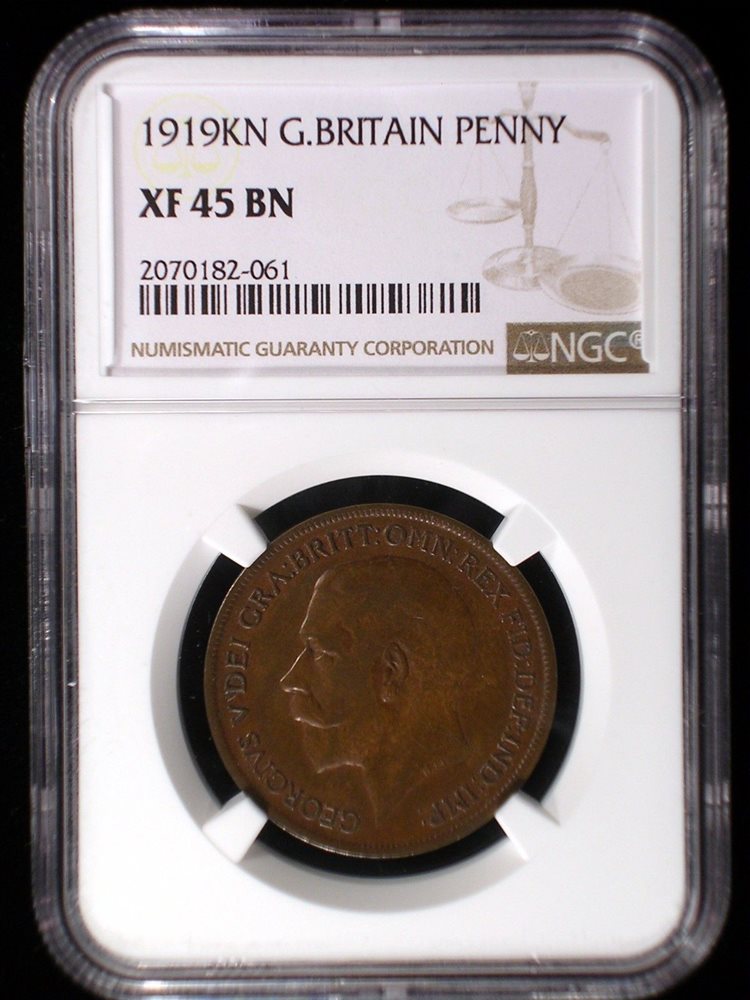
4. 1919-KN Penny Kings Norton Mint (Verified auction record: £126)
The 1919-KN is the rarest of the outsourced pennies, carrying the KN mintmark for Kings Norton Metal Company, another private firm that pitched in. An NGC XF45BN coin went for $157.50 (about £126). Only a tiny fraction of George V pennies have this mark, which appears in the same spot as the H on Heaton coins, making KN examples especially sought after.
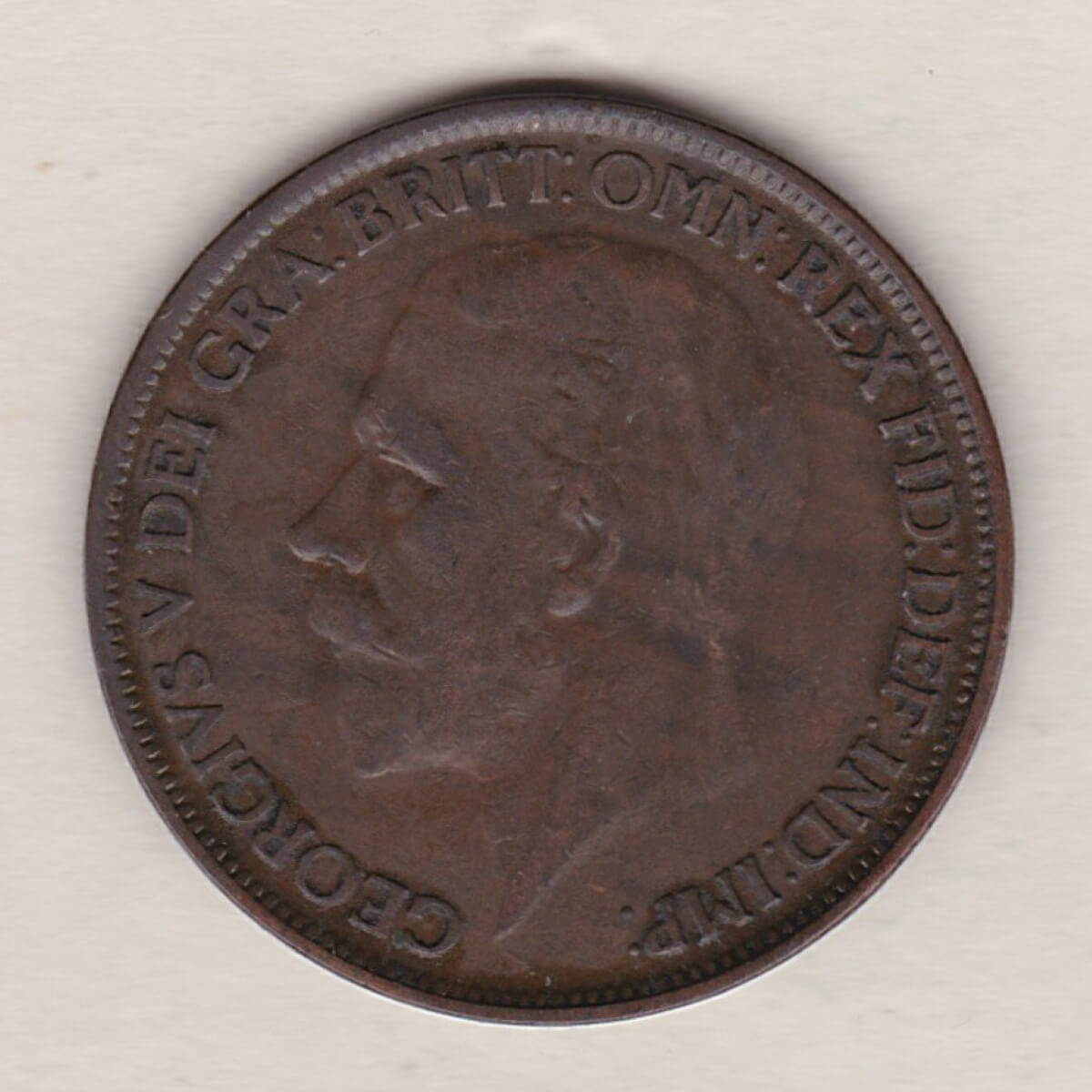
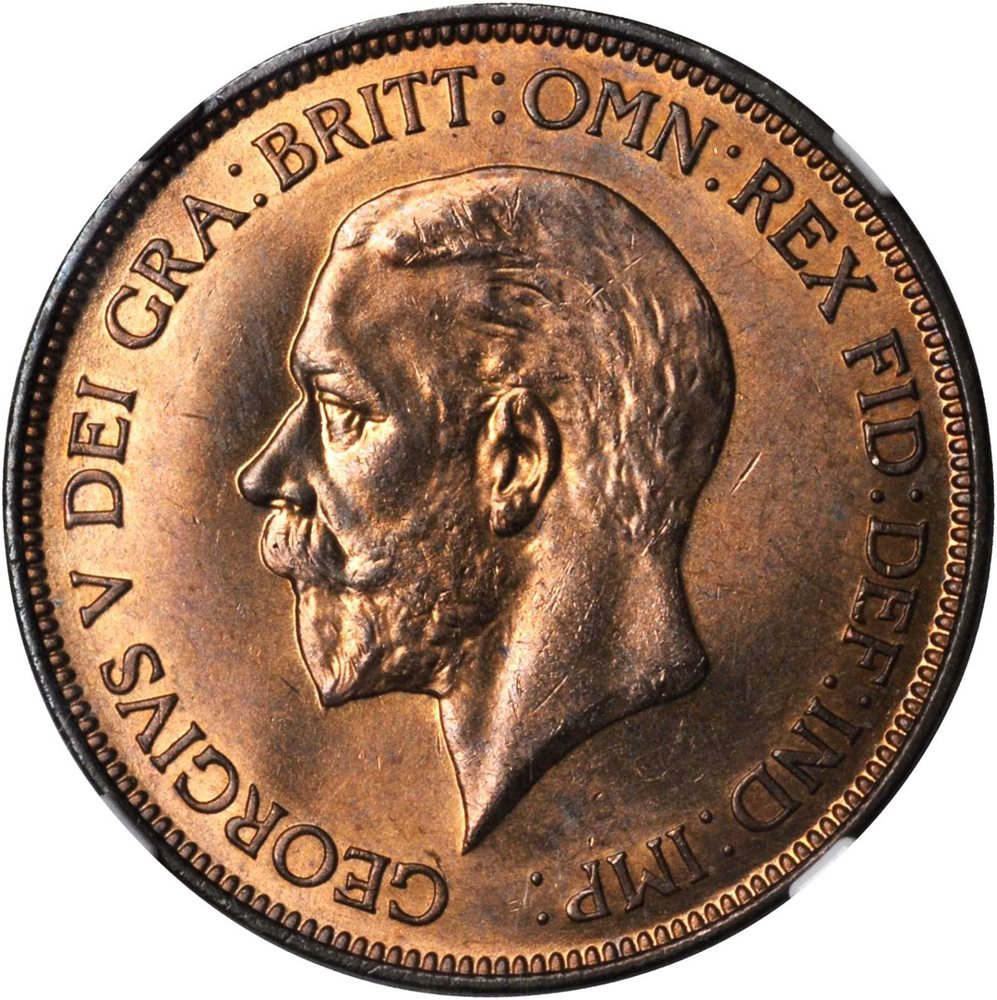
5. 1926 Modified Effigy Penny (Verified auction record: £144)
The 1926 Modified Effigy introduced a subtle but significant tweak to George V’s portrait. The Mint adjusted the spacing between BRITT and OMN in the legend and moved the engraver’s initials. A PCGS MS65BN example brought $180 at Heritage Auctions in August 2021 (about £144). The change fixed ghosting issues on the reverse caused by the original high-relief design, and you can spot the difference under a magnifying glass.
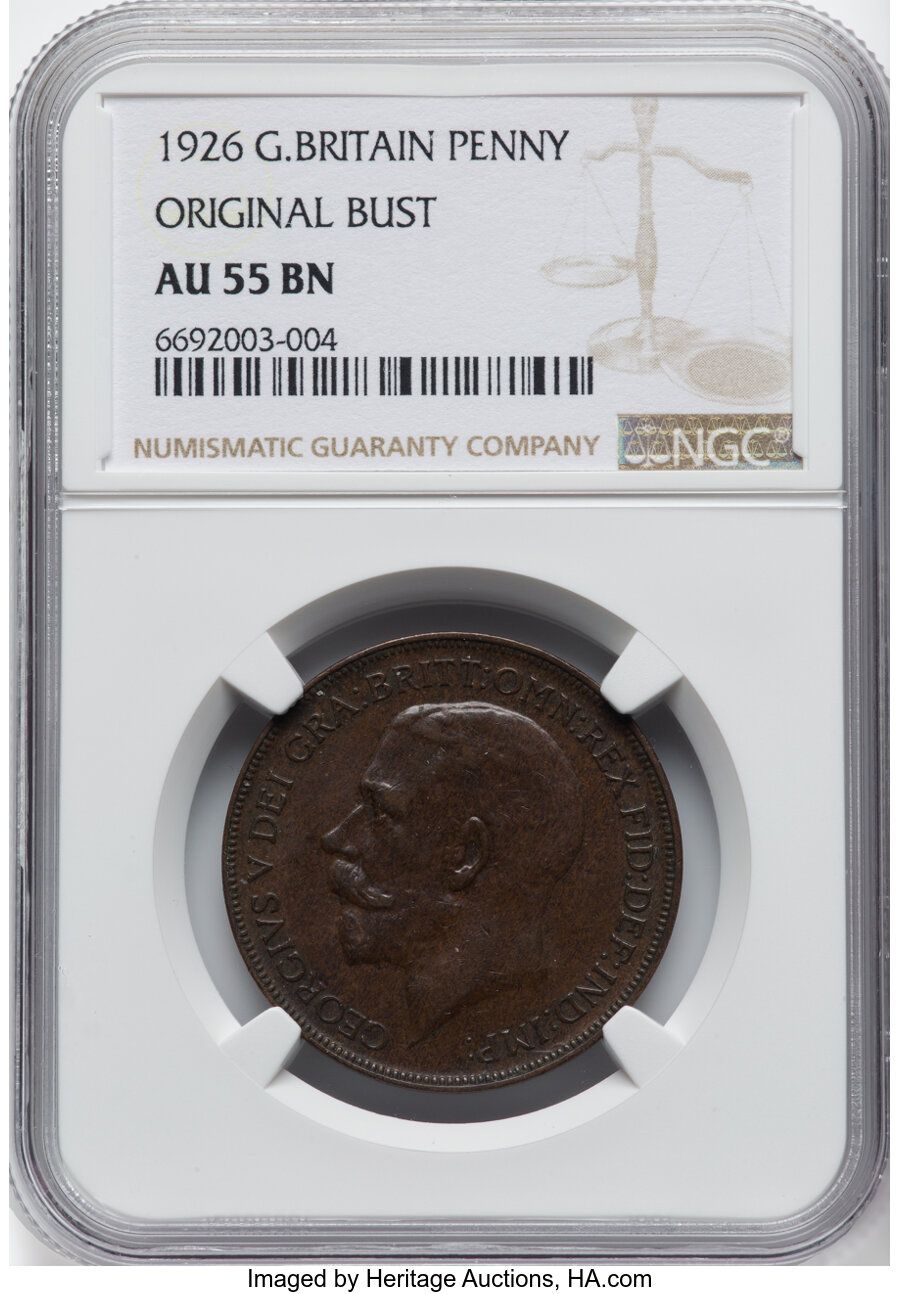
6. 1926 Original Effigy Penny (Verified auction record: £144)
Before the tweak, the Mint produced pennies with George V’s original portrait. A Heritage sale saw an MS65BN example go for $180 (about £144). These originals have wider legend spacing and the engraver’s initials in a different spot. They are more common than the Modified Effigy, but high-grade pieces still sell well. The design ran from 1911 until the modification appeared partway through 1926.
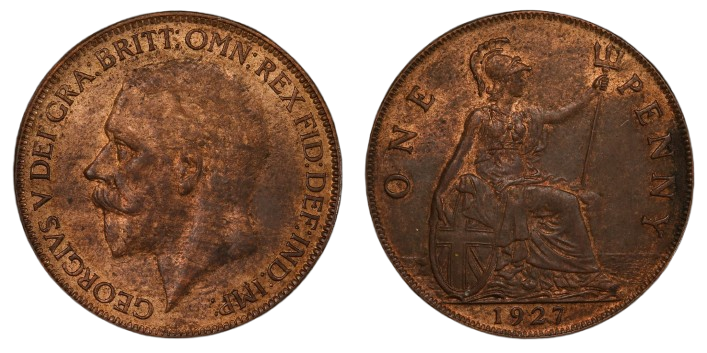
7. 1927 Penny (Verified auction record: £10)
A standard George V issue from his later years, the 1927 penny is not rare in circulated condition. However, uncirculated pieces with red-brown surfaces can still bring modest sums. A PCGS MS63RB example sold for $12.50 (about £10). The Mint produced plenty, but very few survived in pristine condition. Collectors often use these as type coins for the late George V period.
8. 1936 Penny (Verified auction record: £125)
1936 was George V’s final year, making this the last pre-decimal bronze penny before his death in January 1936. A Stacks Bowers auction saw an MS66RD example fetch $156 (about £125). Edward VIII then took the throne but abdicated before any pennies with his portrait entered circulation, which adds to the 1936’s appeal as the end of the George V series.
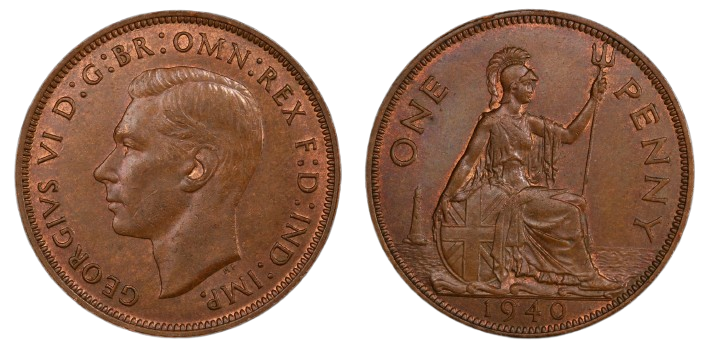
9. 1940 Penny George VI (Verified auction record: £88)
The 1940 penny was among George VI’s first issues, struck during the early years of World War Two. A PCGS MS64BN example sold for $109.99 (about £88). Wartime production brought real challenges, with the Mint operating at reduced capacity, yet quality stayed remarkably consistent. The 1940 date kicks off the main wartime series.
10. 1951 Penny George VI (Verified auction record: £237)
The 1951 penny comes from one of George VI’s final years, just before Elizabeth II’s coins appeared. A PCGS MS65 Red example was offered at $299 (about £237). With a mintage of just 120,000 for these proof-like business strikes, the coin is far rarer than its face value suggests. Collectors chasing complete George VI sets particularly prize the 1951 date.