



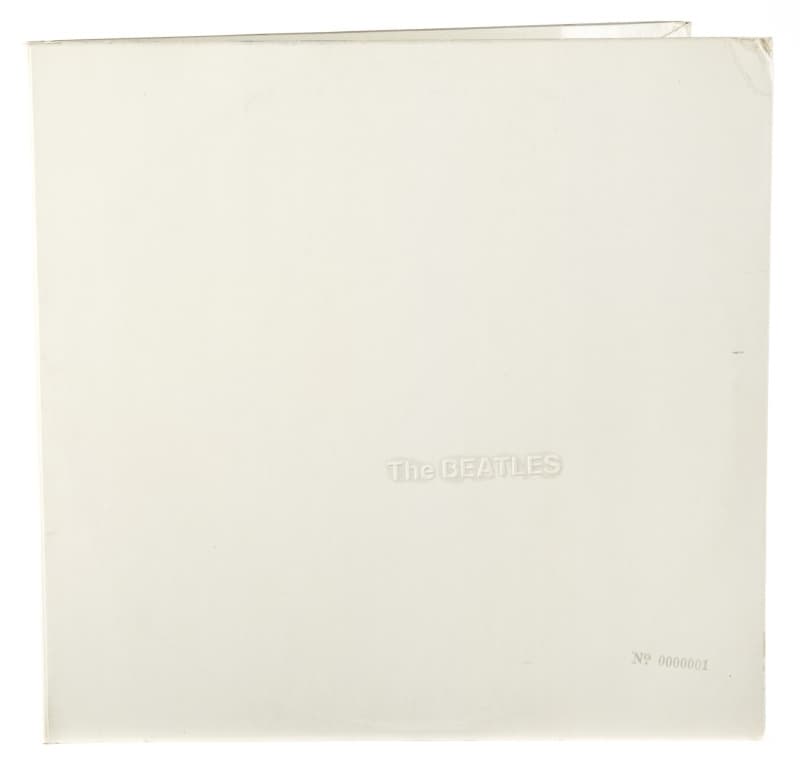
Knowing how to identify a valuable Beatles White Album vinyl LP starts with a single detail: the serial number stamped on the cover.
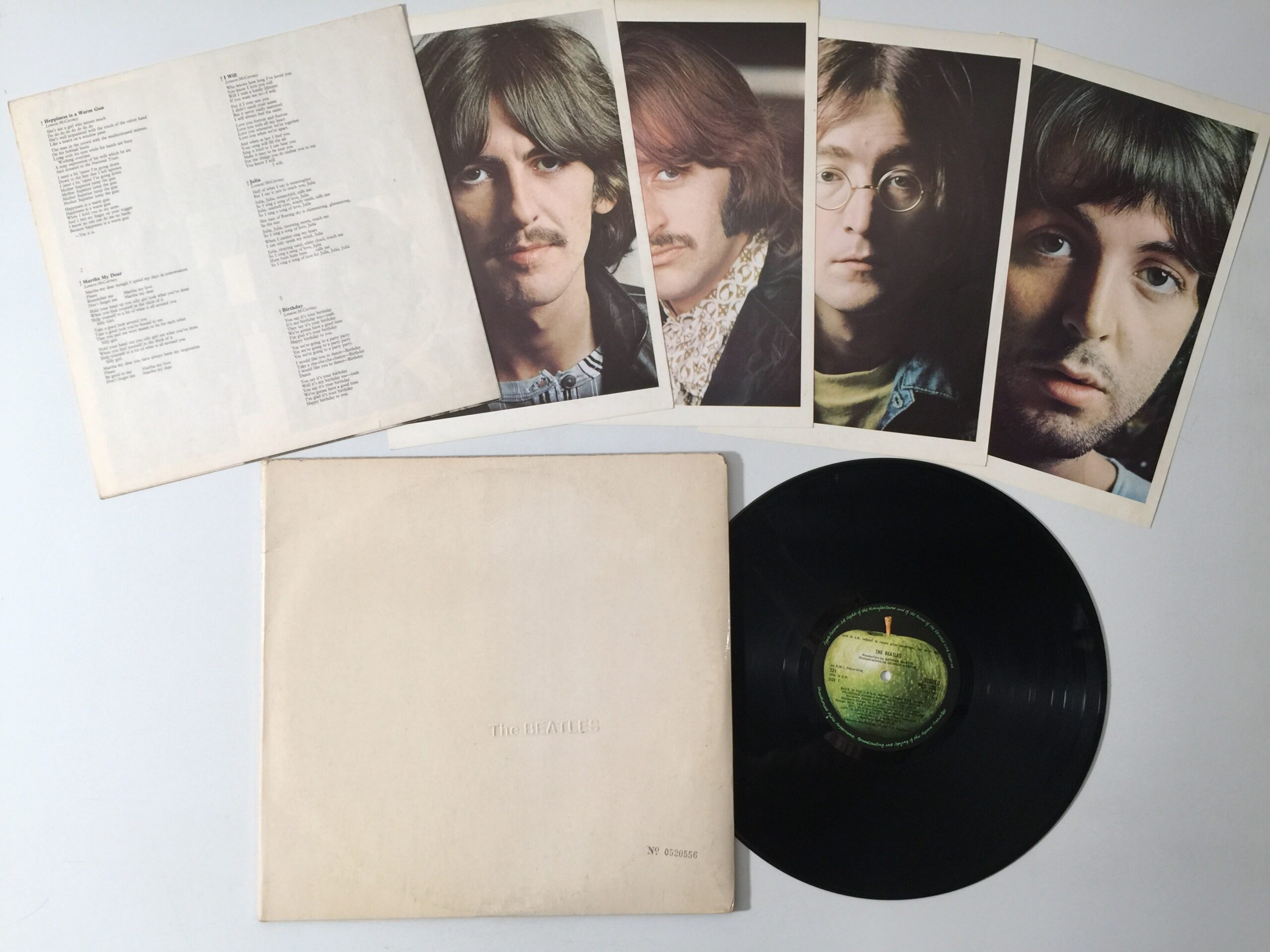
When The Beatles released their self-titled double album in November 1968, every early copy of the plain white sleeve carried its own embossed serial number, with the band’s name in raised lettering. Later pressings dropped the numbering altogether, which is precisely why the earliest numbered examples have become some of the most closely studied records in collecting.
Most White Albums found in attics and record fairs are later pressings with no number at all, and they trade for modest sums. The copies that command serious money are a narrow group: low serial numbers, first pressings with the correct labels and matrix stampers, factory misprints, and examples signed or owned by the band themselves. The difference between a £100 record and a £500,000 one can come down to a few digits pressed into cardboard, so it pays to know exactly what to look for.
The auction results below show the full spread of the market, from the most expensive record ever sold at auction to honest first pressings that remain within reach of an ordinary collector. Every price here has been verified against the records of established auction houses, converted to British pounds at the exchange rate applicable at the time of sale. Where a lot carried an estimate rather than a realised price, we say so.
Discover all in our:
How to identify a valuable Beatles White Album vinyl LP: 10 auction results that show what to look for
1. Ringo Starr’s personal copy, No. 0000001 (Verified auction record: £520,000)
The first lesson in White Album identification is that the number is everything, and this copy carries the lowest one of all. Ringo Starr’s personal No. 0000001 sold through the Julien’s Live auction on 5 December 2015, part of a sale of instruments and items from his and wife Barbara Bach’s estate, for $790,000 (about £520,000) against a pre-auction estimate of $40,000 to $60,000. Rolling Stone reported the price as a world record. Because the copies were numbered in sequence, whoever bought Starr’s copy would have the first printing produced of the album. As Starr told the magazine, “We used to play the vinyl in those days. We didn’t think, ‘We’ll keep it for 50 years and it will be in pristine condition.’ Whoever gets it, it will have my fingerprints on it.”
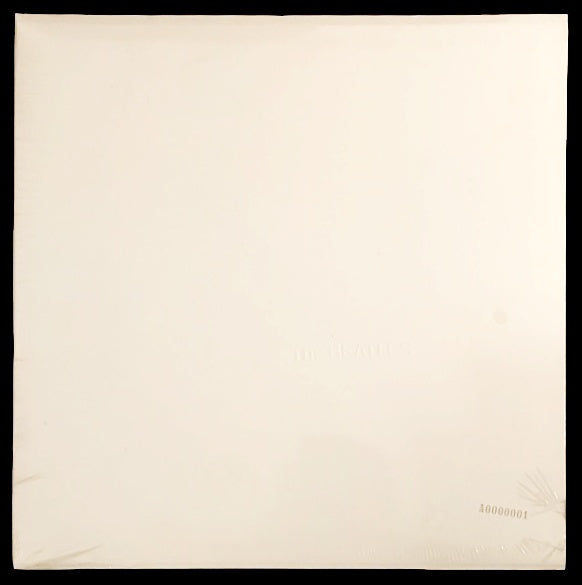
2. The only factory sealed US No. A0000001 presentation copy (Estimated market value: £560,000 to £750,000)
Not exactly a vinyl, but the story is worth it. Gotta Have Rock and Roll describes it as the only known factory-sealed No. A0000001 in existence, then explains why it is so unusual: number one White Albums are what the trade calls “Presentation Copies”, made at the Queens Litho plant for the president of Apple Records, never sold to the public, and never containing any discs. According to authenticator Perry Cox, only three of these number one covers exist, all accounted for. This one was sealed at the factory, kept by a Queens Litho employee, and sold by Cox to collector Stan Panenka in 1998. Offered in December 2021 with an estimate of $750,000 to $1,000,000 (about £560,000 to £750,000), it did not meet its reserve and went unsold. The lesson for identification is to read the listing closely: a low number does not guarantee a playable pressing.
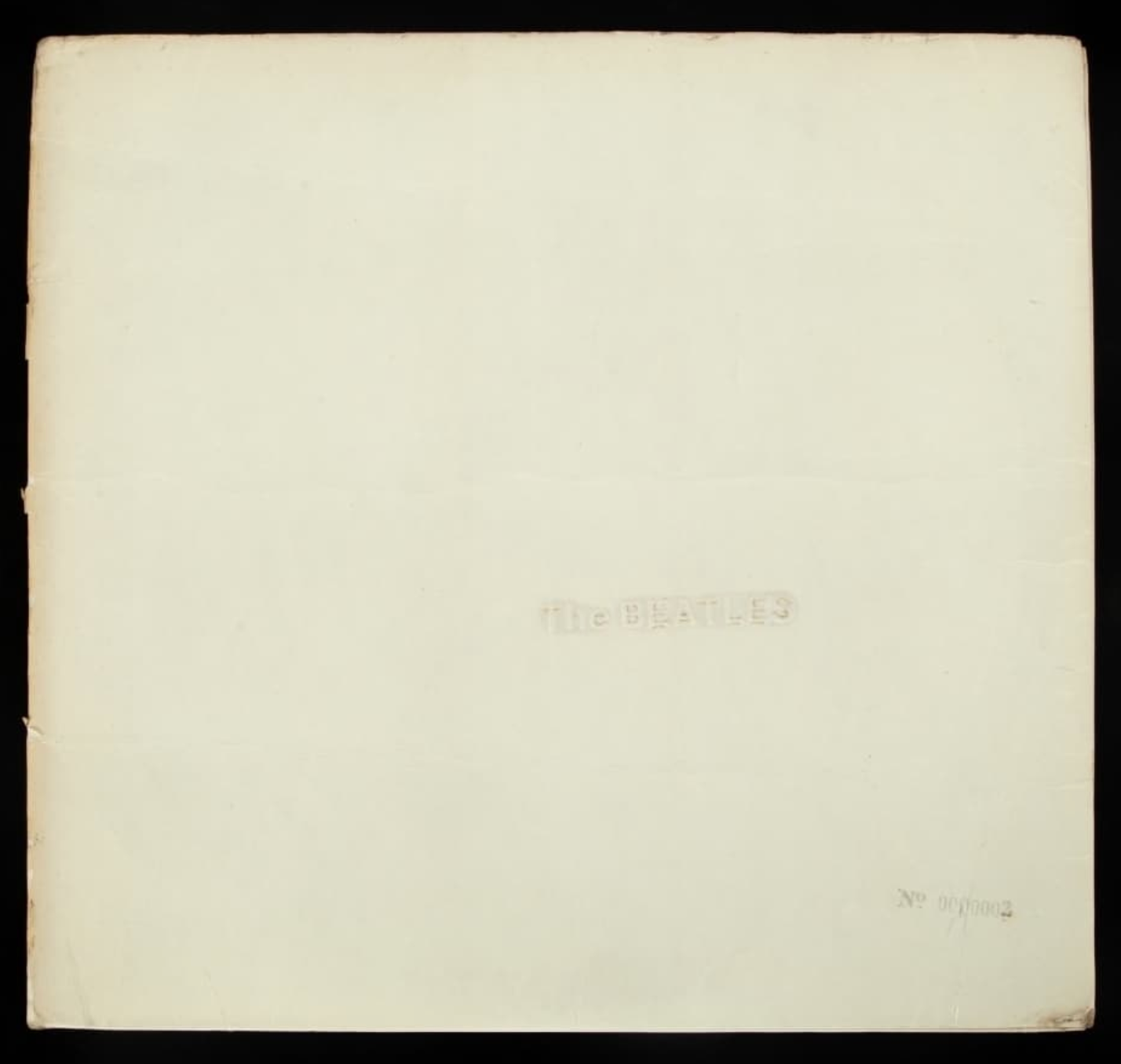
3. UK first pressing mono No. 0000002 (Verified auction record: £40,000)
The copy numbered one place behind Ringo’s shows what the very lowest numbers are worth without a Beatle’s provenance attached. Sold at a Julien’s Auctions Music Icons sale for $50,000 (about £40,000) against a $40,000 to $60,000 estimate, this UK first pressing mono copy ticks every identification box: 22 November 1968 first press green apple labels reading “Sold in UK.” without the later “An EMI Recording” text, a top-loading Garrod & Lofthouse laminated sleeve, and -1 matrix numbers on all four sides confirming discs pressed from the first masters.
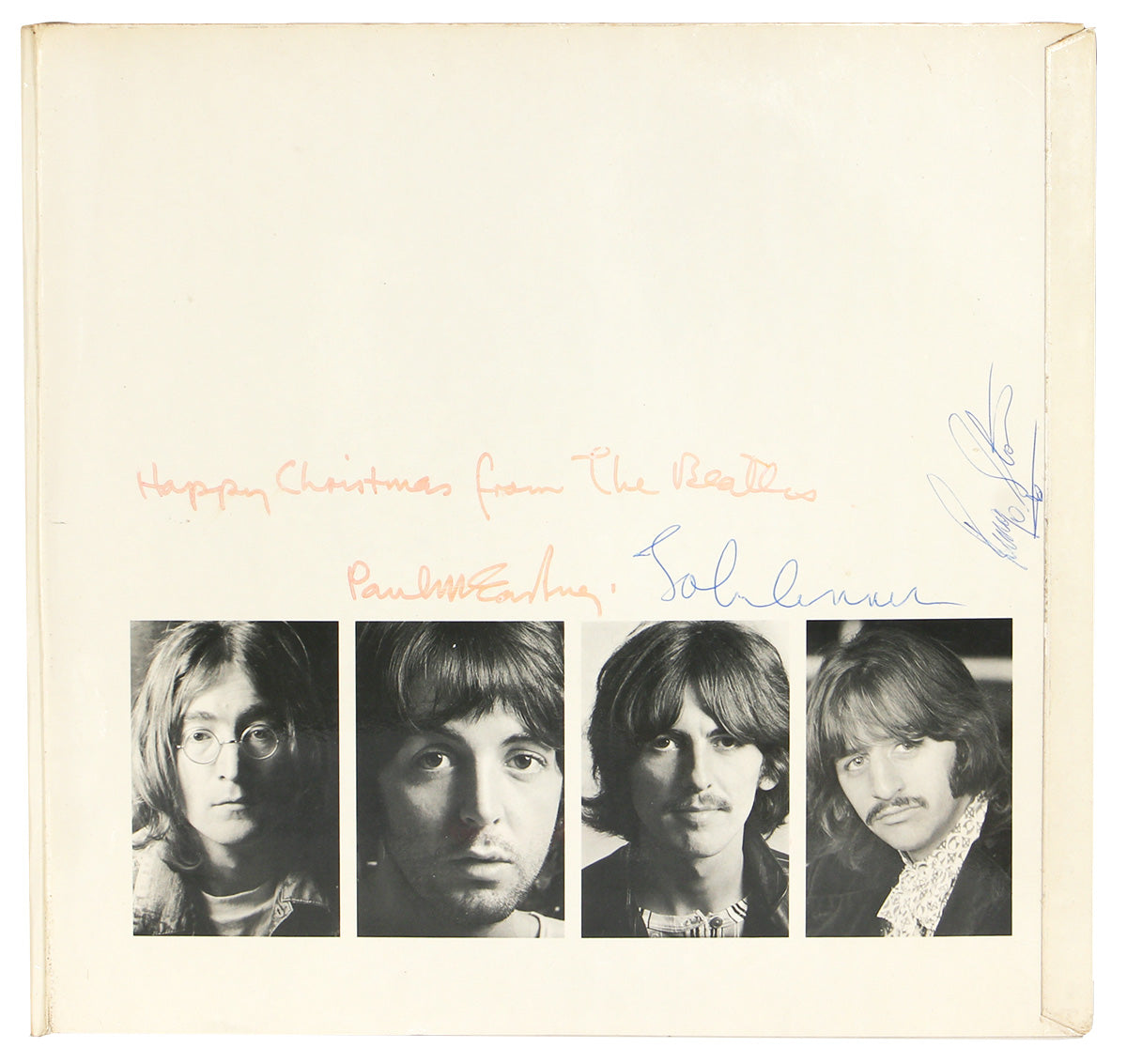
4. A White Album signed by John Lennon and Paul McCartney (Verified auction record: £30,400)
Autographs move a White Album into a different market altogether. This copy, numbered 70879, was signed by Lennon and McCartney in ballpoint pen at the Beatles’ December 1968 staff Christmas party, with McCartney adding “Happy Christmas From the Beatles” on the gatefold. It came from the collection of an Abbey Road employee and carried letters of authenticity from Beatles autograph specialists Frank Caiazzo and Roger Epperson (REAL). Gotta Have Rock and Roll sold it in July 2023 for $39,000 (about £30,400). Note the caution in the lot description: the Ringo Starr signature on the sleeve was judged to be the work of Neil Aspinall, which is why expert authentication matters as much as the signatures themselves.
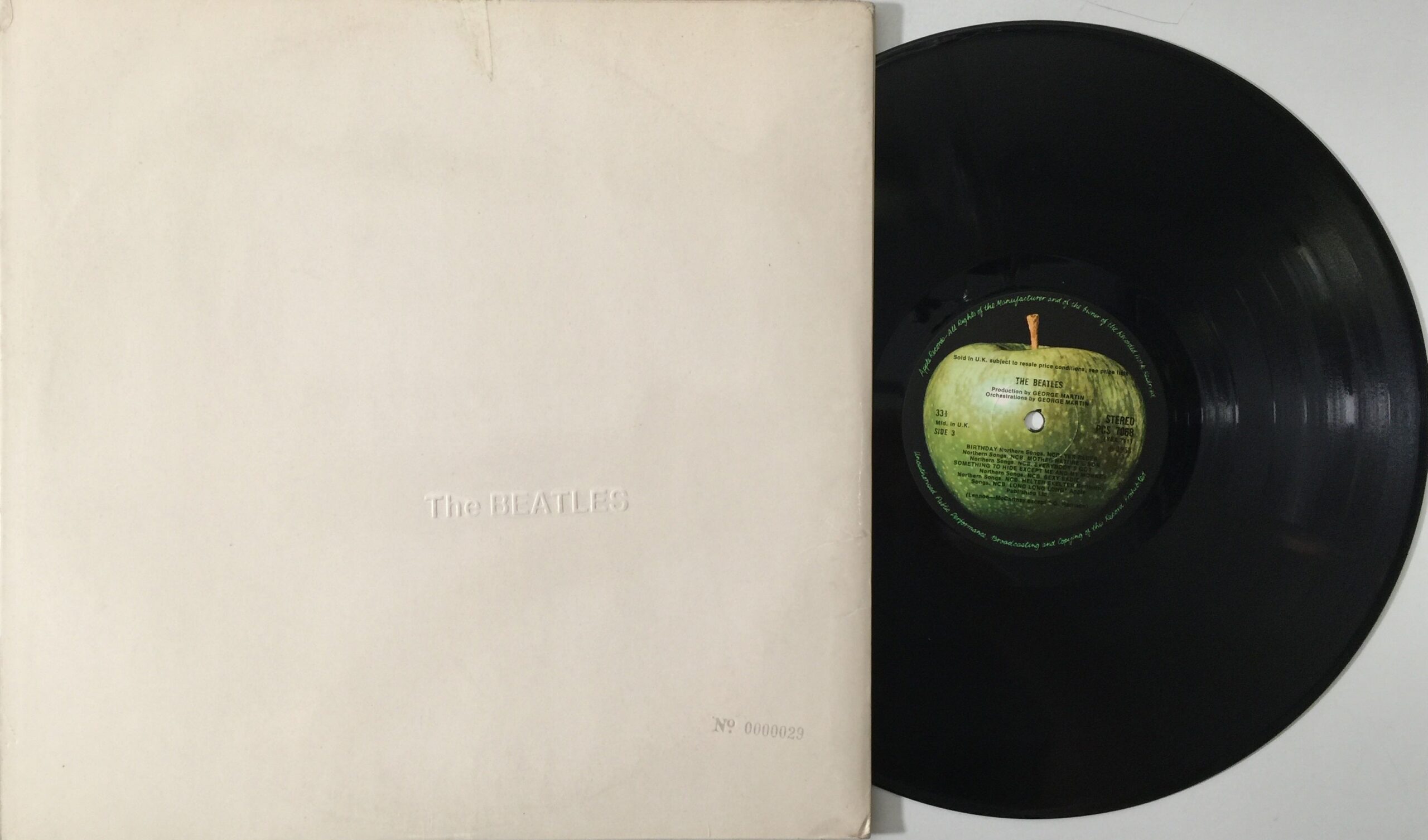
5. UK stereo No. 0000029 (Verified auction record: £5,500)
Once the number climbs past the single digits, values drop sharply but remain substantial. This UK stereo copy, numbered 0000029, sold at Omega Auctions’ dedicated Beatles Auction in October 2022 for a £5,500 hammer price. The lot description is a useful education in itself: the sleeve had been professionally restored after a split, with a small patch of chipboard grafted in, and the auctioneer disclosed every repair. The original UK stereo records carry “Sold In UK” text on the labels, no “EMI Recording” credit, and -1 matrix endings on all four sides.
6. US original pressing SWBO-101 No. 008 (Verified auction record: £3,800)
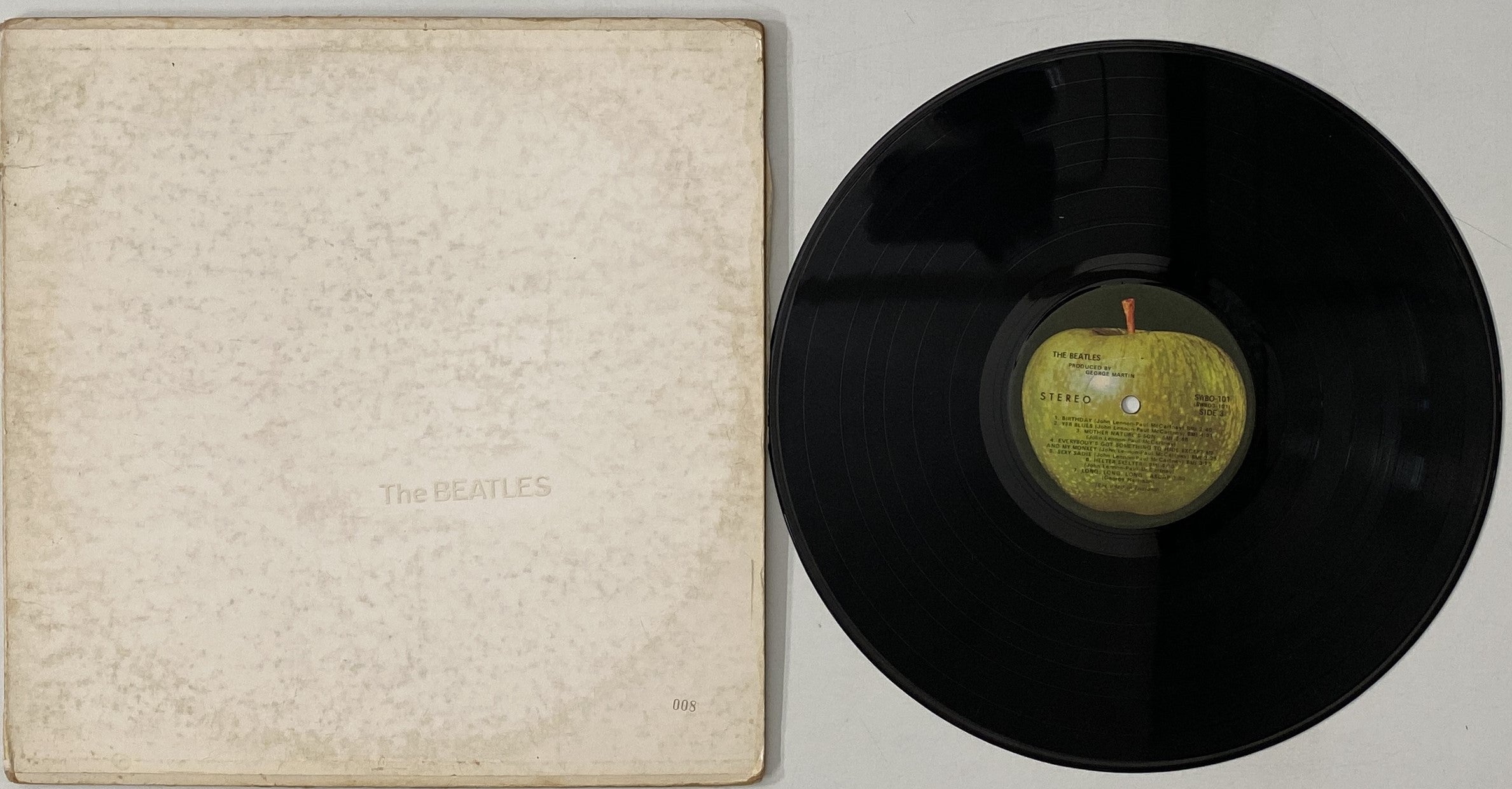
American first pressings carry the Apple catalogue number SWBO-101 and their own numbering sequence. This copy, numbered simply 008, sold at Omega Auctions in March 2024 for a £3,800 hammer price despite honest wear: seam splits on both sides of the gatefold, discolouration, and records graded VG and G+. A three-digit number on a US stock copy is rare enough that condition took second place, though a cleaner example would have brought considerably more.
7. Paul McCartney signed 1978 white vinyl pressing (Verified auction record: £2,400)
Not every valuable White Album is a 1968 original. This 1978 reissue, pressed on white vinyl and complete with its poster and portrait prints, was signed by Paul McCartney on the interior gatefold in silver marker. Julien’s Auctions sold it at the Music Icons 2016 sale for $3,200 (about £2,400), above its $1,500 to $2,500 estimate. The lesson for collectors runs both ways: a genuine McCartney signature lifts even a common reissue into four figures, but the same signature on a low-numbered first pressing would be worth many times more.
8. A UK mono copy with a questioned serial number (Verified auction record: £460)
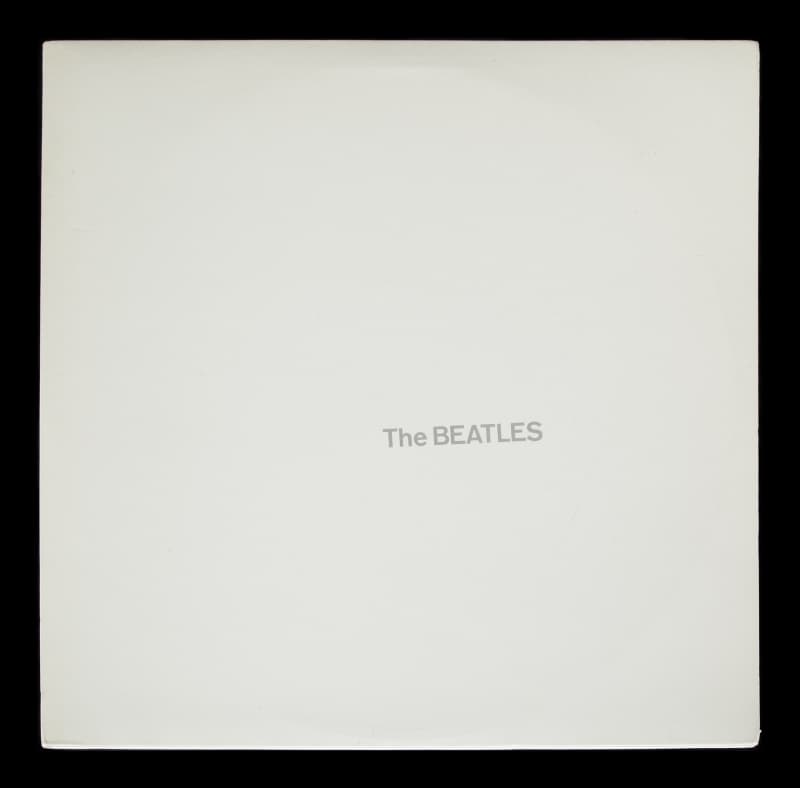
This lot from Omega Auctions’ May 2021 vinyl sale is essential reading for anyone tempted by a low number. The sleeve appeared to read 0000286, but the auctioneer suspected it may originally have been 80286, with digits altered or damaged, and said so plainly in the catalogue. Priced accordingly, the complete mono copy with -1 matrices, photos and poster made a £460 hammer price. Genuine embossed numbers sit crisply in the card; anything that looks flattened, re-pressed or inked over deserves close inspection before you bid.
9. UK mono top loader No. 0159030 (Verified auction record: £240)
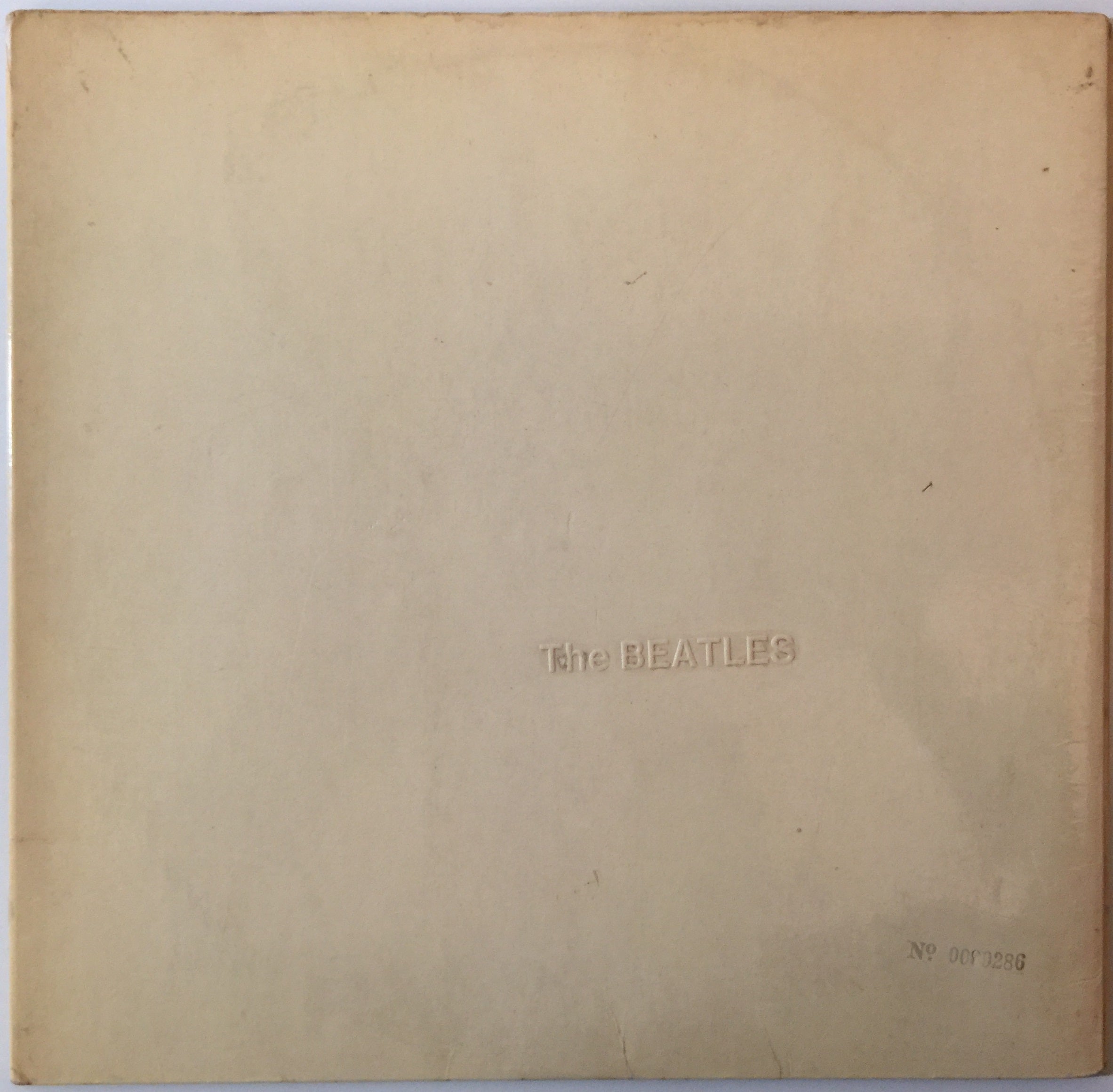
This is what an honest, ordinary first pressing looks like at auction. A clean UK mono top loader numbered 0159030, with no EMI credits on the labels, -1 matrix endings on all four sides, original photos and poster, sold at Omega Auctions in November 2021 for a £240 hammer price. All the correct first pressing markers are present; only its far higher serial number separates it from the copies higher up this list. For most collectors, this is the realistic and still satisfying entry point.
10. The ‘Rocky Racoon’ misprint stereo copy (Verified auction record: £120)
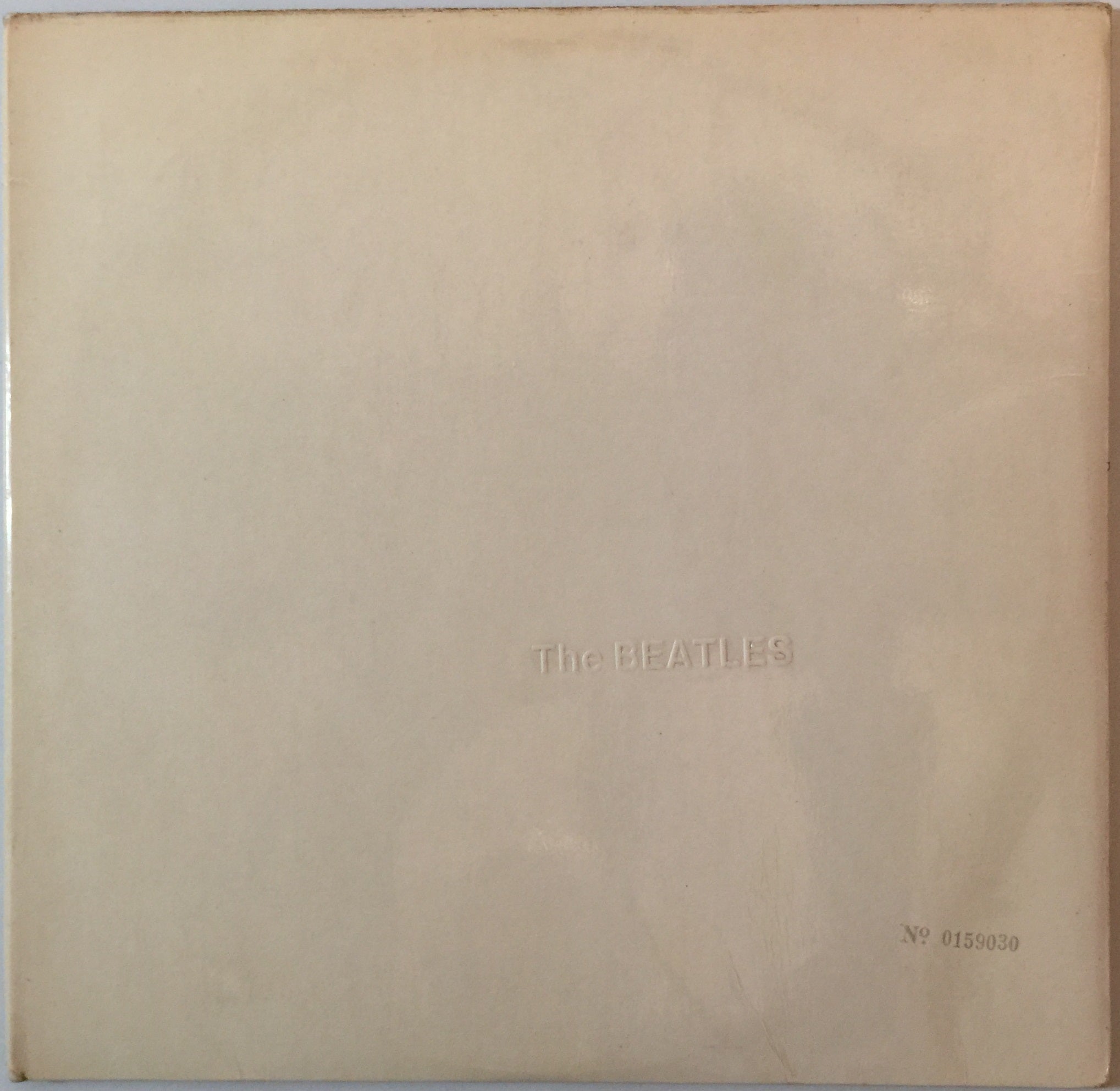
Factory errors give collectors one more detail to check. A small number of UK stereo copies left the plant with “Rocky Raccoon” misspelt as “Rocky Racoon” on the side two label. This example, numbered 0520556 and complete with inners, photos and poster, sold at Omega Auctions’ October 2022 Beatles Auction for a £120 hammer price. Misprints reward the patient browser: the premium over a standard copy is modest today, but scarce variants of famous records have a habit of appreciating as the supply of clean examples dries up.
The lasting heritage of White Album collecting
The White Album occupies an unusual position in record collecting because the band built the collectability into the object itself. The numbering turned every early sleeve into a document of its own place in the production run, and more than fifty years later that decision still sets the order of the market. Institutions and private collectors compete for the same handful of single-digit copies, while the wider pool of numbered originals gives newer collectors a genuine first pressing to hunt for at accessible prices.
Provenance and authentication decide everything at the top of this market. The gap between Ringo Starr’s £520,000 copy and a £240 top loader is not the music, which is identical, but the paper trail: who owned it, who verified it, and which auction house stood behind the sale. Buy from established houses, read condition reports closely, and treat any low serial number or signature without documentation as unproven until an expert says otherwise.