




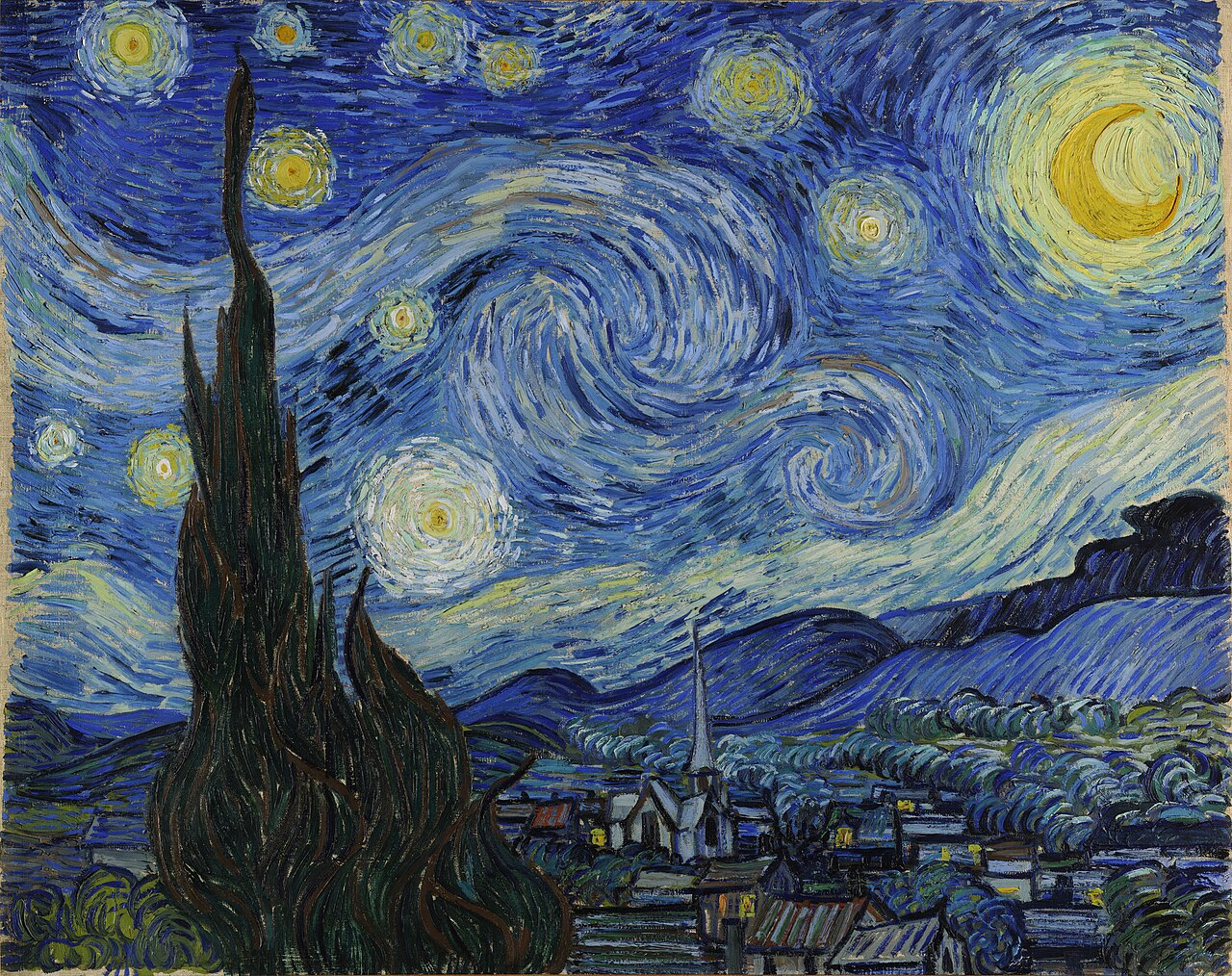
Inside the starry night, Vincent van Gogh poured his turmoil onto canvas. The result is one of the most recognisable paintings in art history: a swirling sky, a luminous moon and a dark cypress tree, painted by a man wrestling with his mind while confined to an asylum in the south of France.
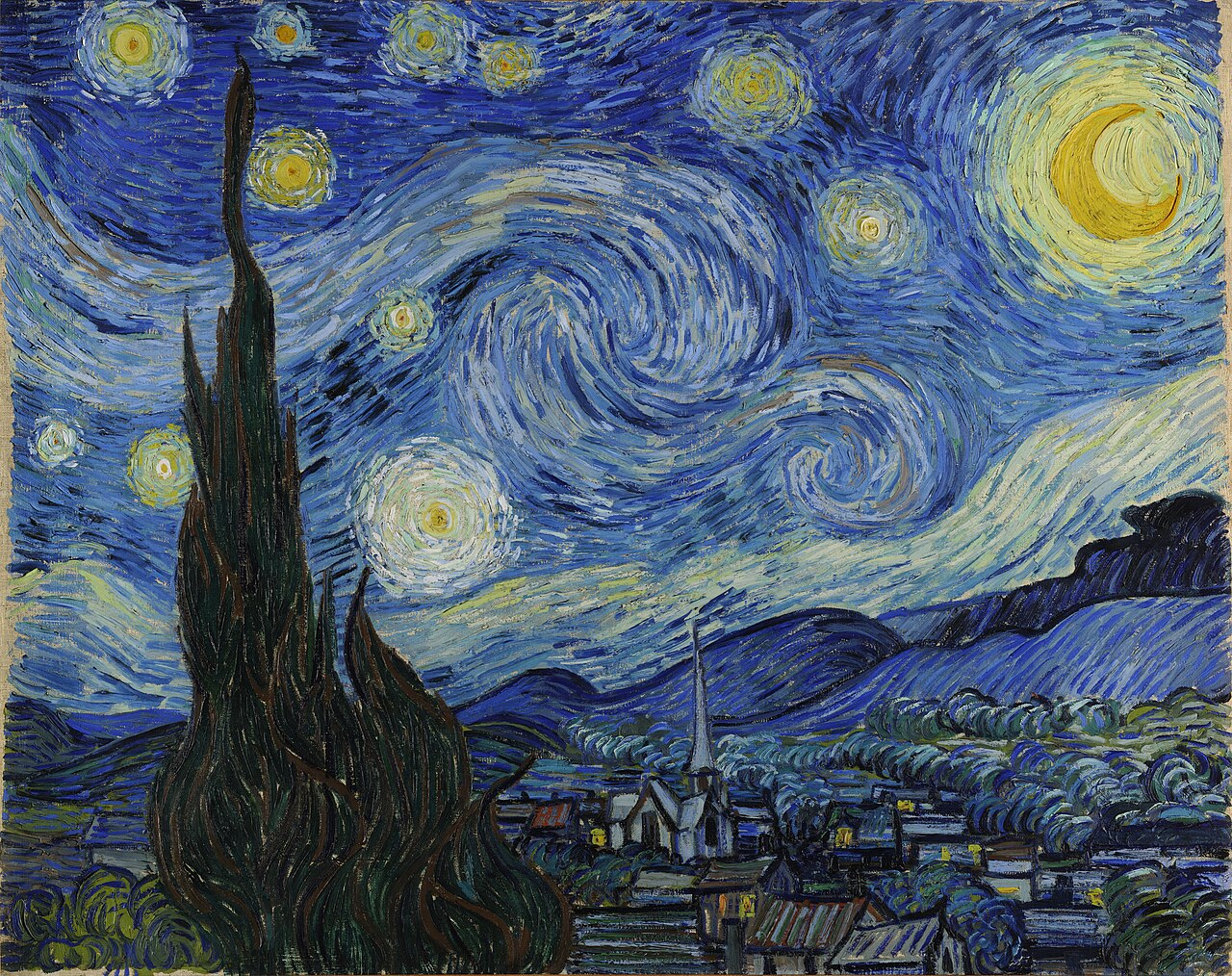
The Starry Night also documents the final, troubled years of an artist who turned personal suffering into his best-known work. He painted it in June 1889 at the Saint-Paul-de-Mausole asylum in Saint-Rémy-de-Provence, and it records both what he could see from the window and how he felt.
The interest lies in the gap between how calm the painting looks and the circumstances it came out of. Van Gogh had voluntarily institutionalised himself after a severe mental breakdown, and the canvas he produced there became one of the defining images of modern art.
Discover all in our:
Inside the starry night: the tragic story behind Vincent Van Gogh’s masterpiece
Credit: Museum of Modern Art, New York
The breakdown and the asylum
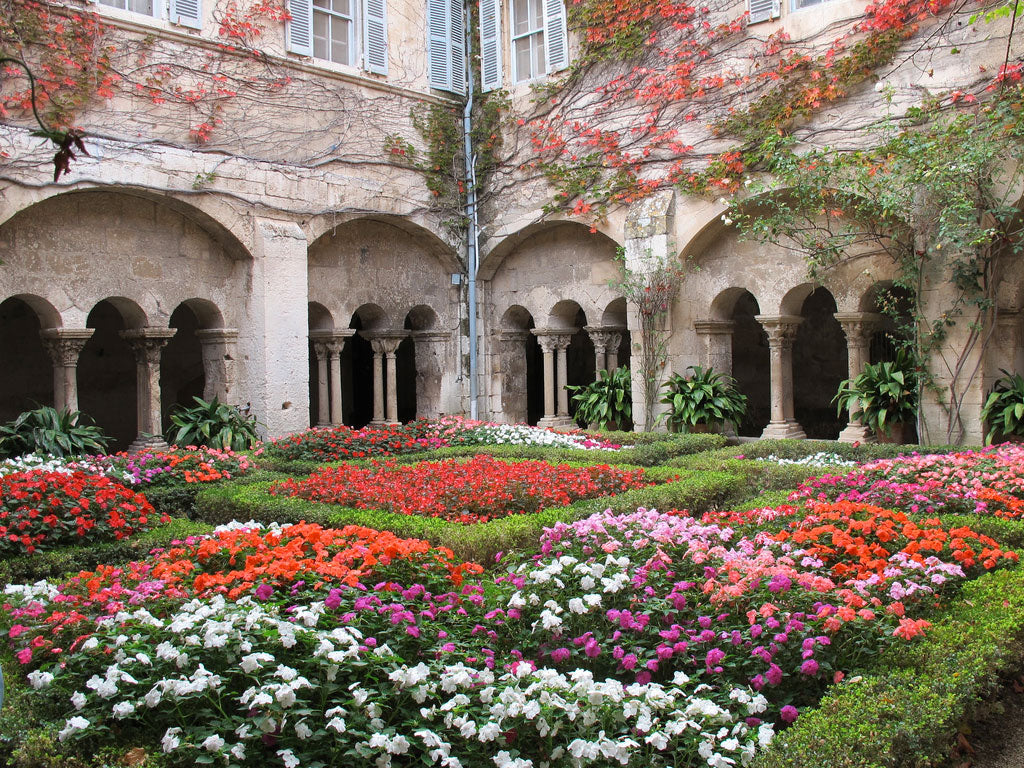
On 23 December 1888, Vincent van Gogh had a violent mental breakdown in Arles. In the confusion of that night, he cut off part of his own left ear. By May 1889 he could see he was not coping, and he voluntarily admitted himself to the Saint-Paul-de-Mausole asylum in Saint-Rémy-de-Provence.
The institution was a former monastery catering for wealthy patients. When Van Gogh arrived it was less than half full, so he was given a bedroom on the upper floor and a ground-floor studio. The asylum director emphasised rest, routine and productive occupation. For Van Gogh, painting was survival as much as occupation, and it gave the days a structure his illness had taken away.
During his year-long stay, he produced some of his most celebrated works, including Irises, Wheat Field with Cypresses and The Starry Night itself.
Credit: Wikimedia Commons
The view from memory
The Starry Night depicts the view from the east-facing window of Van Gogh’s asylum bedroom, yet it is not a straightforward representation. He was not permitted to paint in his bedroom, so he created the scene in his studio during the day, from memory, sketches and imagination.
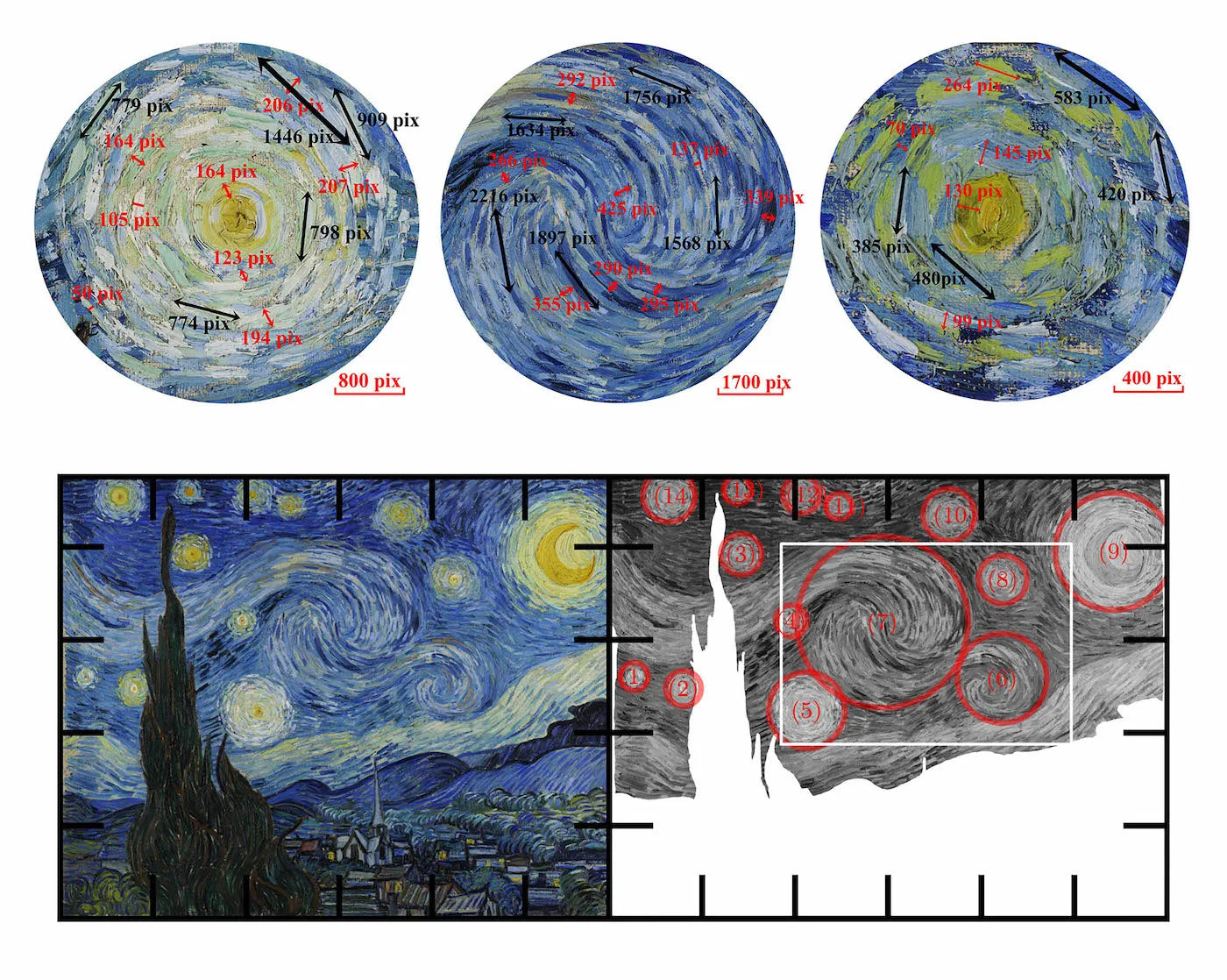
The sky dominates the composition. Van Gogh rendered the pre-dawn heavens as a swirling mass of blues and yellows, with a bright crescent moon and 11 stars. The largest is Venus, the morning star, visible in Provence at that time. The moon is stylised rather than astronomically accurate.
In the foreground, a tall dark cypress tree stretches upwards, its form exaggerated. The village below the hills is entirely imaginary, based on sketches of Saint-Rémy rather than the actual obstructed view. What unifies the composition is the sense of motion, the sky seeming to swirl while the cypress reaches towards the heavens.
Credit: Physics Of Fluid
A mind in motion
Van Gogh’s mental state when painting The Starry Night was complex. His correspondence reveals a man struggling with hallucinations, depression and periods of incapacity, yet capable of clarity and sustained productivity. The asylum routine contained that instability well enough for him to work at intensity.
In letters to his brother Theo, Vincent described the asylum as a place to recover his composure, yet the same letters reveal ongoing anxiety. He wrote of feeling empty and haunted by thoughts. Some scholars suggest he suffered from temporal lobe epilepsy, a condition that produces vivid, almost hallucinatory visual experiences of the kind that appear in his late work.
Van Gogh himself was critical of The Starry Night. In a letter to fellow artist Émile Bernard written in late November 1889, he referred to the painting as a failure. Theo was more generous, though he noted that Van Gogh’s search for style sometimes took away from the real sentiment of things.
Whatever he thought of the result, the act of painting was where he found some order.
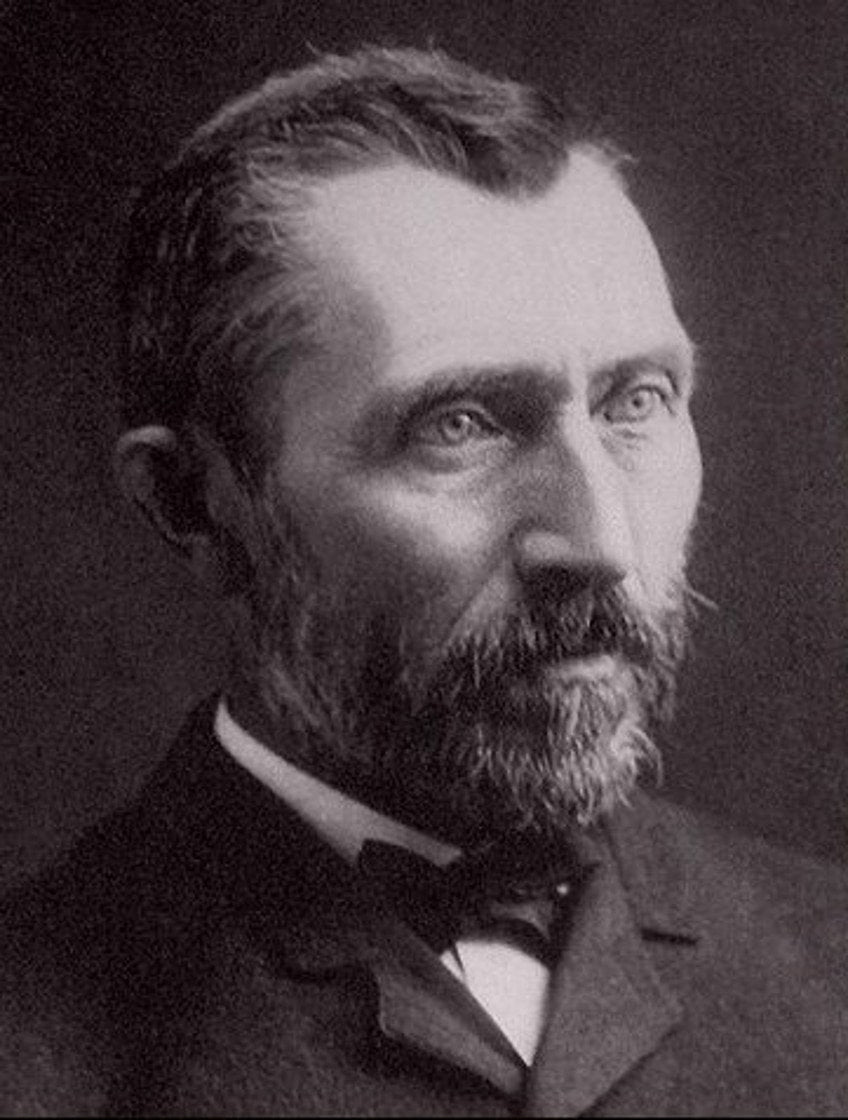
Credit: Public domain
From asylum to icon
Van Gogh died in July 1890, just over a year after painting The Starry Night. He was 37. His brother Theo inherited the painting. When Theo died six months later, the collection passed to Theo’s widow, Johanna van Gogh-Bonger. She promoted Vincent’s reputation for the rest of her life, organising exhibitions and selling works selectively.
In 1901, she sold The Starry Night to poet Julien Leclercq, who sold it to Émile Schuffenecker. By 1906, it belonged to Rotterdam collector Georgette van Stolk. In 1941, the Museum of Modern Art in New York acquired the painting through the Lillie P. Bliss Bequest, the first Van Gogh to enter a New York museum collection.
Today, The Starry Night is one of the most recognisable paintings in the world. It took 52 years to get from the asylum studio to the museum wall. A man who sold only a handful of works in his lifetime is now celebrated as a master.
Its interest survives the price. The canvas records a night sky as it looked to someone who was seriously ill and painting anyway.
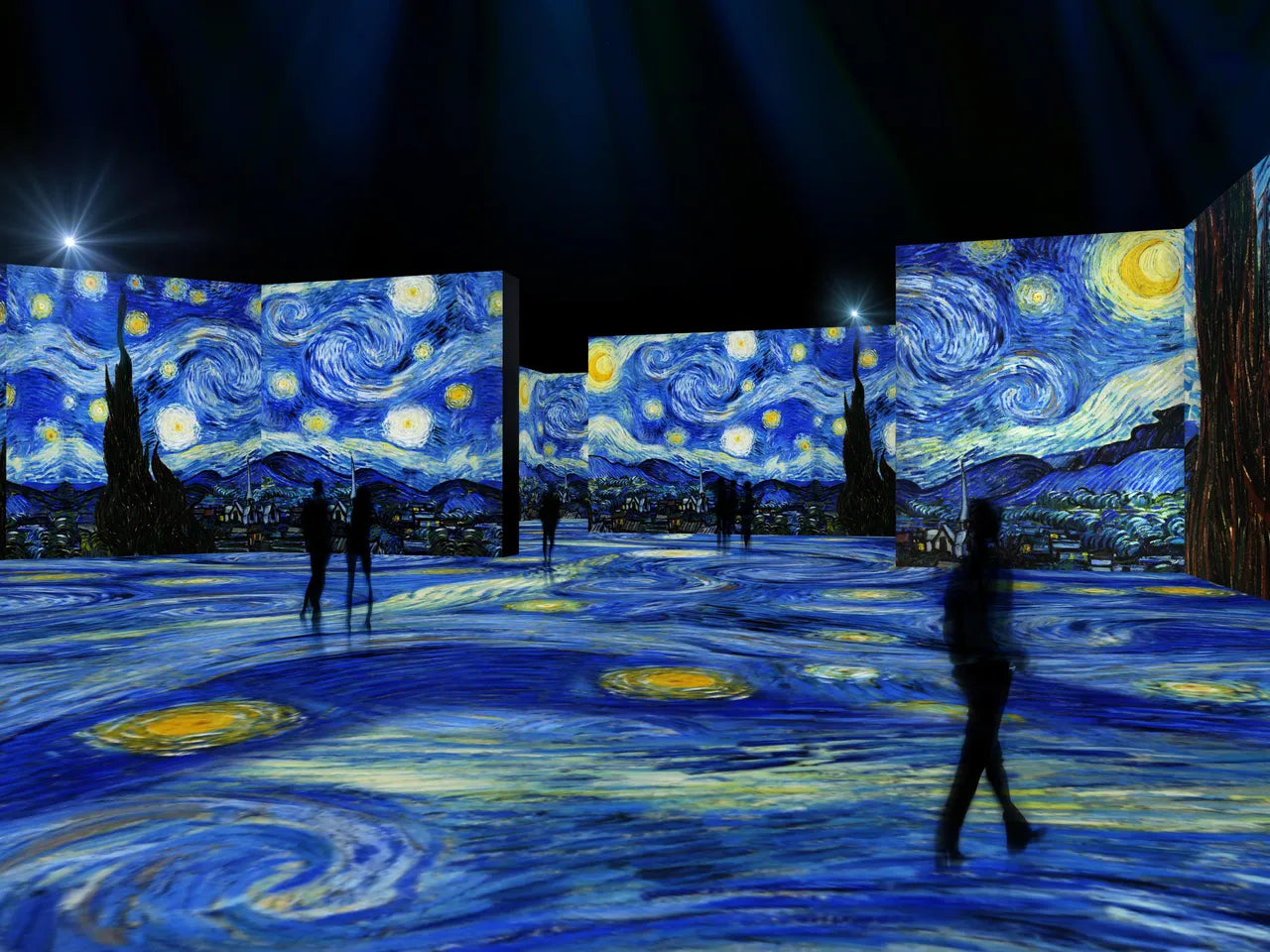
Credit: Smithsonian Museum
The Starry Night today
The painting is often used to argue that great art comes out of struggle, and the biography supports the reading. It also makes the line between illness and ability harder to draw than the story usually allows, because the same year produced both the hallucinations and the canvases. What Van Gogh made in that asylum in Saint-Rémy was a painting, and it was also evidence that he could still work.
The tragedy of Van Gogh’s life is well documented. What is easier to forget is the timing: he painted The Starry Night in June 1889, called it a failure that November, and was dead by the following July at 37. The picture stayed in private hands for 52 years before a museum wanted it, and it has hung in New York since 1941.

![Map of France, Spain, and Portugal; Switzerland in cantons [inset]; Island of Corsica (1863) by Samuel Augustus Mitchell. Original From The New York Public Library.](https://news.justcollecting.com/wp-content/uploads/2026/09/image-from-rawpixel-id-2038926-jpeg-340x220.jpg)