



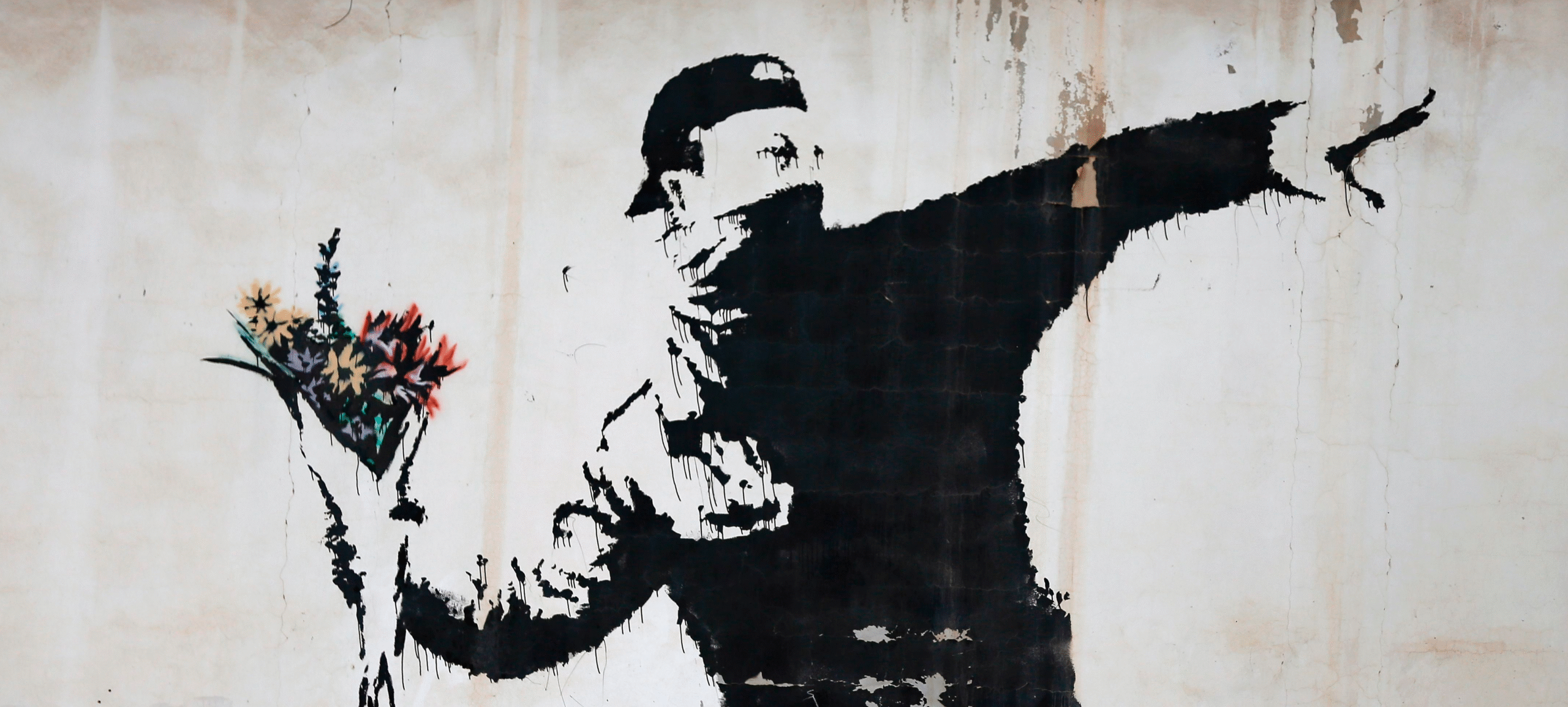
For most of the twentieth century, the idea of street art having “true value” felt like an oxymoron. Art made without permission, slapped onto someone else’s wall, and meant to be enjoyed for free was never supposed to end up in a high-end auction house. But Banksy, the elusive street artist from Bristol, has spent the last twenty years completely flipping that idea on its head. His paintings, prints, and legendary stunts haven’t just made him one of the most famous living artists on the planet; they’ve dragged street art right into the spotlight of the contemporary gallery world. Thanks to him, auction houses that used to turn their noses up at graffiti are now hosting entire evening sales dedicated to it.
This massive shift was never really about the sheer volume of his work. Sure, Banksy’s stencilled images are endlessly and unofficially reproduced on everything from t-shirts to phone cases, but none of that matters to the high-end market. What serious collectors and auction houses are actually buying is a specific, verifiable object. They want a canvas or print with a documented history and a certificate of authenticity from Pest Control, Banksy’s official verification team. The huge gap between a five-pound tourist print and a nine-figure original canvas boils down almost entirely to paperwork and history, and that gap is exactly where the real money changes hands.
Three specific sales did more to prove street art belongs next to blue-chip contemporary paintings than any traditional gallery exhibition ever could. Each of these sales smashed Banksy’s previous auction records. This forced the wider art market to take Banksy, and by extension street art as a whole, seriously. He was no longer just a creator of clever images; he was a serious investment. Here, we’ll take a look at how those massive sales happened, how his work actually gets authenticated, and what these astronomical numbers tell us about street art’s place in the gallery world today.
Discover all in our:
The true value of street art: how Banksy changed the contemporary gallery market forever
Credit: Britannica
From Bristol stencils to the auction room
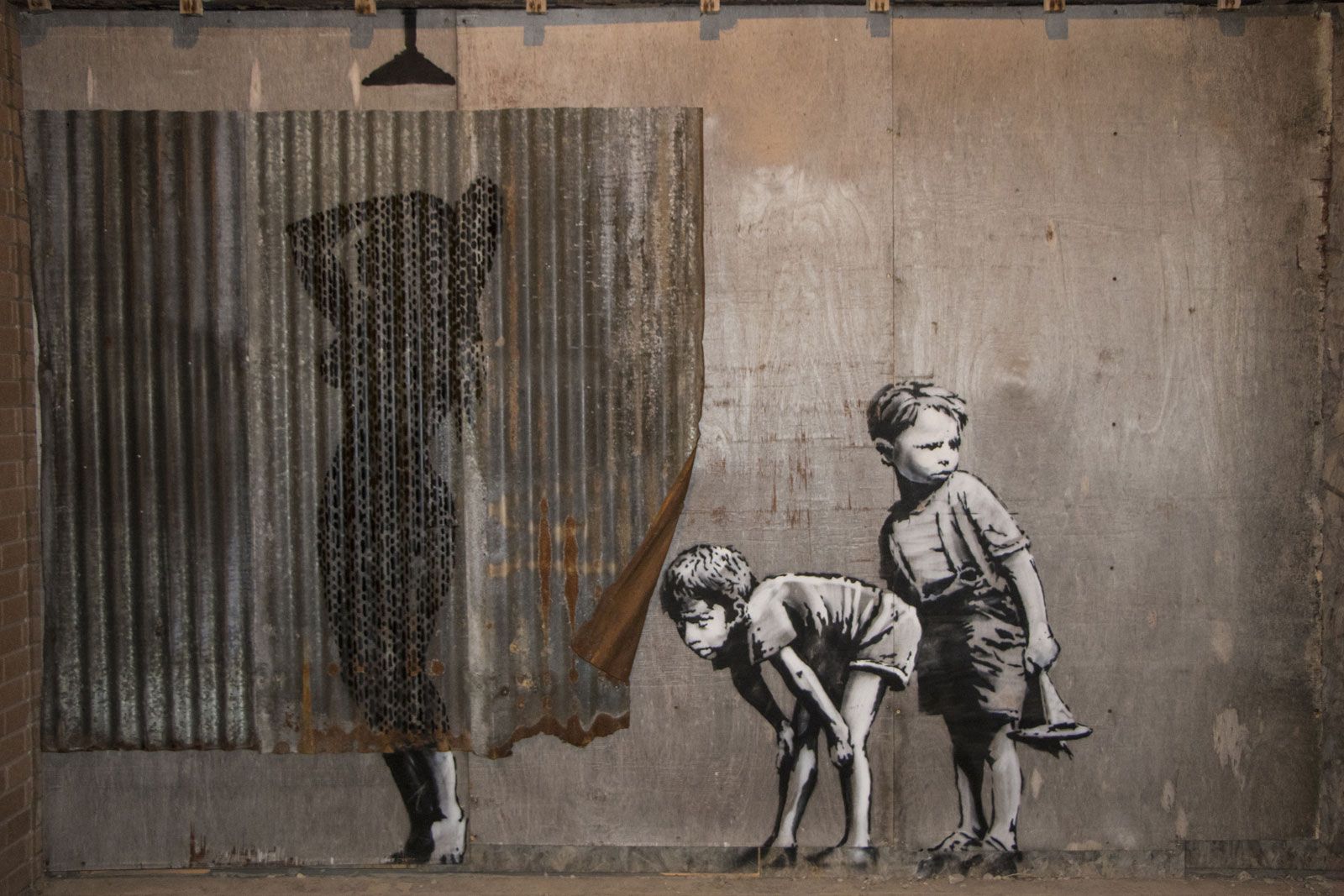
Banksy’s early work grew out of Bristol’s gritty 1990s graffiti scene, popping up on walls, bridges, and railway lines instead of framed canvases. For years, there wasn’t really a formal market for his art. Fans bought stencilled prints from small, independent publishers, and the few paintings floating around privately just didn’t have the backing of the traditional art world.
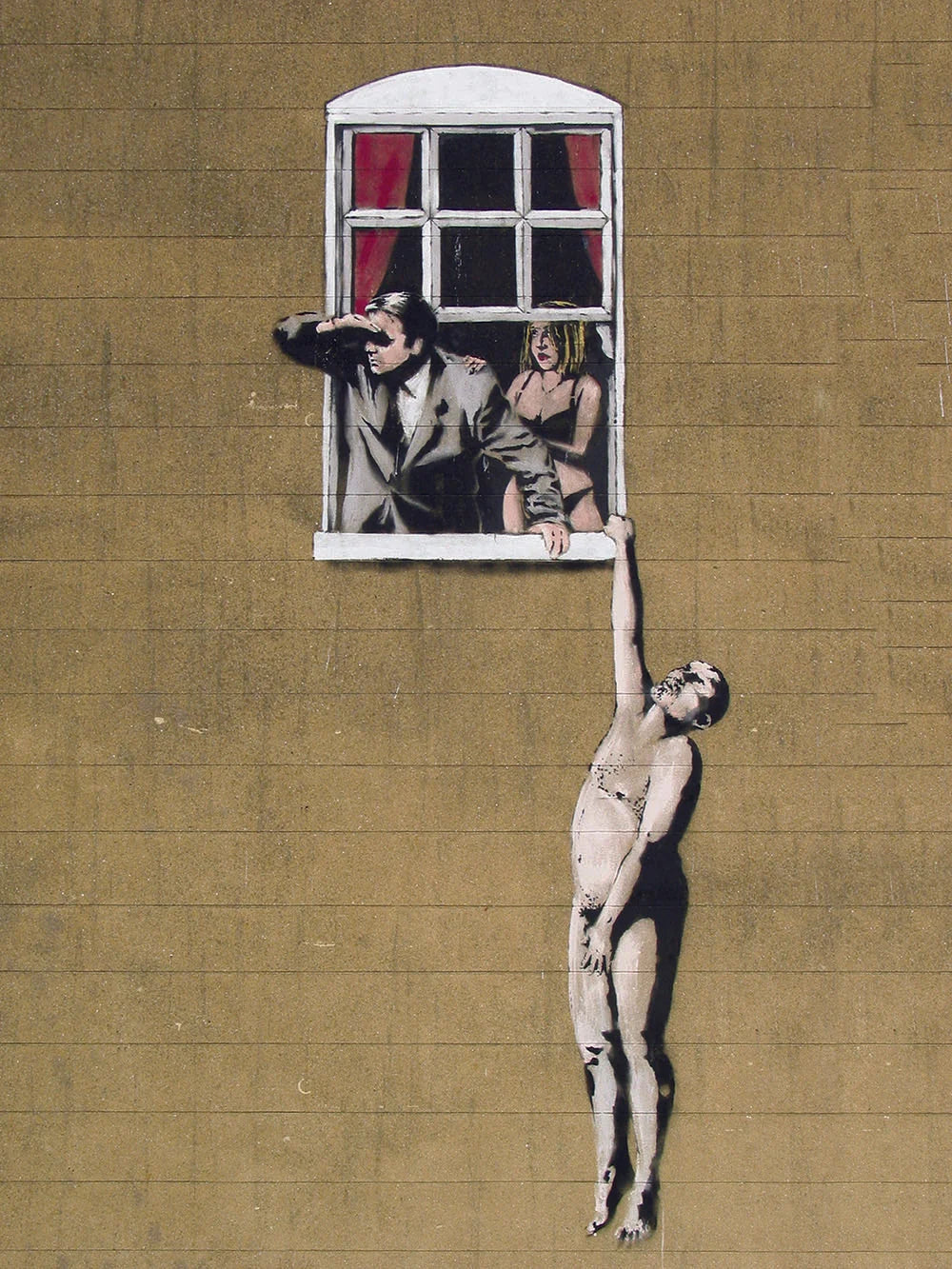
The real turning point happened in 2009 when Banksy took over the Bristol Museum and Art Gallery for a twelve-week show. It drew in around 300,000 visitors who voluntarily donated £45,000, even though entry was free. Seeing a major museum open its doors to a street artist, combined with that massive public turnout, sent a clear message to auction houses: people wanted Banksy’s work, and his appeal went way beyond his graffiti roots.
Credit: Britannica
The shredder that rewrote the rulebook
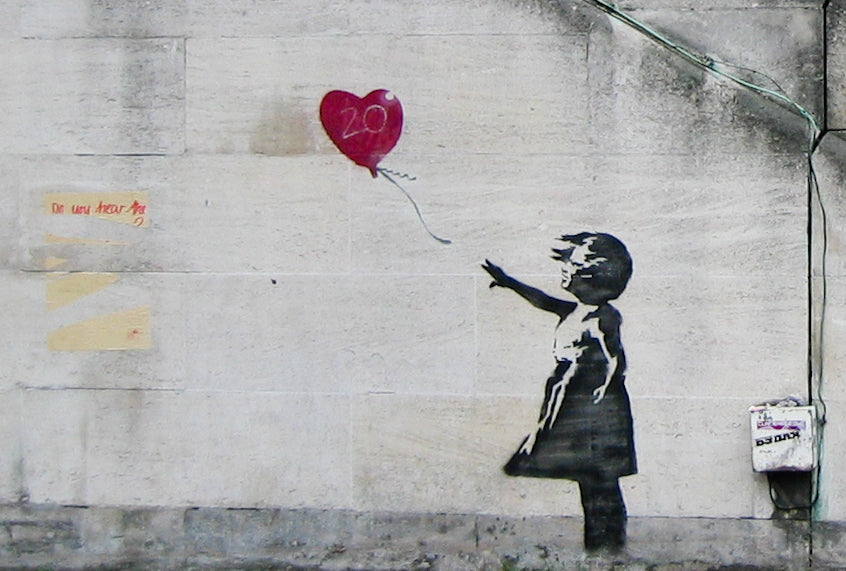
If there’s one event that officially cemented Banksy’s status in the high-end art market, it was the unforgettable stunt in October 2018. During a Sotheby’s evening sale in London, his famous Girl With Balloon painting sold for a whopping £1.1 million. But just seconds after the gavel dropped, a hidden shredder inside the frame buzzed to life, slicing half the canvas into strips while the whole room watched in shock.
Instead of asking for a refund, the buyer decided to keep the half-shredded piece, which Banksy promptly renamed Love is in the Bin. Rather than ruining the artwork’s value, the prank perfectly illustrated what conceptual artists have said for decades: the story and the creator behind an object can matter just as much as the object itself. The art world definitely took notice.
Credit: Wikipedia
Chasing the record: three sales in three years
What happened next was a whirlwind. Banksy broke his own auction record three separate times in rapid succession. In October 2019, Devolved Parliament, his massive painting swapping House of Commons politicians for chimpanzees, sold at Sotheby’s for nearly £9.9 million. That was nine times his previous record.
That record barely lasted a year and a half. In March 2021, Game Changer, a tribute to NHS workers during the pandemic displayed at Southampton General Hospital, sold at Christie’s for a hammer price of £14.4 million, or £16.8 million including the buyer’s premium. The proceeds went to NHS charities, and it set a new world auction record for Banksy.
Just seven months later, the record was shattered yet again. Love is in the Bin, the infamous shredded canvas from 2018, made its way back to Sotheby’s in October 2021. It sold for £16 million at the hammer, totaling an incredible £18.5 million with fees. That was roughly sixteen times what the original buyer had paid just three years prior. Three broken records across three different pieces in just three years. That incredibly fast price jump is exactly why the art world stopped treating Banksy like a passing novelty and started seeing him as a serious financial heavyweight.
Credit: Bansky Explained
Pest Control and the price of trust
Honestly, none of these multi-million-pound sales would be possible without a rock-solid way to prove the art is real. Because Banksy’s true identity is still a secret and his images are copied constantly, he set up Pest Control as the only official group allowed to authenticate his work. If you own a piece, you send them photos and details. Pest Control checks this against their private records, and if it’s the real deal, they issue a certificate of authenticity.
Today, major auction houses won’t even look at a Banksy piece without that certificate, and collectors see its absence as a massive red flag. In a market focused on an artist no one can actually call up and talk to, this quiet background paperwork is the only thing that makes an eight-figure price tag possible.
Credit: Bansky Explained
Street art’s seat at the gallery table
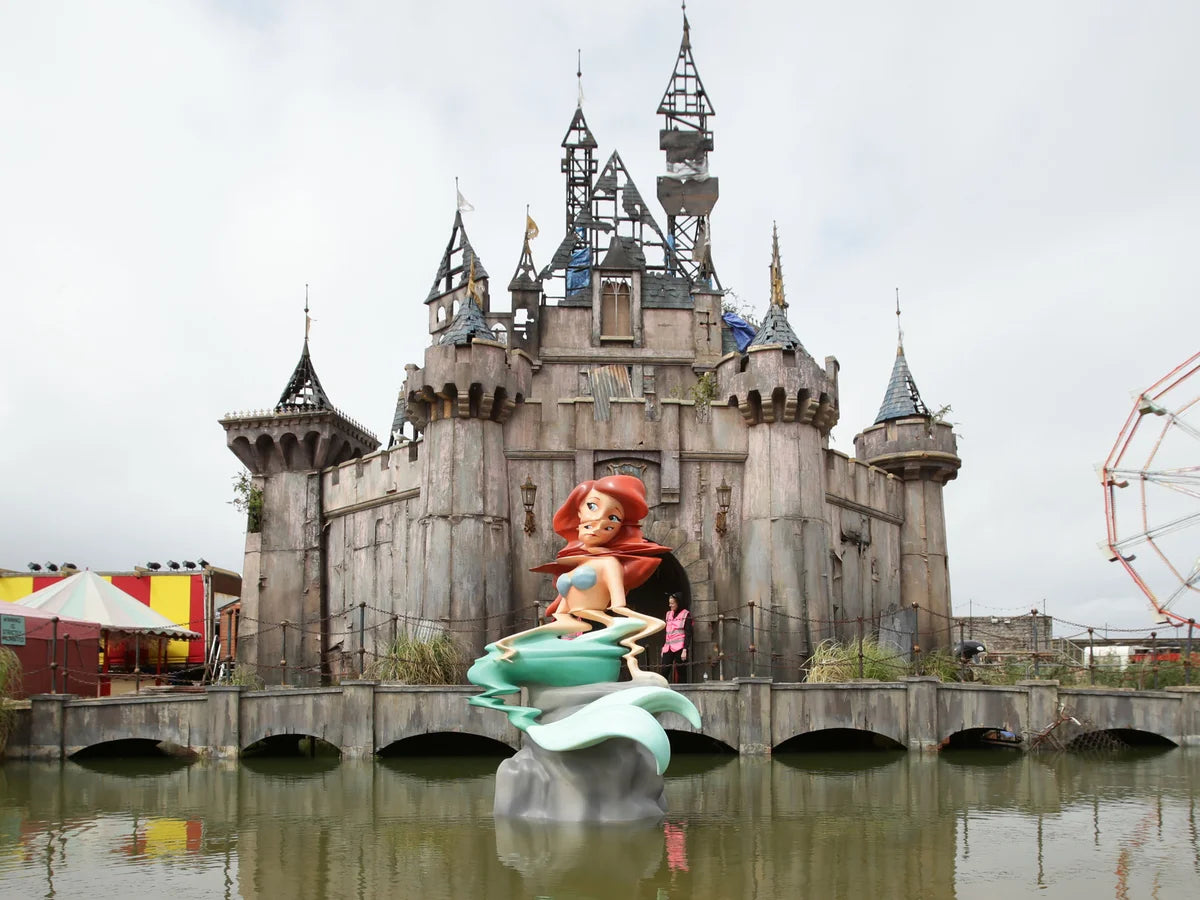
The ripple effect of these sales goes way beyond Banksy’s own bank account. Auction houses that used to completely ignore street art now build entire sections of their contemporary sales around it. Museums have eagerly followed the trail blazed by Bristol in 2009. Just look at 2023: Banksy’s Cut and Run exhibit at Glasgow’s Gallery of Modern Art pulled in 180,000 people over ten weeks, breaking the gallery’s box office records. It was his first official solo show in fourteen years.
Public museums and auction houses usually ask very different questions. One cares about cultural impact, and the other cares about cold, hard cash. However, Banksy’s career is a rare case where both cultural and financial value peaked at the exact same time. This perfect storm is what finally convinced a sceptical art world to treat street art as a valuable and legitimate category of its own.
Credit: Bansky Explained
How paperwork, not paint, built Banksy’s market
When you strip away the secret identity and the wild pranks, the secret behind Banksy’s soaring prices isn’t much of a mystery. It all comes down to a certificate of authenticity, a clear sales history, and a compelling story attached to a specific object that wealthy buyers want to fight over. Devolved Parliament, Game Changer, and Love is in the Bin are three distinct works, but they all share this exact combination, and each one broke a record because of it.
That is the fundamental lesson the wider gallery market learned from him. Street art didn’t need to copy the traditions of oil painting or sculpture to be taken seriously; it just needed the same infrastructure of provenance and trust that backs up every other corner of the art trade. Once Pest Control and major auction houses provided that framework, the immense value that had always been hiding in the work finally had a place to shine.