



The 10 most controversial artworks in history did not set out simply to shock. Each one crossed a line that mattered to somebody: a religious community, a police force, a funding body, or a grieving family.
Provocation is forgotten within a news cycle. What separates the works below is that each provoked a response with real consequences: a museum sued its own city over one, a government cut an arts budget over another.
Here are ten artworks whose reception says as much about their era as the work itself.
Discover all in our:
The 10 most controversial artworks in history
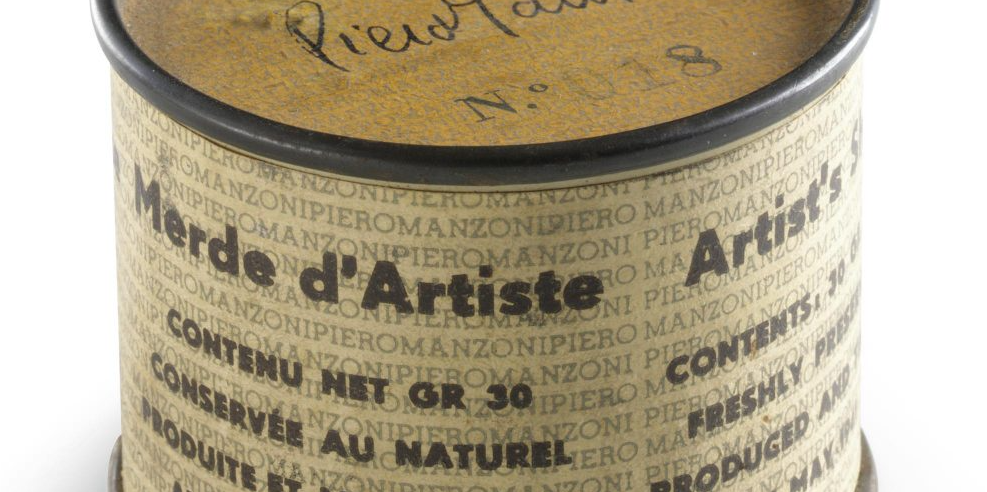
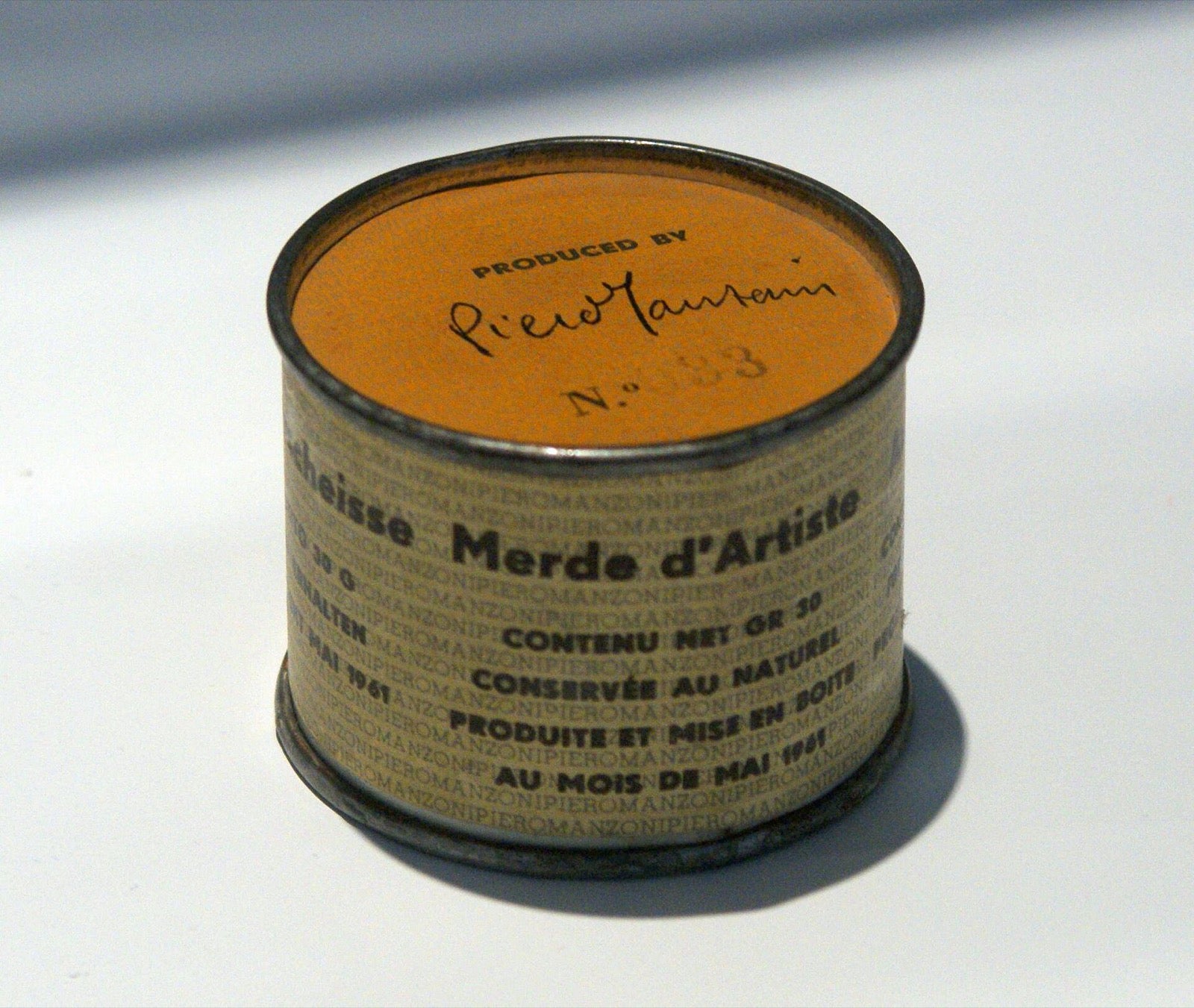
1. Merda d’artista, Piero Manzoni (1961)
Piero Manzoni filled 90 tins with 30 grams each of what the label called his own preserved excrement in May 1961, priced by weight in gold. He told the artist Ben Vautier this was the most personal thing a collector could own. Nobody has confirmed what the tins hold, since opening one destroys its value.
Credit: Jens Cederskjold via Wikimedia Commons (CC BY 3.0)
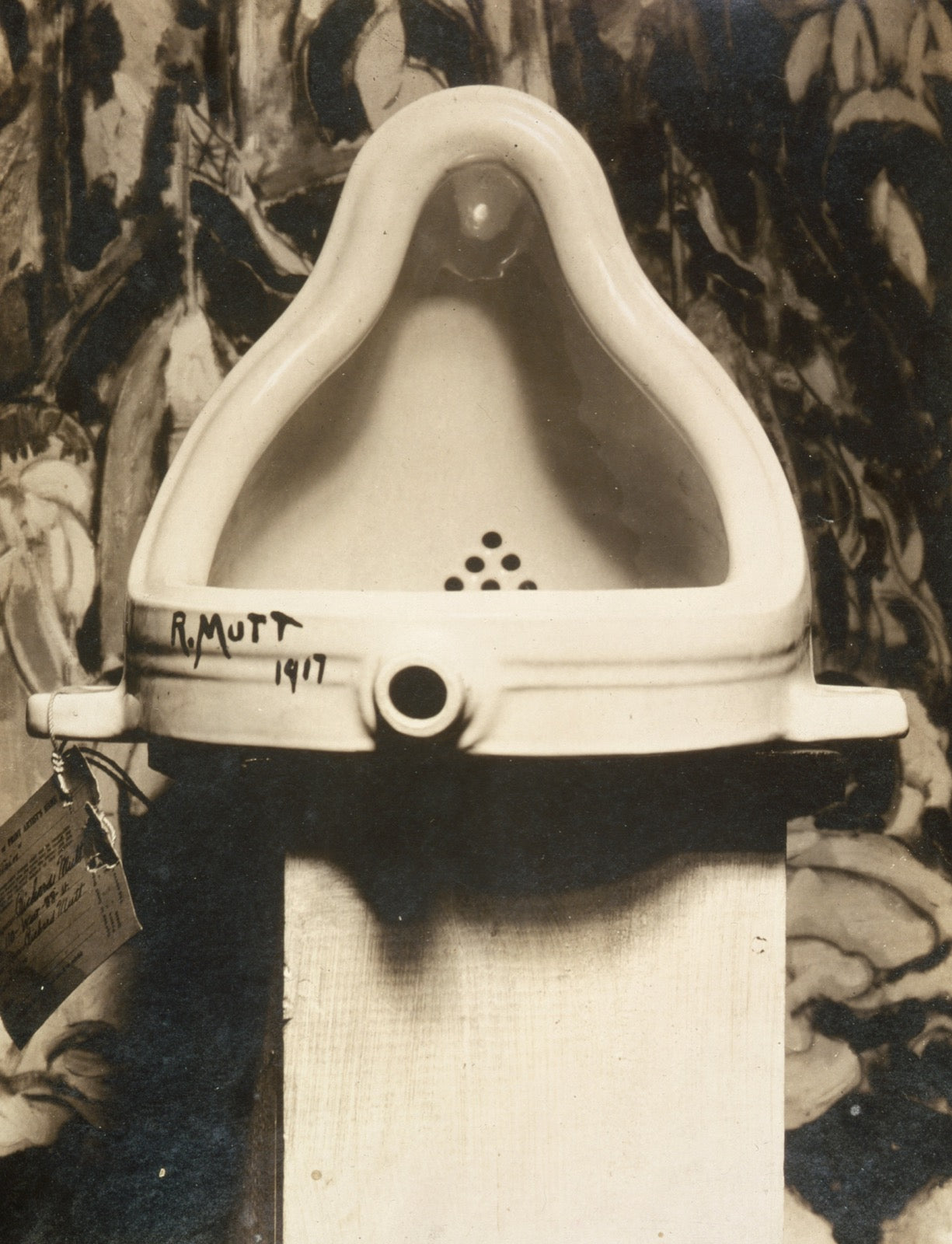
2. Fountain, Marcel Duchamp (1917)
Marcel Duchamp provoked the same argument decades earlier, over a far more ordinary object. In April 1917 he submitted a porcelain urinal signed “R. Mutt” to an exhibition that had promised to show every paying member’s work. The board hid Fountain behind a partition instead, and Duchamp resigned in protest. In 2004, British art professionals voted it the most influential artwork of the twentieth century.
Credit: Marcel Duchamp / Alfred Stieglitz, public domain via Wikimedia Commons
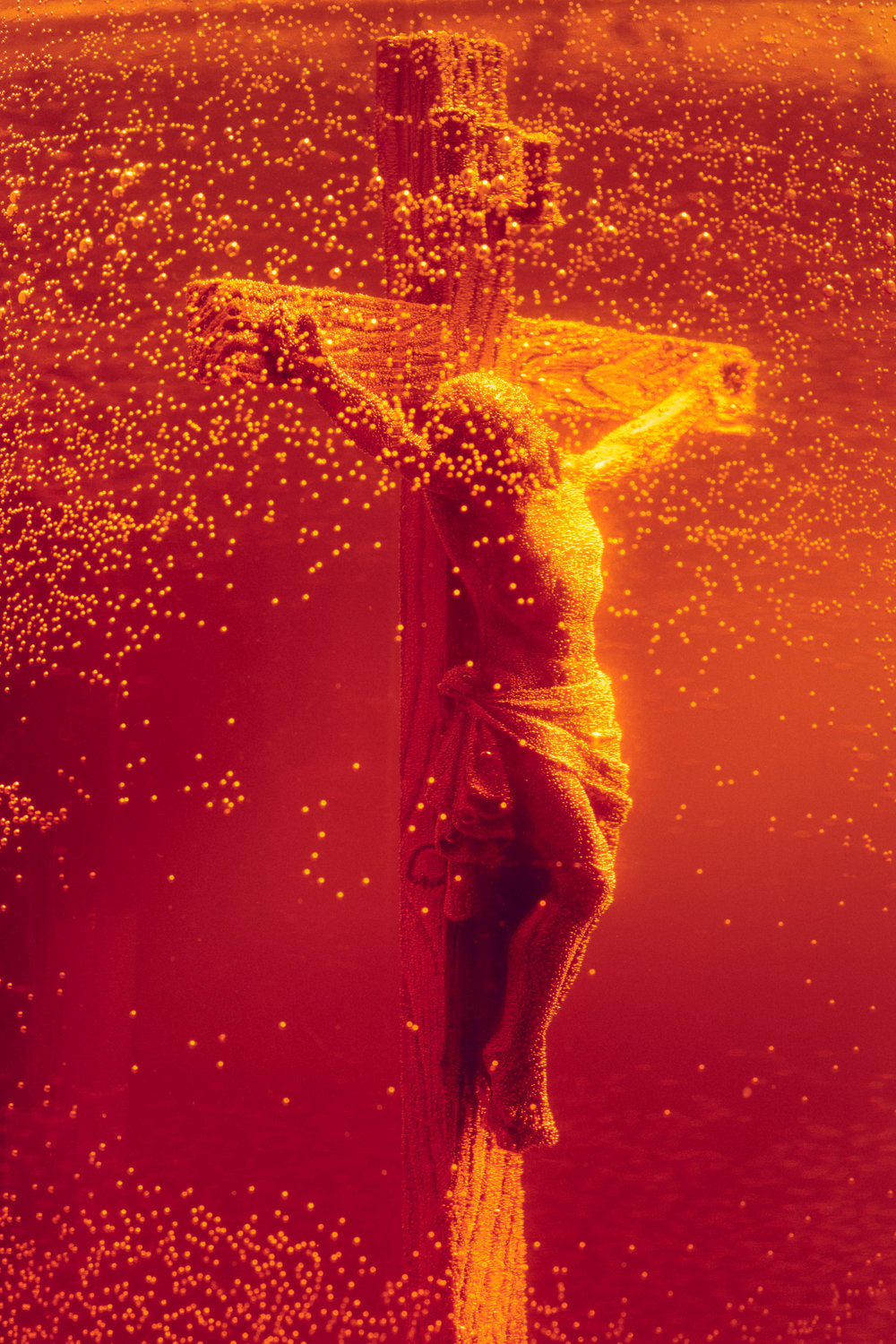
3. Immersion (Piss Christ), Andres Serrano (1987)
Andres Serrano’s Immersion, better known as Piss Christ, photographs a plastic crucifix submerged in the artist’s own urine. In 1989, Al D’Amato and Jesse Helms used Serrano’s $15,000 in public funding for it to help force cuts to the National Endowment for the Arts. Serrano received death threats, and in 2011 a print on display in Avignon was slashed beyond repair.
Credit: David Shankbone via Wikimedia Commons (CC BY 3.0)
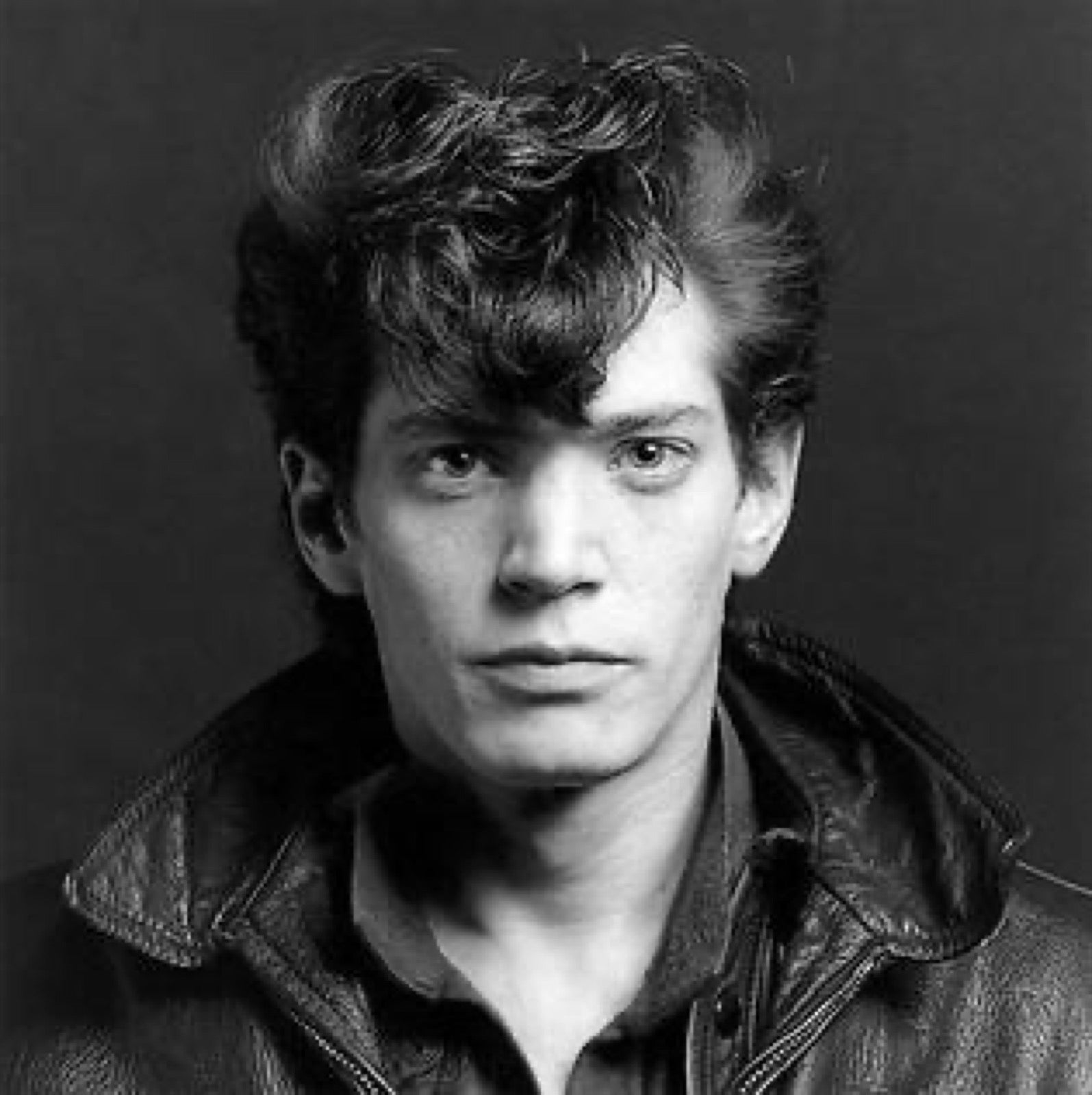
4. The Perfect Moment, Robert Mapplethorpe (1989 to 1990 tour)
Robert Mapplethorpe’s retrospective The Perfect Moment turned his homoerotic photography into a fight over government arts funding. Washington’s Corcoran Gallery cancelled its 1989 showing for fear of endangering federal funding. When Cincinnati’s Contemporary Arts Center went ahead with the show in March 1990, its director, Dennis Barrie, was charged with obscenity. He and the museum were acquitted that October, the first such trial against an American art museum.
Credit: Robert Mapplethorpe Foundation
5. The Holy Virgin Mary, Chris Ofili (1996)
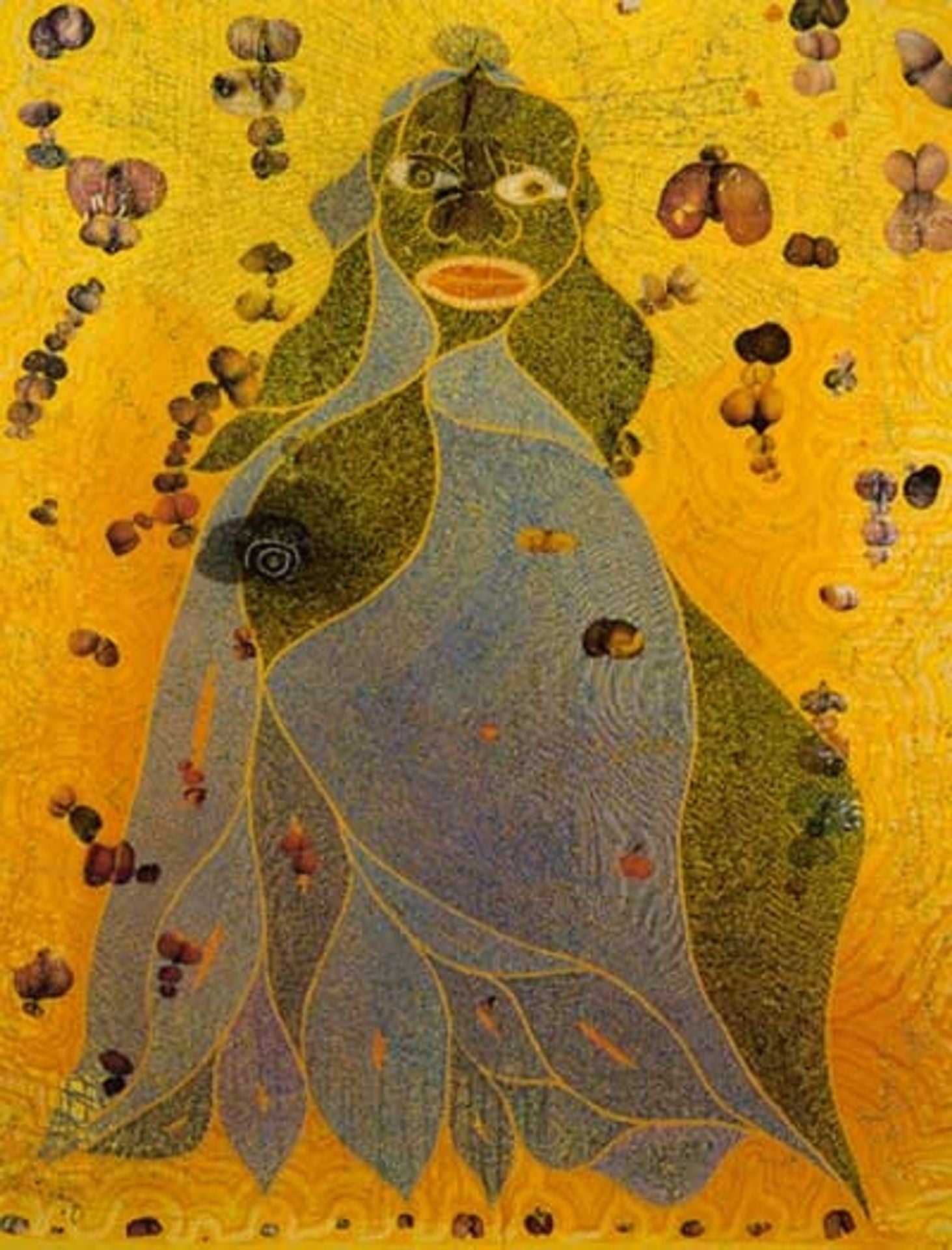
Chris Ofili’s The Holy Virgin Mary depicts a Black Madonna built from paint, glitter and resin, with elephant dung standing in for one breast. When it reached the Brooklyn Museum’s Sensation show in 1999, mayor Rudolph Giuliani called it “sick” and tried to cut the museum’s funding and evict it. The museum sued and won on First Amendment grounds, though a visitor smeared paint across the canvas that December. It was gifted to MoMA in 2018.
Credit: Wikimedia Commons (CC BY-SA 4.0)
6. Myra, Marcus Harvey (1995)
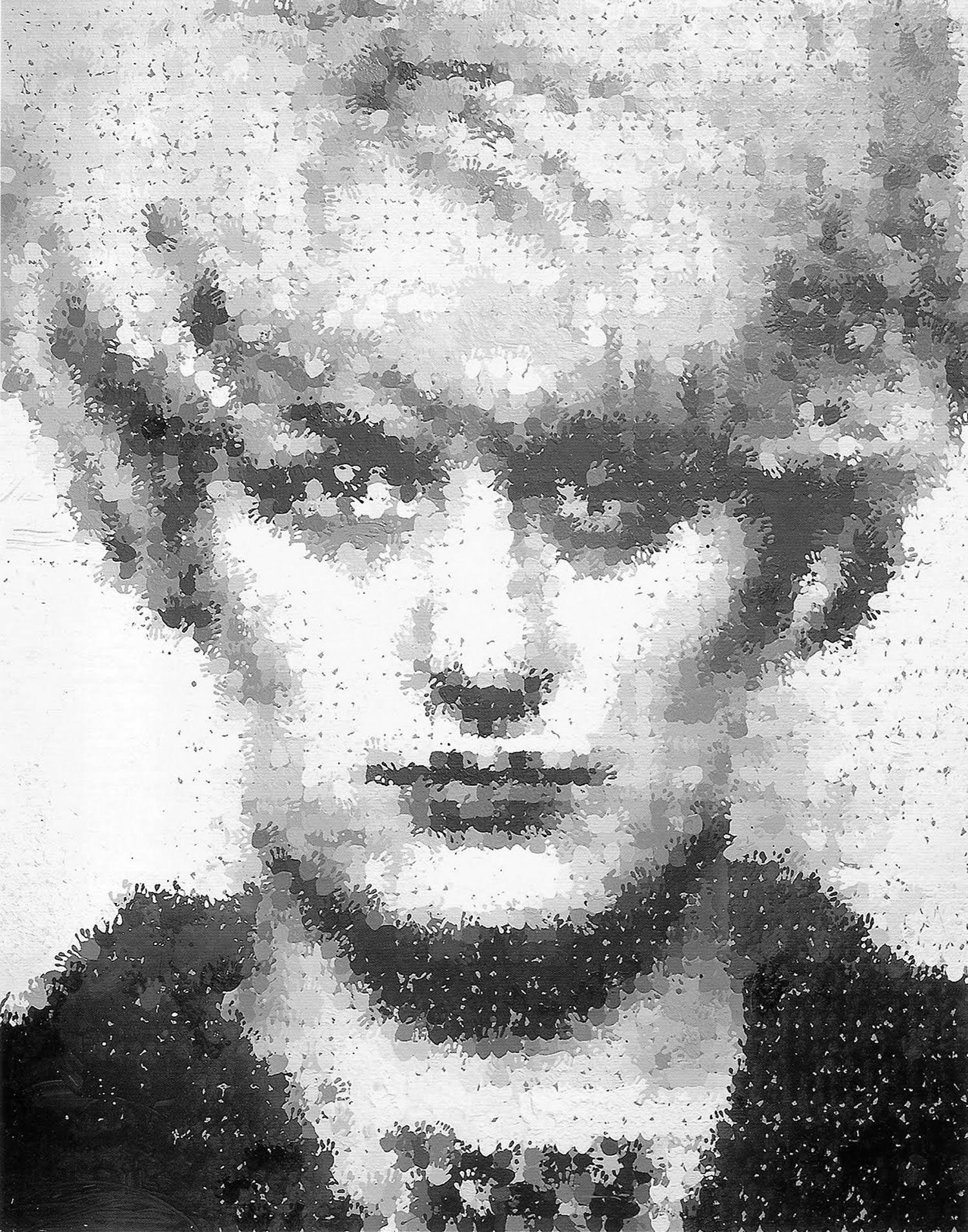
Marcus Harvey’s Myra reproduces the police mugshot of Moors murderer Myra Hindley, built entirely from small prints cast from a child’s hand. Shown at the Royal Academy’s Sensation exhibition in September 1997, it was attacked twice on its opening day alone, doused in ink and pelted with eggs, and had to be rehung behind perspex under guard. Four Academicians resigned over its inclusion.
Credit: Robert Lamb via Wikimedia Commons (CC BY-SA 2.0)
7. The Physical Impossibility of Death in the Mind of Someone Living, Damien Hirst (1991)
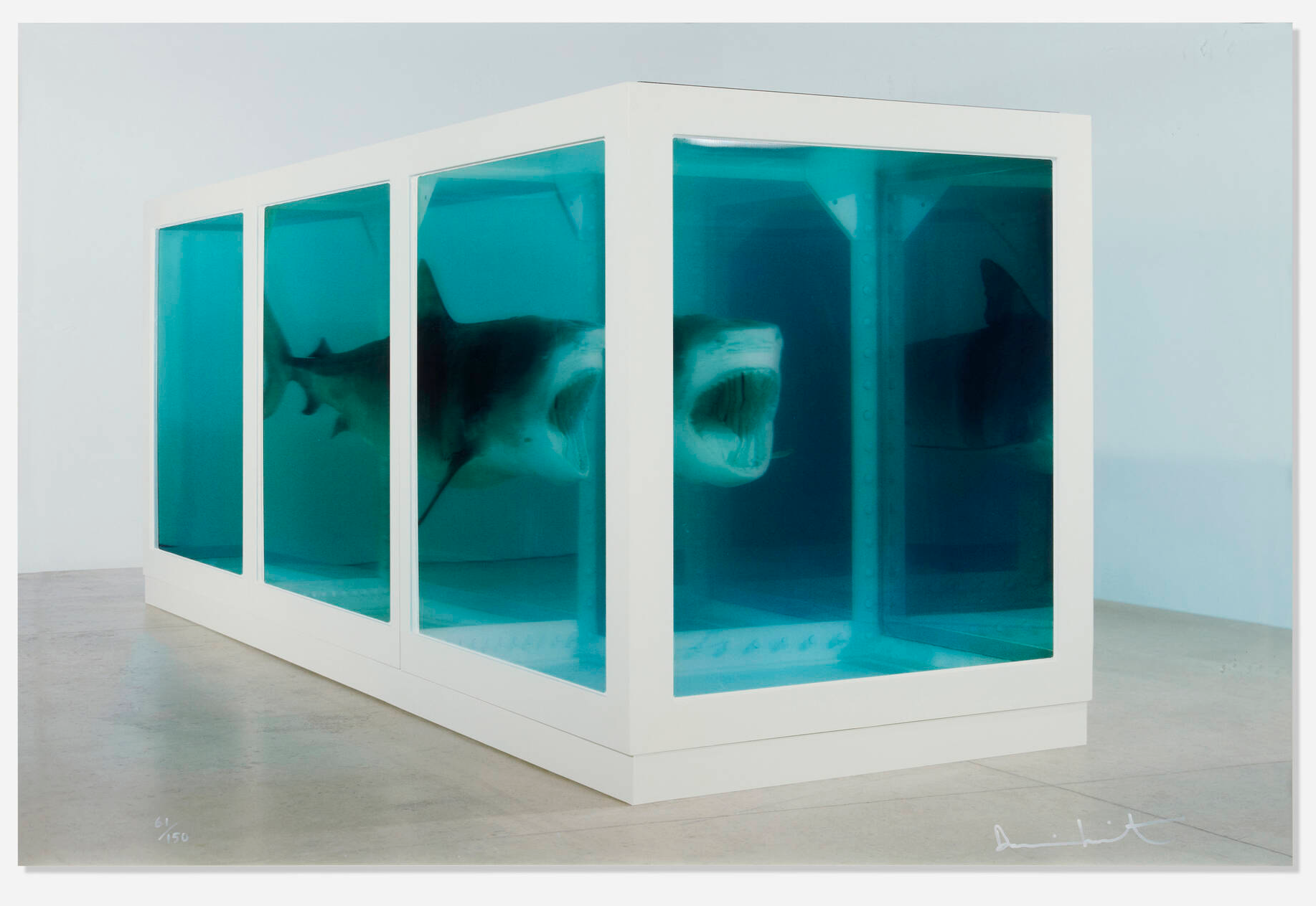
Damien Hirst’s shark began with an open-ended commission: Charles Saatchi offered in 1991 to fund whatever Hirst wanted, and a fisherman caught him a tiger shark off Australia. The Sun greeted its 1992 debut with the headline “£50,000 for fish without chips”, and critic Robert Hughes called the market itself a “cultural obscenity”. The original shark decayed so badly that Hirst replaced it entirely in 2006.
Credit: Damien Hirst via Wikimedia Commons (CC BY-SA 3.0)
8. My Bed, Tracey Emin (1998)
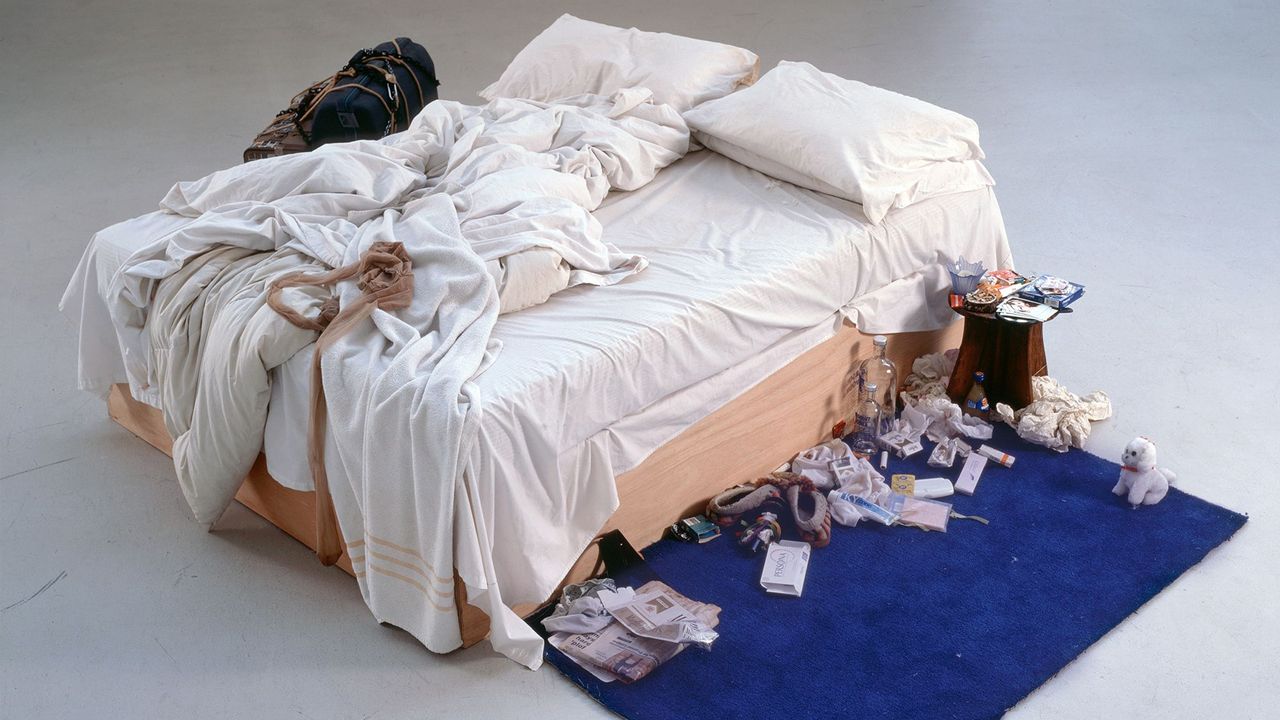
Tracey Emin’s My Bed is her own bed, left as she found it after four days of depression and drinking in 1998, surrounded by bottles and stained underwear. Shown at the Tate as a shortlisted Turner Prize entry in 1999, it made Emin a tabloid fixture. It did not win, but one 2010 review called it “still filthy, still repulsive, and still one of the most moving works of contemporary art”.
Credit: Lewis Clarke via Wikimedia Commons (CC BY-SA 2.0)
9. Dropping a Han Dynasty Urn, Ai Weiwei (1995)
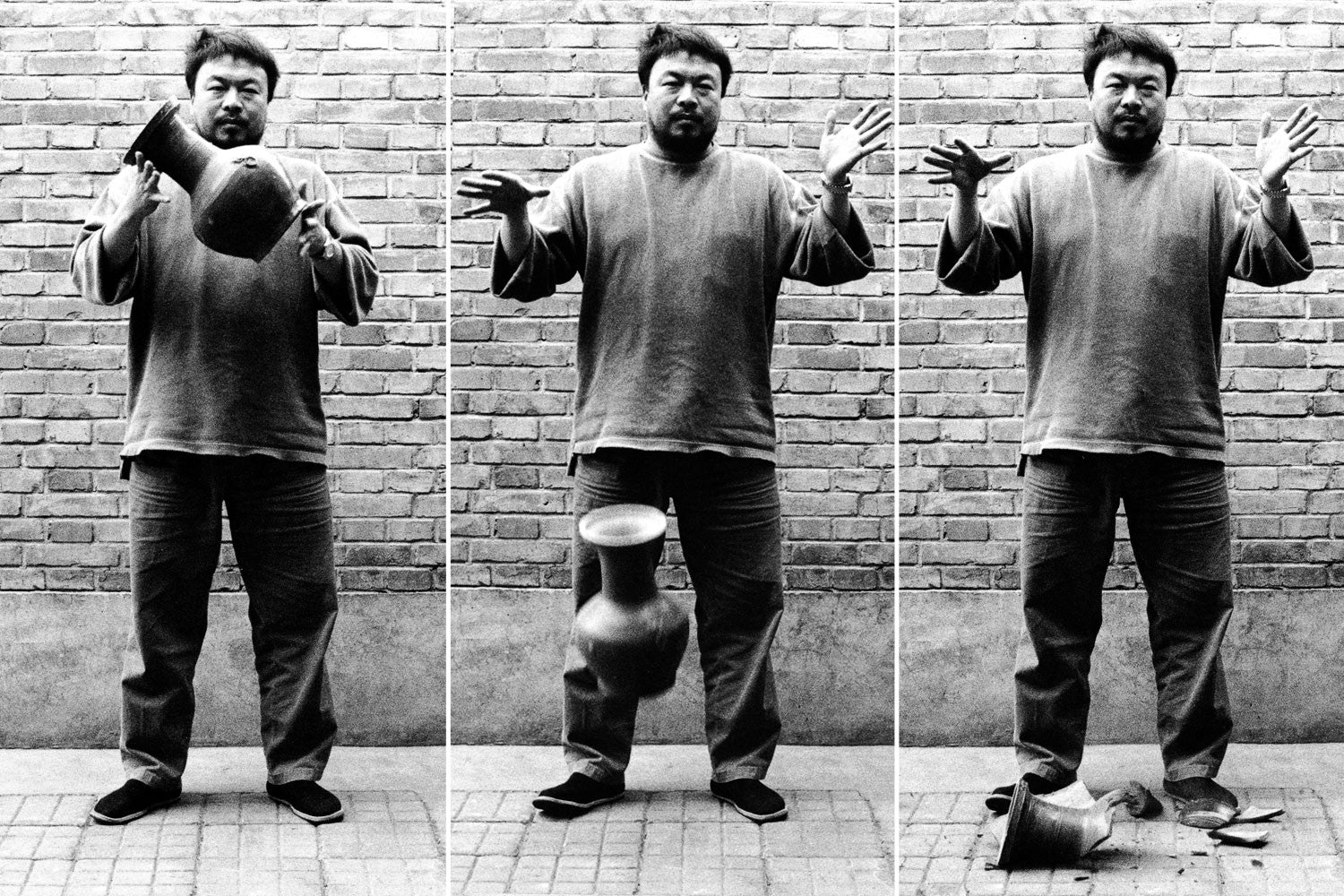
Ai Weiwei built his reputation on the same gesture used against real antiquity. His 1995 triptych Dropping a Han Dynasty Urn documents him holding, releasing and standing over the shattered remains of a 2,000 year old urn. Critics accused him of vandalising an irreplaceable relic for a photograph, while others read it as comment on how carelessly the past gets destroyed. In 2014, a Miami artist smashed one of Ai’s later vases in response.
Credit: Reddit
10. Shoot, Chris Burden (1971)
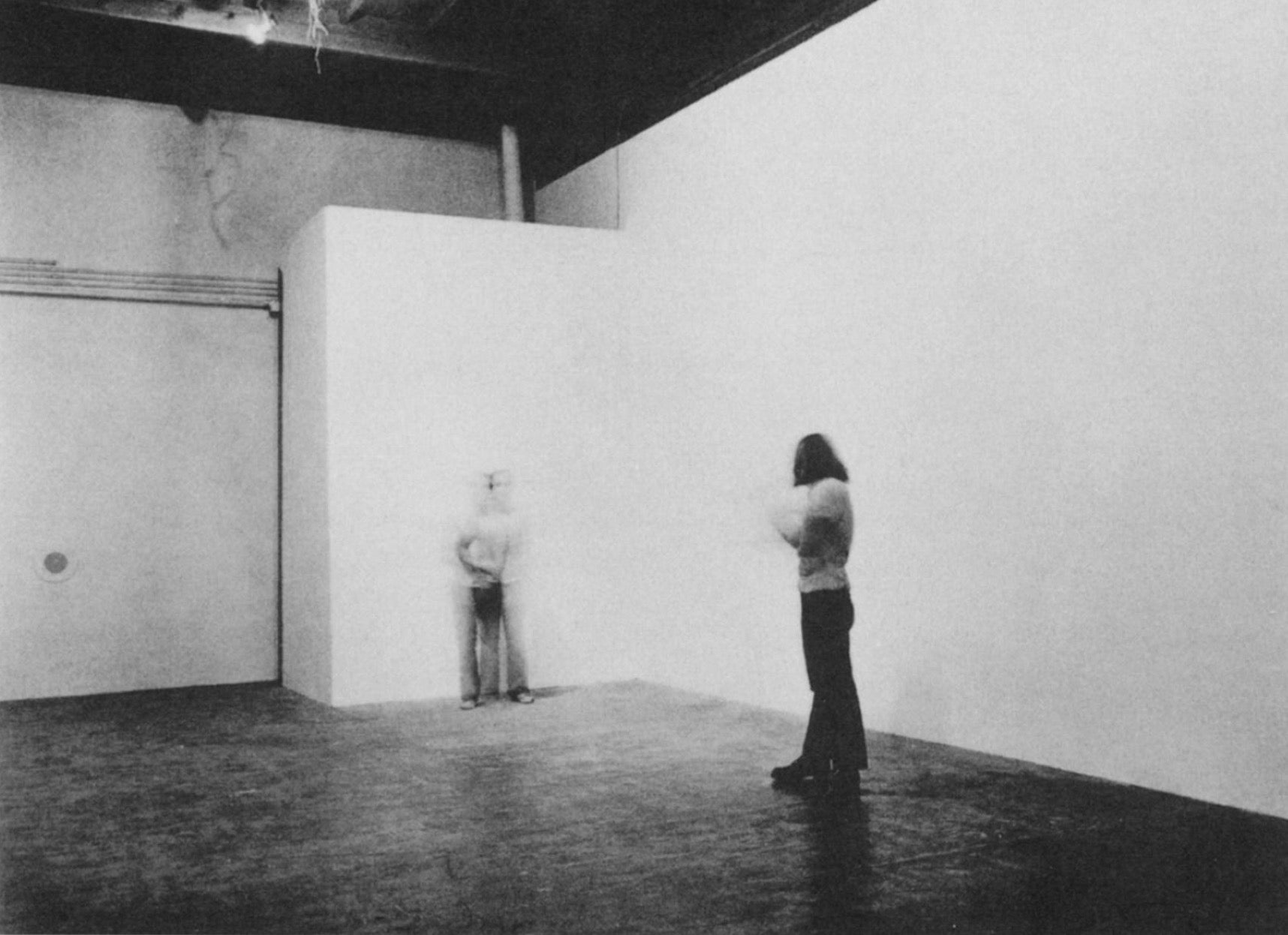
On 19 November 1971, at the F-Space gallery in Santa Ana, California, Chris Burden had a friend, Bruce Dunlap, shoot him in the left arm with a .22 rifle from fifteen feet away, in front of a small invited audience. The whole event lasted eight seconds and was recorded on film. Burden became known, slightly inaccurately, as “the artist who shot himself”, since someone else pulled the trigger. The piece is now treated as a founding work of endurance art, the branch of performance built on real physical risk rather than symbolic risk, and it has been referenced and re-enacted by other artists ever since.
Credit: theartstory.org
How the art establishment absorbed its own scandals
Most of these fights ended the same way. Ofili’s painting, once threatened with eviction from a public museum, is now part of the Museum of Modern Art’s collection. Duchamp’s urinal, hidden from view on the night of its rejection, was later voted the most influential artwork of the century.
What never settled is the argument underneath. Serrano’s photograph was still being attacked two decades after it was made, and Ai Weiwei’s urn-breaking is still re-enacted today, as homage or as punishment. None of the ten needed to be beautiful to hold an audience for thirty years or more.
Additional controversial artworks worth knowing about
Three further works came up while researching this list, and each pushed at a limit the ten above don’t quite cover: consent, physical danger and public tolerance.
160 cm Line Tattooed on 4 People, Santiago Sierra (2000)
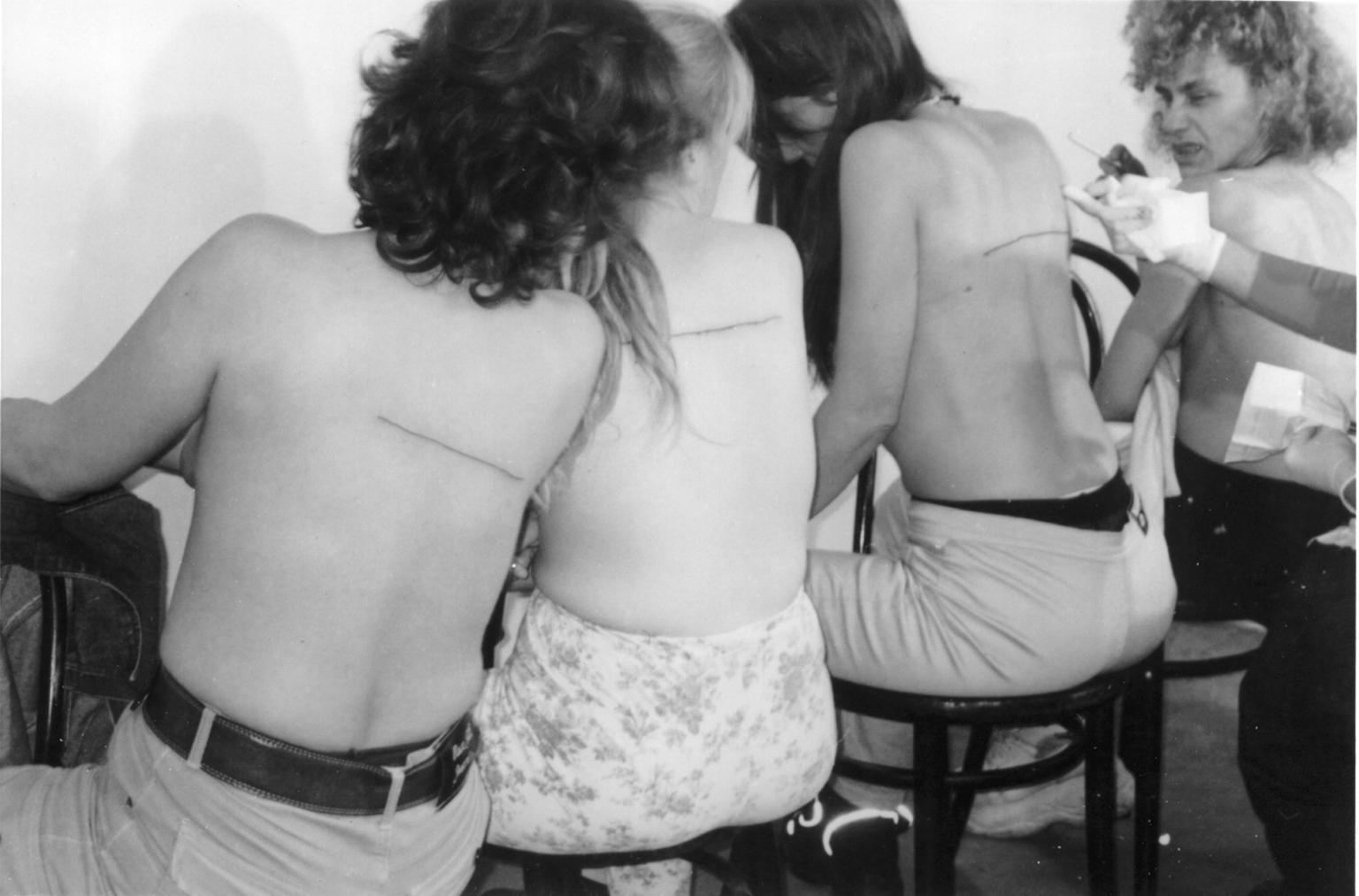
In December 2000, at El Gallo Arte Contemporáneo in Salamanca, Santiago Sierra paid four heroin-addicted sex workers the cost of a single dose of the drug, roughly what each would earn in four hours of their usual work, to sit still while he had a continuous line tattooed across their backs. Sierra has always argued that the tattoo itself isn’t the problem: the problem is a set of social and economic conditions that let an artist buy that kind of consent so cheaply. Critics take the opposite view, and the argument over whether documenting exploitation critiques it or simply repeats it has followed Sierra’s work for two decades.
Credit: Monmar Comunicació from Vic via Wikimedia Commons (CC BY-SA 2.0)
Rhythm 0, Marina Abramović (1974)
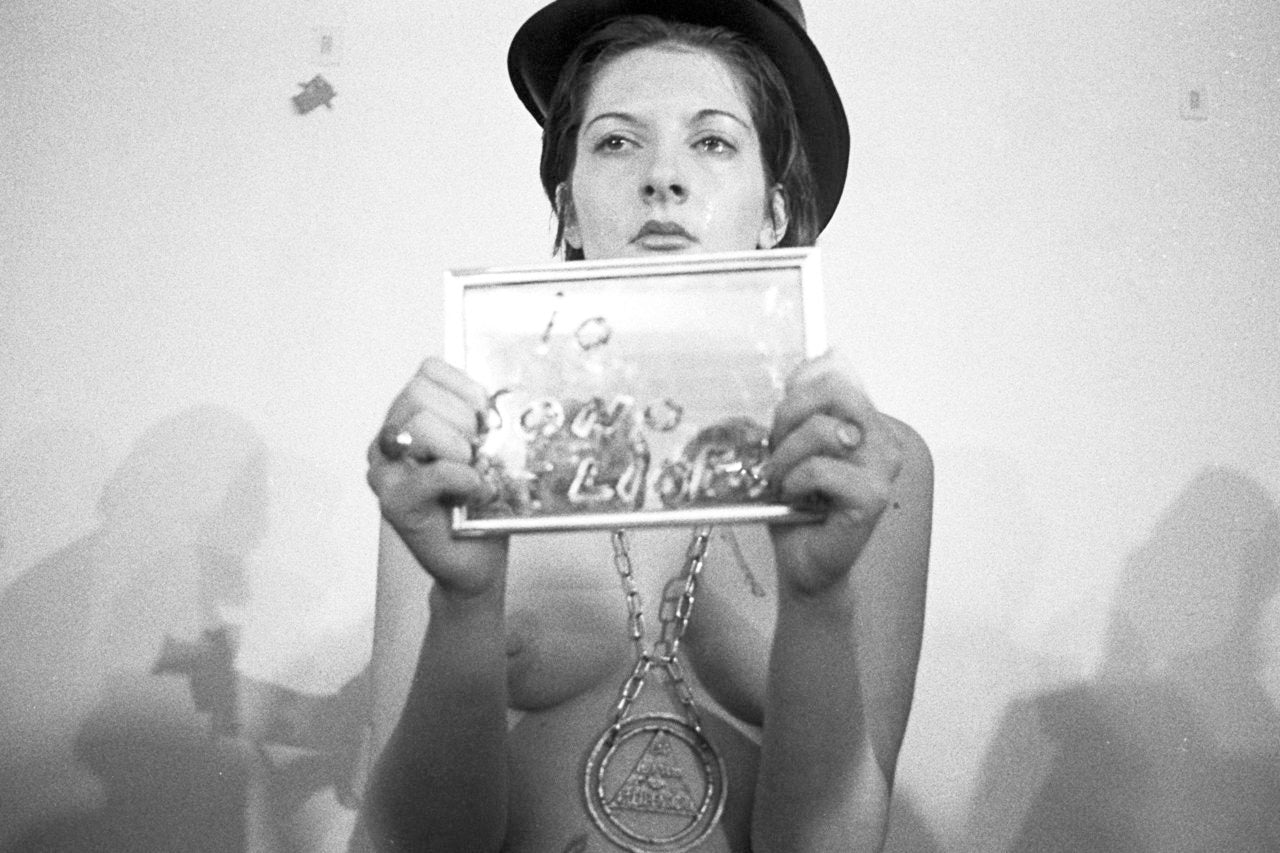
For six hours at the Studio Morra gallery in Naples, Marina Abramović stood still and let the audience do whatever they liked to her, using any of 72 objects laid out on a table: a rose and a feather at one end, scissors, a scalpel and a loaded gun at the other. Visitors were gentle to begin with. By the third hour they were cutting her clothes off with razor blades, and by the fifth a loaded gun had been pressed into her own hand with her finger worked onto the trigger, at which point a fight broke out among the audience and a protective group formed around her. Abramović later said the piece taught her that, left unchecked, an audience can kill you.
Marina Abramović pictured at a public event
Credit: The Peabody Awards via Wikimedia Commons (CC BY 2.0)
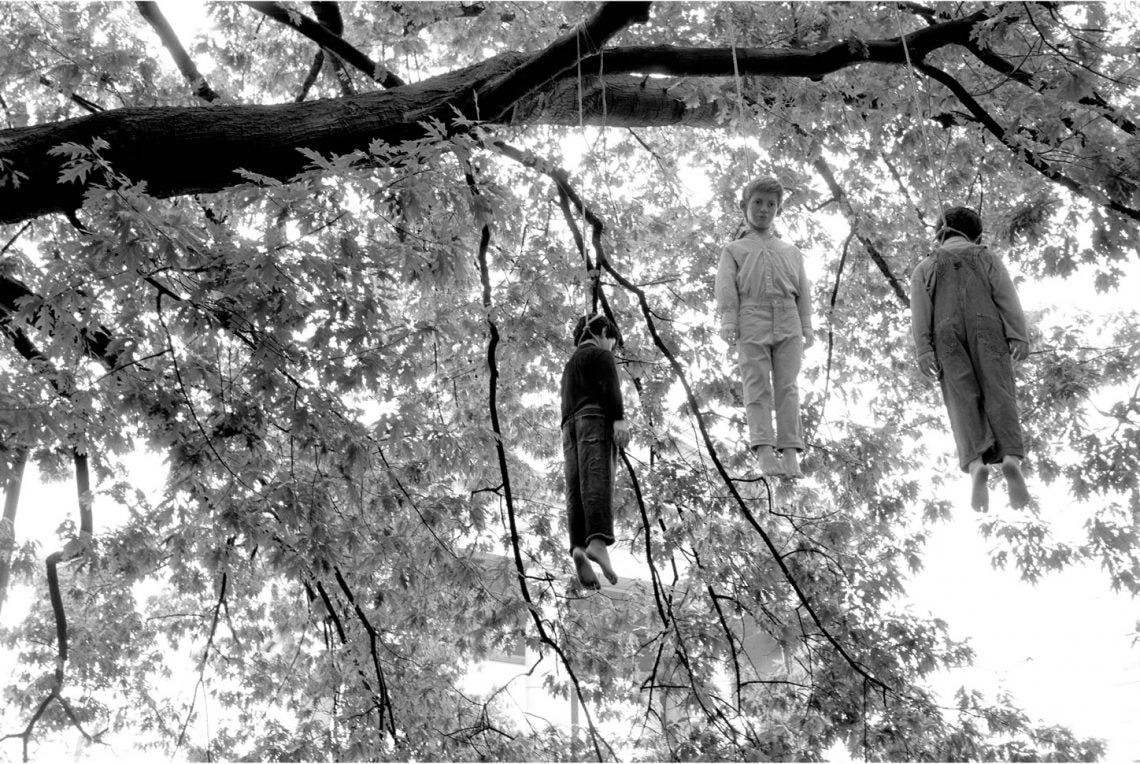
Untitled, Maurizio Cattelan (2004)
On 5 May 2004, Maurizio Cattelan hung three life-sized, hyper-realistic mannequins of children by the neck from Milan’s oldest tree, an oak in Piazza XXIV Maggio planted in 1924 as a war memorial. The piece was meant to stay up for a month. It lasted a single day: on 6 May, a construction worker climbed the tree and cut the figures down, falling in the process and breaking several bones. He was later given a two-month prison sentence for damaging the work, while Cattelan himself never fully explained what the piece meant, beyond suggesting that reality already contains worse.
Credit: Fondazione Nicola Trussardi