



American Gothic is one of the most reproduced and parodied portraits America has ever produced, and also one of the hardest to pin down. Grant Wood painted it in his studio in Cedar Rapids, Iowa, in 1930, posing his own sister and the family dentist as the two figures. He never fully explained what he meant by it, and nearly a century on, historians still argue about what the painting is actually saying.
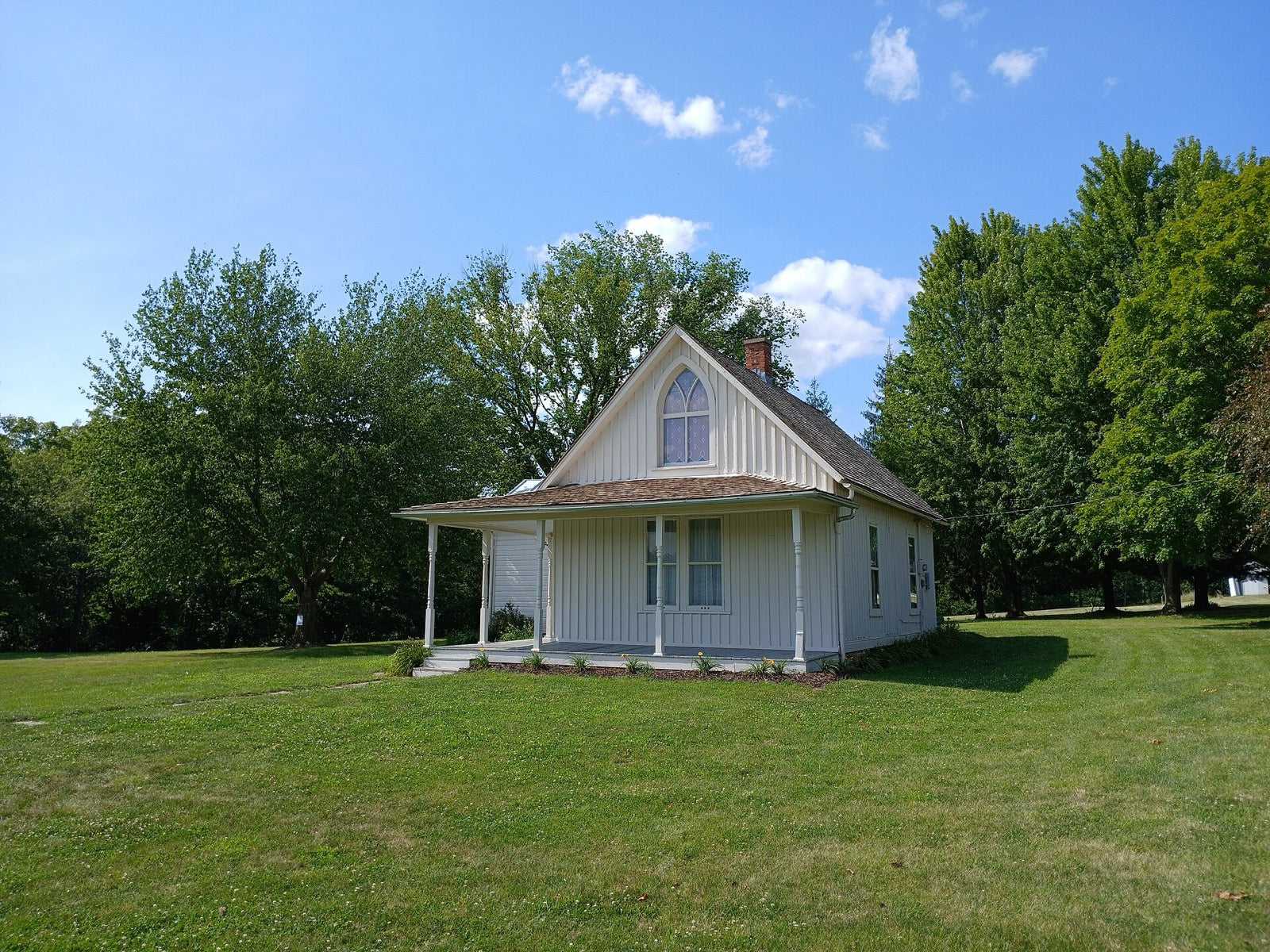
The idea came from a small white house Wood spotted on a visit to Eldon, Iowa, in August 1930, a plain wooden building dressed up with a Gothic window borrowed from a much grander style of architecture. Wood thought the window absurd on such a modest home, calling the effect “a form of borrowed pretentiousness”. He sketched the house on the spot, then built the rest of the composition around it once he was back in his studio, inventing the two figures who now stand in front of it.
When the Art Institute of Chicago showed the finished painting later that year, it won a bronze medal and a prize of $300, worth around £62 at the exchange rate of the time. What nobody settled then, and nobody has settled since, is whether Wood was celebrating small-town Iowa or quietly mocking it.
Discover all in our:
The story behind American Gothic: unpacking the mystery of America’s most famous portrait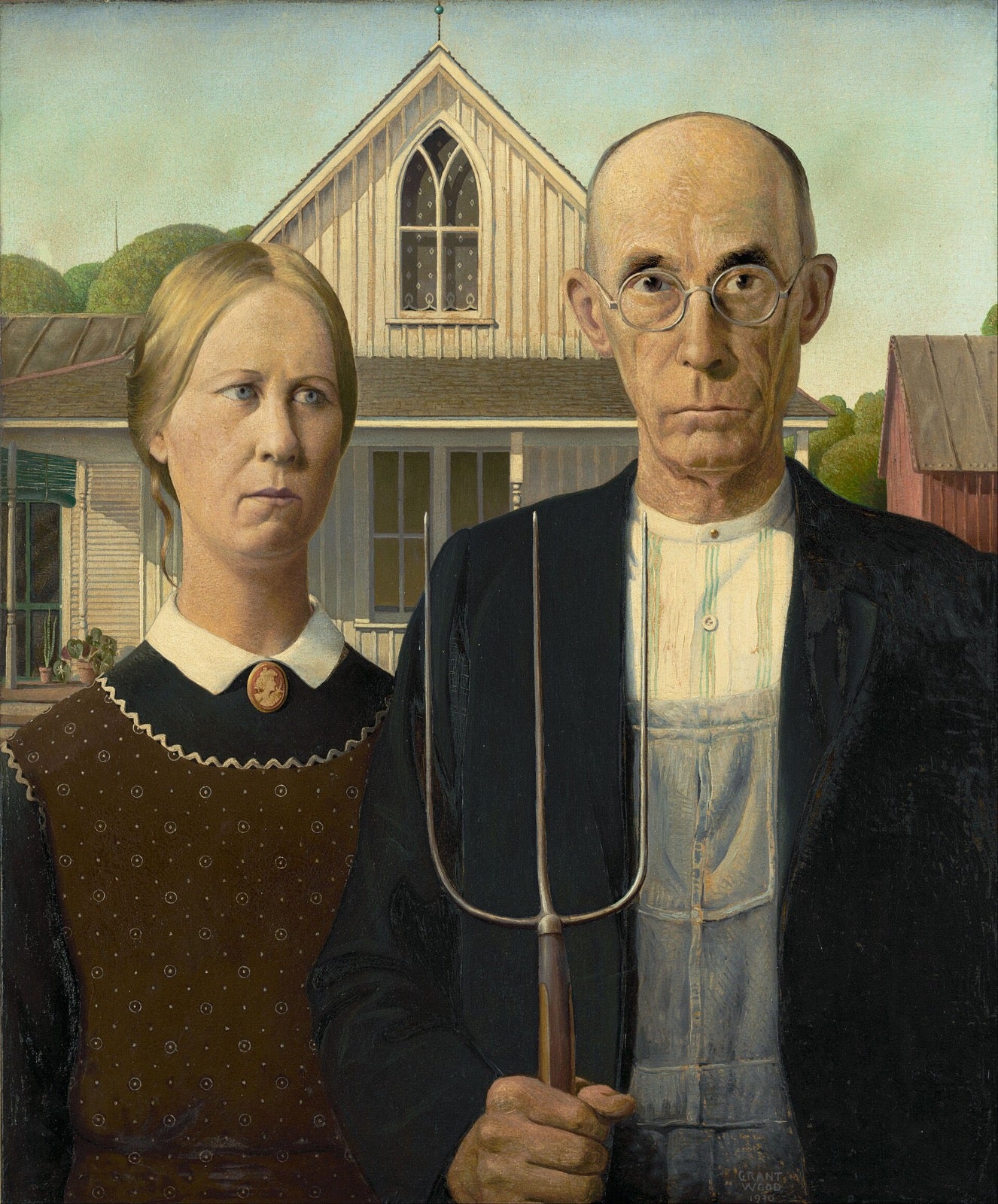
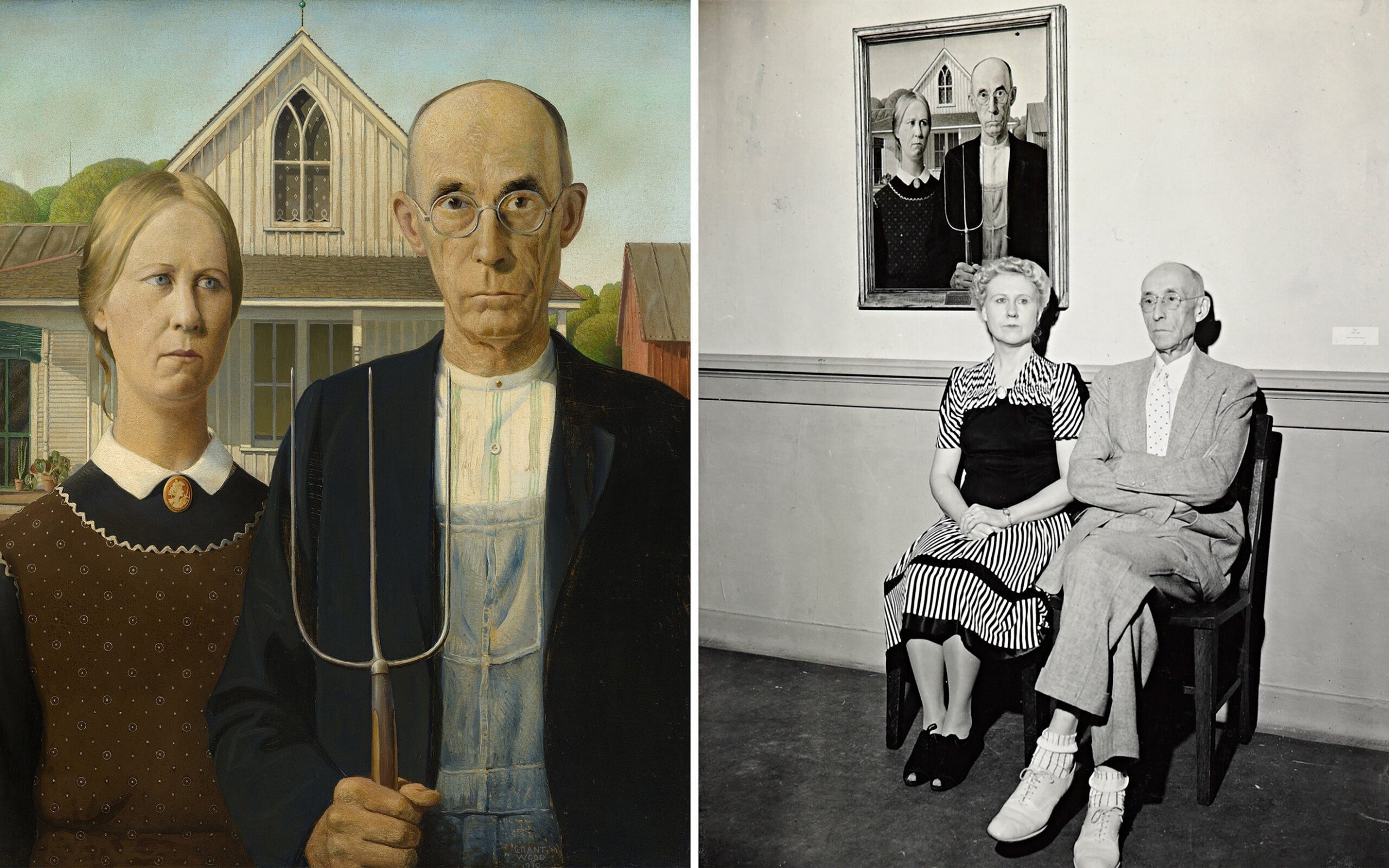
Grant Wood’s American Gothic, oil on beaverboard, 1930
Credit: Grant Wood, public domain via Wikimedia Commons
A farmhouse in Eldon, Iowa
The house still stands. Built in 1881 to 1882 for Charles Dibble, a livery stable operator, and his wife Catharine, it is a modest, three-room home in a style known as Carpenter Gothic, distinguished mainly by its steep gables and a pointed Gothic window upstairs. Nobody is entirely sure where that window came from. One theory says the Dibbles ordered it through a railroad catalogue; the more popular story credits Sears, Roebuck and Co., though neither has ever been confirmed.
Wood only ever saw the real house twice. He was driven past it by a local acquaintance, John Sharp, stopped the car to make a quick sketch, and later asked for a photograph so that he could finish the painting back in his studio in Cedar Rapids. The house was listed on the National Register of Historic Places in 1974 and passed to the State Historical Society of Iowa in 1991; the American Gothic House Center that opened there in 2007 now draws around 15,000 visitors a year.
Credit: Ser Amantio di Nicolao, public domain via Wikimedia Commons
The sister and the dentist
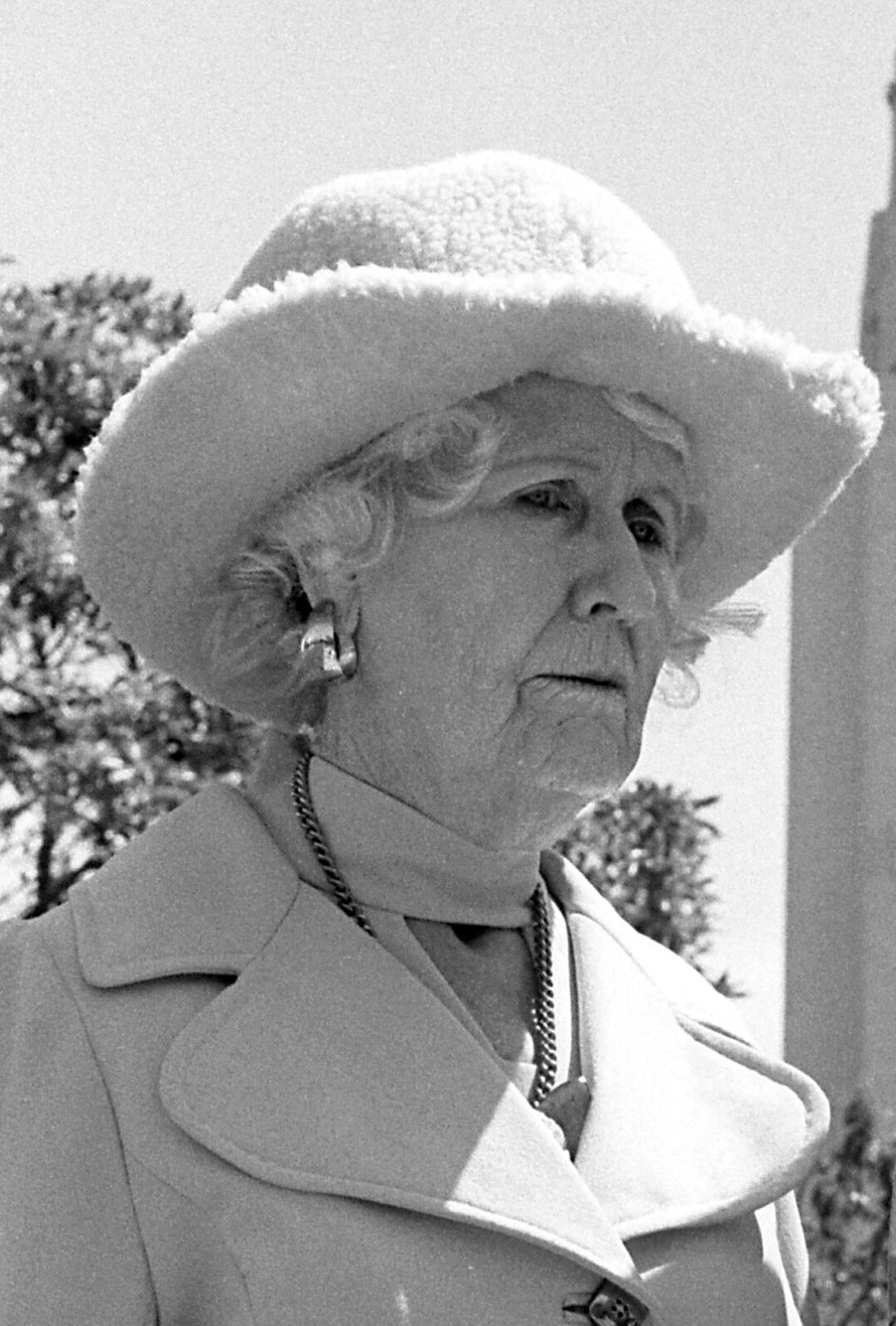
The two figures were not a couple, and they were not professional models. The woman was Wood’s younger sister, Nan Wood Graham; the man was Byron McKeeby, the family’s dentist in Cedar Rapids, born in 1867. Wood dressed McKeeby in overalls under a suit jacket and put a pitchfork in his hands, then deliberately lengthened his sister’s face on the canvas so that she would not be recognisable.
Wood described the pair as a father and his daughter, not husband and wife, though most early viewers assumed otherwise, an assumption that has followed the painting ever since. Nan Wood Graham lived until 1990 and was not always comfortable with what became of her image. When Hustler magazine printed a topless parody of the painting in 1977, she said she was afraid people would think she had authorised it.
Credit: Bill Varie, Los Angeles Times via Wikimedia Commons (CC BY 4.0)
Satire, or a portrait of endurance?
When American Gothic was first shown at the Art Institute of Chicago in 1930, one of the judges dismissed it as a “comic valentine”. A museum patron disagreed strongly enough to get it a bronze medal and the $300 prize, and then persuaded the museum to buy it outright. It has stayed in Chicago ever since.
The reaction at home was harsher. When the painting appeared in the Cedar Rapids Gazette, Iowans were furious at what they took to be a mocking portrait of “pinched, grim-faced, puritanical Bible-thumpers”. Wood insisted he meant no such thing, replying that “I had to go to France to appreciate Iowa”. The row eventually faded, helped along by the Great Depression: as hardship spread across the country, the same stiff, unsmiling couple started to look less like a joke and more like a picture of quiet endurance.
New readings, a century apart
The debate never really settled; it just kept acquiring new layers. In 2010, the art historian Tripp Evans argued the picture was actually a Victorian mourning scene in disguise, pointing to the drawn curtains, the woman’s black dress and her averted eyes. In 2019, the critic Kelly Grovier proposed reading the two figures as Pluto and Proserpina, the rulers of the underworld in Roman myth, with the pitchfork standing in for a guardian’s weapon rather than a farm tool.
A century of parody
The pose turns up everywhere. Gordon Parks borrowed it first, in 1942, recasting the two figures as a Washington office cleaner, Ella Watson, posed with a broom instead of a pitchfork. Since then it has appeared in Green Acres, The Dick Van Dyke Show, Pee-wee’s Playhouse, Arthur, The Simpsons, SpongeBob SquarePants, King of the Hill and Desperate Housewives, in The Rocky Horror Picture Show, on stage in The Music Man, and in a Google advert in 2023.
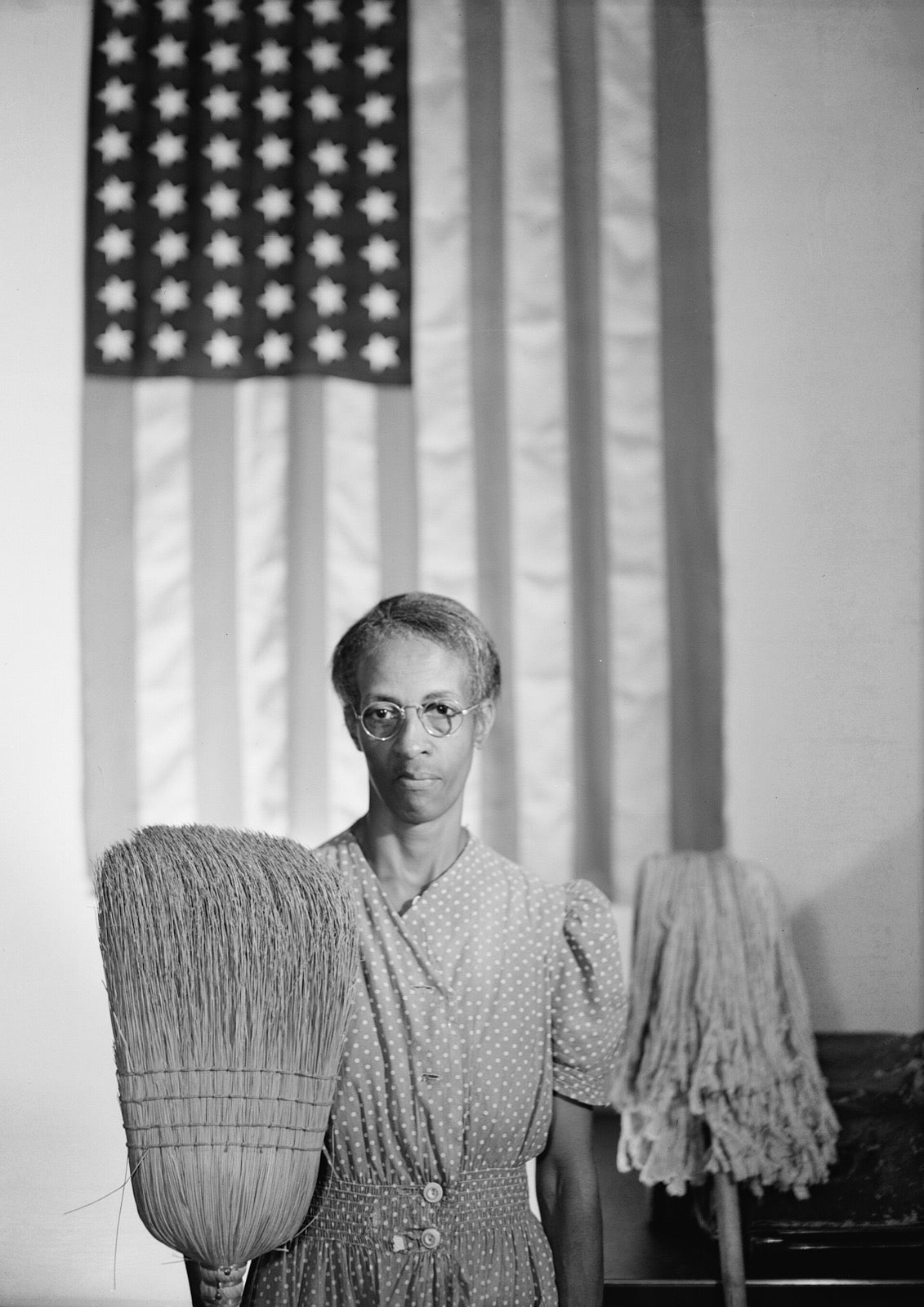
Credit: Gordon Parks, public domain via Wikimedia Commons
Why the painting rarely leaves Chicago
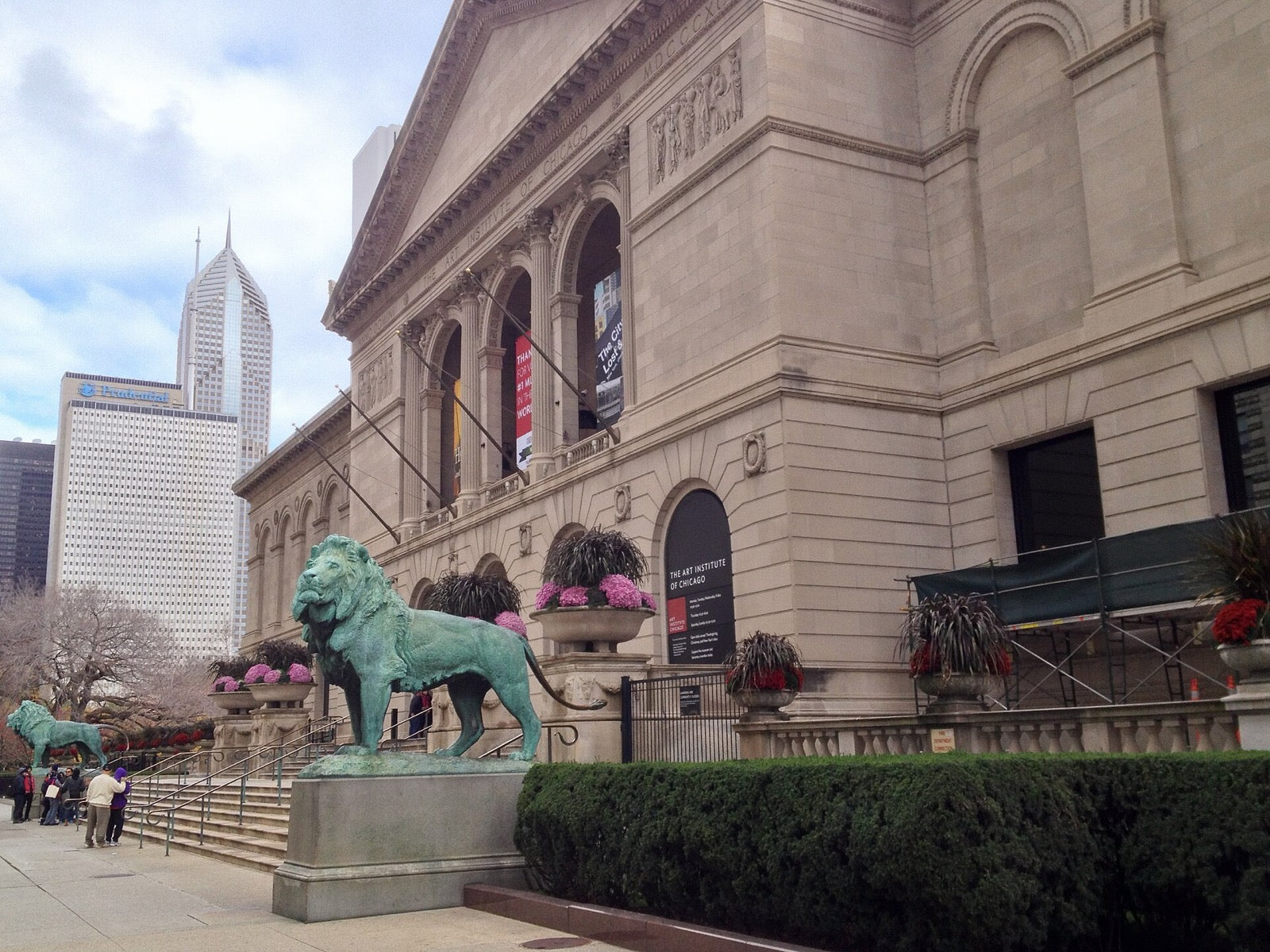
American Gothic has never been sold since the Art Institute of Chicago bought it in 1930, and it almost never travels. The one exception came in 2016 and 2017, when it left the United States for the first time to appear at the Musée de l’Orangerie in Paris and the Royal Academy of Arts in London, before returning to its usual gallery in Chicago, where it has hung for most of the past century.
Credit: Nicholas Hartmann via Wikimedia Commons (CC BY-SA 4.0)
The one mystery Grant Wood never cleared up
None of this was settled by Wood himself. He called the Gothic window on the house “a form of borrowed pretentiousness”, which sounds like mockery, then told angry Iowans, “I had to go to France to appreciate Iowa”, which sounds like affection. Both statements came from the same man, about the same picture, within a year or two of its completion, and neither one has ever cancelled the other out.
That refusal to resolve is probably why the picture is still being reinterpreted nearly a century after it was painted: as satire, as Depression-era comfort, as a mourning scene, as myth, and as raw material for a Google advert. Nan Wood Graham spent much of her life recognised as the woman in the painting without ever fully controlling what people made of her image. Ninety-six years later, the painting she posed for has the same problem.