



Albrecht Dürer etchings are the smallest and least typical part of the work that earned him his reputation as the father of printmaking. He made six, all between 1515 and 1518, and then stopped. Everything else he printed across four decades is a woodcut or a copper engraving.
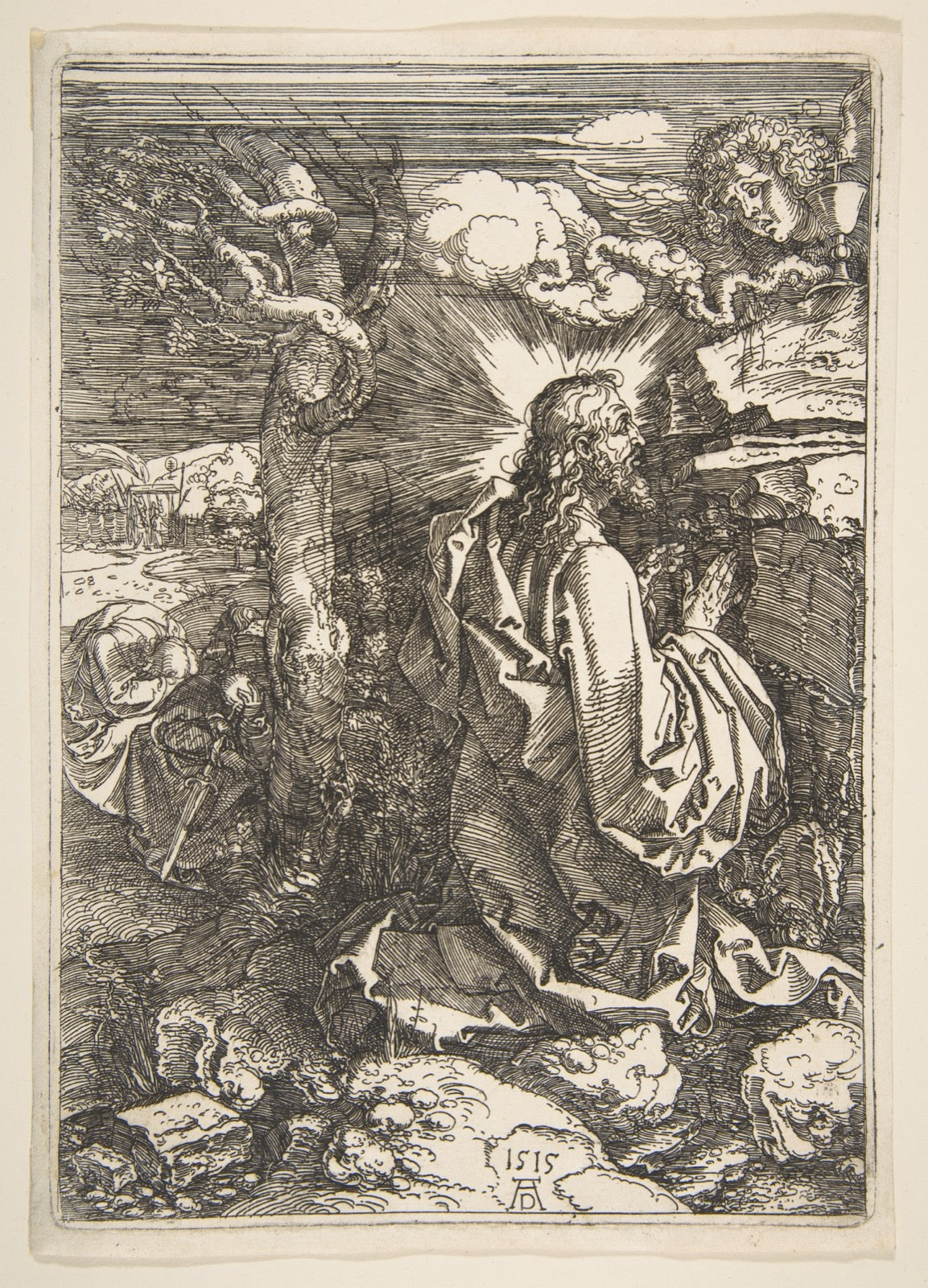
The reason he gave up is visible in the prints. Dürer etched on iron rather than copper, and iron rusts. When Bonhams catalogued his Agony in the Garden of 1515 in December 2018, the entry recorded a Meder IIa/b impression “printing with rust spots”, the corrosion transferring itself onto the paper.
The range in this market is wide. A genuine Dürer woodcut sold at Bonhams in June 2024 for £1,536 including premium. A fine early impression of his engraving Melencolia I carried an estimate of £150,000 to £250,000 at Sotheby’s in 2023. Both are Dürer; the difference lies in medium, date of printing and the quality of the sheet.
Discover all in our:
Albrecht Dürer etchings: a beginner’s guide to the father of printmaking
Credit: The Metropolitan Museum of Art, New York
Six etchings, and why Dürer stopped at six
The etchings occupy three years of a long career. Harvard Art Museums catalogues the 1515 sheet, known both as Christ on the Mount of Olives and Agony in the Garden, as “Etching printed in black ink on white laid paper”. He then went back to the burin for good.
Etching reached printmaking through armour decoration. Daniel Hopfer, an Augsburg armourer, is credited with adapting his trade’s acid and resist method to flat plates around 1510 to 1515, and iron was what armourers had to hand. Lucas van Leyden later became the first in Europe to etch on copper, which held a freer line and lasted longer under the press. Dürer worked before that shift, so few clean impressions could be pulled before a plate deteriorated.
The result is odd: the etchings are scarce in good condition yet cost no more than the engravings. Bonhams sold two of the six in a single lot in December 2018, the 1515 Agony in the Garden with the 1516 Sudarium held by an angel, for £4,375 including premium.
What the title father of printmaking actually claims
Dürer invented neither woodcut nor engraving. Both were established before his birth in 1471, and etching arrived through Hopfer’s workshop rather than his.
What he did was make printmaking an independent art rather than a reproductive trade. He treated a printed sheet as a finished work, signed it with the AD monogram that still anchors every catalogue entry, and sold through agents well beyond Nuremberg. That monogram is also why copying him paid, which is the beginner’s central problem five centuries on.
Credit: The Metropolitan Museum of Art, New York
Telling a woodcut, an engraving and an etching apart
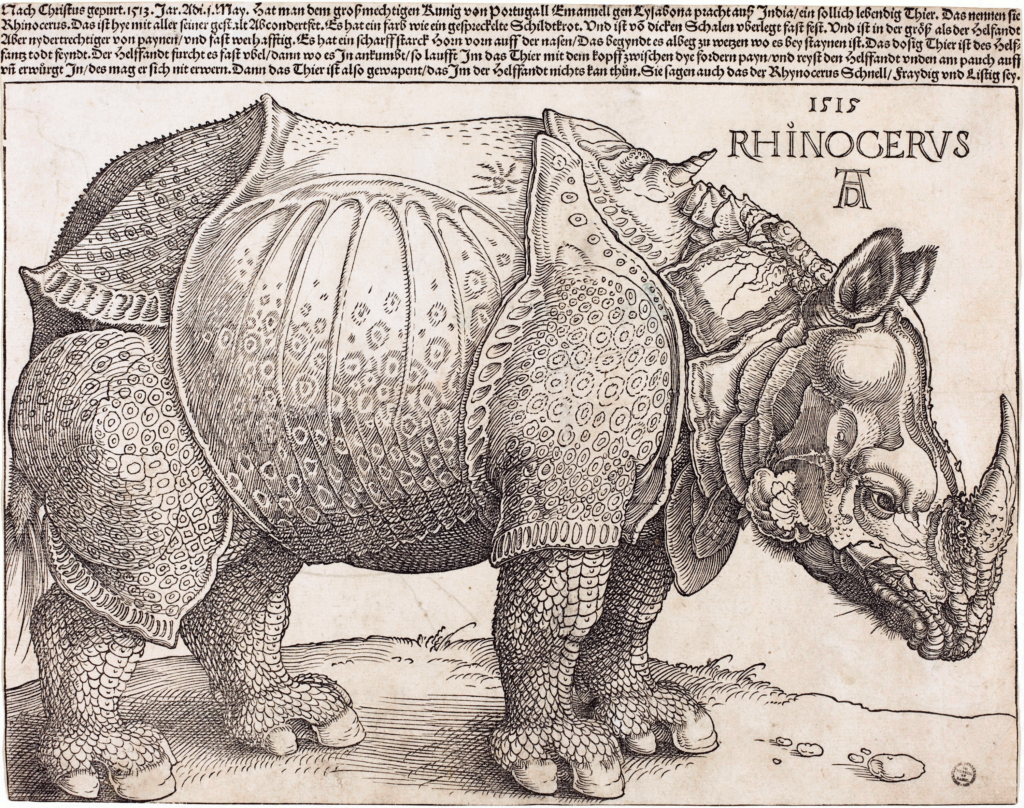
A woodcut is a relief print. The block is cut away so the design stands proud, and it prints as a black line of fairly even weight, which is why Dürer’s woodcuts read as bold and graphic.
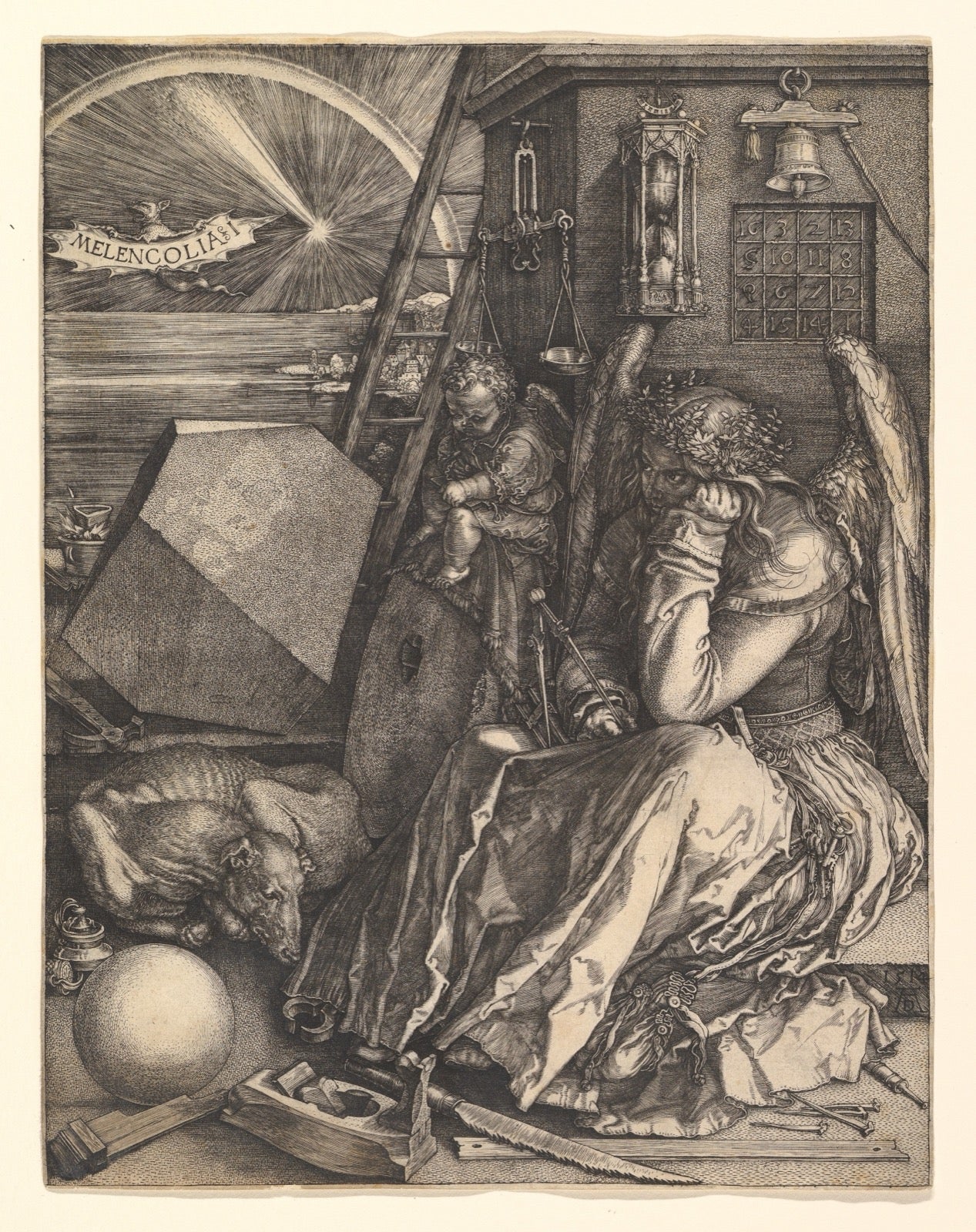
An engraving is cut into copper with a burin, and the line swells and tapers as the tool digs deeper. That control produces the tonal modelling of Melencolia I. An etching is bitten by acid through a wax ground, so the artist draws with a needle rather than cutting metal. Susan Dackerman put the consequence as a question: “Dürer’s etchings: printed drawings?” Beside an engraving, the etched line is looser and softer at the edges.
Meder grades, and why one image carries two prices
Joseph Meder’s 1932 Dürer-Katalog remains the standard reference, recording the engravings, etchings and woodcuts with their states, editions and watermarks. Auction houses still grade sheets by his letters, and earlier letters mean better.
Sotheby’s described a 1514 Saint Jerome in his Study as “a very fine Meder a impression with particularly strong contrasts” printed “on paper without a watermark as is consistent with the earliest and finest impressions”, and estimated it at £100,000 to £150,000 in 2012. Bonhams sold another Saint Jerome from the same plate, graded Meder e/f, in a three-print lot that made £7,500 including premium in December 2018. The image is identical. Decades of printing separate the two sheets.
Credit: Albrecht Dürer, public domain via Wikimedia Commons
Watermarks and paper, within limits
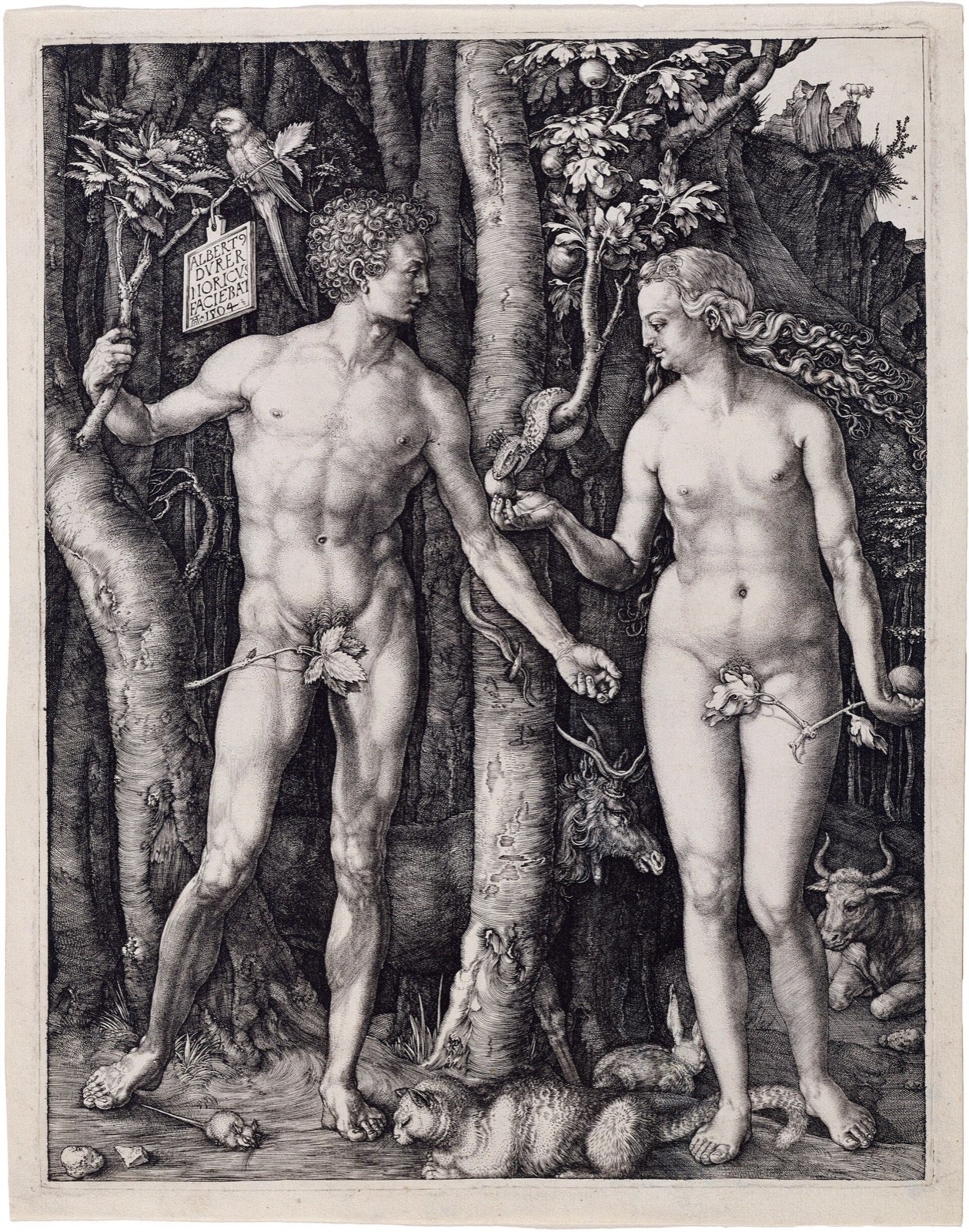
The Adam and Eve of 1504 that Bonhams sold in April 2025 was described as an engraving “on laid paper with Bull’s Head watermark (Meder 62)” in Meder’s third and final state.
The National Gallery of Victoria, which holds some 451 Dürer items, has imaged and published its watermarks. Its research cautions against reading too much into a single mark: paper reaching Nuremberg by river was sorted by merchants “according to the standard paper sizes and the quality of the paper, not by mill or watermark”. A watermark is one strand of evidence alongside state, condition and printing quality, rather than a date stamp.
The facsimiles that catch beginners
Most objects offered as Dürer prints are not Dürer prints. Charles Amand-Durand (1831 to 1905) published photogravure facsimiles of old master prints from 1869, and his Dürer subjects include Melencolia, Adam and Eve, Hercules at the Crossroads and St Thomas. They survive a quick look and still circulate on retail sites under Dürer’s name alone.
Two checks catch most of them. Amand-Durand impressions carry a stamp on the reverse, and the plate mark tends to sit well outside the image rather than close to the borderline. Beyond that, buy where the catalogue grades the sheet: the Bonhams and Sotheby’s entries quoted here, itemising Meder letter, state, watermark, trimming and repairs, are the detail worth insisting on.
Credit: The Metropolitan Museum of Art, New York
What Dürer prints actually cost
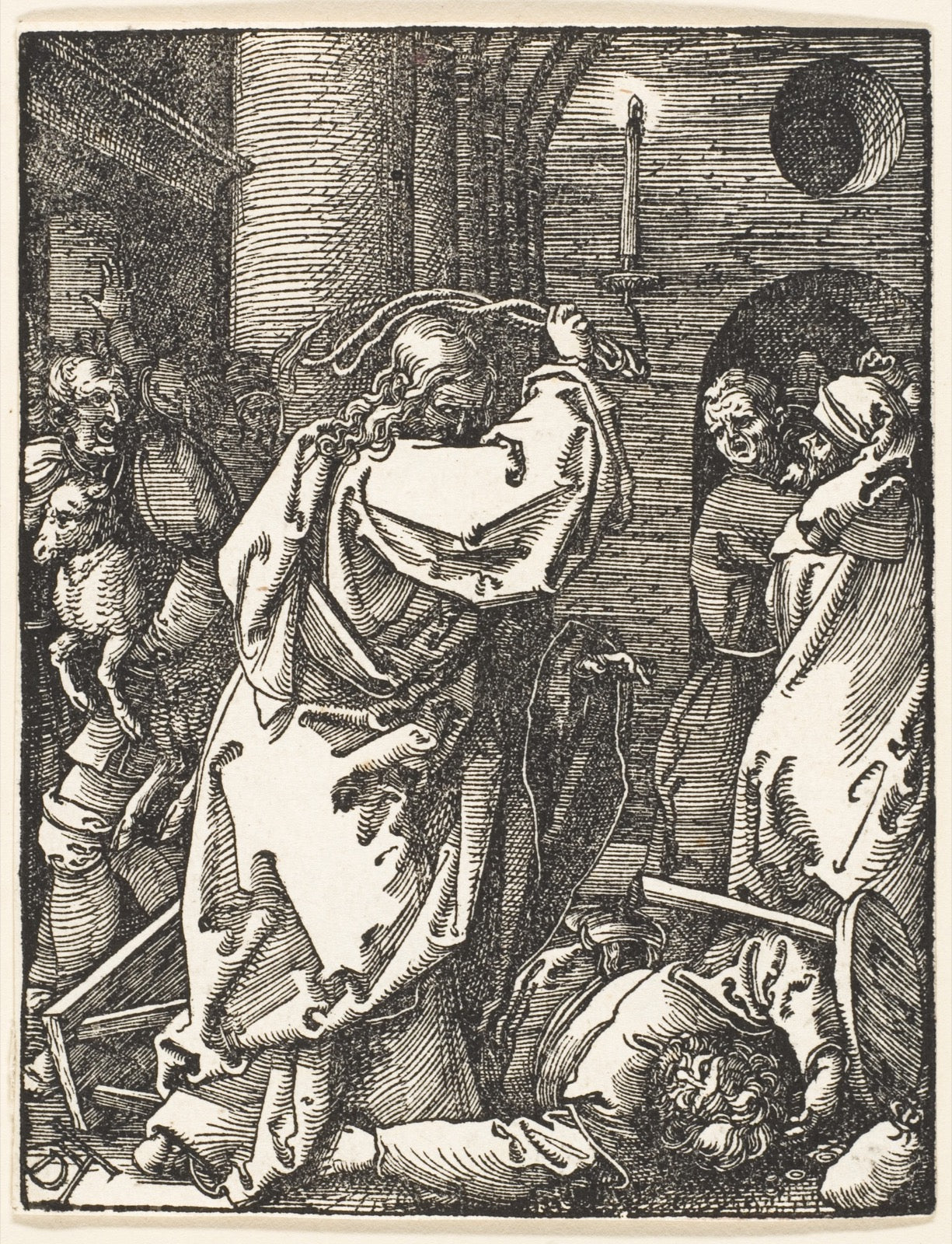
The floor is lower than most people expect. Bonhams sold two woodcuts from the Small Passion for £1,125 including premium in March 2015, a Betrothal of the Virgin woodcut of about 1504 for £2,250 in the same sale, and a Christ carrying the Cross from The Large Passion for £1,536 in June 2024.
Engravings hold the middle ground. In one Bonhams sale in December 2018, Three Peasants in conversation made £3,500, Sol Justitiae £3,750, the Standard Bearer £4,000, The Large Horse £6,000 and The Promenade £8,125, all including premium.
Then it climbs steeply. Adam and Eve made US$114,800 including premium at Bonhams in April 2025, about £89,000. Christie’s offered Knight, Death and the Devil with an estimate of $500,000 to $700,000 in its dedicated Dürer sale of January 2013, a catalogue led by Saint Eustace, which had sold for £190,000 in 1985.
Why the impression, not the image, sets the price
Knowing the pictures is not what this market rewards. One Saint Jerome plate produced a sheet estimated at £100,000 to £150,000 and a sheet that shared a lot at £7,500, and the distance between them is a question of how early the impression was pulled and how well the paper has lasted. Reading a catalogue entry properly matters more than iconography.
The etchings carry a particular advantage. Dürer’s failure with iron has never been priced in, and two of the six sold together for £4,375, less than a good impression of a peasant genre engraving from the same decade. The rust spots that frustrated him are now what a cataloguer records to place a sheet in the printing sequence.