



Valuable foreign stamps most collectors overlook rarely come from Britain or the United States, whose Victorian rarities dominate what most people think a valuable stamp looks like. Beyond the Penny Black and the Inverted Jenny lies a wider philatelic world: Qing dynasty China, colonial Africa, the young republics of Latin America, pre-federation Australia, Tsarist Russia’s rural post, and the independent Kingdom of Hawaii, each with classic rarities that general collectors rarely hear about.
Modern commemoratives are printed by the hundred million; nobody expects those to be worth anything. The ten stamps below are different: hand-engraved die proofs, colonial provisionals and printing-stone errors from the first decades of postage, several carrying an expert certificate, since this is also the material most often forged.
Prices here range from a few hundred pounds to several hundred thousand: the point is not the world’s most expensive stamp but the most interesting one, a misspelt Zanzibar error, a Mexican airmail issue struck for an Amelia Earhart flight, a Chinese die proof that set a world record. Several sold for less than their own catalogue value, and that gap says as much about overseas philately as the stamps themselves.
Discover all in our:
Valuable foreign stamps most collectors overlook
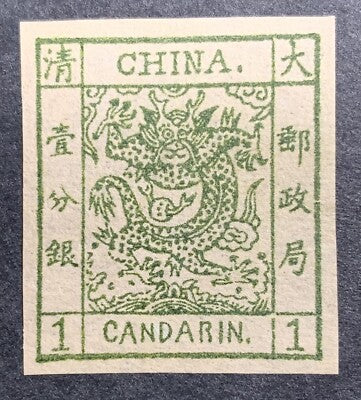
1. China’s Large Dragon die proof (£183,163)
This engraver’s die proof shows the Large Dragon design in its final state, with three dots to each eyebrow, and only two examples are recorded. Spink Hong Kong sold it in January 2016, part of the Meiso Mizuhara collection, the largest single-owner stamp sale ever held in Asia, for HK$2,040,000, about £183,163, a world record for a die proof of any country.
Credit: Spink
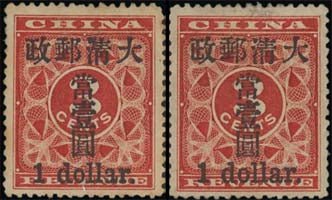
2. China’s Red Revenue “Small Dollar” surcharge (£387,876)
China’s Red Revenue stamps began as revenue stamps for a tax scrapped before it took effect, then sat unused until the new Imperial Post surcharged them for postage in 1897. The rarest surcharge, a dollar on a 3c red, ran to only two panes of twenty-five before its design changed, and just 32 examples survive. Spink sold one from the same sale for HK$4,320,000, about £387,876, against a top estimate of HK$1.5 million.
Credit: Spink
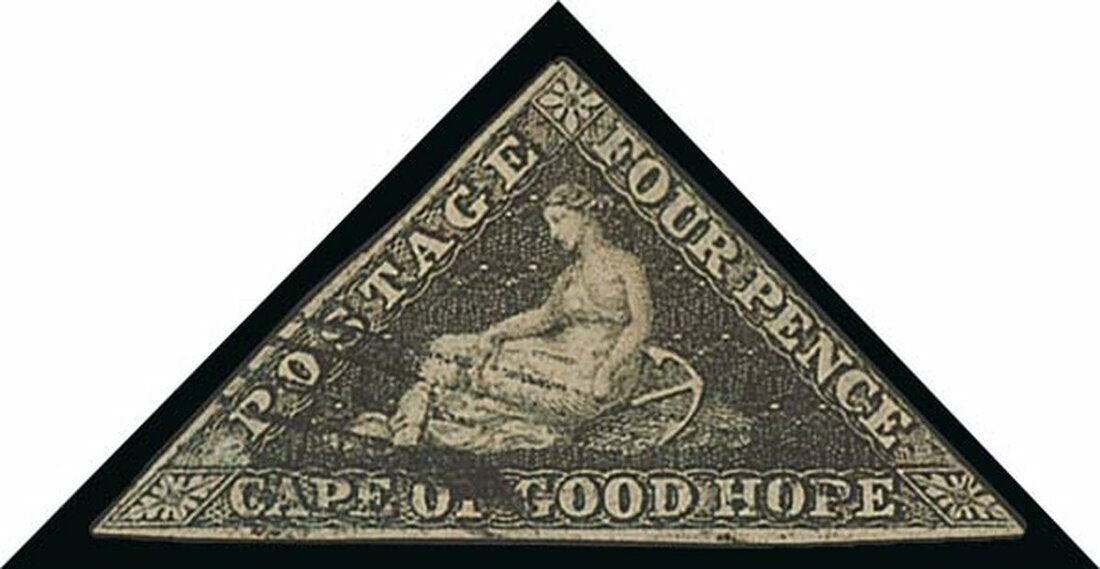
3. Cape of Good Hope’s 4d black triangular (£24,000)
Cape triangulars are well known among collectors of British Africa, but this Perkins Bacon 4d black is scarcer than most, with only twelve examples surviving. A supposed link to mourning for Prince Albert’s death has been disproved, and it is now thought to be leftover proof sheets used during an 1861 stamp shortage. Spink sold this certificated example for £24,000, well under its £35,000 catalogue value.
Source: Spink, 2021
Cape of Good Hope 4d black triangular stamp
Credit: Spink
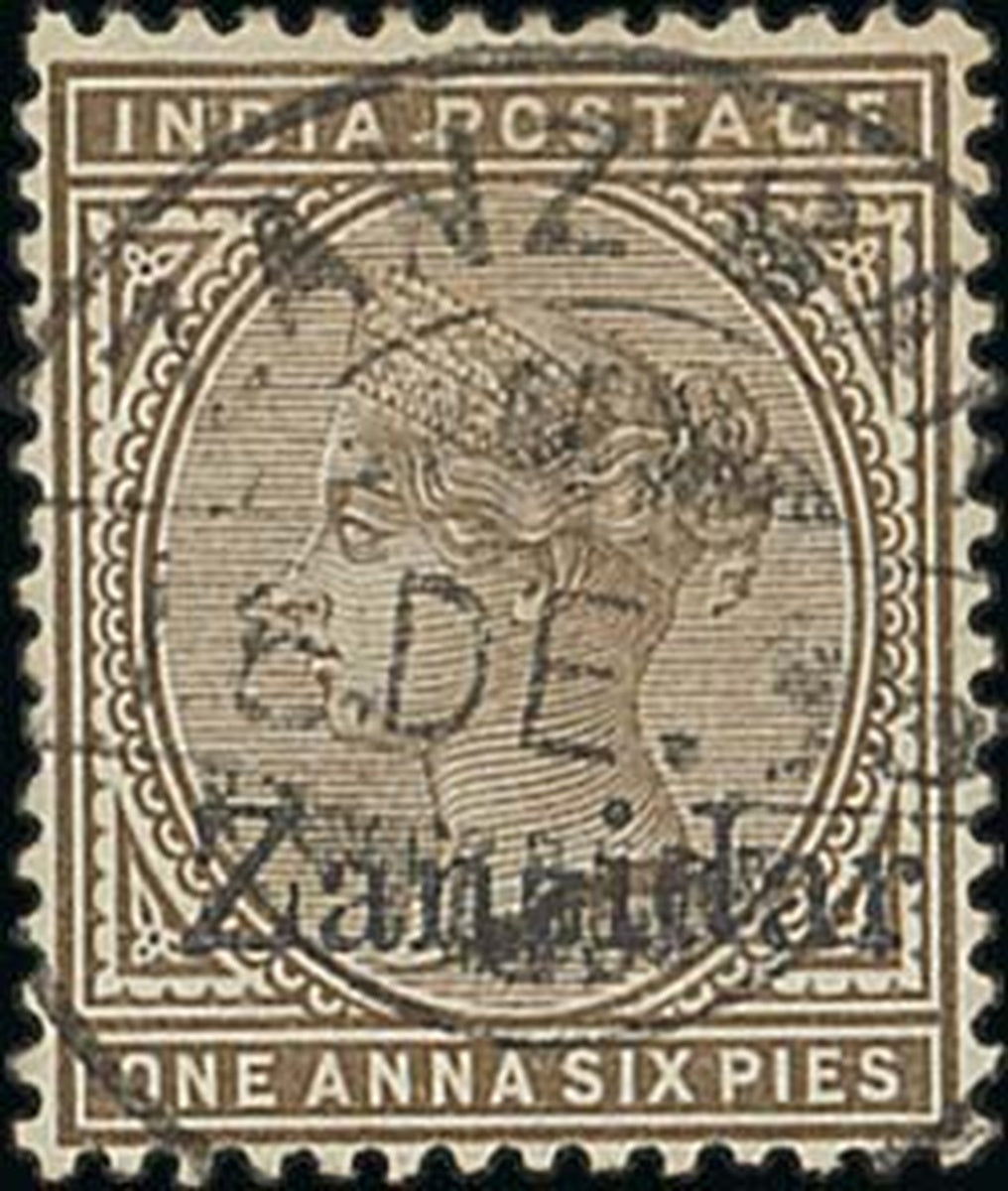
4. Zanzibar’s “Zanzidar” misprint (£300)
A slip at the typesetter’s desk misspelled the country’s name on this 1895-96 1a.6p. sepia stamp, printing “zanzidar” for “zanzibar”. The Royal Philatelic Society certified it genuine in 1953, and Stanley Gibbons catalogues it at £1,200, yet it made only £300 when Spink sold it in 2020, a reminder that an interesting error does not automatically command its book value.
Credit: Spink
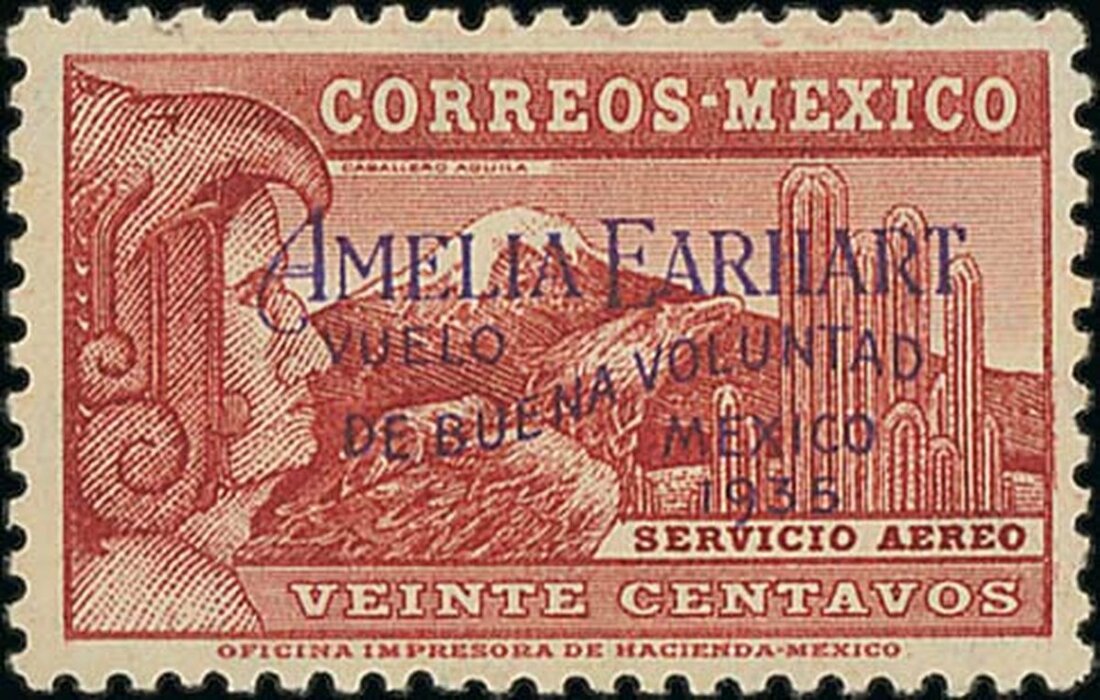
5. Mexico’s Amelia Earhart airmail stamp (£850)
Mexico issued this 20c airmail stamp in April 1935 to mark Amelia Earhart’s flight across the country, in a print run of just 480. Despite that scarcity, and a catalogue value of £3,500, this certificated example made only £850 when Spink sold it in October 2020.
Credit: Spink
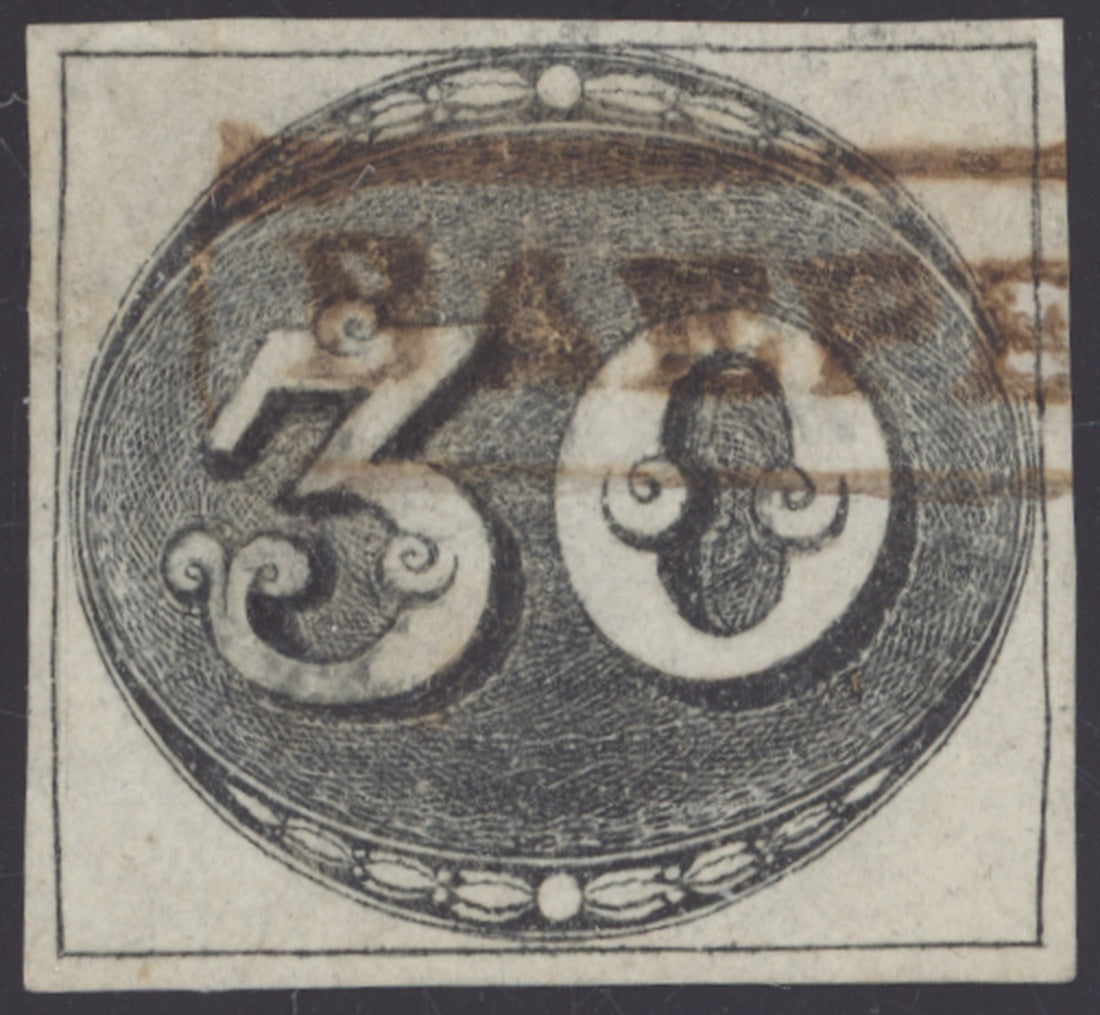
6. Brazil’s Bull’s Eye from Baependi (£950)
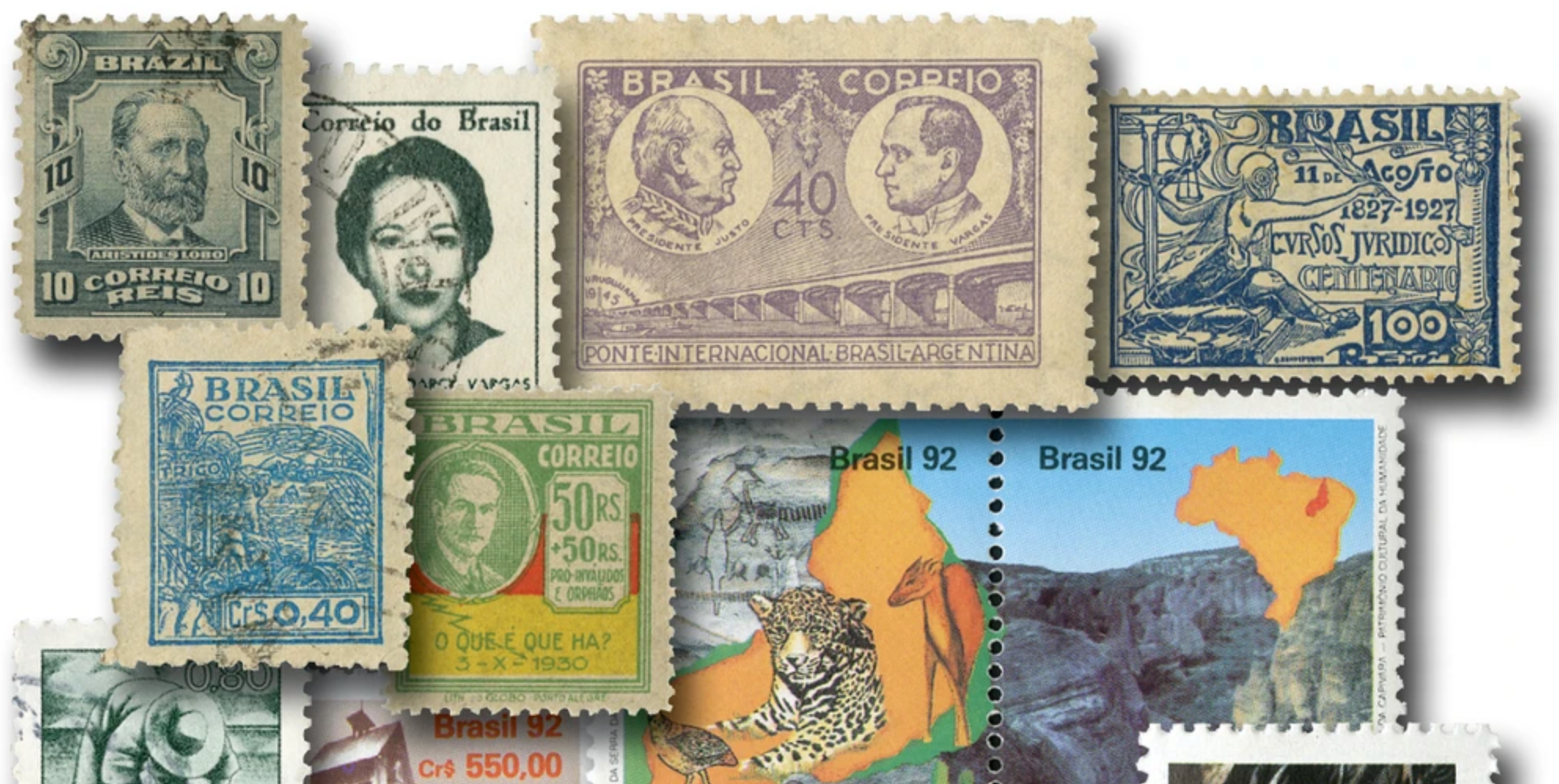
Brazil issued its “Bull’s Eye” stamps on 1 August 1843, the second country in the world, after the United Kingdom, to issue stamps valid nationwide. This 30r black carries the framed handstamp of Baependi, Minas Gerais, the only recorded example of that denomination with that town’s cancellation. Spink sold it for £950 in December 2024.
Brazil’s 1843 “Bull’s Eye” 30 reis stamp
Credit: Spink
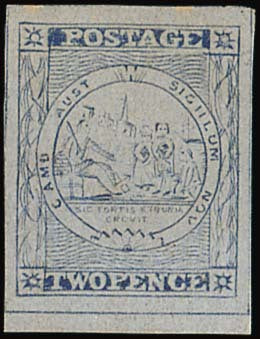
7. New South Wales’s Sydney View twopence (£8,500)
The Sydney Views, issued from January 1850, were the first postage stamps of New South Wales, engraved locally with a view of Sydney Harbour rather than a royal portrait. This Plate V ultramarine example made £8,500 when Spink sold it from the Dauer Collection in 2016, ahead of its £7,500 catalogue value.
Credit: Spink
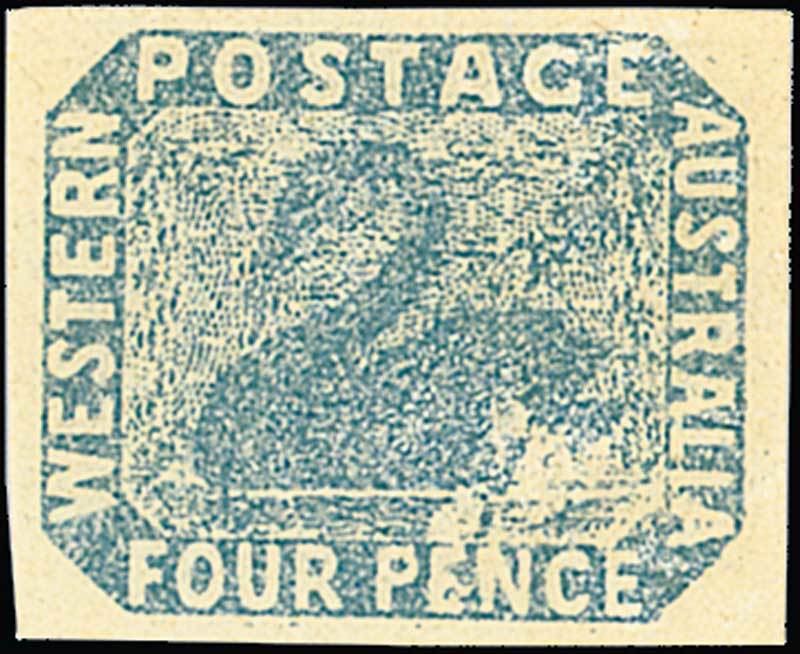
8. Western Australia’s damaged Swan transfer (£850)
Repairing two damaged frames on Western Australia’s printing stone in January 1855, an engraver set one at an angle and the other upside down, producing the country’s celebrated Inverted Swan. The same stone produced smaller flaws too, including this 4d blue showing the swan and water damaged above “ence”. Catalogued at £2,500, Spink sold it for £850 in 2015.
Credit: Spink
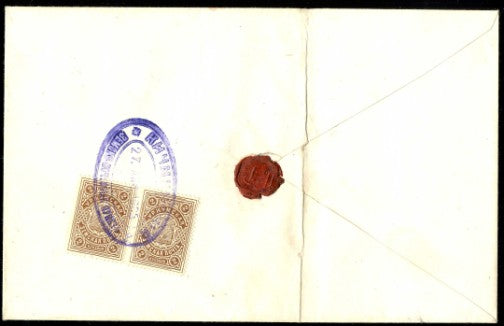
9. A Russian zemstvo pair from Urzum (£240)
Zemstvo posts were local mail services run by Russia’s rural district councils from 1865 alongside the Imperial Post, and at least 3,000 zemstvo stamps were issued before the system ended in 1917. This 1905 2k brown pair from Urzum, on piece, made £240 at Spink, below its £250 to £300 estimate.
Credit: Spink
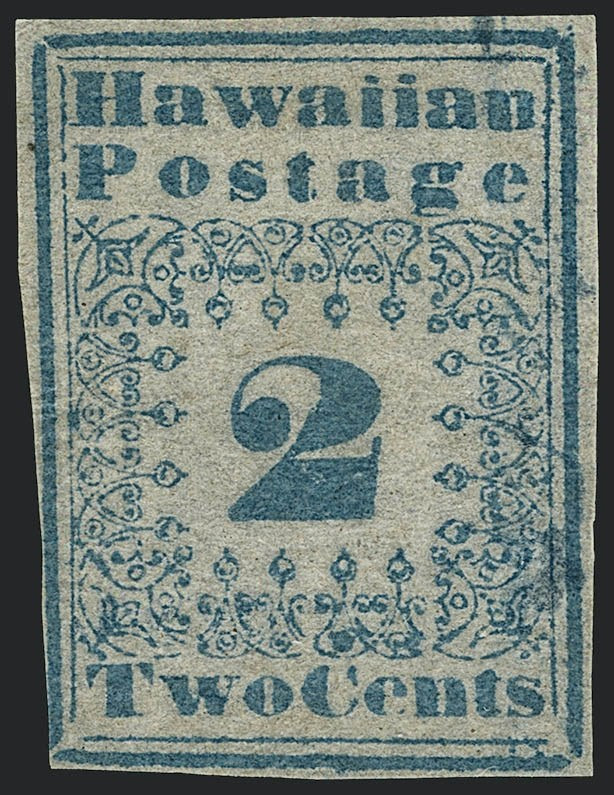
10. Hawaii’s 2c Missionary stamp (£404,126)
Hawaii was still an independent kingdom when it issued the Missionaries in October 1851, decades before it became part of the United States, named for the missionary correspondents who used them most. This 2c example has passed through the collections of Philipp von Ferrary and Maurice Burrus, and made $525,000, about £404,126, when Siegel sold it as part of the William H. Gross collection in October 2018.
Credit: Siegel Auction Galleries
Why catalogue value isn’t the final word
Several of the stamps above made less than their own catalogue value, among them the Zanzibar misprint, the Mexican rarity and the Cape triangular, because an interesting stamp does not always find a bidder who collects that country, or that flaw, as closely as the cataloguer did.
China’s Red Revenue surcharge went the other way, selling for almost three times its top estimate, since Qing dynasty revenue surcharges have a dedicated collector base of their own. Reading the lot description, rather than reaching for a name every collector recognises, is where this kind of value gets found.