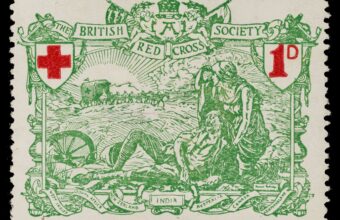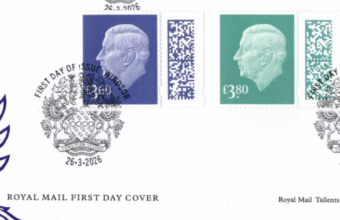




Finding a stamp buyer you can actually trust starts with checking whether the buyer has ever really paid for anything, rather than taking a website’s word for it. Most of the money in philately changes hands out of public view: many of the largest deals are agreed privately, and a price realised at auction is often the only hard evidence a seller ever sees.
That lack of visibility makes the stamp trade an easy one to fake convincingly. A trading name registered last month can carry the same stock photographs and the same offer of a free valuation as a house that has been buying since before the Penny Black turned fifty. The only real test is whether a named lot, a named price and a named date appear on the buyer’s own site, rather than in someone else’s summary of it.
Provenance and authentication decide most of what a stamp is worth once its catalogue number stops mattering. Plate 77 penny reds and British Guiana magentas are also among the most forged and disputed items in the hobby, so a buyer’s certification record tells a seller more than any marketing line does. The seven dealers below all have a documented history of paying the prices stated, checked against each dealer’s own site.
Discover all in our:
Stamp buyers: who can you actually trust?
1. Paul Fraser Collectibles (UK and Channel Islands)
Paul Fraser Collectibles has dealt in rare stamps for 45 years, alongside coins, autographs, and space and entertainment memorabilia. Every sale carries a lifetime guarantee of authenticity, backed by independent expert verification. The firm has placed rarities with the Smithsonian, sold major pieces for the British Postal Museum, and was recently entrusted with the largest and most famous collection of early British postal material ever assembled.

Credit: Paul Fraser Collectibles
Visit Paul Fraser Collectibles
2. Stanley Gibbons (London)
Stanley Gibbons has traded in stamps since 1856, when Edward Stanley Gibbons began selling them from a corner of his father’s chemist’s shop in Plymouth. The Gibbons catalogue, first issued in 1865, remains a standard reference in British philately.
Credit: Public domain via Wikimedia Commons
3. Spink (London)
Spink was founded as a goldsmith’s and pawnbroker’s business in 1666 and moved into philately through Robson Lowe’s business, which it absorbed via Christie’s in 1995. It now runs stamp sales from London, New York, Hong Kong and Switzerland.
Credit: Spink
4. Robert A. Siegel Auction Galleries (New York)
Robert A. Siegel held his first stamp sale as a teenager in Kansas City in 1930. The firm he founded is now the largest stamp auction house in the United States, with 2018 sales alone reaching $36 million, and has been run by Scott Trepel since Siegel’s death in 1993.
Credit: Public domain via Wikimedia Commons
Visit Robert A. Siegel Auction Galleries
5. Grosvenor Philatelic Auctions (London)
Grosvenor was founded in 1997 by three professional philatelists, James Grist, Nick Mansell and Andrew Claridge, and has built its reputation as a leading UK specialist in British Empire and foreign postal history from its saleroom on the Strand.

Credit: Public domain via Wikimedia Commons
Visit Grosvenor Philatelic Auctions
6. Corinphila Auctions (Zurich, Switzerland)
Corinphila has run stamp auctions from Zurich since 1925, making it the oldest such house in Switzerland. Its catalogues are widely used as a reference point in classic philately.

Credit: Corinphila Auctions
7. Bonhams, through Bruun Rasmussen (Copenhagen)
Bonhams handles stamps, covers and postal history through its sister house Bruun Rasmussen, which runs six online sales a year from Copenhagen, with Bonhams’ network reaching 22 countries.
Credit: Bonhams / Bruun Rasmussen
The history of buying and selling stamps
Stamp dealing began almost as soon as stamps themselves. Within two decades of the Penny Black’s introduction in 1840, Edward Stanley Gibbons was buying and selling from a stall in his father’s Plymouth chemist’s shop, and his 1865 price list grew into the catalogue that still prices British stamps today. The trade that followed him for the next century was mostly built around individuals: Robert A. Siegel started in Kansas City as a teenager, and H.R. Harmer built a business in London and then New York on the strength of named collections rather than a shopfront.
Through the twentieth century, many of those individual dealerships were folded into larger auction houses. Robson Lowe sold his business to Christie’s in 1980, and it passed into Spink in 1995. That consolidation left fewer standalone specialist stamp houses than existed a century ago, but the ones that remain still trade heavily on decades of named sales rather than advertising.
What has changed is how a seller checks that history. A collector in 1960 relied on a dealer’s reputation among other collectors; a seller today can look up a lot number and a hammer price on the auction house’s own site before agreeing to anything. That single change is why the houses above are worth checking directly rather than trusting a search result about them.