



The Graf Zeppelin airmail stamps mark one of postal history’s odder chapters: three American stamps issued in 1930 that the public mostly refused to buy, and a parallel run of German issues that helped fund the airship’s most ambitious flights. Both are collected today as much for their aviation history as for the stamps themselves.
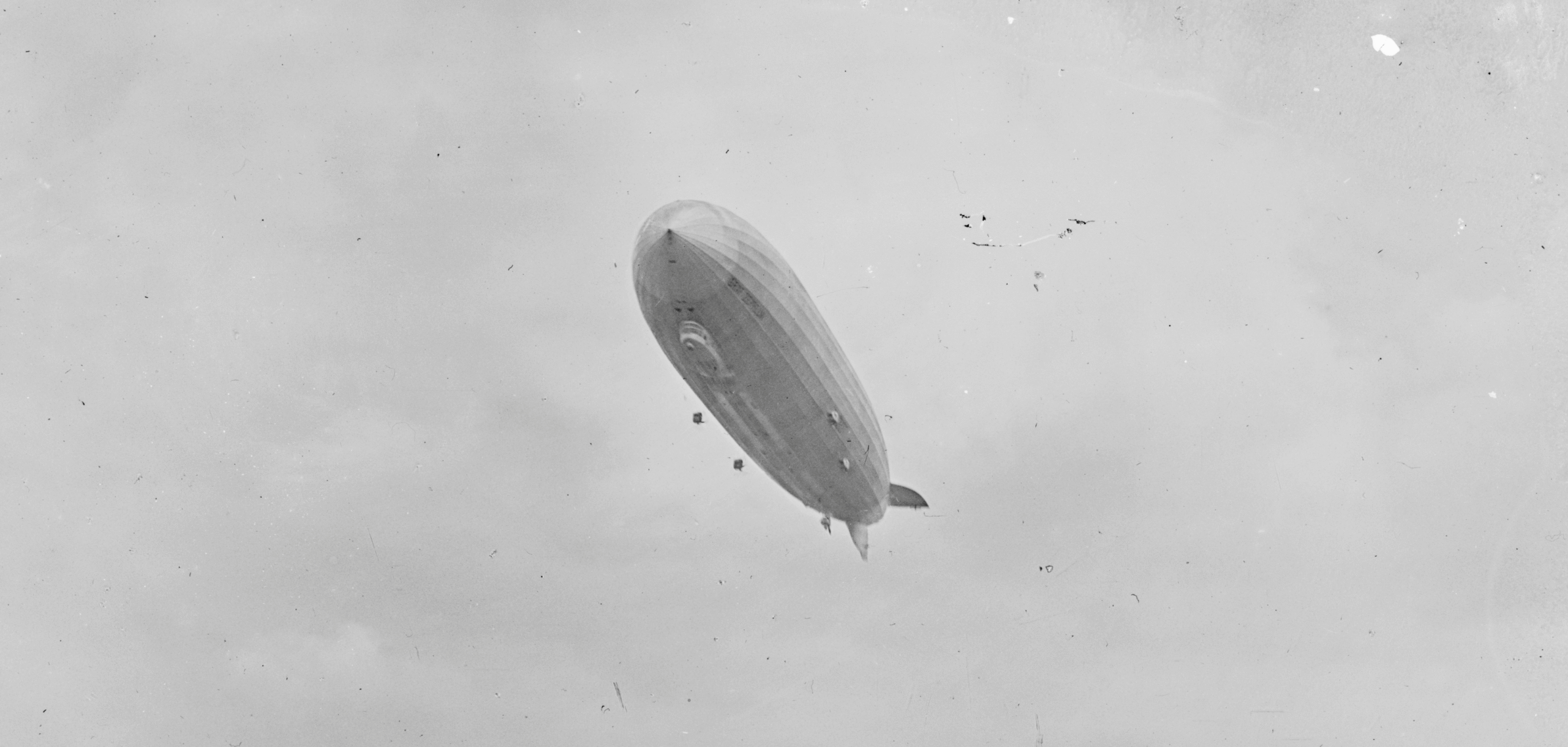
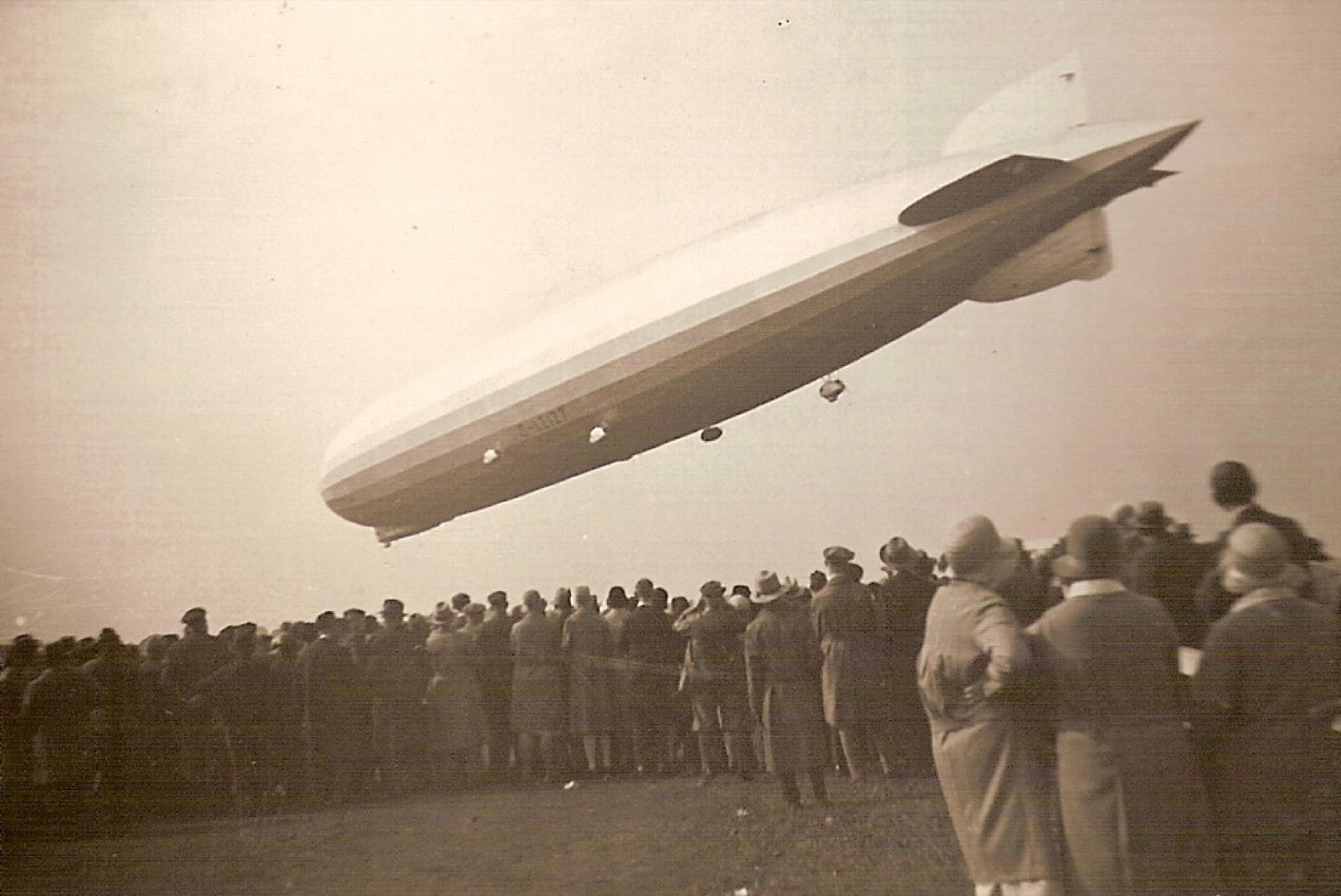
The airship at the centre of it, LZ 127 Graf Zeppelin, was built at Friedrichshafen and christened by Countess Brandenstein-Zeppelin on 8 July 1928. It entered commercial service that October and, within a year, circled the globe in 21 days, 5 hours and 31 minutes, part-funded by the newspaper owner William Randolph Hearst. Mail was central to the business: operators depended on postage revenue to keep it flying, and postal administrations on several continents issued stamps so collectors would pay to have their letters carried aboard it.
That combination, pioneering flight financed partly by collectors, has left a market running from a few pounds to several thousand, depending on the flight, the country and the condition. This guide covers what the stamps are, why the American set became a byword for a flop, and what to check before buying.
Discover all in our:
The Graf Zeppelin airmail stamps: aviation history you can own
Credit: Grombo via Wikimedia Commons (CC BY-SA 3.0)
An airship that flew on other people’s postage
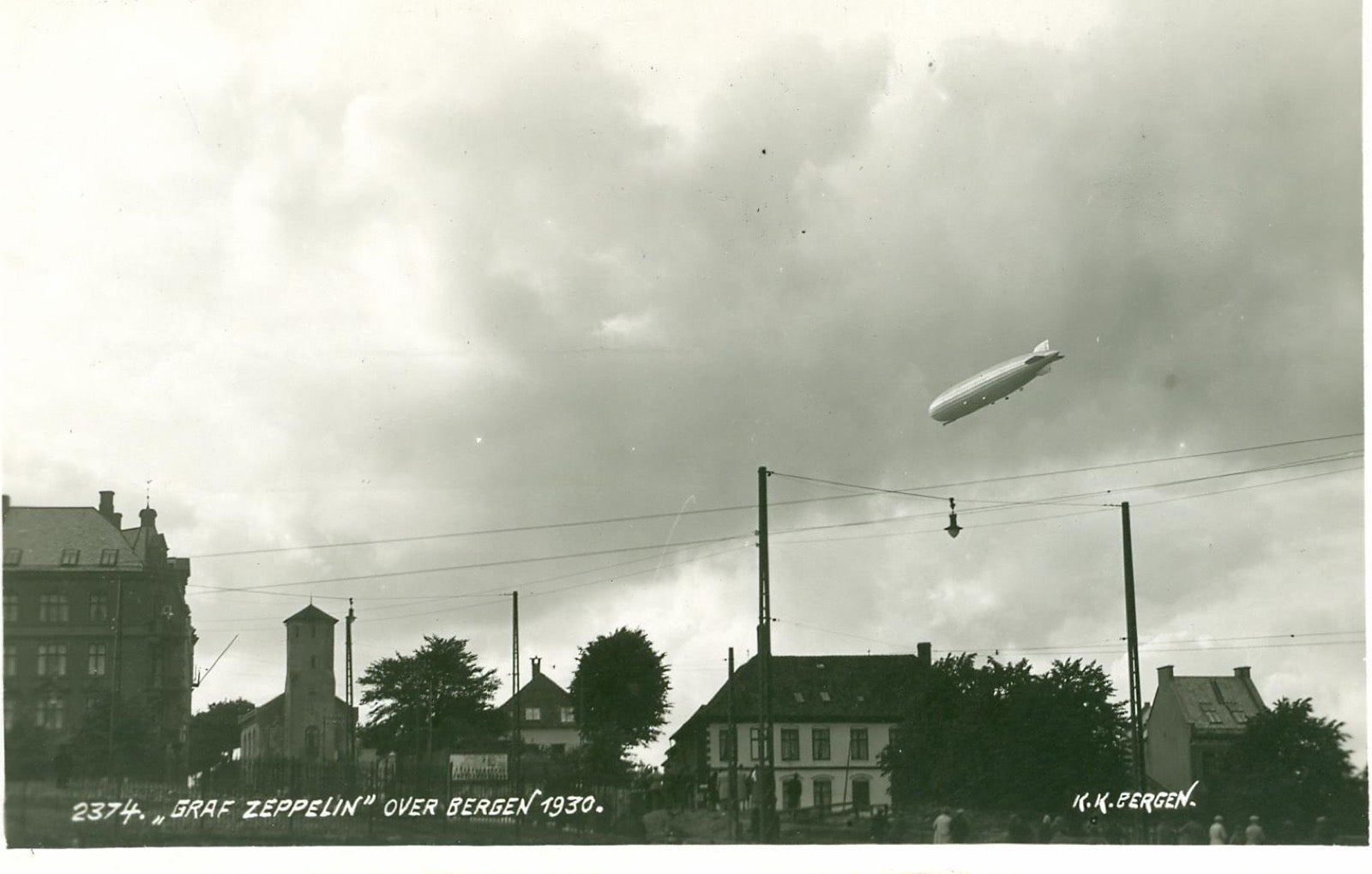
Graf Zeppelin’s commercial case rested on carrying passengers, freight and, above all, mail. Airmail paid a premium, and collectors wanted their letters to share in a famous flight. On its first transatlantic crossing in October 1928 the airship carried 66,000 postcards and covers. Over 590 flights and almost 1.7 million kilometres, it carried 106,700 kg of mail and freight alongside more than 13,000 passengers, without injuring a single passenger or crew member.
That record ended abruptly. Graf Zeppelin was withdrawn from service shortly after the Hindenburg disaster of 6 May 1937, made its last flight on 18 June that year, and was scrapped in April 1940. The stamps issued during its nine years of service remain the most accessible way to own a piece of that history.
Credit: Bergen Public Library, Norway
The American set that collectors loved and the public wouldn’t buy
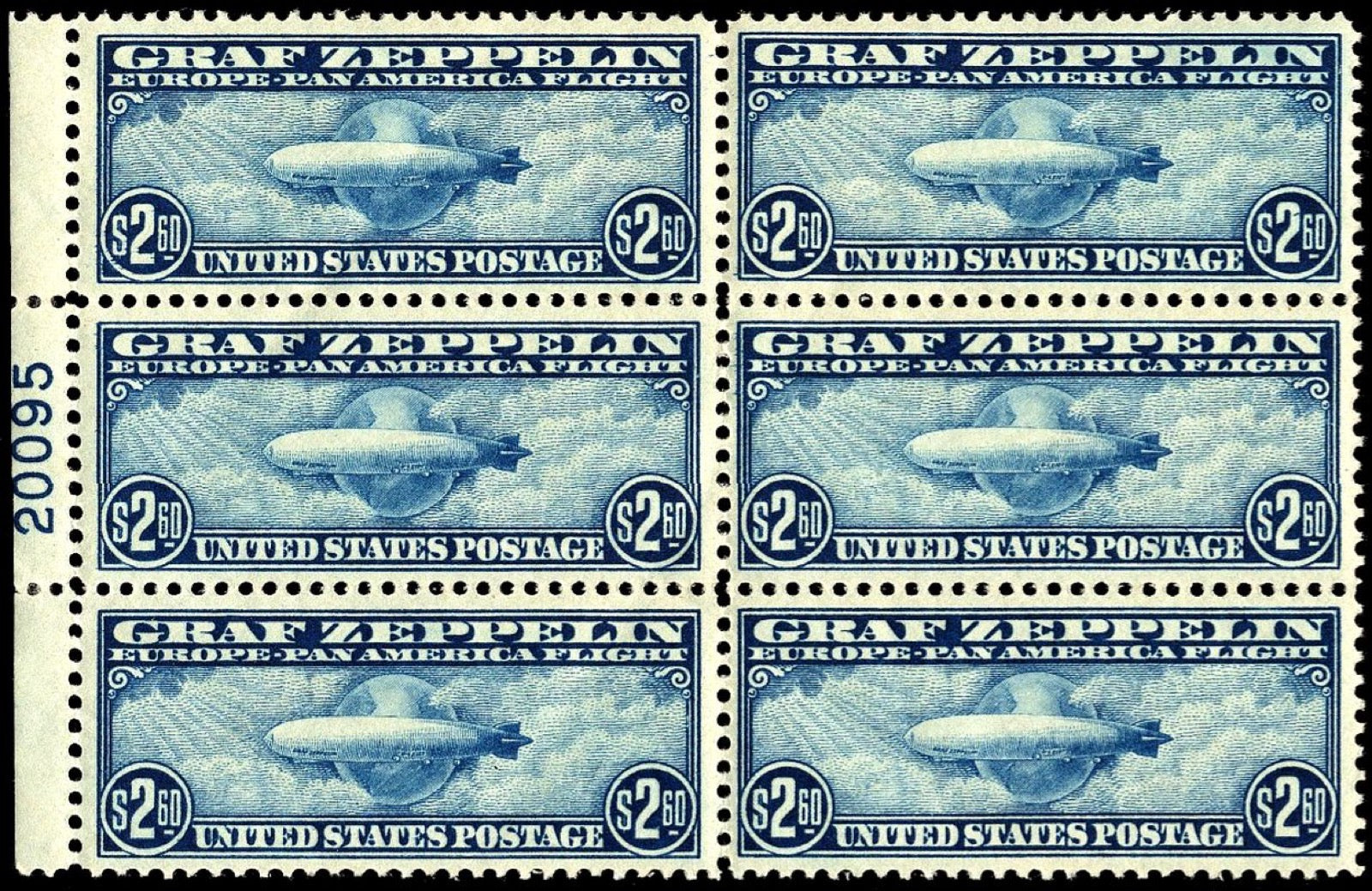
The best-known Graf Zeppelin stamps are the three the United States Post Office Department issued on 19 April 1930: a 65-cent green stamp showing the airship flying east over the Atlantic, a $1.30 brown stamp with the airship over a map of Europe and the Americas, and a $2.60 blue stamp, designed by C. A. Huston and A. R. Meissner, showing the airship among clouds above a globe. The set cost $4.55, a striking sum in the second year of the Great Depression, and the stamps were valid only for mail carried on the Zeppelin’s Pan American flight from Germany to the United States via Brazil.
The Post Office printed 1,000,000 of each denomination but sold barely a tenth: 93,336 of the 65-cent, 72,428 of the $1.30 and 61,296 of the $2.60, a combined 227,260 stamps, or about 7% of the print run. The set was withdrawn on 30 June 1930 and the unsold stock destroyed. Of the revenue raised, 93.5% went to the Zeppelin Airship Works in Germany: the issue was conceived as a goodwill gesture towards Germany, not as a source of postal income.
Credit: Public domain via Wikimedia Commons
Germany’s own tribute in postage
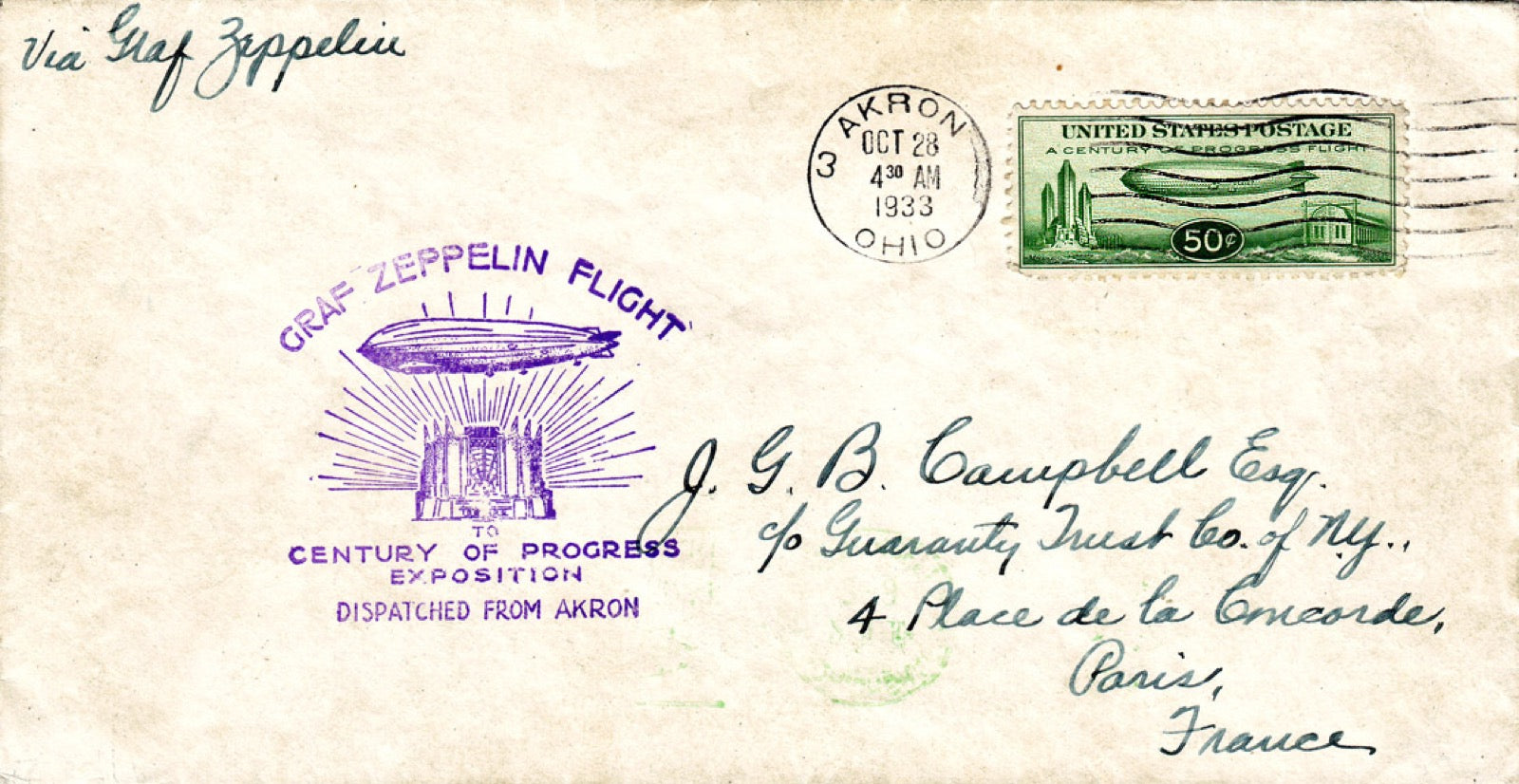
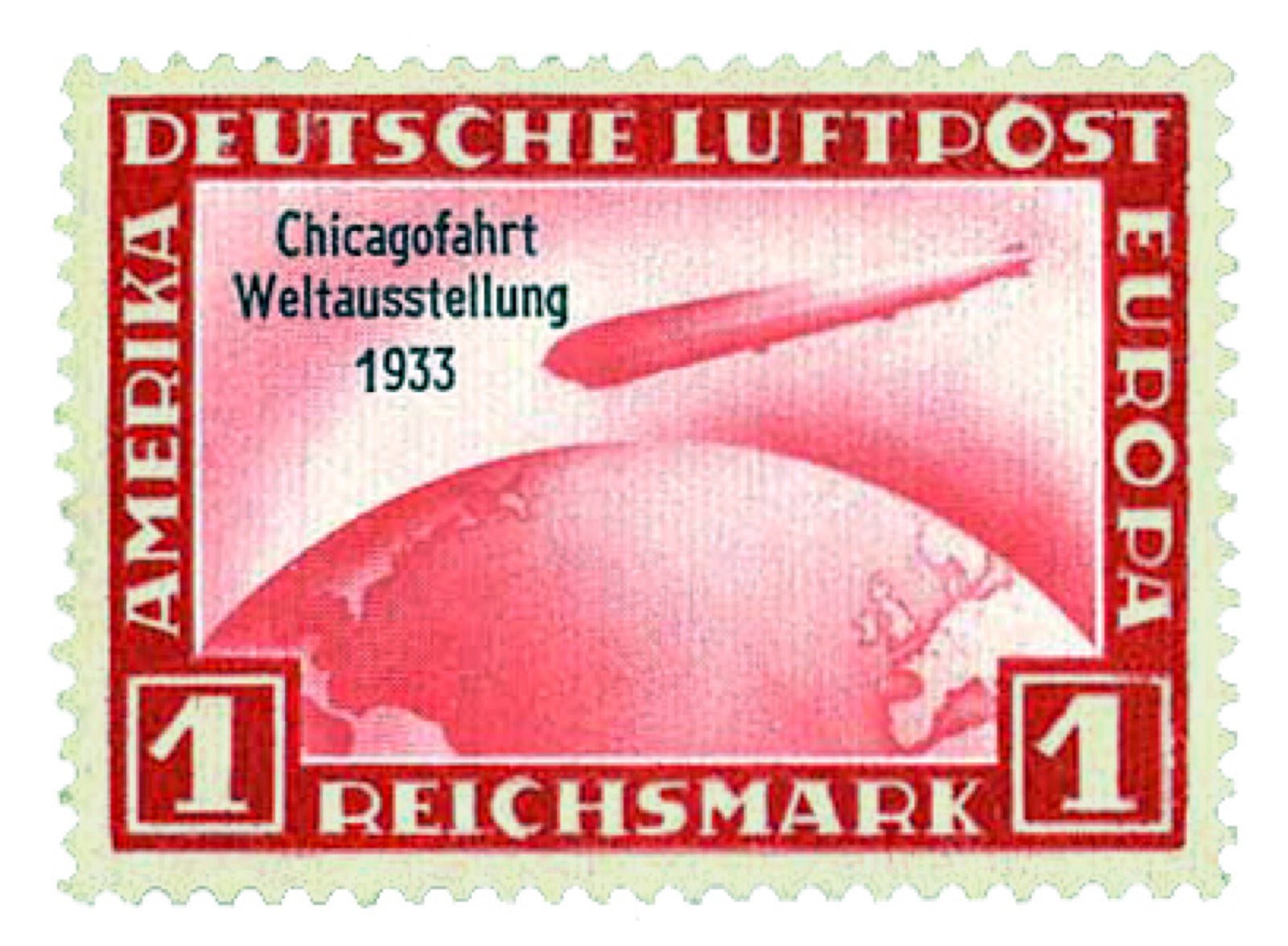
Germany issued its own dedicated Zeppelin stamps alongside the American set. The Reichspost produced stamps specifically for the 1929 round-the-world flight and again for the 1933 flight to the Century of Progress exhibition in Chicago, each issue existing only because of that particular voyage. Other postal administrations in Europe and the Americas followed the same pattern through the early 1930s, tying an issue to a single flight rather than to ordinary mail.
This scattered Zeppelin material across many countries’ catalogues rather than confining it to Germany and the United States. A cover bearing an Egyptian, Brazilian or Argentine stamp and a Graf Zeppelin postmark is no less part of the same story than an American plate block, and for a beginner it is often the more affordable route in.

Credit: Public domain via Wikimedia Commons
What Zeppelin mail actually sells for
Prices vary enormously by what is actually being sold. A complete set of the three 1930 American stamps as plate blocks, the format Scott’s catalogue prices most highly, made £1,674 ($2,691 including premium) at Bonhams in April 2012, against a Scott catalogue value on the same lot of £3,800 ($6,110). That gap between catalogue and hammer price is normal: a catalogue figure is a pricing convention, not a record of what collectors actually pay, and pricing a stamp from the catalogue alone usually disappoints, whether buying or selling.
At the other end of the market, a 1931 postcard carried on Graf Zeppelin’s Cairo to Palestine flight, franked with Egyptian stamps and illustrated by hand with a sketch of the airship over the Sphinx, sold for £111 ($150) at Spink in January 2022. Covers like it, ordinary mail that happened to travel on a famous flight, remain one of the more affordable ways into the field.
Credit: The Cooper Collection of Zeppelin Postal History
Reading a cover before you buy
Condition vocabulary in this field is exact and worth learning before spending any money. Centring, perforation count, whether the gum is original and unmounted or has been hinged, and the type of cancellation each move a stamp’s price independently of the design. A lot described as fine used is not the same object as one described as superb unmounted mint, and the difference shows up in the price, not just the adjective.
Certificates matter more here than in most stamp collecting, because the best-known Zeppelin issues are also among the most imitated. Reprints, proofs, essays and outright forgeries circulate alongside the genuine stamps, and a significant item bought without a certificate from a body such as the Royal Philatelic Society London or the Philatelic Foundation is a different and far less valuable proposition. A cover or postcard is priced as a whole rather than as a stamp with an incidental piece of paper attached, so the route, the cancellation and the rarity of that usage matter as much as the stamp itself.
Credit: Public domain via Wikimedia Commons
The failure that built today’s scarcity
The American set’s commercial failure in 1930 is precisely what makes it collectable now. Because so few of the 3,000,000 stamps printed were ever sold, and because the Post Office destroyed the rest, the surviving 227,260 form a fixed and shrinking population, competing for attention with an expanding roster of country issues tied to Germany’s other flights. That scarcity, combined with a story that touches aviation, the Depression and interwar diplomacy, is why plate blocks and flown covers alike keep finding buyers well above face value, whatever the catalogue says they are worth.