




Rare vintage wine value depends on more than the label and the year on it. Two bottles of the same wine and vintage can sell for wildly different sums, and the gap comes down to a handful of provable factors. On 13 October 2018, a single 750ml bottle of 1945 Domaine de la Romanée-Conti made $558,000, around £429,000, at Sotheby’s in New York, a world record for a single bottle of wine at auction.
Most of the roughly 600 bottles made in 1945 have long since been drunk or lost, and survivors without a documented history are worth a fraction of that record price. What separated the Sotheby’s bottle was the paperwork behind it, since nobody had tasted the wine in decades.
Wine like this supports an entire secondary market of specialist auction houses, from Bonhams to Zachys. What follows is a guide to the factors that separate a bottle worth drinking from one worth bidding on.
Discover all in our:
Rare vintage wine value: what determines a bottle’s worth to collectors
Credit: Gsherry, public domain via Wikimedia Commons
Provenance and the paper trail
The Sotheby’s bottle of 1945 Romanée-Conti came from the cellar of Robert Drouhin, whose family firm, Maison Joseph Drouhin, had distributed the domaine’s wines from 1928 to 1964. That unbroken chain of ownership is what auction houses mean by provenance, worth more to a buyer than any certificate.
A 2026 Sotheby’s sale of a magnum of 1870 Château Lafite makes the same point differently. The bottle came from Glamis Castle, seat of the Earls of Strathmore and Kinghorne, whose cellar books recorded the purchase of 48 magnums in 1878, rediscovered untouched in their original bins ahead of a Christie’s sale in 1971.
Bonhams found the same appeal in a single-owner cellar closer to home: a restaurant’s stock, bought directly from the producing domaines over three decades. One lot, two bottles of 1999 Domaine Leroy Clos de la Roche, made £8,060 against an estimate of £4,500 to £5,500.
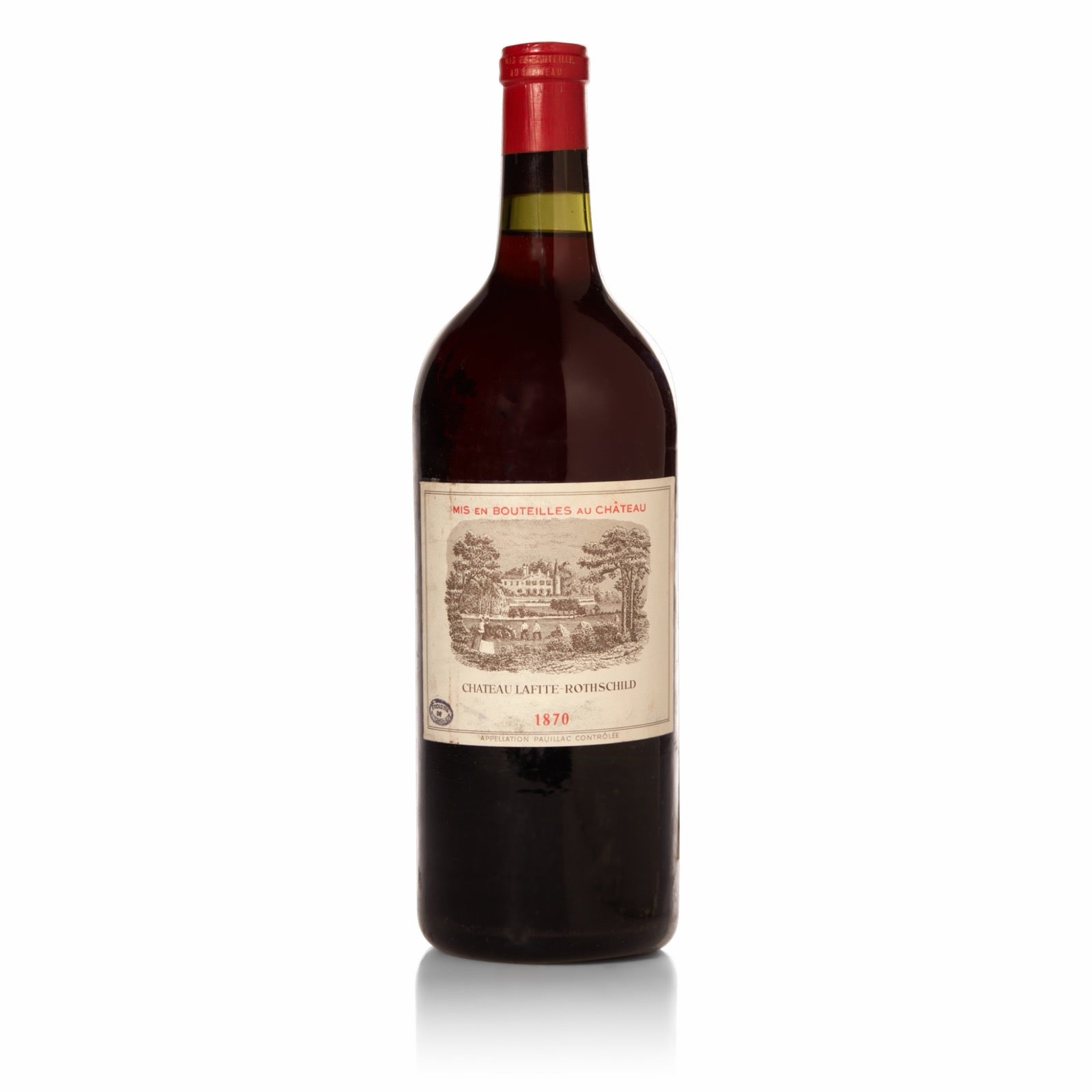
Credit: Sotheby’s
Rarity, and how many bottles are actually left
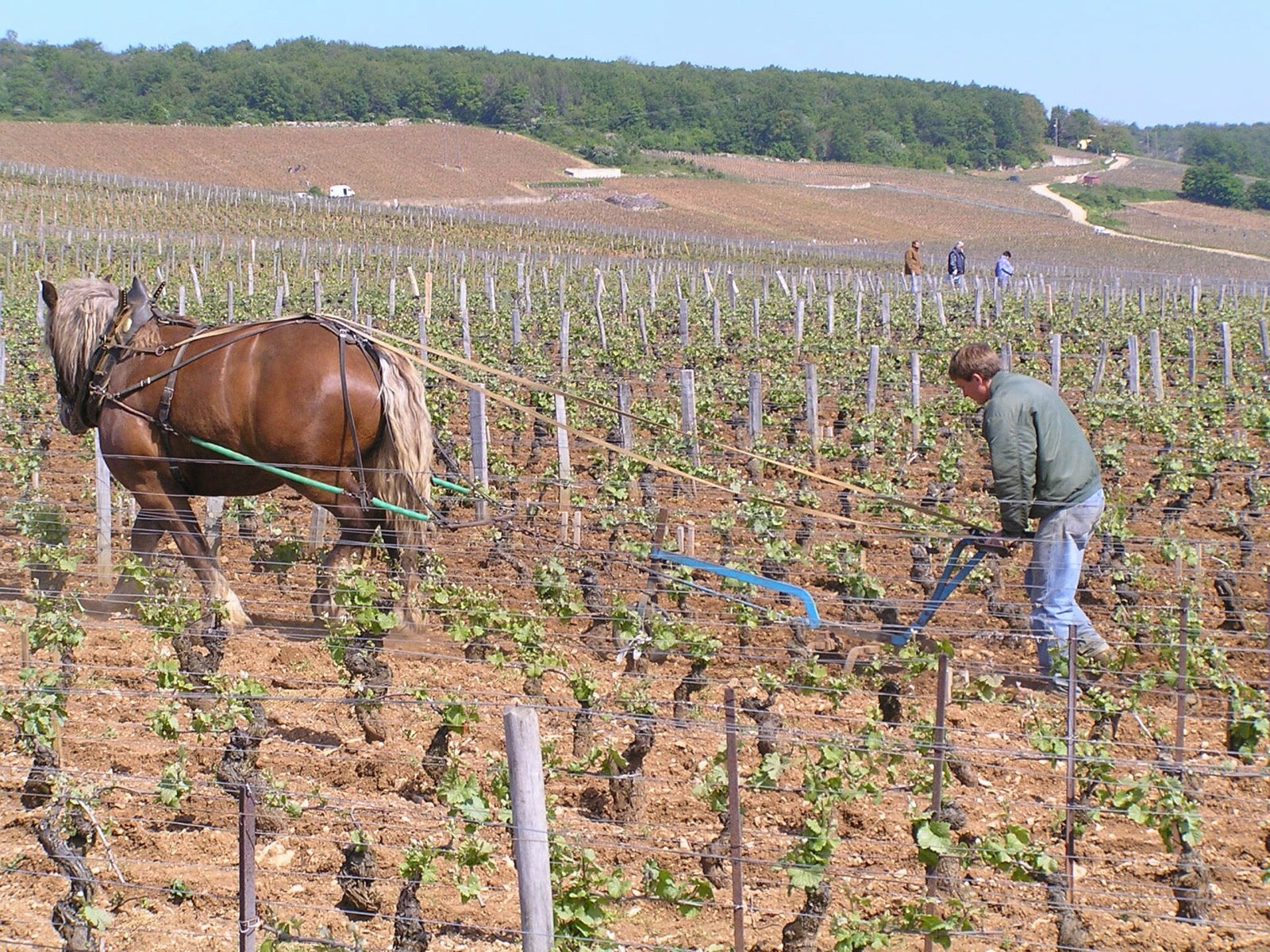
The 1945 vintage at Romanée-Conti was tiny to begin with. Frost and hail cut the harvest to around 600 bottles, from vines that had survived phylloxera, only for the domaine to pull those same vines up once the grapes were picked. No later vintage could come from that plot again, making 1945 a genuine full stop rather than an old date on a label.
That scarcity is why the sale beat a record that had stood since 2007, when a jeroboam of 1945 Château Mouton Rothschild held the title for a single bottle. Large formats and reissues can soften rarity, but a vintage whose vines no longer exist cannot be replenished at any format.
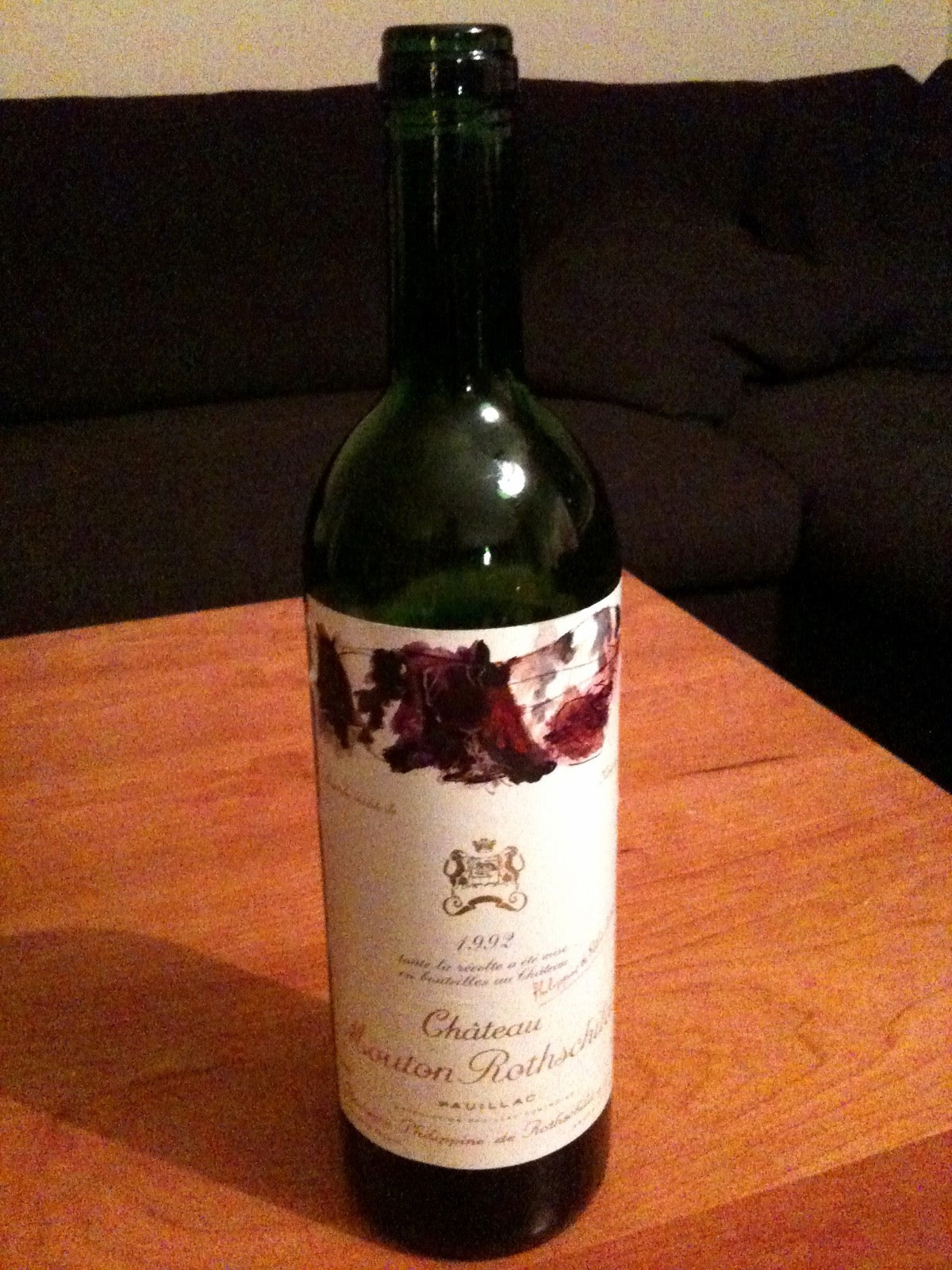
Credit: Michael Reuter via Wikimedia Commons (CC BY 2.0)
The producer’s name and the vintage’s reputation
Rarity on its own is not enough. A forgotten producer’s last bottle is still a forgotten producer’s last bottle. Value climbs fastest when scarcity meets a name collectors already trust, which is why a single November 2023 sale in New York, built around one collector’s cellar, set five world records in one afternoon without leaving Bordeaux and Burgundy’s best-known estates.
Four identical twelve-bottle cases of 1959 Château Lafite Rothschild each made $87,500, around £70,500, a record for that wine. Twelve bottles of 1945 Château Mouton Rothschild topped the sale at $200,000, around £161,000. Petrus set records for its 1989 and 1990 vintages in Imperial bottles, at $87,500 and $81,250 (around £70,500 and £65,500), and a twelve-bottle case of 1993 La Tâche made $68,750, around £55,000. These are blue-chip names in vintages the market already rates highly.
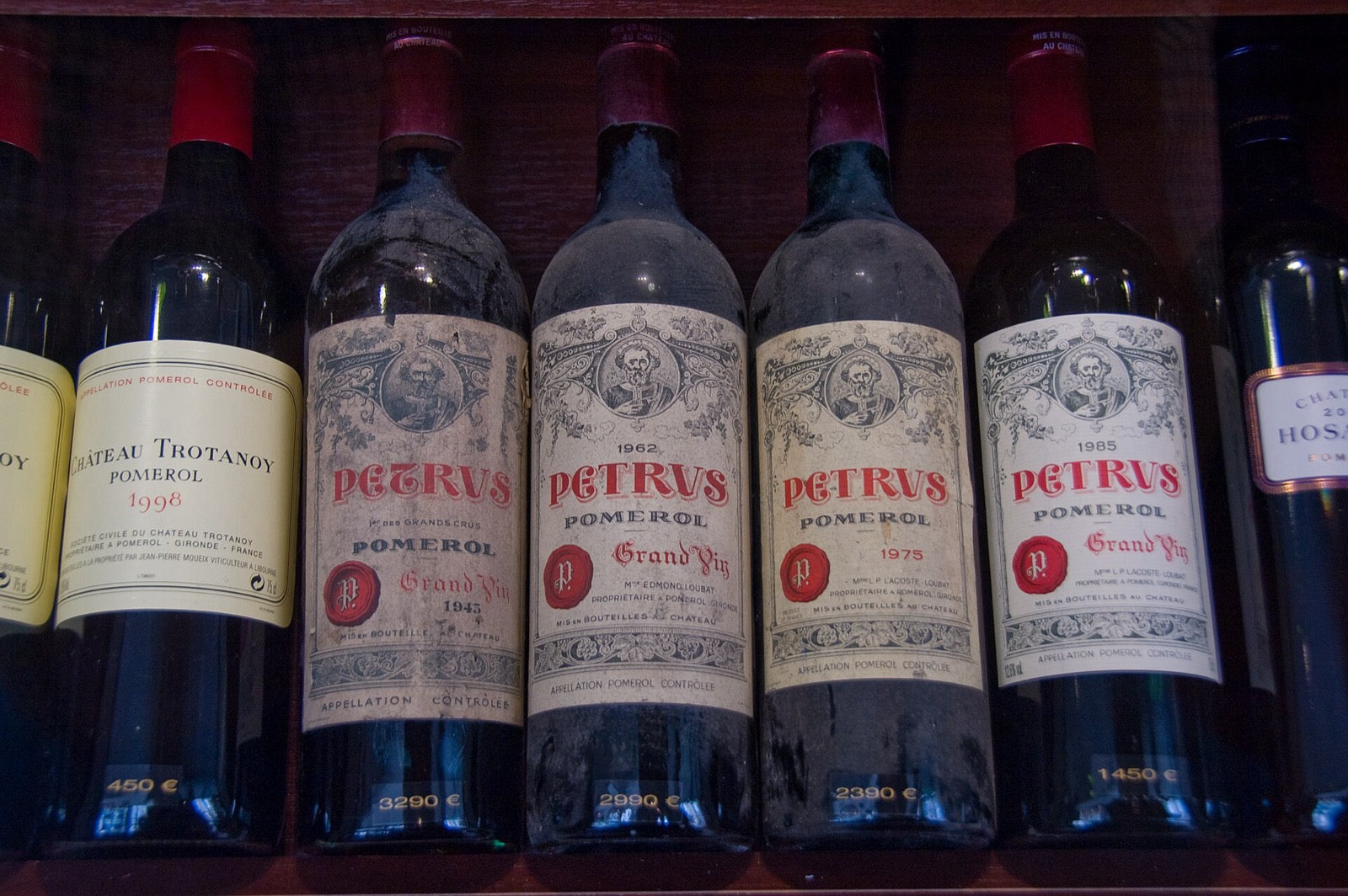
Credit: Frederik Vandaele via Wikimedia Commons (CC BY 2.0)
Condition: ullage, fill levels and storage history
Auction houses grade old wine by its ullage, the gap between the cork and the wine, since a low level usually means air has got in and the wine has been oxidising. Zachys treats fill level as a risk indicator rather than a verdict on its own, since what matters most is whether the level fits the bottle’s age and stays consistent across a case.
Storage history carries just as much weight as the label. Bonhams described the Hostellerie Jérôme cellar as stored with extreme care and still in pristine condition after decades in the restaurant’s own cellars. Sotheby’s said much the same of the Glamis Castle magnums of 1870 Lafite, described as nothing short of perfection at over a century old.
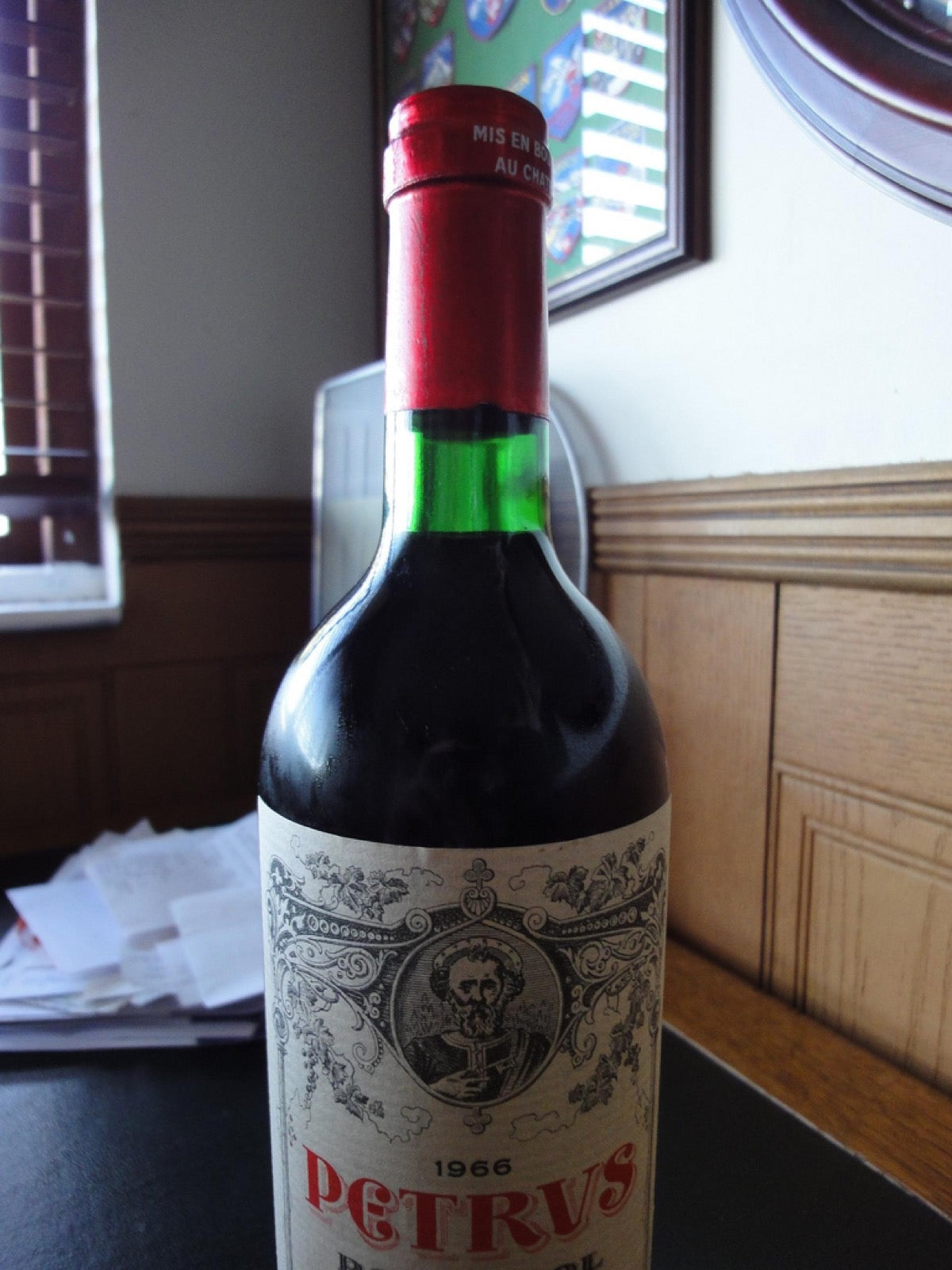
Credit: Andrew Phillips via Wikimedia Commons (CC BY 2.0)
Bottle size changes the price, but not by a simple multiple
A magnum holds two standard bottles and an Imperial holds eight, but neither commands a price that is simply the standard bottle multiplied up: large formats age more slowly and are rarer, since fewer were ever filled. The Glamis Castle magnum of 1870 Lafite carries a pre-sale estimate of $30,000 to $50,000, roughly £23,000 to £38,000, for an April 2026 Sotheby’s sale, reflecting its size and story rather than its volume.
A format nobody expects to see can also outperform its estimate simply because so few exist. The Petrus Imperials above make the point: large-format Pomerol is rare enough that a saleroom will compete for one regardless of what a standard bottle is doing that week.
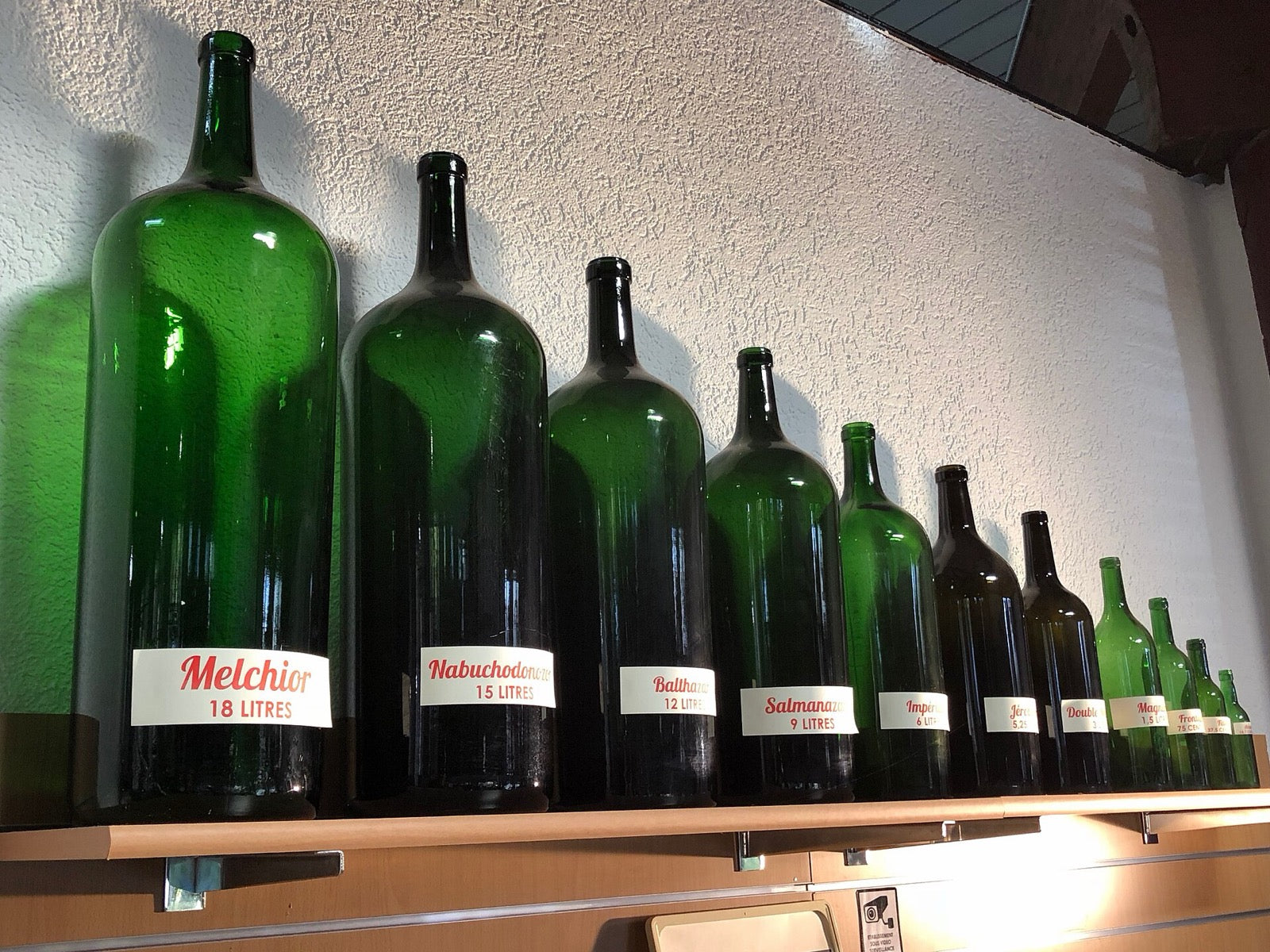
Credit: Slywire via Wikimedia Commons (CC BY-SA 4.0)
Critic scores and what they do to demand
A high score from an influential critic can move a price before a bottle changes hands. One Bordeaux shipper, describing Robert Parker’s effect on wine still in barrel, said the gap between a score of 85 and 95 for the same wine had been worth six to seven million euros, and that “a bottle rated 100 can multiply its price fourfold.” Political scientist Colin Hay found Parker’s scores alone accounted for around a third of the variation in release prices for Saint-Émilion, and a similar share for Médoc.
Scores do not override everything else. Château Pavie’s 2003 vintage got a positive rating from Parker on release and still sold for 30% less than its opening en primeur price once bottled, a reminder that a score competes with reputation, provenance and the wider market.
Why the same wine can sell for ten times itself
None of these factors works alone. The Sotheby’s bottle of 1945 Romanée-Conti needed the vintage’s rarity, Robert Drouhin’s documented cellar and a market already primed to pay record sums for Burgundy, all at once, before it could reach $558,000. A bottle of the same wine without that paper trail would still be valuable. It would not be record-breaking.
The Zachys sale made the same point from the other direction, setting five records in one afternoon because a single documented cellar put rare formats of blue-chip producers in front of buyers who collect exactly those names. A famous château and an old vintage are a starting point, not a valuation. What turns that into a price is what can be proven afterwards, and how many people are chasing the same name right now.