
Autographed whisky bottles sit where two branches of collecting meet: the whisky itself, already collectable on rarity and age alone, and a signature added by whoever distilled it, designed its label, or once held the glass. That combination has produced unusual results in the spirits market, from a Japanese whisky signed by its chief blender that made over £780,000 in Hong Kong to a parliamentary bottle signed by a backbench MP that sold for £17.50.
A signature on a whisky bottle tends to fall into one of two categories. The first belongs to whoever made the liquid or the label: a master distiller or blender who signs each numbered bottle, or an artist commissioned to sign the packaging, as Peter Blake did for a Macallan bottled from a 1926 cask. The second belongs to a public figure with no hand in making the whisky, brought in to sign bottles for a charity sale, a parliamentary tradition, or a personal connection to the brand. Both carry weight with buyers, but for different reasons: the first for what it says about the whisky’s craft, the second for the story attached to the name.
Where a bottle lands on that scale decides most of its price. This guide looks at what pushes a signed release into six and seven figures, how to check a signature is genuine before bidding, where signed bottles actually come to market, and how to look after one once it is on the shelf.
Discover all in our:
Autographed whisky bottles: a collector’s guide to signed spirits memorabilia
Credit: Bonhams
When the distiller or the artist signs
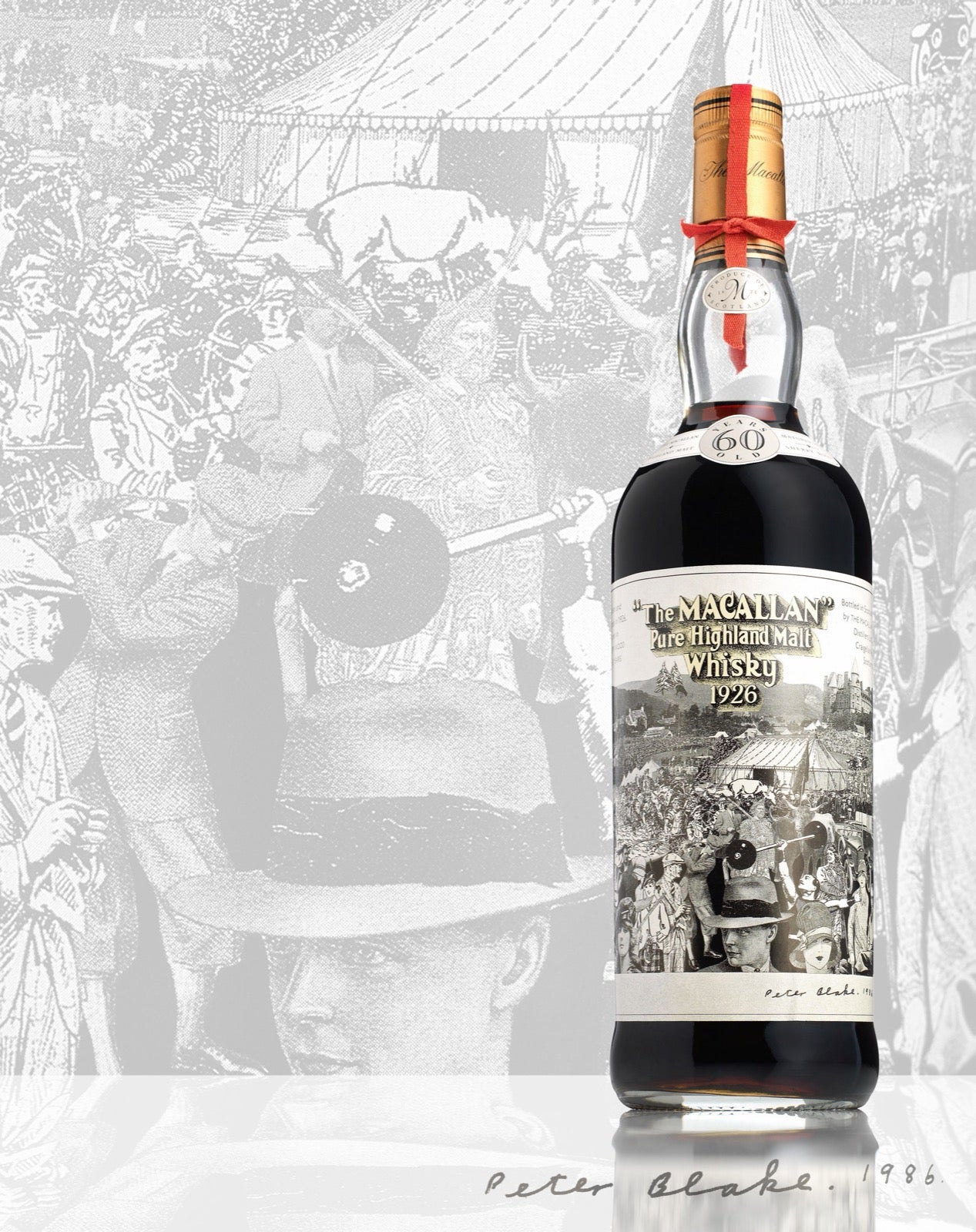
The highest prices in this category belong to bottles where the signature comes from someone who made the whisky or its packaging. The Macallan’s 1926 vintage, matured for 60 years, was released with labels designed by Peter Blake and signed by both Blake and Allan Shiach, the Macallan’s chairman. One of the twelve bottles carrying that label sold for £615,062.50 at Bonhams on 6 March 2019.
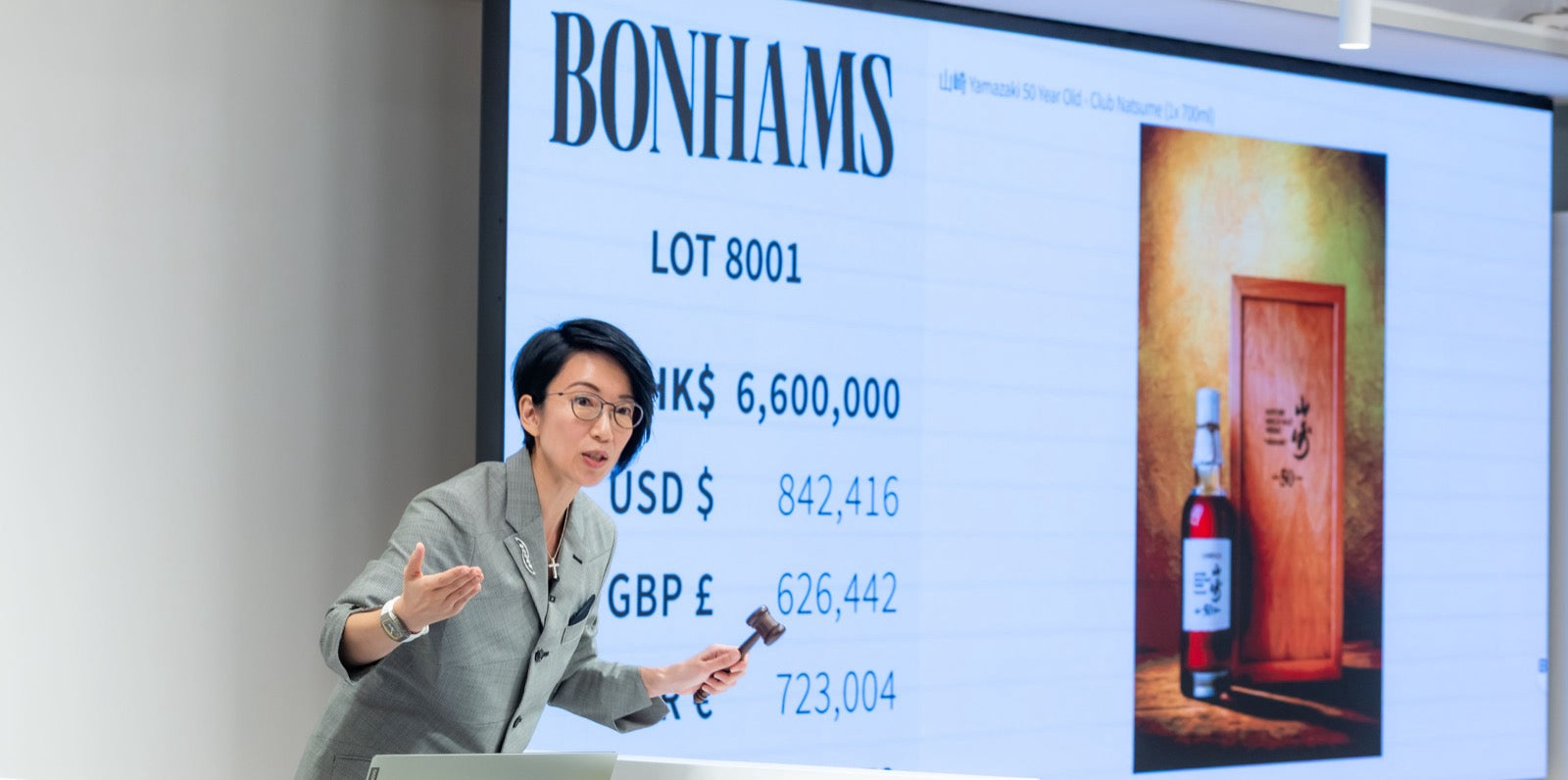
The Macallan repeated the idea in 2020 with the Red Collection: six bottles of whisky aged from 40 to 78 years, labels illustrated and signed by the Spanish artist Javi Aznarez, three of them also signed by Sarah Burgess, the distillery’s lead whisky maker. Sotheby’s sold the set for £756,400 on 31 October 2020. On 30 May 2026, Bonhams Hong Kong sold a Yamazaki 50 Year Old made for Club Natsume and signed by Suntory’s chief blender, Shinji Fukuyo, for HK$8,250,000, about £784,000 and a new world record for a bottle of Japanese whisky.
Credit: Bonhams
When someone else picks up the pen
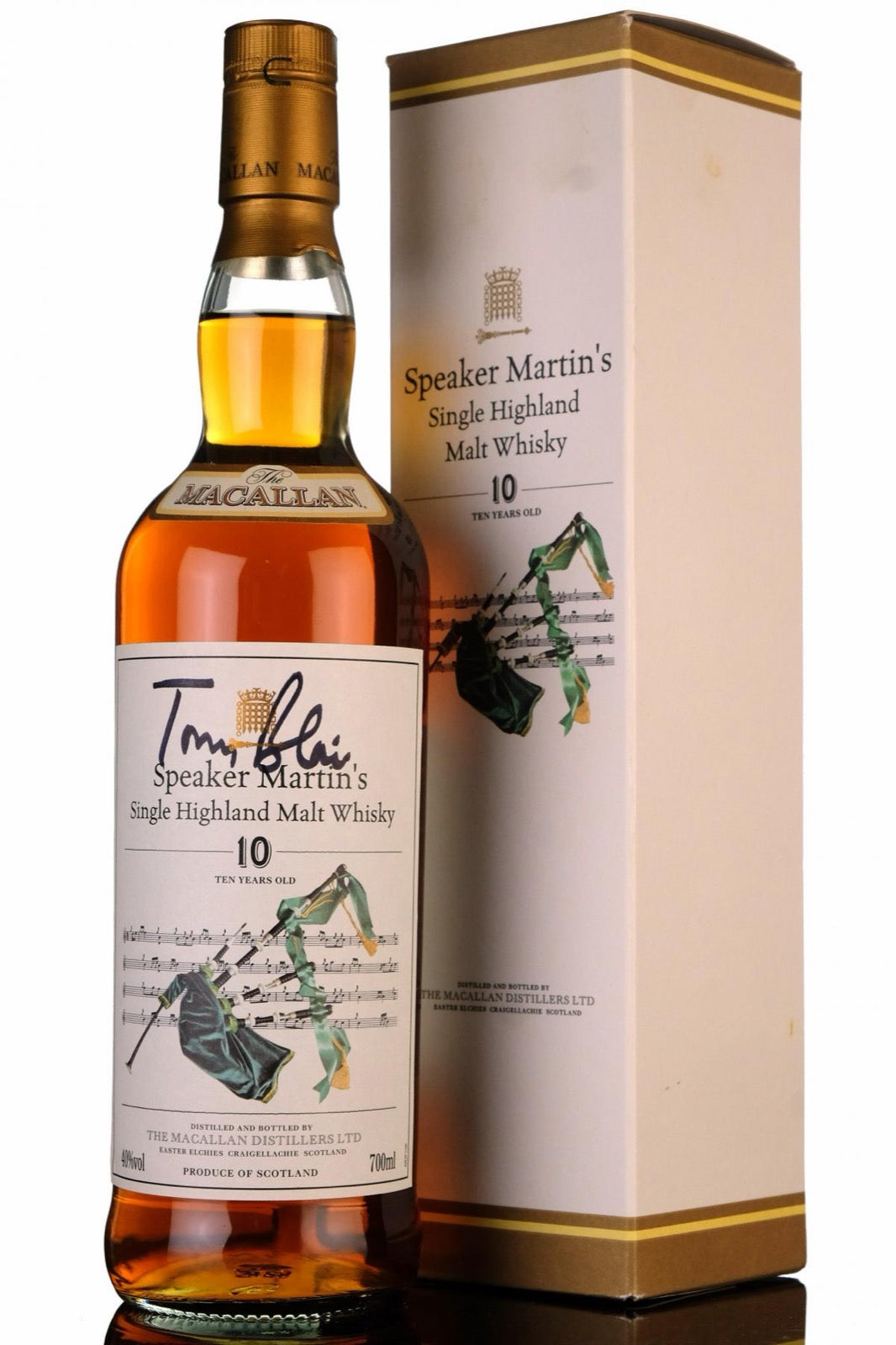
Further down the market, the signature often belongs to a public figure rather than the distillery. The Macallan 10 Year Old bottled for a Speaker Martin’s first edition in the early 2000s carries the signatures of the former prime minister Tony Blair and Michael Howard, and has sold repeatedly at Whisky-Online Auctions, reaching £1,700 on 1 June 2022, its highest price across six recorded auctions between 2016 and 2025.
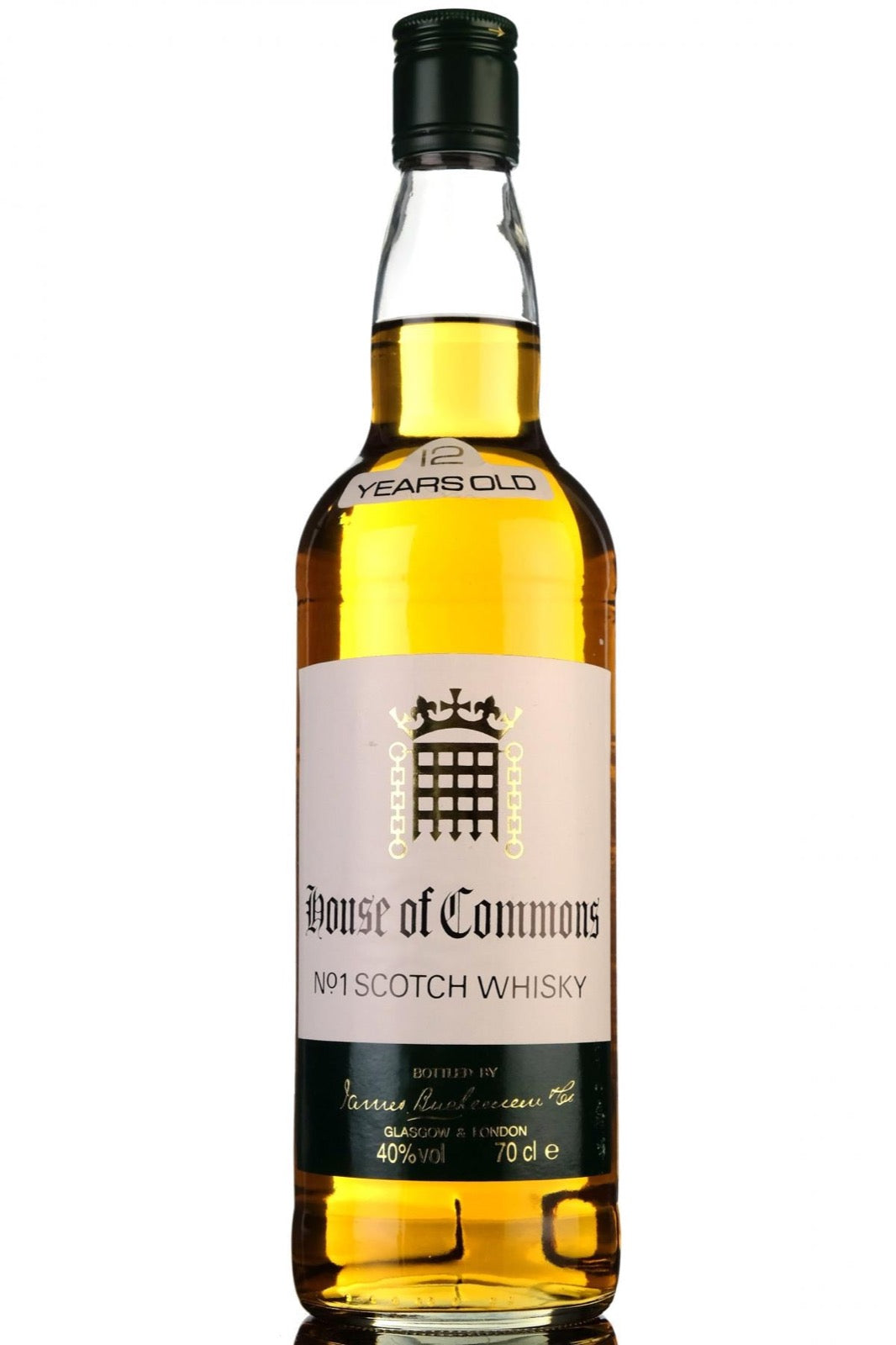
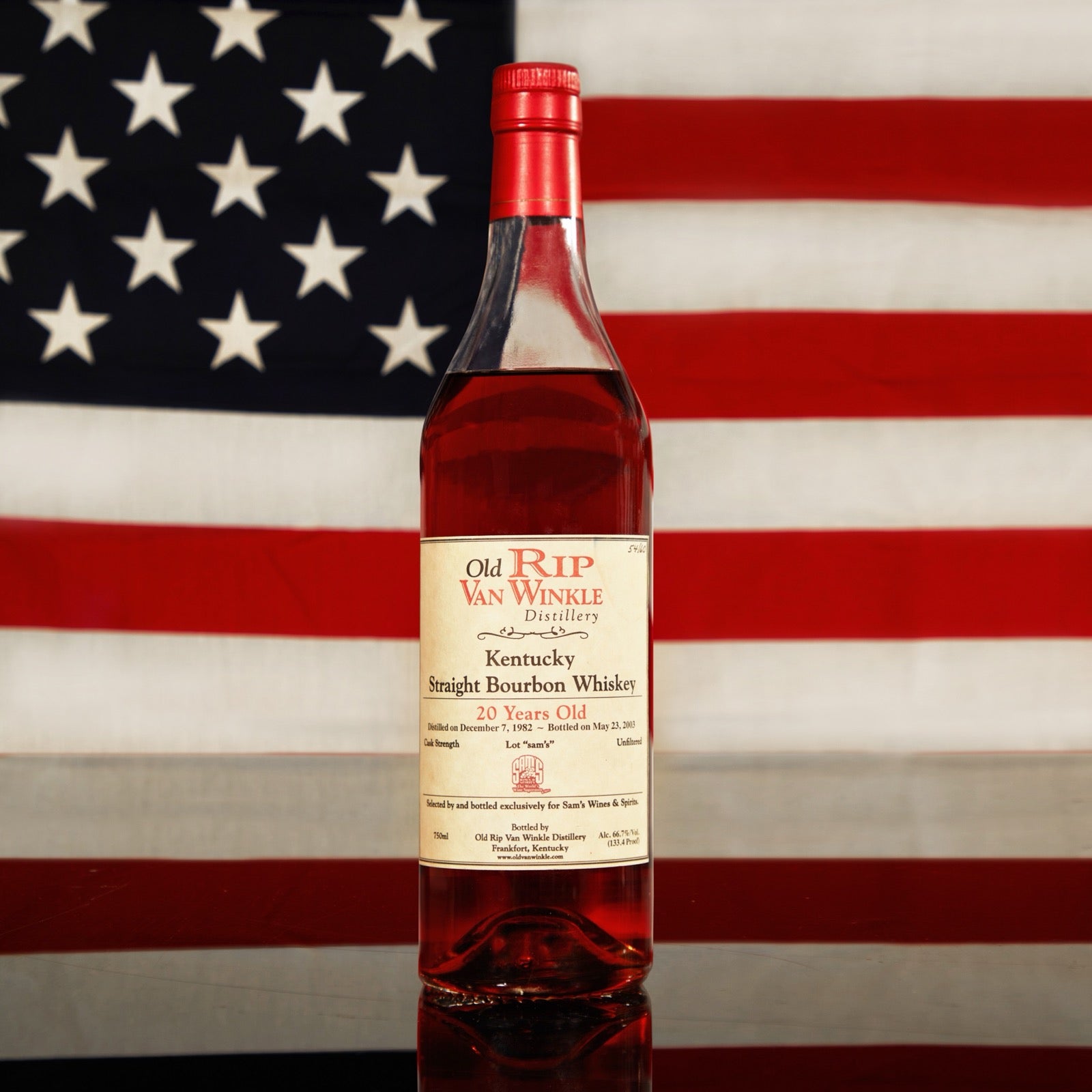
The House of Commons’ own whisky has a similar following among MPs and their constituents: a 12-year-old bottle signed by Hector Munro sold for £17.50 on 23 January 2019, while a 10-year-old bottled during John Bercow’s speakership and signed by Michael Meacher made £25 on 7 August 2024. Across the Atlantic, the Van Winkle distillery signs bottles rather than labels: a 1982 Old Rip Van Winkle 20 Year Old Single Barrel, one of 60 made and signed by Julian Van Winkle III, carried an estimate of $70,000 to $100,000, about £52,000 to £74,000, at Sotheby’s American whiskey sale on 24 January 2026.
Credit: Whisky-Online Auctions
Checking a signature is genuine
A signature adds nothing to a bottle’s value if a buyer cannot show where it came from. These lots all carry the same kind of paperwork: an auction house’s own description of when and where the signing took place, and a chain of ownership back to the distillery or signer. Buying through an established auction house or a specialist whisky platform means that description is on record and can be checked before bidding, rather than taken on trust from a seller.
Private sales carry the most risk, particularly for celebrity signatures with no distillery involvement. A signature with no date, no witness and no link to a signing event is hard to stand behind later, whatever the seller claims. The safest approach is the one that applies to any autograph: ask for the documentation auction houses provide as standard, and treat an undocumented bottle as unverified.
Credit: Whisky-Online Auctions
Where signed bottles come to market
Specialist whisky auctioneers such as Whisky-Online Auctions handle most of the smaller, charity-linked signed bottles, including the House of Commons whiskies, where a bottle’s sale history can be checked across several years. The major international houses, Bonhams and Sotheby’s among them, take on the artist collaborations and record-breaking releases through dedicated whisky and spirits sales.
Charity events are a steady source of newly signed bottles, particularly around Westminster and among distilleries that invite supporters to sign a small run at launch. These sales are usually well documented at the time, since both charity and distillery want to publicise who signed what, making them a reasonably safe entry point for new collectors.
Credit: Sotheby’s
Looking after a signed bottle
Signed whisky bottles need the same care as any other, with one addition. Spirits are stored upright rather than on their side, unlike wine, because prolonged contact between a high-strength spirit and cork degrades the cork over time. Keeping the bottle upright also keeps the whisky away from the label, which matters even more once that label carries a signature.
Direct sunlight fades both the whisky’s colour and any ink on the label, so a dark cupboard is safer than an open shelf for a bottle bought as an investment rather than for drinking. Keep the box, the certificate of authenticity and any paperwork from the sale together with the bottle: on a signed release, that paperwork matters as much as the whisky inside.
What decides whether a signature is worth £17.50 or £784,000
The gap between a £17.50 House of Commons bottle and a £784,000 Yamazaki comes down to the same questions each time: who signed it, how many others carry the same signature, and how well documented the signing is. A master distiller’s signature on a one-off release, backed by an auction house’s own record of the event, sits at one end. A public figure’s signature on a widely bottled charity release sits at the other, and is no less genuine for being worth far less.
That range is what makes the category workable for a new collector. A first signed bottle does not need to cost six figures to be a real piece of whisky history, and the same questions about provenance apply whether the price is £17.50 or £615,062.50.