



Stamp collection valuation is rarely a single figure read off a catalogue page. When a stock book or a lifetime of album pages reaches a specialist’s desk, the price that comes back is built from condition, paperwork and whether anyone else currently wants that particular stamp. The catalogue number tells a dealer what the stamp is, not what they will pay for it.
A dealer weighing up a collection is not applying one method. The American Stamp Dealers Association, whose members appraise collections for sale, lists five separate figures an appraisal can produce: catalogue value, insurance replacement value, potential auction realisation, retail value and wholesale value, the price a dealer pays that day. A stamp can carry all five at once, and they are rarely the same number.
This guide sets out how each figure is reached: what a catalogue price means, how centring and gum move a price before any certificate is issued, why an expert committee’s opinion can be worth more than the stamp itself, and how rarity and ownership history set a genuine ceiling.
Discover all in our:
Stamp collection valuation: how dealers price your stamps

Credit: Mikepascoe, public domain via Wikimedia Commons
Catalogue value is a price list, not a receipt
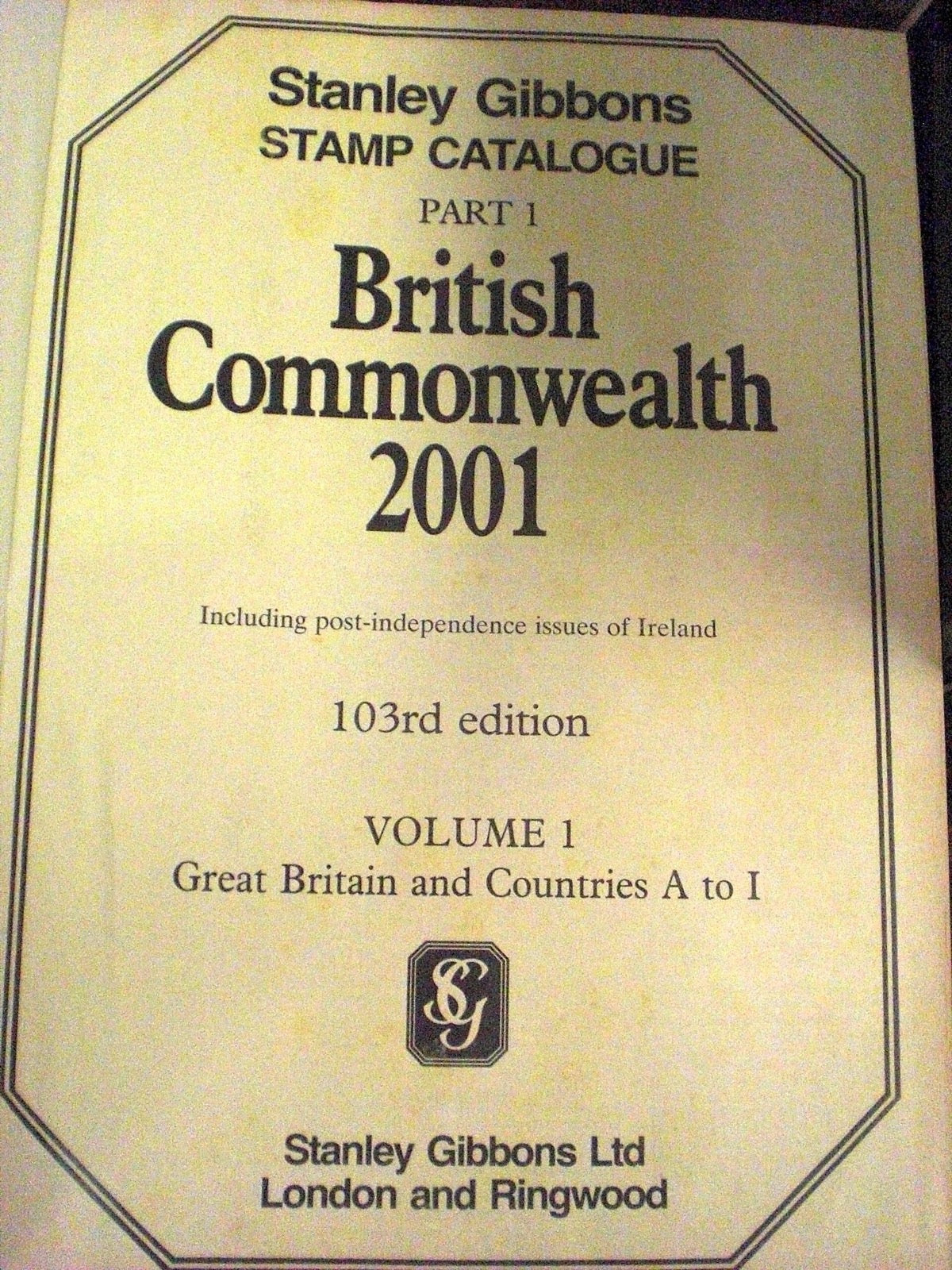
Stanley Gibbons describes its own catalogue plainly: it is a retail price list, the price the firm would charge if it held that exact stamp in that exact condition. Most other catalogues, produced by firms that do not sell stamps, instead average market values across many transactions. Neither figure promises what a dealer will pay to buy a stamp from a collector.
The American Stamp Dealers Association puts it more bluntly for anyone selling rather than buying: value is what a willing buyer will pay a willing seller, never a fixed figure. A stamp can sell above or below its catalogue price depending on the condition of that particular example, which is where the real pricing work begins.
Credit: Stanley Gibbons, public domain via Wikimedia Commons
Condition: centring, margins and gum
Centring, how evenly the design sits within its margins, is graded first. The Philatelic Stamp Experts’ scale runs from GEM, with perfectly balanced margins, down to VG, where the perforations cut into the design, combining that with gum condition and any faults into a numeric grade from 10 to 100.
Gum is where the biggest swings happen. According to the Philatelic Foundation, comparable copies of the same stamp can vary in price by five or six times depending purely on the state of the gum, original, hinged, or regummed to disguise a defect. Regumming is common enough that dealers check for it routinely: later gum lacks the thin natural streaks of the original, and often shows bubbling or brush marks.
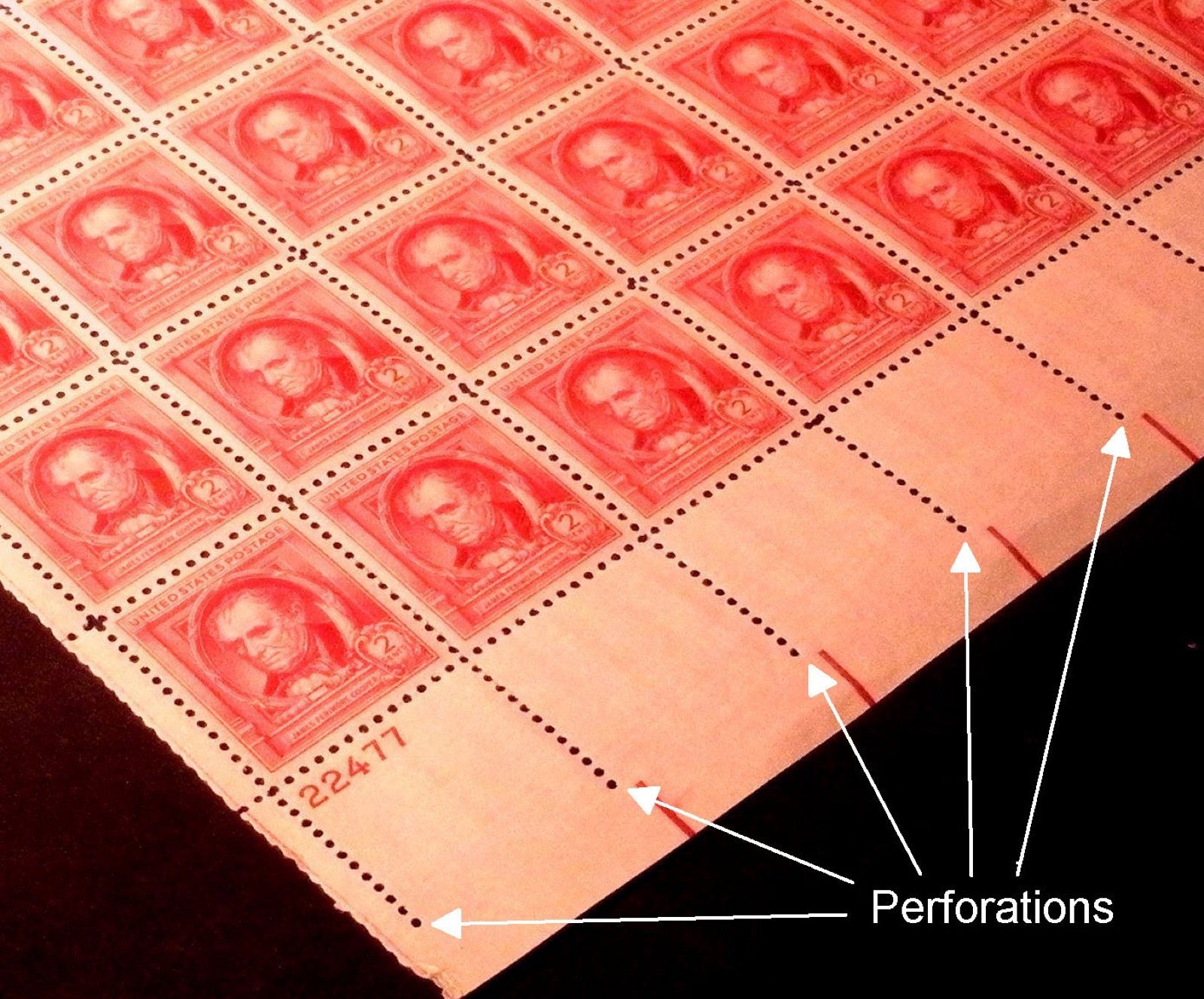
Perforation matters too. A perforation gauge counts the holes across a two-centimetre span, and because several classic issues share a design across more than one perforation size, getting the gauge right can be the only way to tell a common stamp from a scarce one.
Credit: Bureau of Engraving and Printing, public domain via Wikimedia Commons
Certificates and the paper trail that makes a price
For anything of consequence, condition assessments get formalised. The Royal Philatelic Society London’s Expert Committee has issued certificates since 1894, and nine members examine roughly 2,500 to 3,000 items a year, returning an opinion of either “certified as genuine” or, for anything short of that, “all other opinions”. A certificate becomes part of the stamp’s saleable identity, not just protection against fakes.
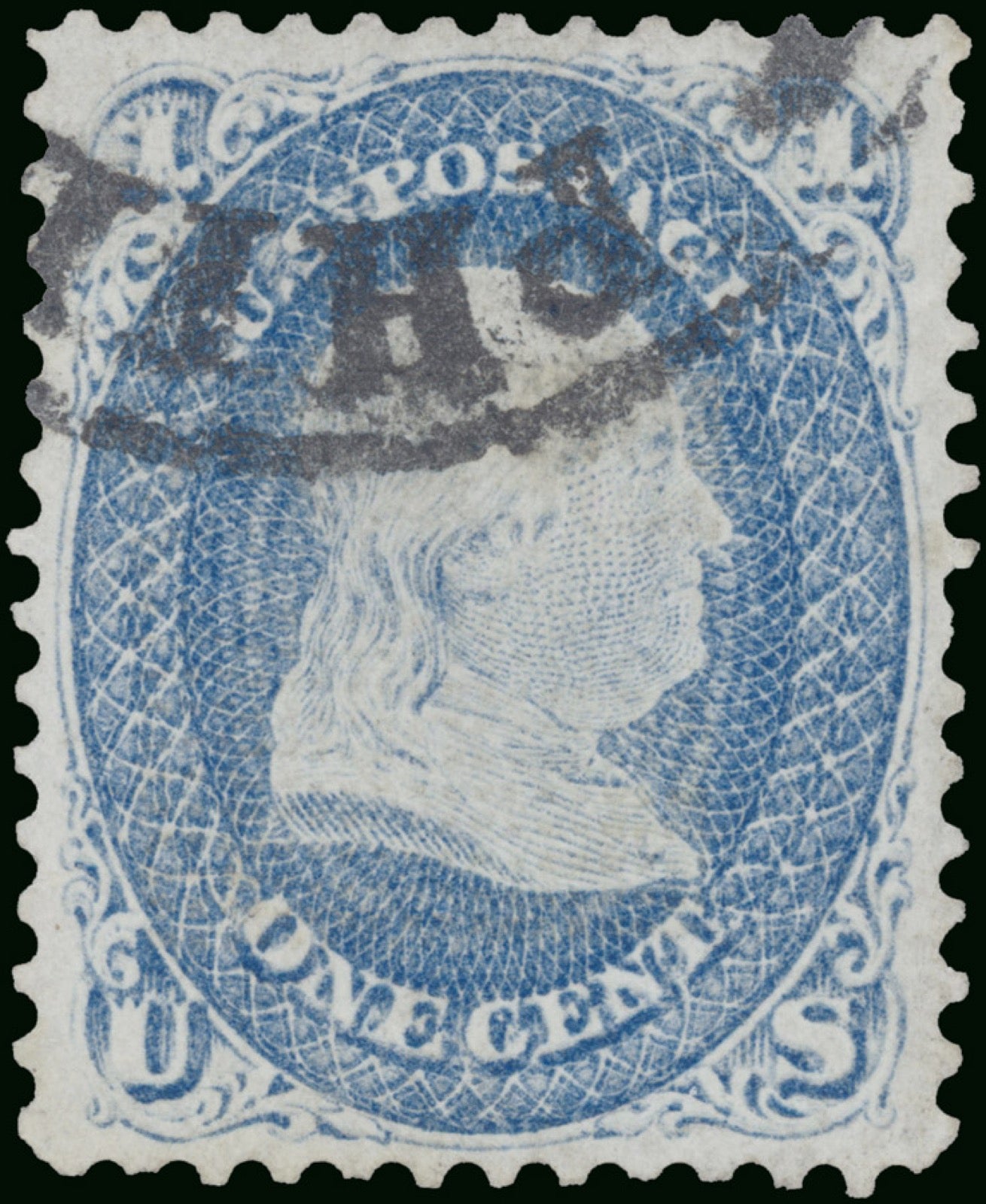
The 1868 American 1c Z Grill shows how far that paper trail travels. Only two examples have ever been found and certified genuine, and one sits permanently in the New York Public Library, leaving a single copy in private hands. That copy, graded 90 by the Philatelic Stamp Experts, carries certificates running from 1957 to 2024, each one reconfirming the same stamp as its price climbed: $46,750 in 1975, $850,000 in 1998, and $4,366,000 when Robert A. Siegel Auction Galleries sold it within the William H. Gross collection in 2024, a record for a single American postage stamp.
Credit: Premkudva, public domain via Wikimedia Commons
Rarity and provenance set the ceiling
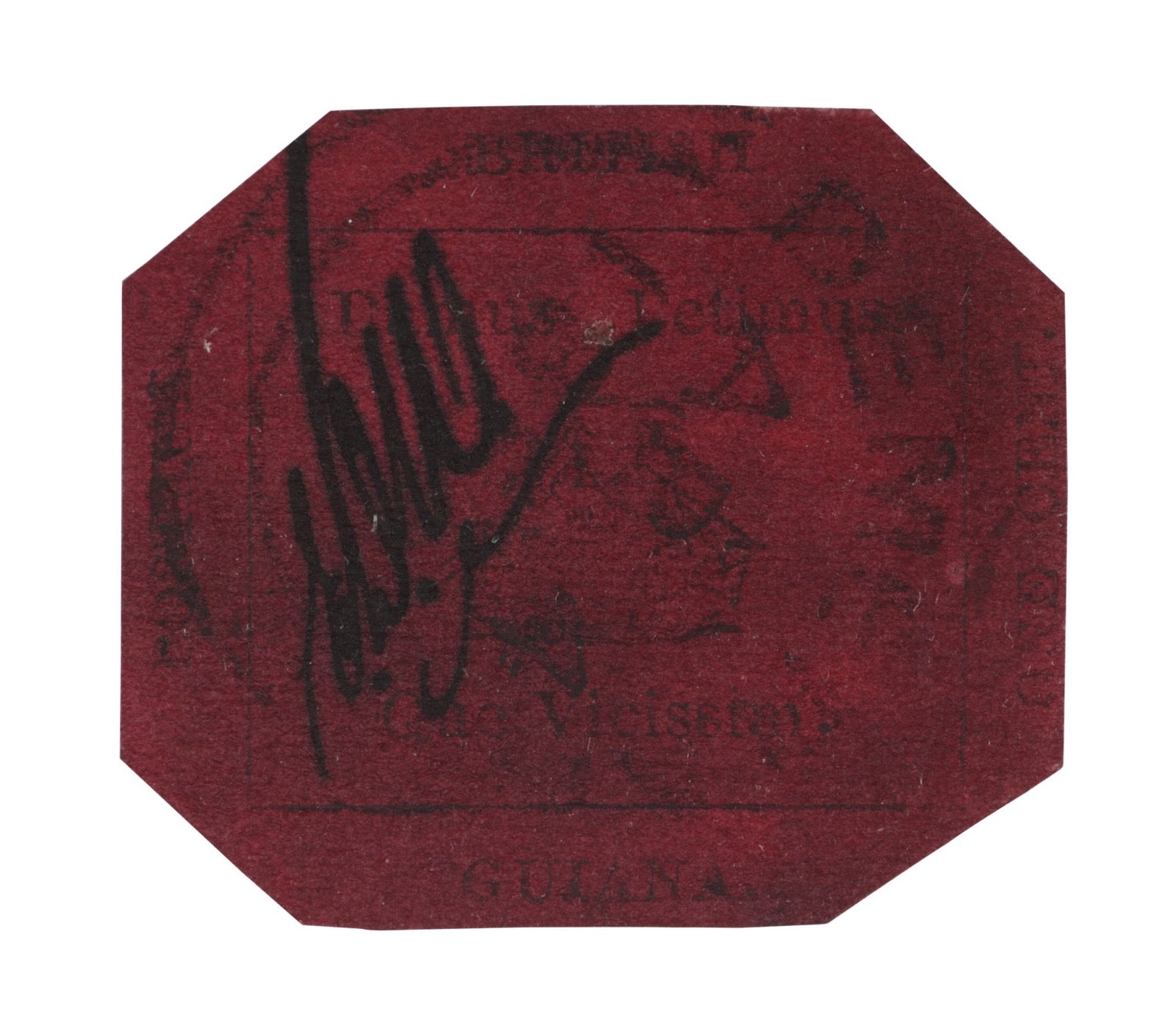
Above a certain point, rarity alone does not set the price, ownership history does. As we have mentioned in previous articles, the British Guiana One-Cent Magenta is the only surviving example of its issue, a small octagonal stamp measuring 29 by 26 millimetres, cancelled in Demerara on 4 April 1856. It carries two Royal Philatelic Society certificates, from 1935 and 2014, and Sotheby’s own lot notes record its surface rubbing as reduced by over-painting, possibly while it was in the collection of Philipp von Ferrary.
Its provenance runs through ten named owners across more than 150 years, from Andrew Hunter, who found it in 1856, through Ferrary and Arthur Hind to the shoe designer Stuart Weitzman. When Weitzman sold it at Sotheby’s New York in June 2021, against an estimate of $10 million to $15 million, the buyer was Stanley Gibbons, whose own account records the hammer dropping at $8.3 million. Condition decides whether a stamp is sound, a documented chain of owners decides whether a buyer pays a premium on top.
Credit: Sotheby’s
How a dealer actually reaches a figure
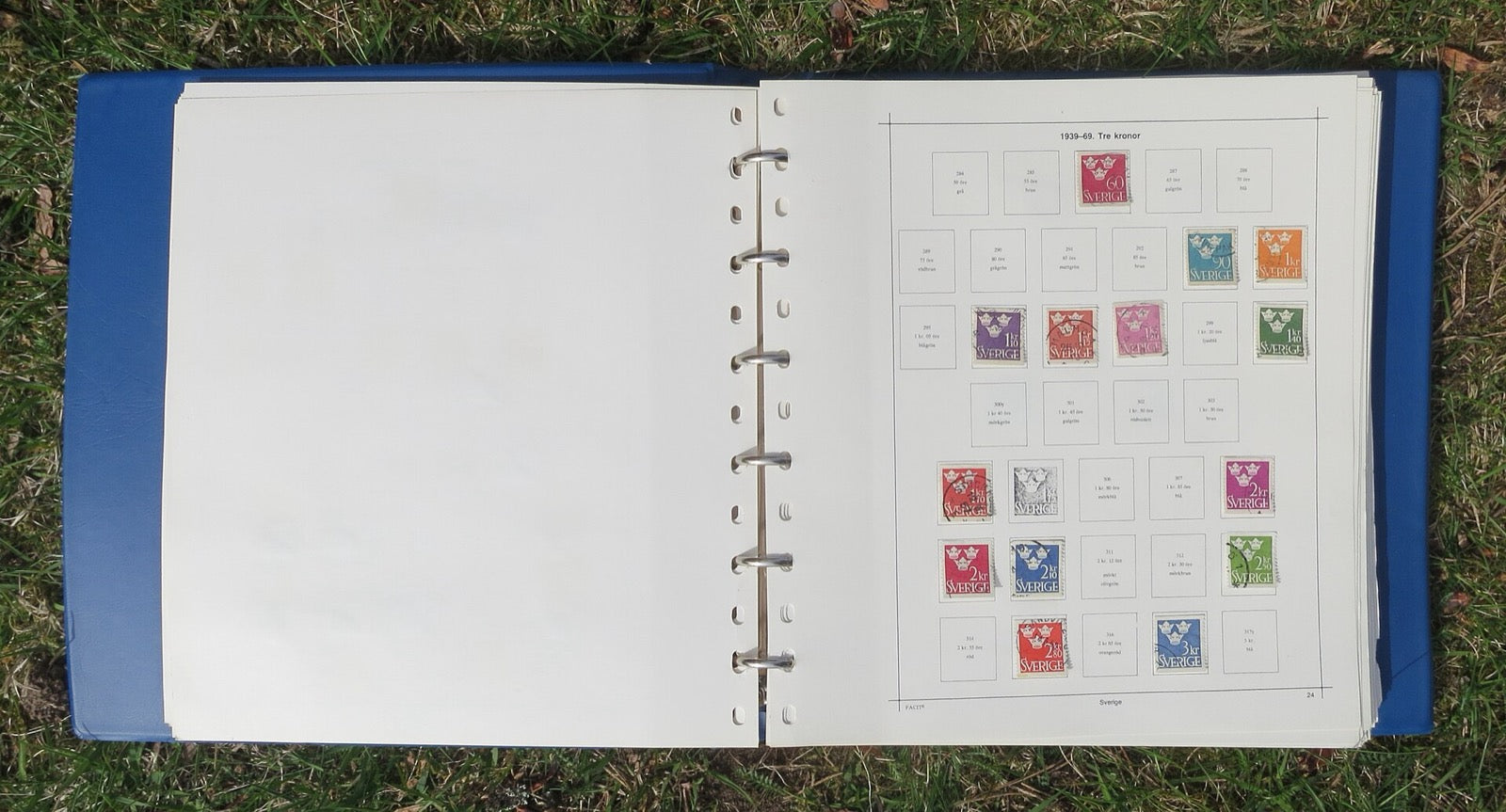
In practice, getting a figure means choosing a route. Spink offers a visit to one of its offices, a specialist visiting the collection at home for a fee, or a submission of scans or photographs with a brief description, with visit costs often reimbursed if the firm then sells the collection. Valuations of this kind are also standard for insurance and probate, not only for a sale.
Whichever route is used, the dealer works through the same five-way split the American Stamp Dealers Association describes: what the catalogue says, what it would cost to replace at retail, what it might make at auction, what a shop would charge, and what a dealer will pay that day. It is the last of those, wholesale value, that most owners are asking for, and it is usually the smallest number on the list.
Credit: R. Henrik Nilsson via Wikimedia Commons (CC BY 4.0)
The same stamp, four certificates, three prices
The Z Grill’s own record makes the mechanism visible. The same physical stamp was examined and certified in 1957, 1975, 1998, 2005 and 2024, and its price moved from $46,750 to $850,000 to $4,366,000 across those decades, not because the catalogue value changed, but because each sale reconfirmed condition, authenticity and an unbroken ownership record.
That is what a dealer is pricing when a collection arrives on the desk: not a catalogue number, but how much of it the physical stamp, its paperwork and its history can still support. A collection is worth having looked at properly, by a specialist who checks the gum, the centring and the certificates before naming a figure, rather than a catalogue total added up at home.