



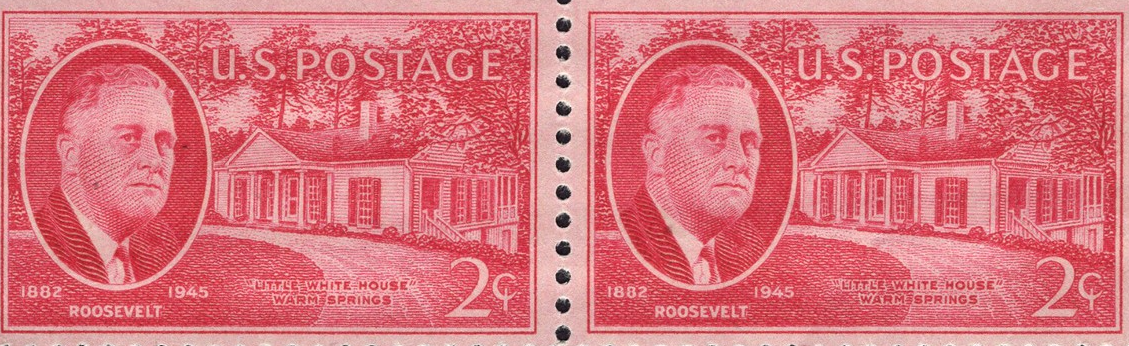
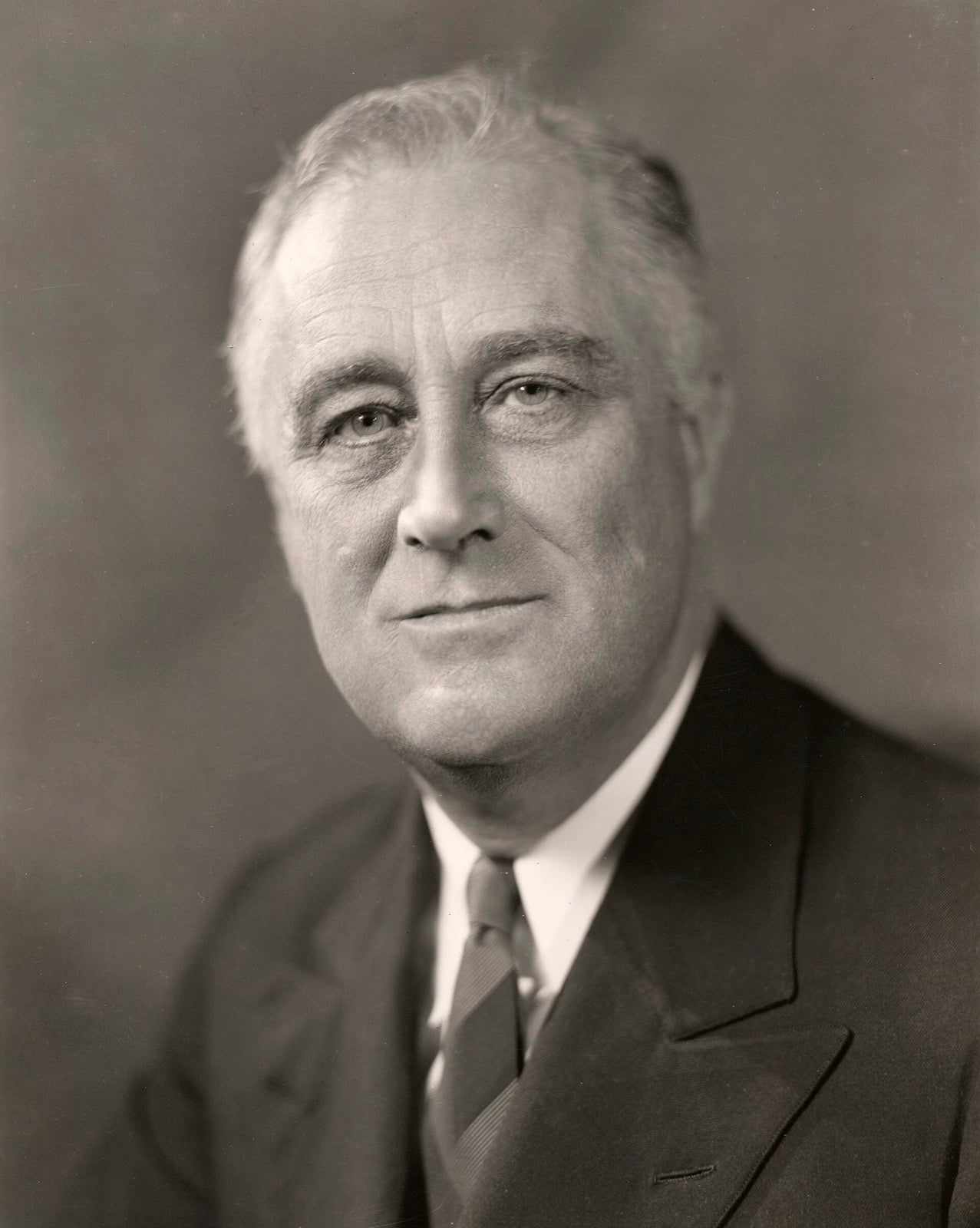
Franklin D. Roosevelt’s secret hobby was not much of a secret by the time he reached the White House. Stamp collecting had followed him from a boyhood spent poring over his mother’s albums to a presidency spent running the country through Depression and world war, and it never let go: he began at 8 and was still choosing stamp designs the day before he died.
Most of that collecting was solitary, an evening spent putting a chaotic pile of stamps into order while the day’s briefings waited. But Roosevelt also put the hobby to public use. As president he personally approved every stamp the Post Office issued, roughly 200 of them across 12 years, using some to sell his New Deal programmes and others as gifts that blew up into one of philately’s great scandals.
Collectors still work this corner of philately today, from the reprints that grew out of that scandal to the sketches and tools Roosevelt left at his own presidential library. Here is his story, and where to look if you want a piece of it.
Discover all in our:
Franklin D. Roosevelt’s secret hobby: stamp collecting
Credit: FDR Presidential Library & Museum via Wikimedia Commons (CC BY 2.0)
A boyhood hobby that started with his mother
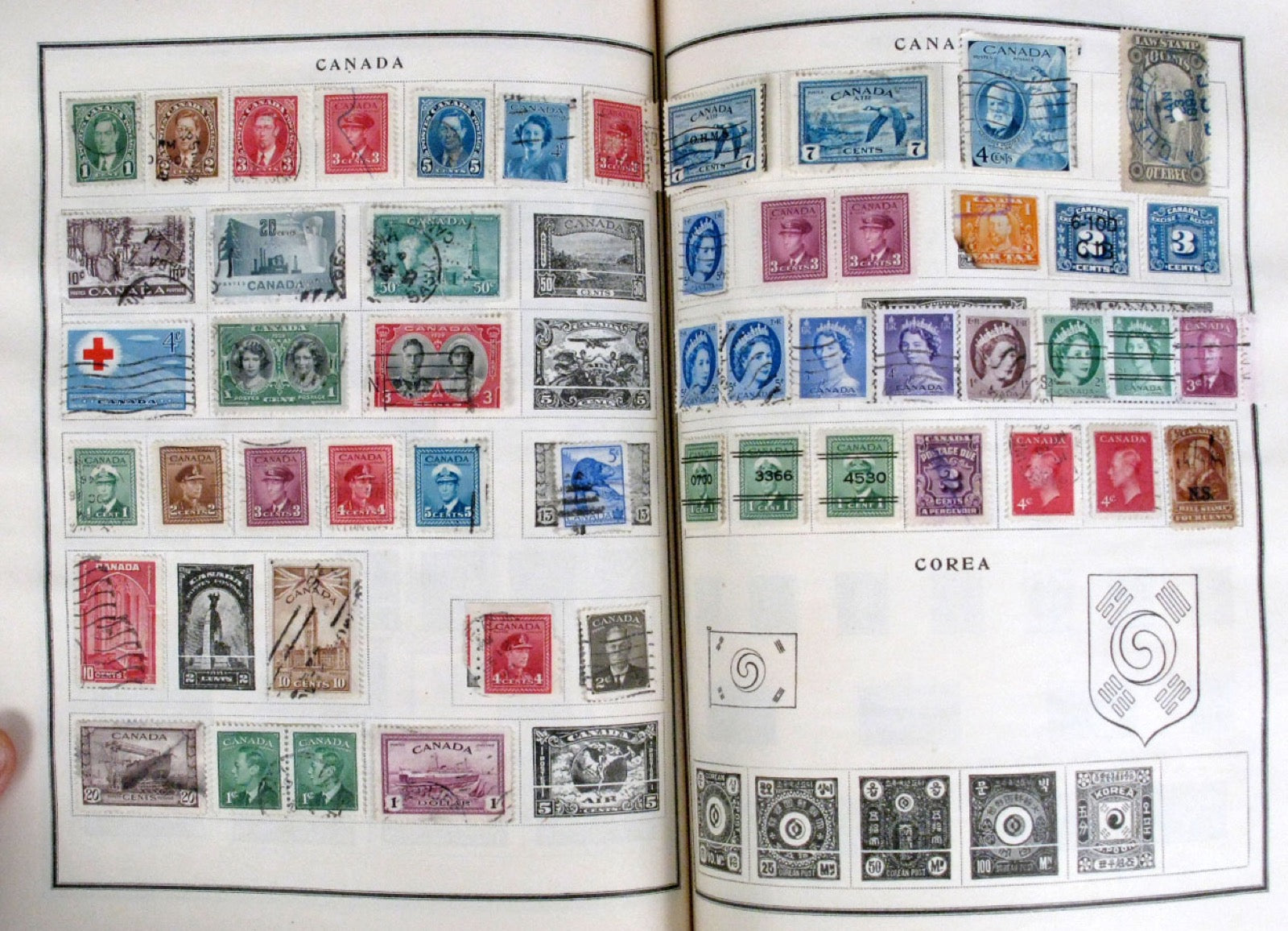
Roosevelt began collecting at 8, at the suggestion of his mother, Sara Delano Roosevelt, who passed on her own girlhood collection. The Delano side of the family traded heavily overseas, and young Franklin had a steady supply of foreign stamps through his relatives, long before he had reason to take an interest in foreign postage as a matter of state.
That first album survives at the Franklin D. Roosevelt Presidential Library in Hyde Park, New York, foreign stamps and all. It is a modest start for a collection that, by his death in 1945, ran to more than 1.2 million stamps.
Credit: bomont57, public domain via Wikimedia Commons
The president who signed off on every stamp
In office, Roosevelt worked closely with his postmaster general, James Farley, on what the nation’s stamps would look like. He suggested subjects, corrected and refined sketches, and designed a handful himself. Six of his own pencil sketches for stamp designs featured in the Smithsonian’s exhibition on his presidency, shown only in rotation because the paper is too fragile for permanent display.
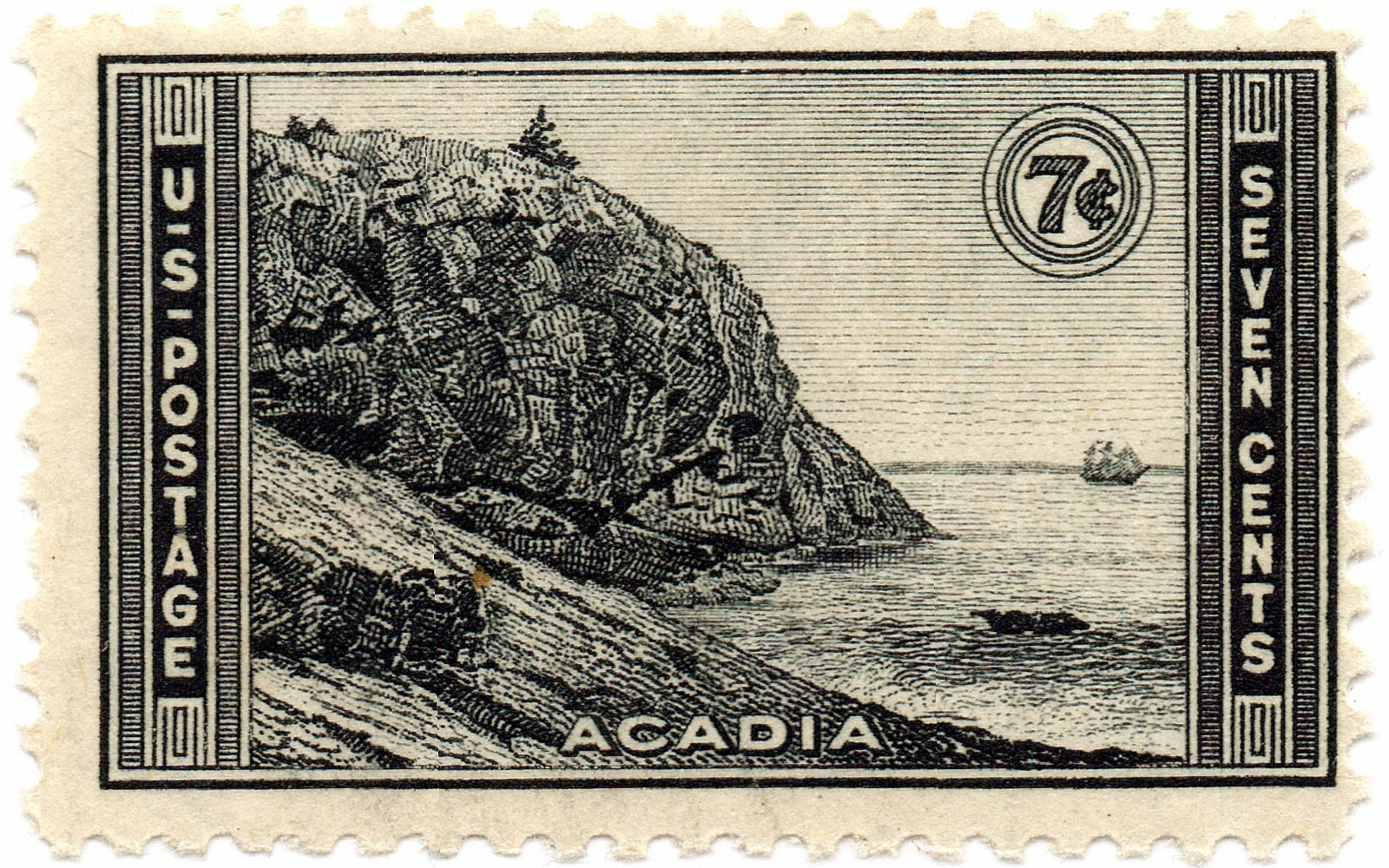
He used the position deliberately. The 1934 National Parks series was approved to promote tourism to sites the government wanted Americans to visit. In 1940, Farley authorised the first US stamp to carry the likeness of an African American, Booker T. Washington, a cause Eleanor Roosevelt had pushed for. As the National Postal Museum’s own curator has put it, Roosevelt believed that three cents of postage, the going rate at the time, could deliver more than just a letter.
Credit: Harris & Ewing, photographer, public domain via Wikimedia Commons
Farley’s Follies: the scandal that nearly ended it
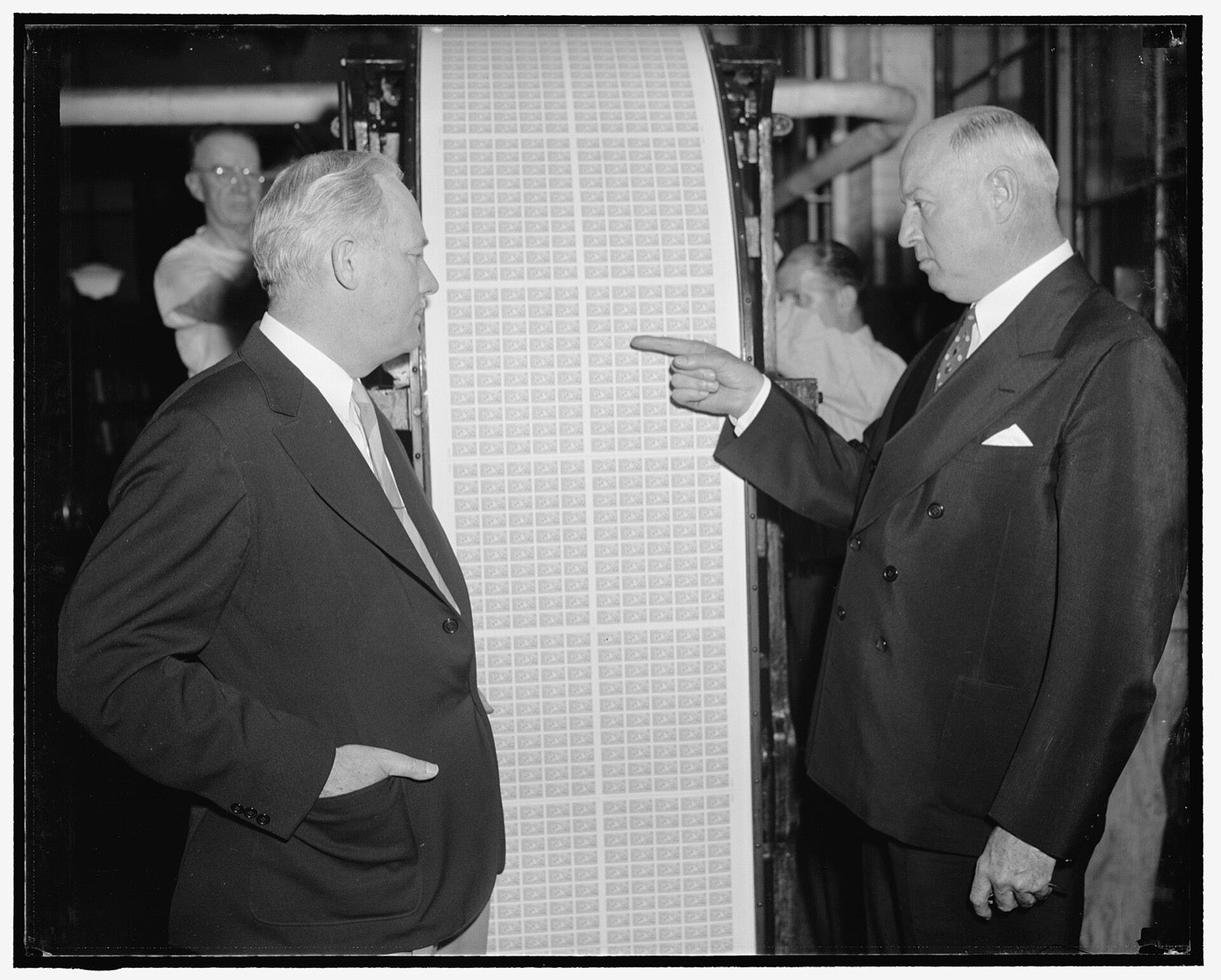
Not everything Farley did with the printing plates went down well. On 20 occasions, he bought imperforate, ungummed sheets straight off the press at face value and had some signed by Roosevelt before handing them out as gifts to family and political friends. When one such sheet, a Mother’s Day issue signed by Farley, turned up for sale at a steep price, newspapers accused the administration of manufacturing rarities for insiders, and Congress opened an inquiry.
Farley’s fix, in 1935, was to reprint all 20 designs without gum or perforations and sell them to any collector who wanted one, at face value, for three months. Collectors have called the reprints Farley’s Follies ever since. Fifteen of the original 20 signed sheets, the ones that caused the row in the first place, were later shown together by the National Postal Museum in its exhibition on Roosevelt’s presidency.
Credit: United States Post Office Department, public domain via Wikimedia Commons
The hobby that helped him cope
Roosevelt contracted polio at 39, and stamps became part of how he managed the years that followed, and later the strain of running a wartime White House. “I owe my life to my hobbies — especially stamp collecting,” he once said. Cheryl Ganz of the National Postal Museum put the appeal in practical terms: “Taking a pile of stamps that are in total chaos and putting them in order was a very relaxing thing for him to do.”
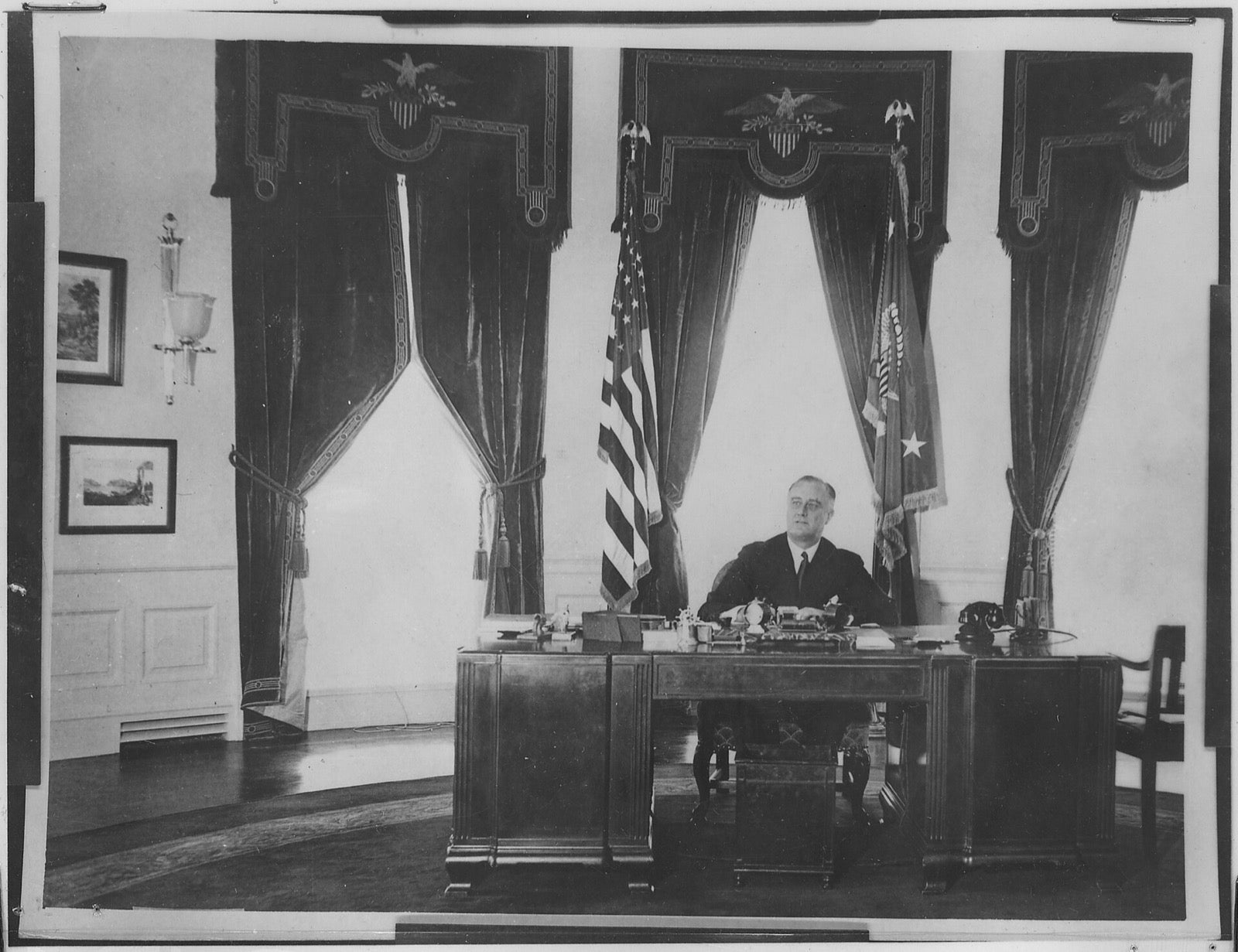
He kept at it to the end. The day before he died, Roosevelt chose the design for a new five-cent commemorative. His last official act, signed off half an hour before the stroke that killed him, approved the purchase of a stamp marking the founding conference of the United Nations, with instructions that gift albums go to every delegate.
Credit: Public domain via Wikimedia Commons
The 1946 sale that made the front pages
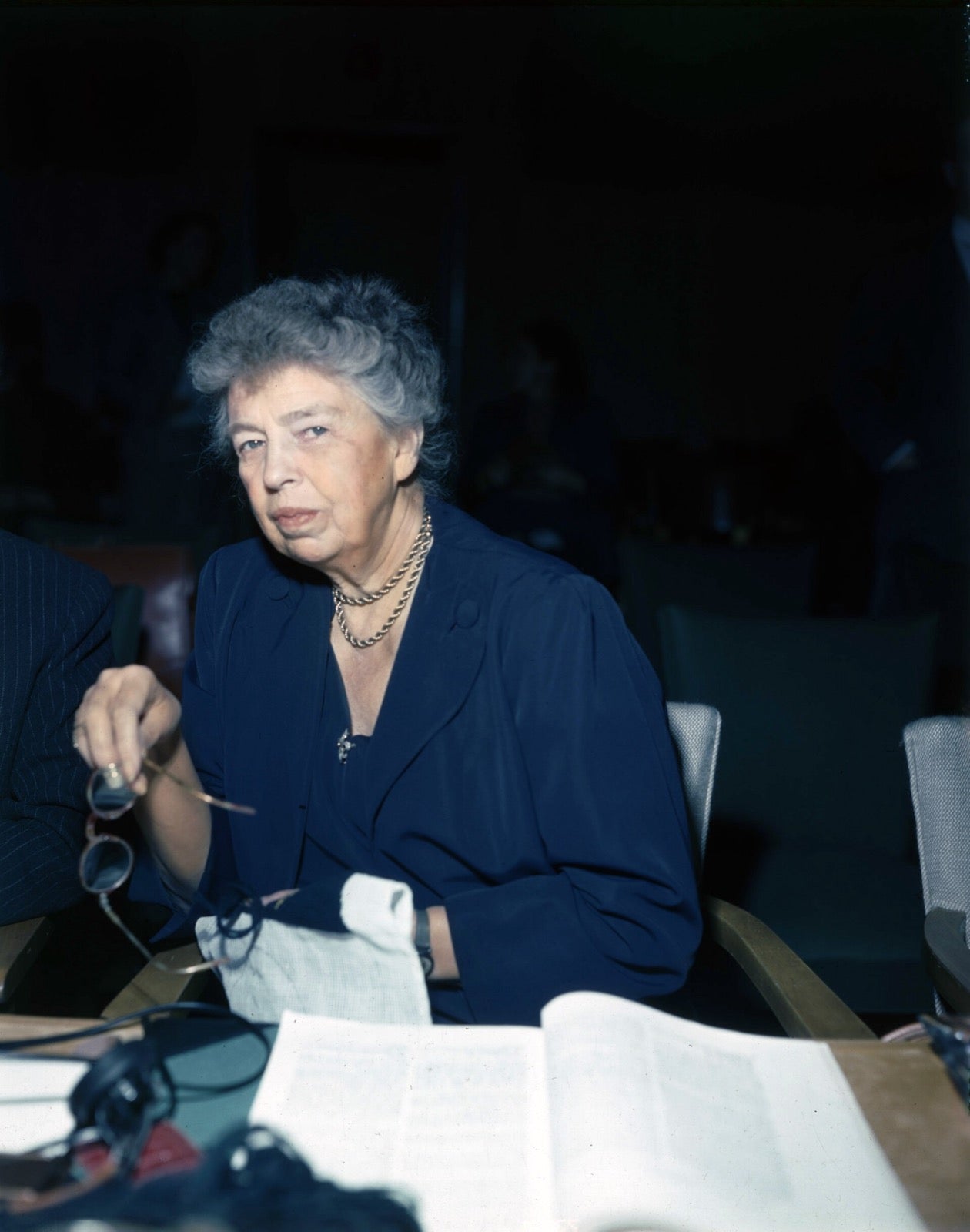
Roosevelt’s will asked for his stamps to be sold after his death, and the following year H.R. Harmer, Inc. auctioned the collection at Parke-Bernet Galleries in New York across four sessions: United States and Latin American material on 4 and 5 February 1946, the rest of the world on 1 and 2 April, and two smaller sessions in July and December clearing what remained. President Truman wrote a greeting to prospective bidders calling Roosevelt “this country’s number one stamp collector”, and Eleanor Roosevelt wrote her own, hoping buyers would “acquire with them some of my husband’s interest and power to lose himself in the occupation of the moment, which is the secret of complete relaxation”.
The sale realised $228,000, around £56,576 at the era’s fixed rate of $4.03 to the pound, far more than its pre-sale appraisal, and it made front-page news well outside the philatelic press. It was the sale that put H.R. Harmer’s New York office on the map, building the reputation the firm still trades on.
Credit: FDR Presidential Library & Museum via Wikimedia Commons (CC BY 2.0)
Why Farley’s Follies remain the way in
Roosevelt’s own signed sheets and sketches belong to museums now, not coming back to market. But the wider hobby he built up around them has not gone anywhere. Farley’s 1935 reprints were sold to any collector who wanted one, at face value, which is exactly why they still turn up at specialist auction houses and dealers within reach of a beginner. The stamps he championed as president, the 1934 National Parks series and the 1940 Booker T. Washington issue among them, are common enough to build a themed collection around without chasing six-figure rarities.
Anything offered as carrying a presidential signature, or genuine Farley gift-sheet provenance, is a different matter, worth a certificate from the Royal Philatelic Society London or the Philatelic Foundation before any money changes hands. For the originals themselves, the Smithsonian’s National Postal Museum and the Roosevelt Presidential Library have both featured them in exhibitions on his presidency, and remain the best starting points for further reading.