



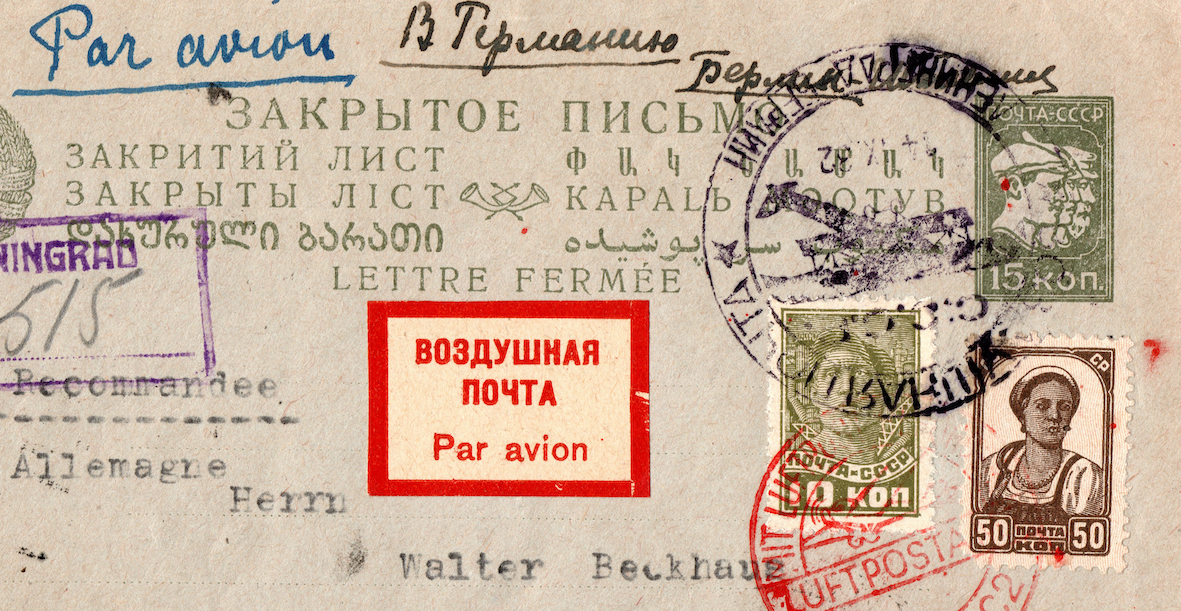
Philately, the formal name for stamp collecting, is one of the oldest and most accessible hobbies in the world, tracing its roots to the invention of the postage stamp itself. Since Sir Rowland Hill’s Penny Black went on sale in Britain in May 1840, collectors have picked up a magnifying glass, tongs and an album to study these small pieces of gummed paper. For some it stays a way of sorting old letters; for others it becomes a pursuit involving rarities worth six or seven figures.
A stamp is a compressed piece of history: what a country puts on its everyday correspondence tells its own story, and a printing error or short-lived design can turn ordinary paper into one of the most valuable objects, ounce for ounce, ever produced. Why some stamps end up in a saleroom while others sit for pennies in a shoebox is much of the appeal of learning the hobby properly.
This guide covers where philately came from, the main types of stamp, the cultural weight stamps carry, why certain examples have become investments, and how to start a collection.
Discover all in our:
Philately 101: a beginner’s guide to stamp collecting

Credit: Georges Croegaert, public domain via Wikimedia Commons
A brief history of philately
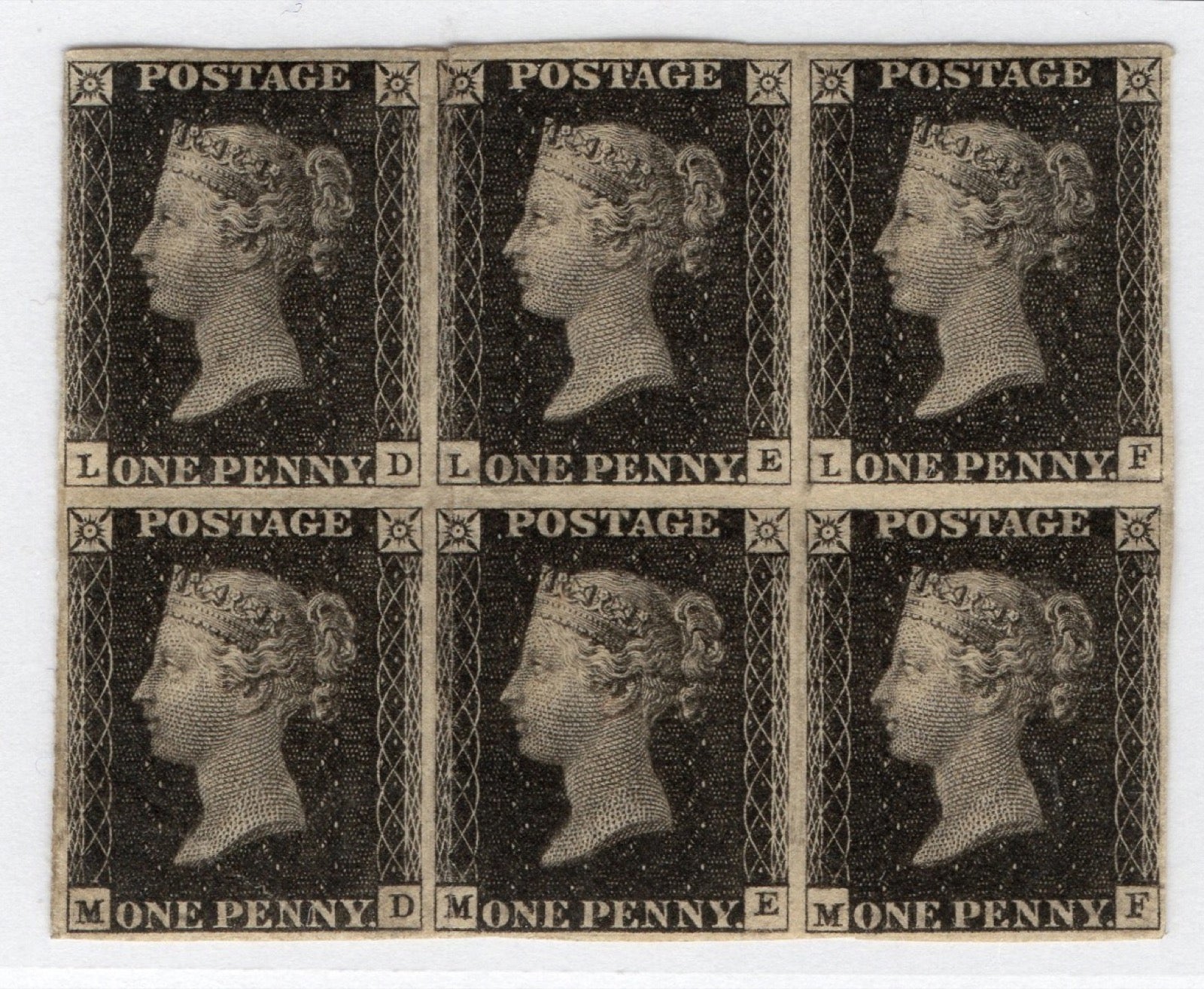
Before 1840, British postage was charged by distance and paid by the recipient, a system so resented that Sir Rowland Hill proposed a flat rate instead. The result was the Penny Black, issued on 1 May 1840 and valid from 6 May, letting a letter of up to half an ounce travel anywhere in the country for a single penny. Charles Heath and his son Frederick engraved Queen Victoria’s portrait from a sketch by Henry Corbould, based on an 1834 cameo by William Wyon. Some 286,700 sheets were printed, comprising 68,808,000 stamps, and the format soon spread to Switzerland, Brazil and beyond.
Collecting these new stamps began almost immediately, though the hobby took until the mid-1850s to catch on widely. A Paris postmaster named Mansen is credited as the first serious collector, selling his holdings in 1855, and the word “philately” was coined in 1864 by the French collector Georges Herpin, from Greek roots meaning “an affinity for” and “exempt from further charge”. By the close of the nineteenth century, the hobby had reached hundreds of thousands of people.
Credit: Public domain via Wikimedia Commons
Different types of stamps
Most stamps fall into a handful of categories. Definitives are the workhorse of any postal system: everyday stamps kept on sale for years and reprinted as stock runs low, which is why Britain’s Machin design alone has over a thousand printing varieties. Commemoratives are the opposite: issued to mark an anniversary, a person or an event, printed in limited numbers with the subject spelled out in text, then withdrawn once supply runs out. Semi-postals add a surcharge for a cause, a practice that began with Diamond Jubilee issues from New South Wales and Victoria in 1897 supporting hospital funds, and continues through Switzerland’s Pro Juventute series.
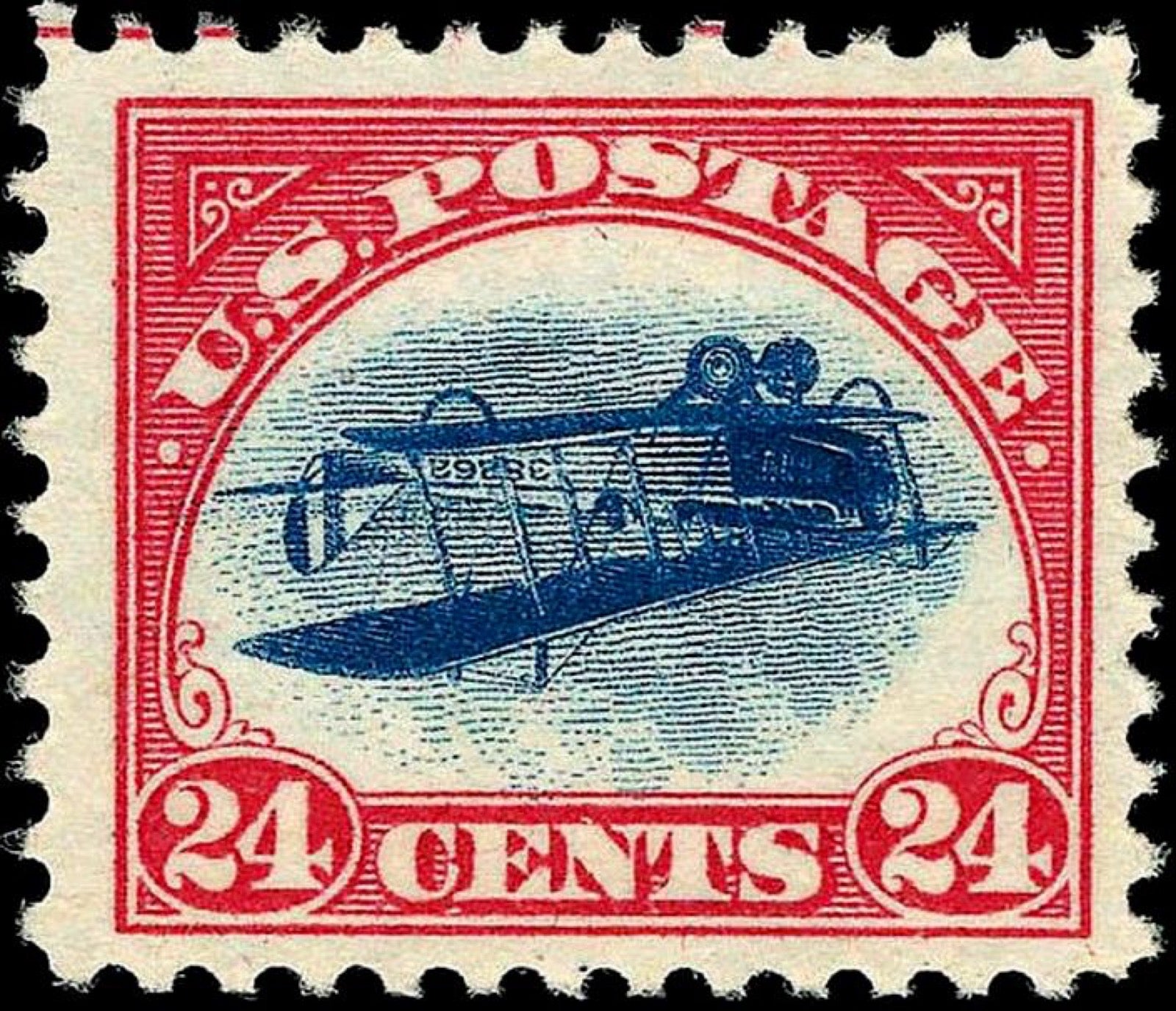
Airmail stamps and printing errors round out the categories beginners meet. Italy issued the world’s first dedicated airmail stamp in 1917, and the United States followed in 1918 with a 24-cent stamp depicting a Curtiss JN-4 biplane. One sheet went through the press with the aeroplane inverted relative to its frame, and when the collector William T. Robey spotted the mistake at a Washington post office on 14 May 1918, he had found what remains the most famous error in American philately: only 100 examples were ever printed.
Credit: Bureau of Engraving and Printing, public domain via Wikimedia Commons
The cultural value of stamps
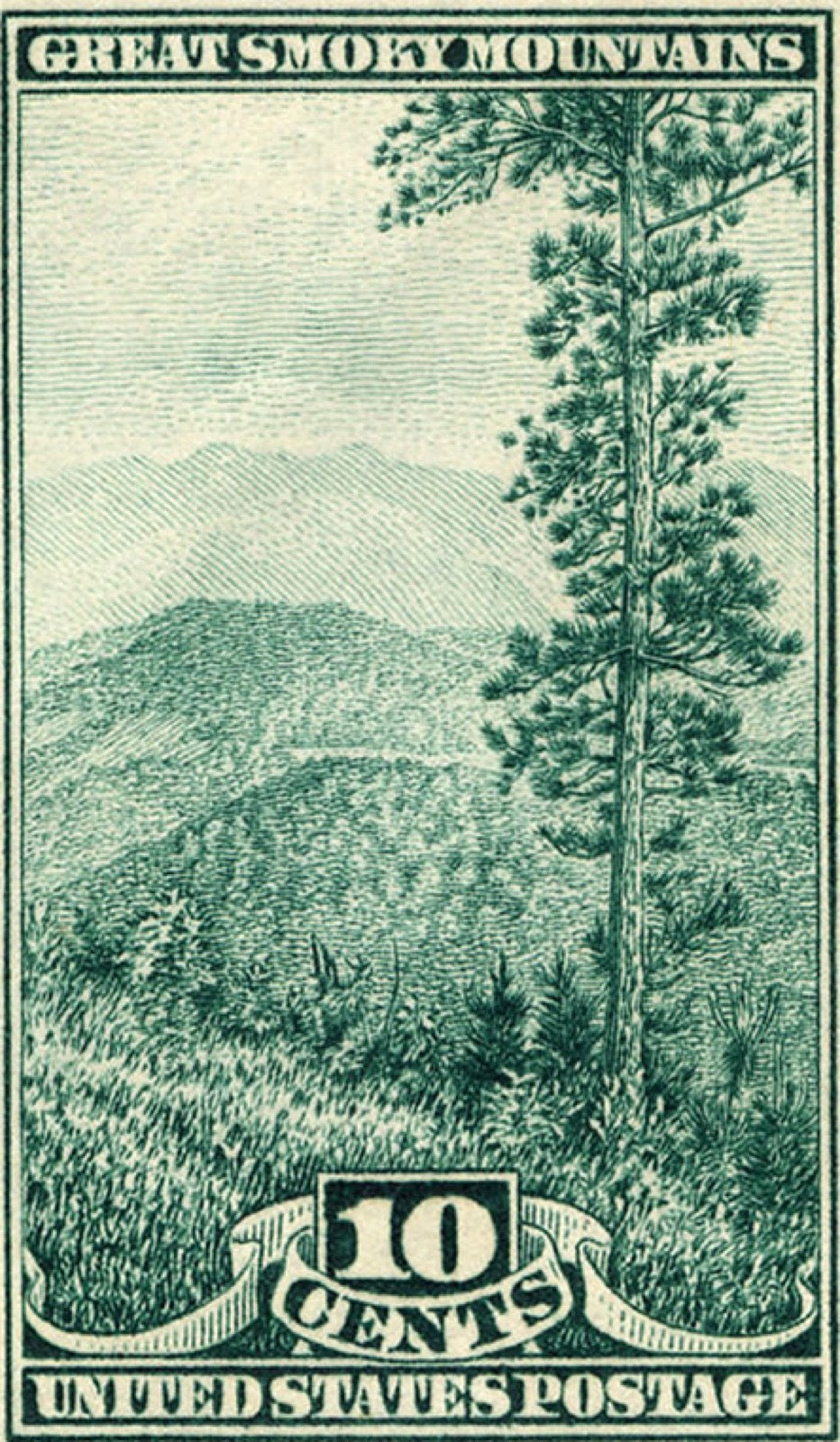
Every stamp names its issuing country, with the historical exception of the United Kingdom, which uses a silhouette of the monarch instead as the format’s inventor, and nearly every stamp carries an image its government wants remembered: a ruler, a landmark, an achievement. A change of regime is often visible on the letterbox before it appears anywhere else, and a country’s postal history reads almost like a timeline of what it chose to celebrate, decade by decade. That is why postal museums treat stamp collections as historical documents, not merely as postage.
Credit: Bureau of Engraving and Printing, public domain via Wikimedia Commons
The investment incentive
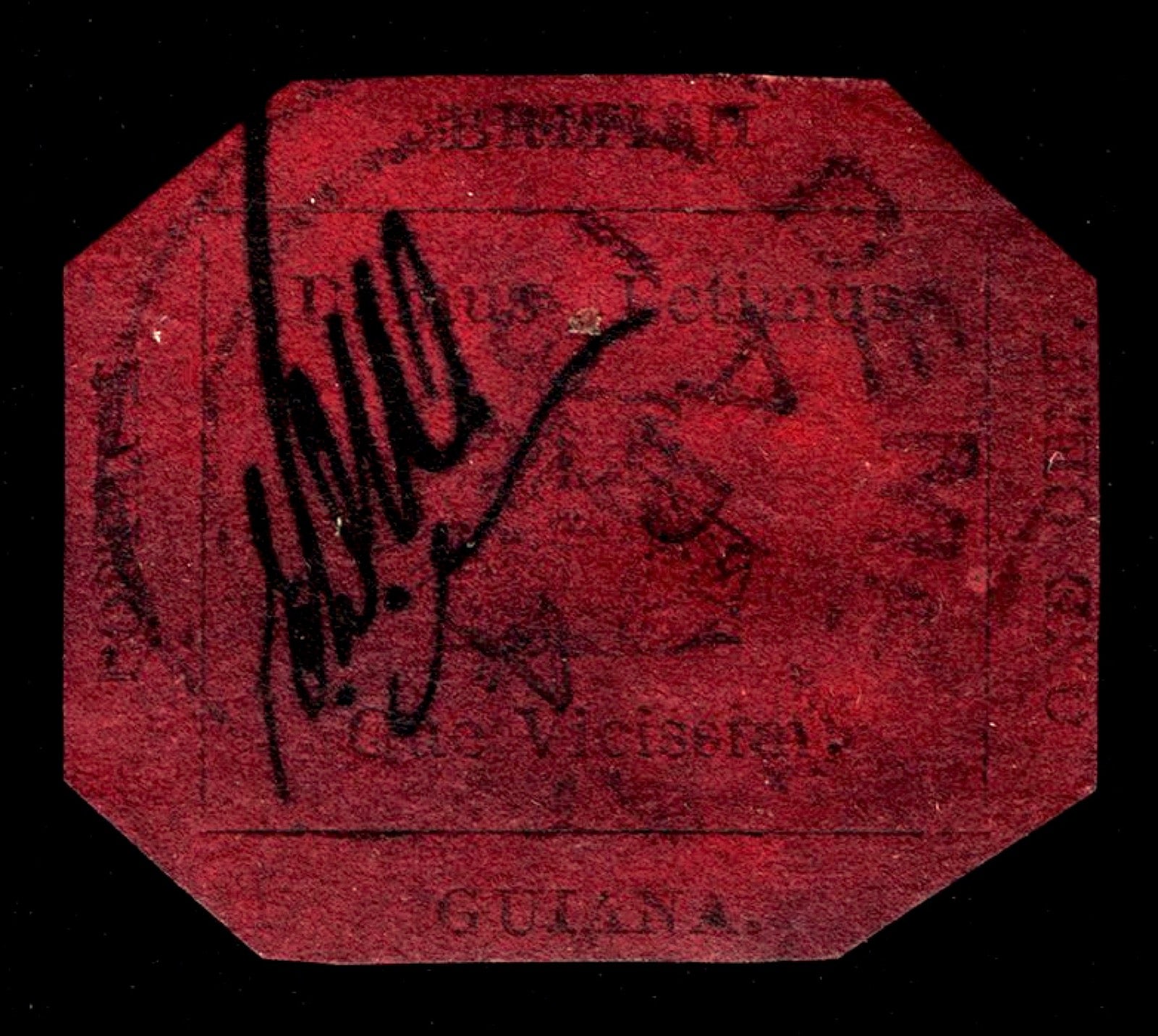
Most stamps in most albums are worth little more than their catalogue listing as a reference number. The trap for anyone eyeing stamps as an investment is treating catalogue value, from Stanley Gibbons or Scott, as a market price: a stamp catalogued in the thousands can fetch a fraction of that at auction. Real money changes hands only at the rarefied end of the market. The British Guiana One-Cent Magenta, the sole surviving example of an 1856 colonial provisional, sold at Sotheby’s in New York on 8 June 2021 for £5.9 million (a final bid of $8.3 million) to the dealer Stanley Gibbons. A decade earlier, Spink in London sold one of 27 known examples of Mauritius’s 1847 “Post Office” twopence blue for £900,000 against an estimate of £400,000 to £500,000, in the Chartwell Collection sale of June 2011. Condition and certification decide almost all of this value: gum, centring and a certificate from the Royal Philatelic Society London separate a rarity from a forgery or a later reprint.
Credit: Public domain via Wikimedia Commons
How to start building a collection
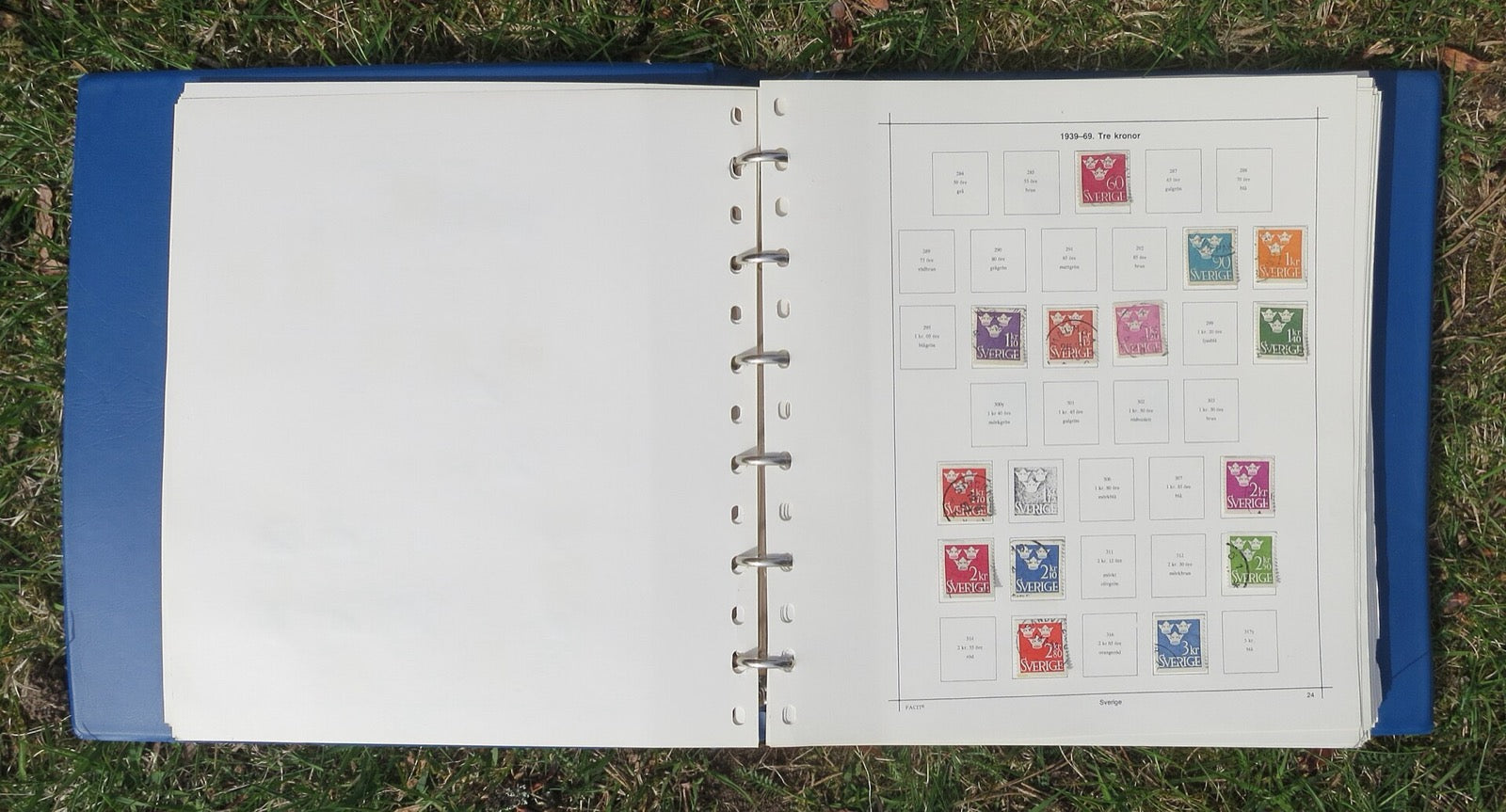
Beginning costs almost nothing. The American Philatelic Society points new collectors first towards material already close at hand, such as envelopes from the post or a relative’s old correspondence, before spending anything. A handful of tools then separate a collection from a pile of loose paper: stamp tongs, so finger oils never touch the surface; a magnifying glass for checking centring, perforations and watermarks; and either an album with printed spaces or a stock book for material still being sorted. A general catalogue supplies the reference numbers used throughout the hobby.
The most useful early decision is choosing a theme rather than trying to collect everything: a single country, a period, a subject such as ships or the Olympic Games, or a category such as errors. A themed collection is cheaper to build and easier to research, and societies such as the Royal Philatelic Society London run mentoring schemes and stamp fairs for beginners.
Credit: R. Henrik Nilsson via Wikimedia Commons (CC BY 4.0)
Why rarity, not size, decides a stamp’s worth
For every million ordinary definitives sitting in albums, a handful of stamps, a colour error, the one surviving example of a colonial provisional, carry weight far beyond their size, and it is that handful which keeps philately in salerooms as well as attics.
For a beginner, though, that arithmetic barely matters. What survives from 1840 onward is a near-continuous record of how nations have chosen to present themselves, and a starter album built with tongs, a catalogue and a chosen theme remains one of the cheapest ways into it.