



The moon landing became philately’s biggest moment on a technicality. The stamp meant to celebrate it was still being designed while the printing die that would produce it was already travelling to the Moon and back, tucked inside the same spacecraft as Neil Armstrong, Buzz Aldrin and Michael Collins.
That die, and the stamp it produced, set off a chain of events that ran for three years. Postal administrations on almost every continent rushed out their own commemoratives. An artist who had sketched the crew days before launch found his design racing a printing deadline. And two years later, a private arrangement between three more astronauts and a German stamp dealer collapsed into the biggest scandal the hobby had ever seen.
None of it was planned as a single story. It became one anyway, built from a design brief, a postmark applied two days late, and a dispute that took over a decade to settle.
Discover all in our:
How the moon landing became philately’s biggest moment
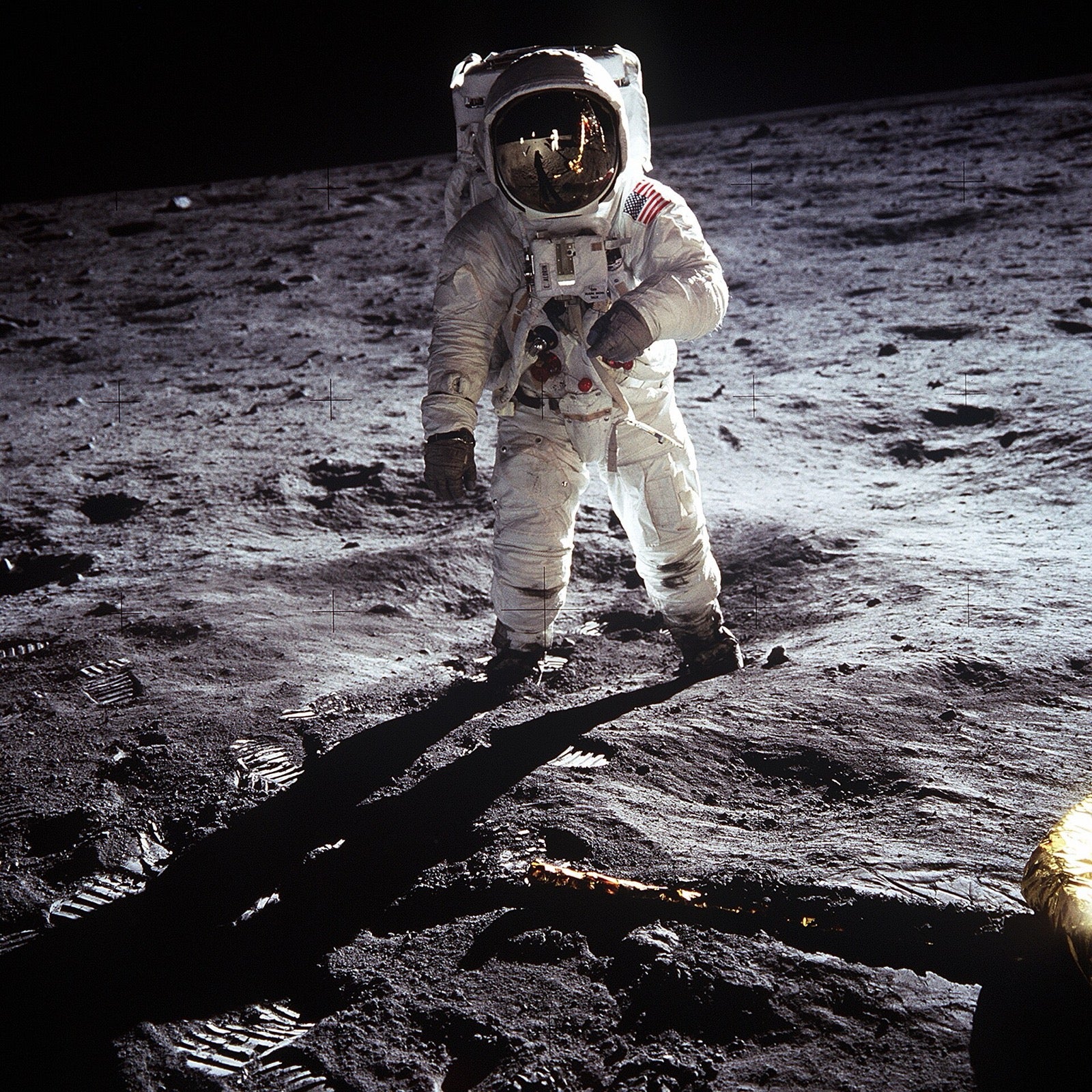
Credit: Neil A. Armstrong, public domain via Wikimedia Commons
A stamp designed before it existed
Paul Calle got exclusive access to the Apollo 11 crew on 16 July 1969, four days before the landing, sketching the astronauts during final launch preparations. From those sketches came the design for a ten-cent airmail stamp: an astronaut stepping down from the lunar module onto the surface, with Earth rising over the Moon’s horizon. Calle’s original sketches were later exhibited at the National Air and Space Museum and the National Gallery of Art.
The stamp itself, catalogued as Scott C76, was not issued until 9 September 1969, but its steel printing die had already made the trip it was meant to commemorate. The engraved master die, shaved down to a fifth of its normal weight, travelled inside the spacecraft with the crew. When the Bureau of Engraving and Printing finally ran the design, it produced more than 152 million stamps, the first jumbo-sized commemorative the US Post Office Department had ever issued, and its first day cover became one of the most requested the department ever produced.
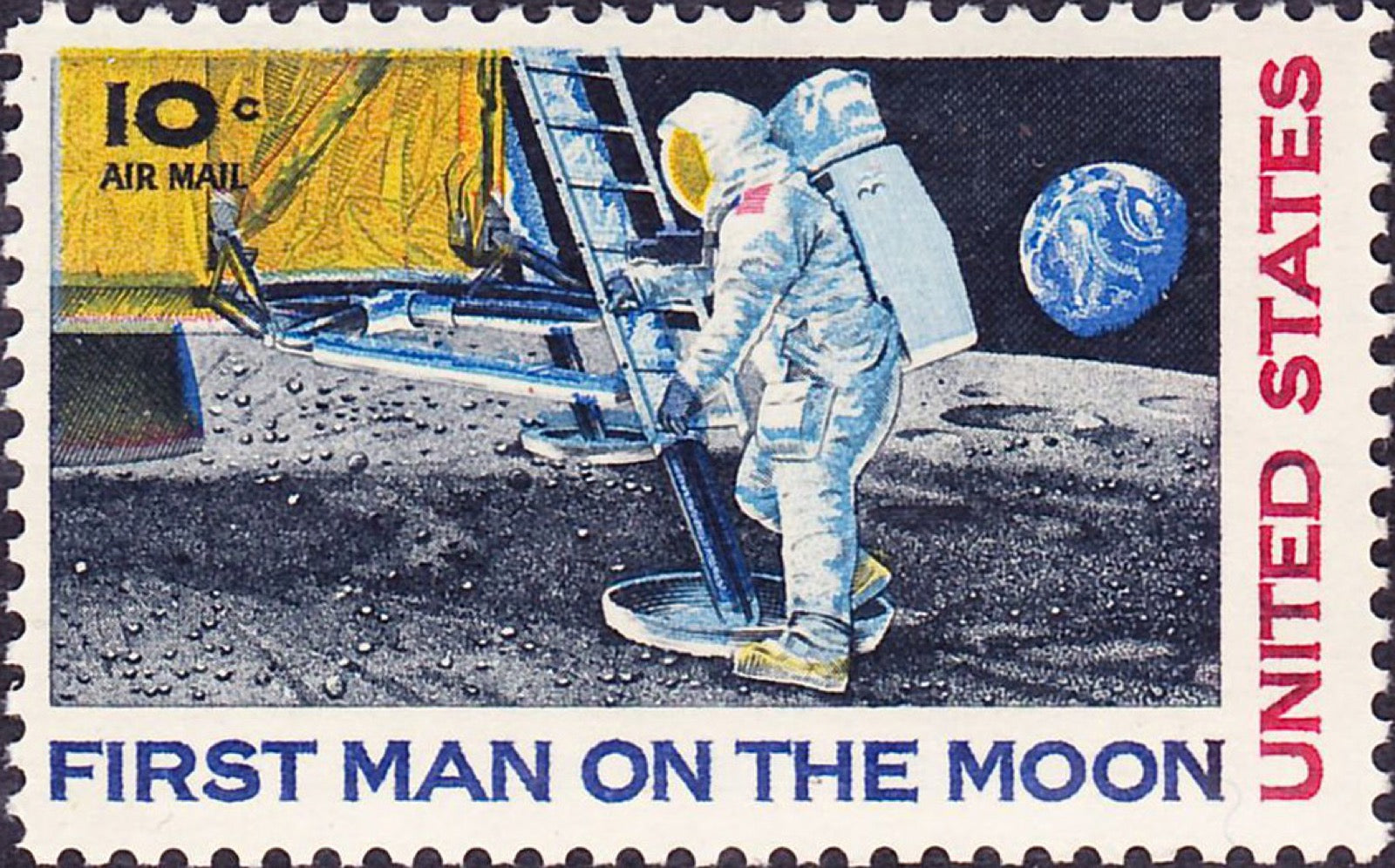
Credit: Bureau of Engraving and Printing, public domain via Wikimedia Commons
The envelope nobody remembered to cancel
Alongside the master die, the crew carried a single envelope bearing a proof of Calle’s design, meaning to cancel it on the lunar surface on 20 July. In the rush of the landing, they forgot. Two days later, on 22 July, when Eagle rejoined the command module in orbit, Armstrong, Aldrin and Collins each cancelled the envelope by hand with a rubber stamp. The postmark read “Moon Landing, USA, July 20, 1969”, backdated to the day it should have happened.
That envelope was unveiled when the stamp went on public sale at the National Postal Forum in Washington DC on 9 September 1969. All three astronauts attended, and Postal Life magazine recorded an ovation that ran for close to two minutes from an audience of more than 4,000.
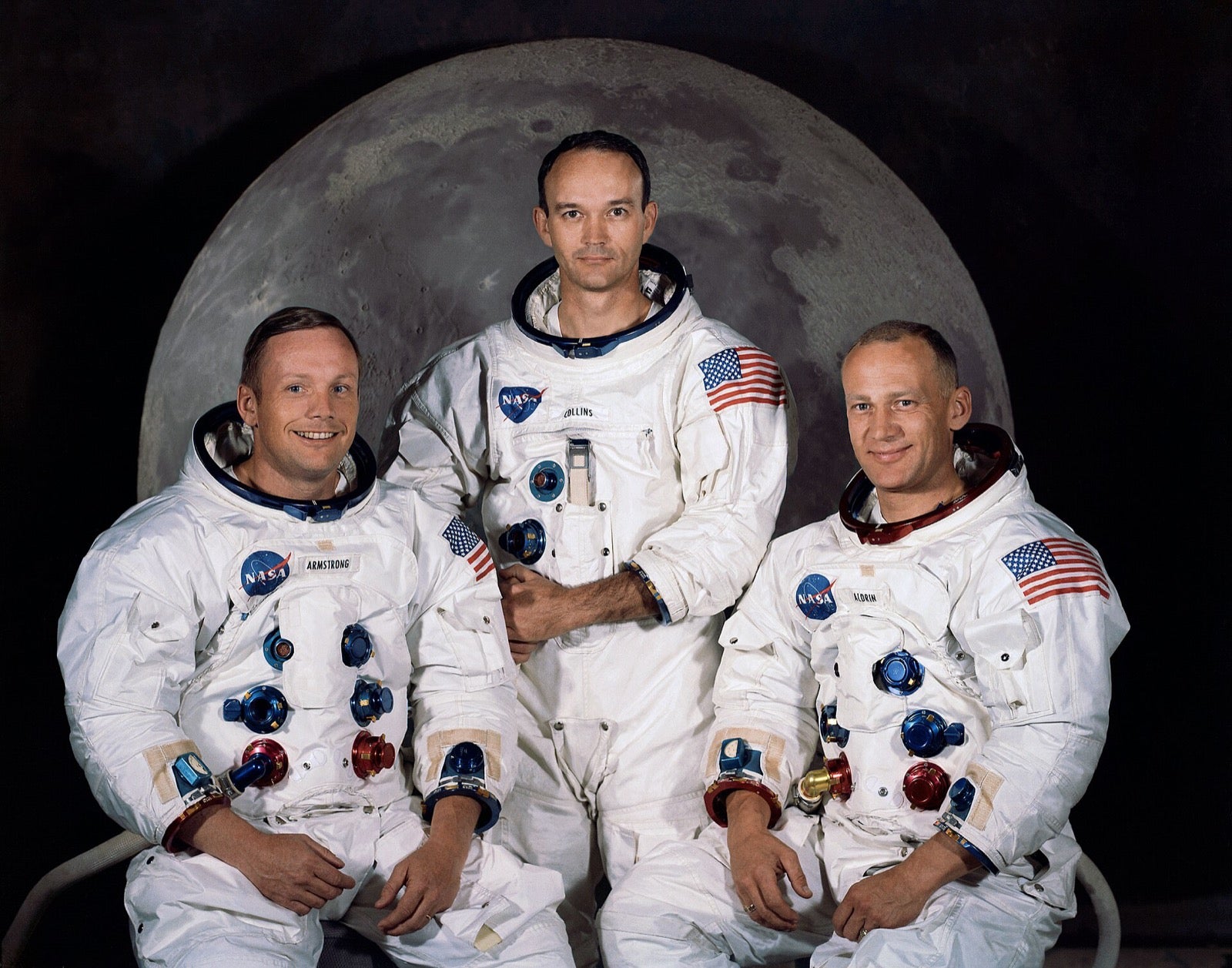
Credit: NASA, public domain via Wikimedia Commons
A hobby with a worldwide reach
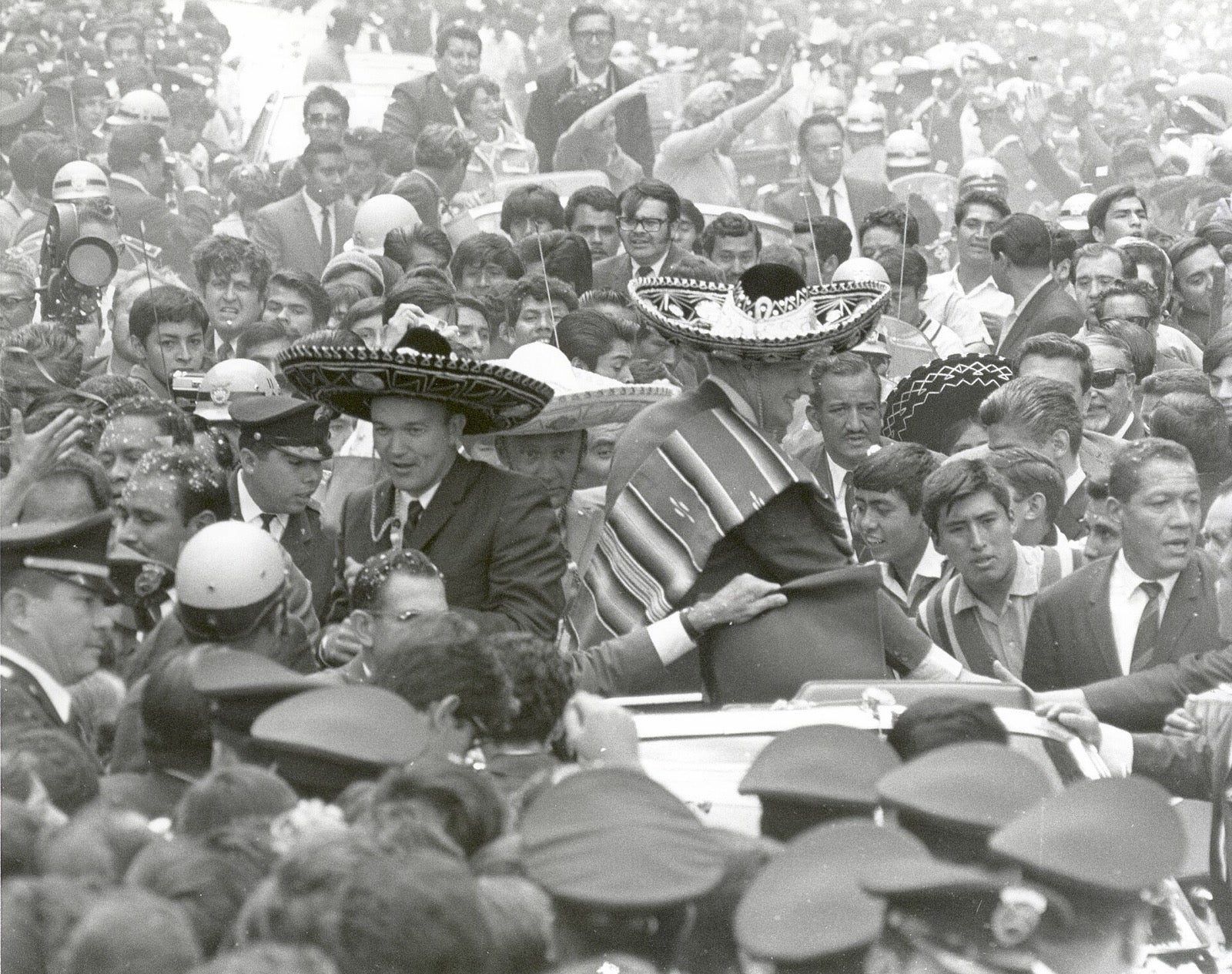
The Americans were far from alone. Postal administrations on nearly every continent issued their own stamps for Apollo 11, and by one specialist count more than fifty separate commemoratives came out of that single mission. Some of the appetite was manufactured by the astronauts themselves. Six weeks after splashdown, Armstrong, Aldrin and Collins, travelling with their wives, set off on a 38-day tour that NASA called Giant Leap, taking in 29 cities across 24 countries. It began in Mexico City on 29 September 1969, and by NASA’s own estimate more than 100 million people saw them along the way, plenty of reason for postal administrations everywhere to mark the occasion in print.
Credit: NASA, public domain via Wikimedia Commons
An insurance policy made of postage stamps
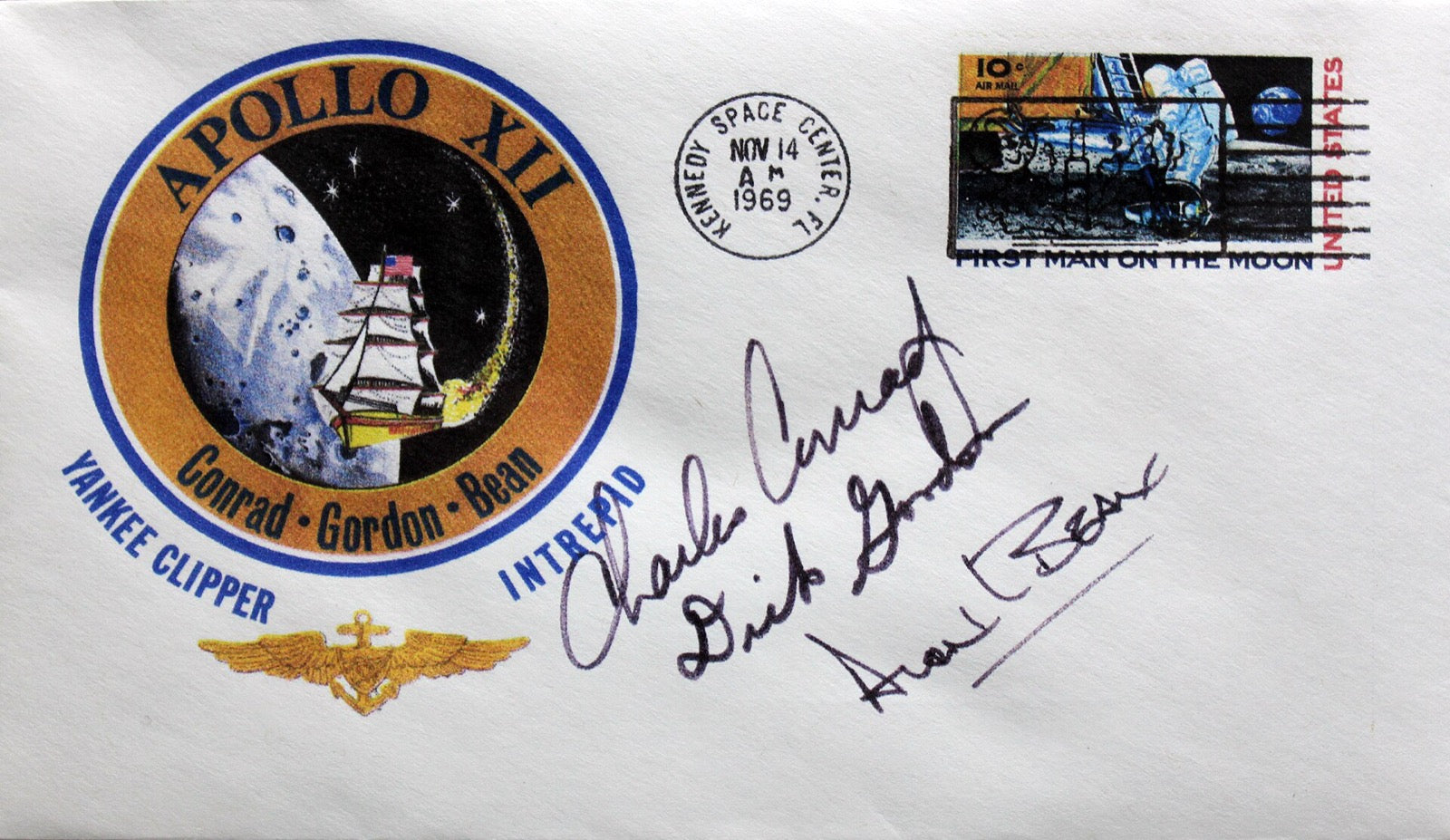
Not every moon-mission cover was a souvenir. No ordinary insurer would cover an astronaut against the risk of the job, so from Apollo 11 through to Apollo 16 the crews found their own solution. While still in quarantine before launch, astronauts signed hundreds of postal covers, which a trusted colleague would then have officially postmarked at Kennedy Space Center on launch day, landing day, or both. If a mission ended in tragedy, the signed covers were left behind for the astronauts’ families to sell. Two sources produced them, the Manned Spacecraft Center Stamp Club in Houston and a family friend named Al Bishop, and because it was the first landing, Apollo 11’s insurance covers still command the highest prices of the set.
Credit: Anagoria, public domain via Wikimedia Commons
The scandal that grounded three astronauts
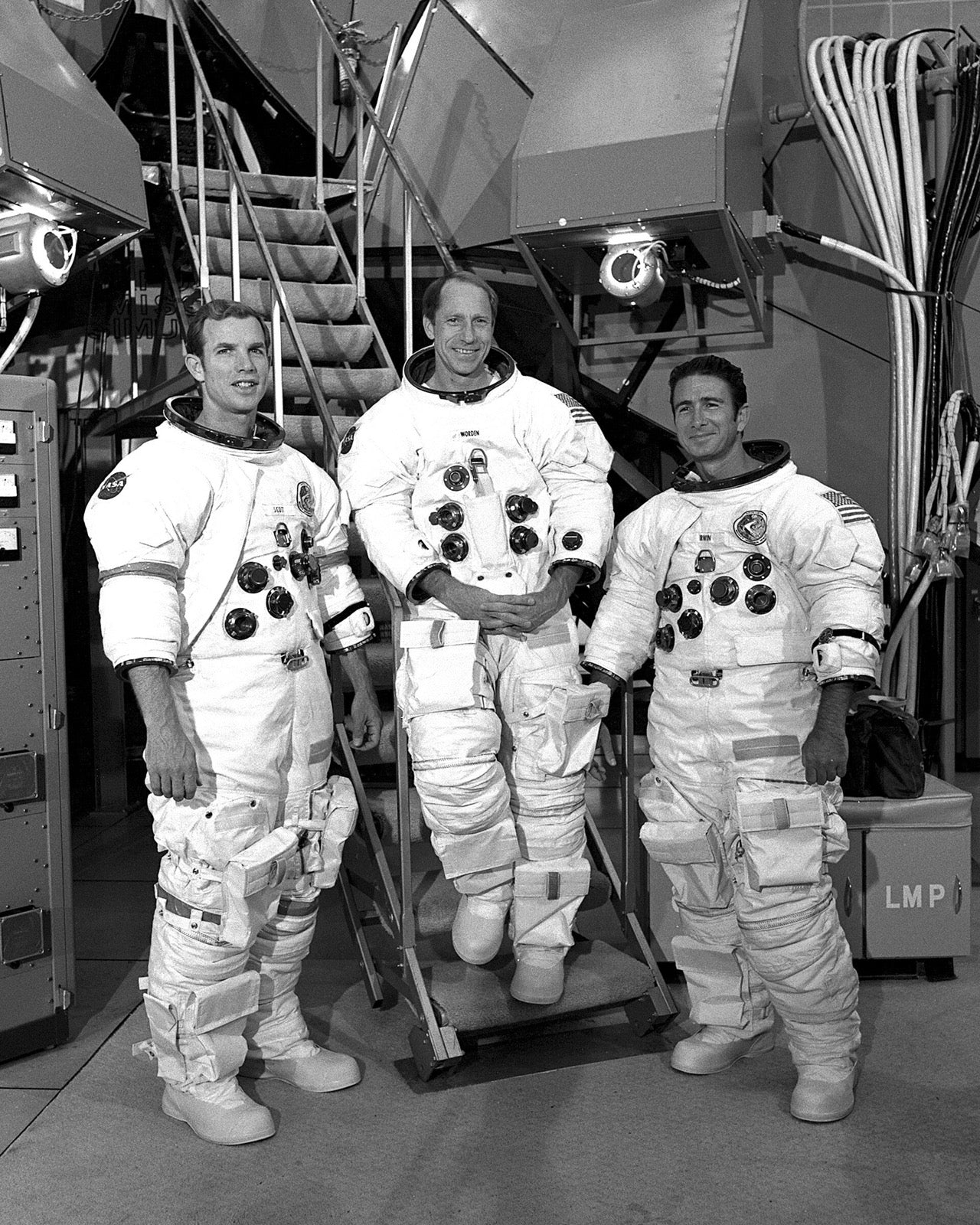
The insurance-cover scheme was sanctioned. What the crew of Apollo 15 did in July 1971 was not. Commander David Scott, command module pilot Alfred Worden and lunar module pilot James Irwin carried around 400 unauthorised postal covers to the Moon aboard the lunar module Falcon, arranged through West German stamp dealer Hermann Sieger. A hundred of the covers were destined for Sieger, the rest kept by the crew as personal souvenirs, and the arrangement stayed quiet until it broke in the press in June 1972.
NASA reprimanded all three astronauts on 10 July 1972 and dropped them from the backup crew for Apollo 17. None of them flew in space again. The following year NASA confiscated 298 of the covers and handed them to the National Archives, and there the matter sat until February 1983, when Worden sued the government over the seizure. The Department of Justice concluded it had no grounds to fight the case, and in July 1983 the covers were returned to the astronauts under an out-of-court settlement.
Credit: NASA, public domain via Wikimedia Commons
Why a scandal made the Apollo 15 covers more valuable, not less
The scandal did not kill the market for Sieger covers. If anything, it made them more collectible. Only a handful of the surviving covers have ever reached public auction, and one of the confiscated-then-returned examples sold at a Novaspace auction in January 2008 for $15,000, worth around £7,614 at that month’s exchange rate. It is a modest sum next to the prices commanded by flown hardware or signed photographs, but it says something about the pull of the story attached to it. A cover that grounded three astronauts is worth more to collectors than one that behaved itself.
That, in the end, is what set moon landing philately apart from every space-collecting category that followed it. Nothing since Apollo has combined a rushed stamp design, a postmark applied by hand in lunar orbit, fifty-odd countries issuing their own commemoratives within months, and a genuine federal scandal, all inside a three-year span. More than half a century on, the stamps and covers tied to the first landing remain the benchmark the rest of space philately is measured against.