



Unopened vintage card boxes and packs are traded today rather like Erwin Schrödinger’s famous cat: sealed, untouched, and either extraordinarily valuable or nearly worthless, depending on a question nobody can answer until the seal is broken. A 1952 Topps wax pack, still folded shut more than seventy years after a shopkeeper sold it for five cents, might hold a Mickey Mantle. It might just as easily hold five commons and a stick of brittle gum. Collectors pay for the not knowing, and they pay well.
Wax packs go back to the early twentieth century, but the modern hobby really begins with Topps’ 1952 baseball set, sold in penny and five-cent wrappers with a stick of gum inside. Those packs were meant to be opened straight away, so almost none survived sealed by accident. Topps famously struggled to sell its unwanted 1952 high-number cards. By the mid-1980s the industry had swung the other way, printing so many cards so fast that the period is still known in the hobby as the junk wax era.
That contrast between cards too scarce to find and cards too common to matter sits behind almost every decision collectors make about unopened product today. This guide looks at why sealed boxes and packs command serious money despite the uncertainty inside them, why genuinely old sealed material keeps getting harder to find, and why that same uncertainty has made the market a target for fraud.
Discover all in our:
Unopened vintage card boxes & packs: the Schrödinger’s card dilemma
Credit: Robert Edward Auctions
The gamble collectors are actually buying
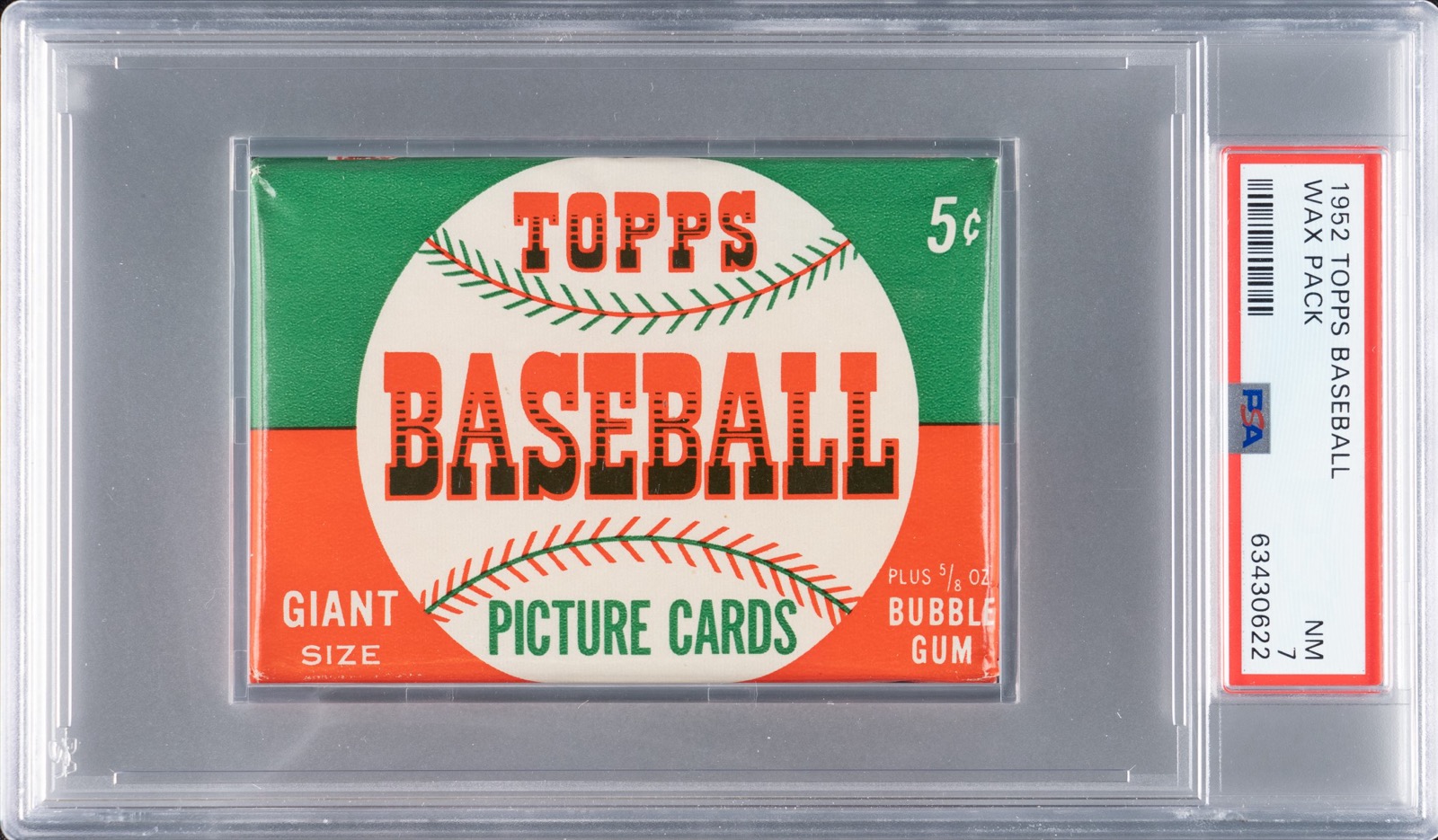
Buying a sealed pack is buying a lottery ticket with a floor value. A common base card from 1952 is worth very little on its own, so the downside on any single pack is small. The upside is what keeps buyers interested: the same set produced a Mickey Mantle rookie card that has sold for millions, and every unopened pack from that print run has some chance of containing one. In August 2026, Robert Edward Auctions sold a single unopened 1952 Topps five-cent wax pack, graded PSA NM 7 for its wrapper, for $105,000.
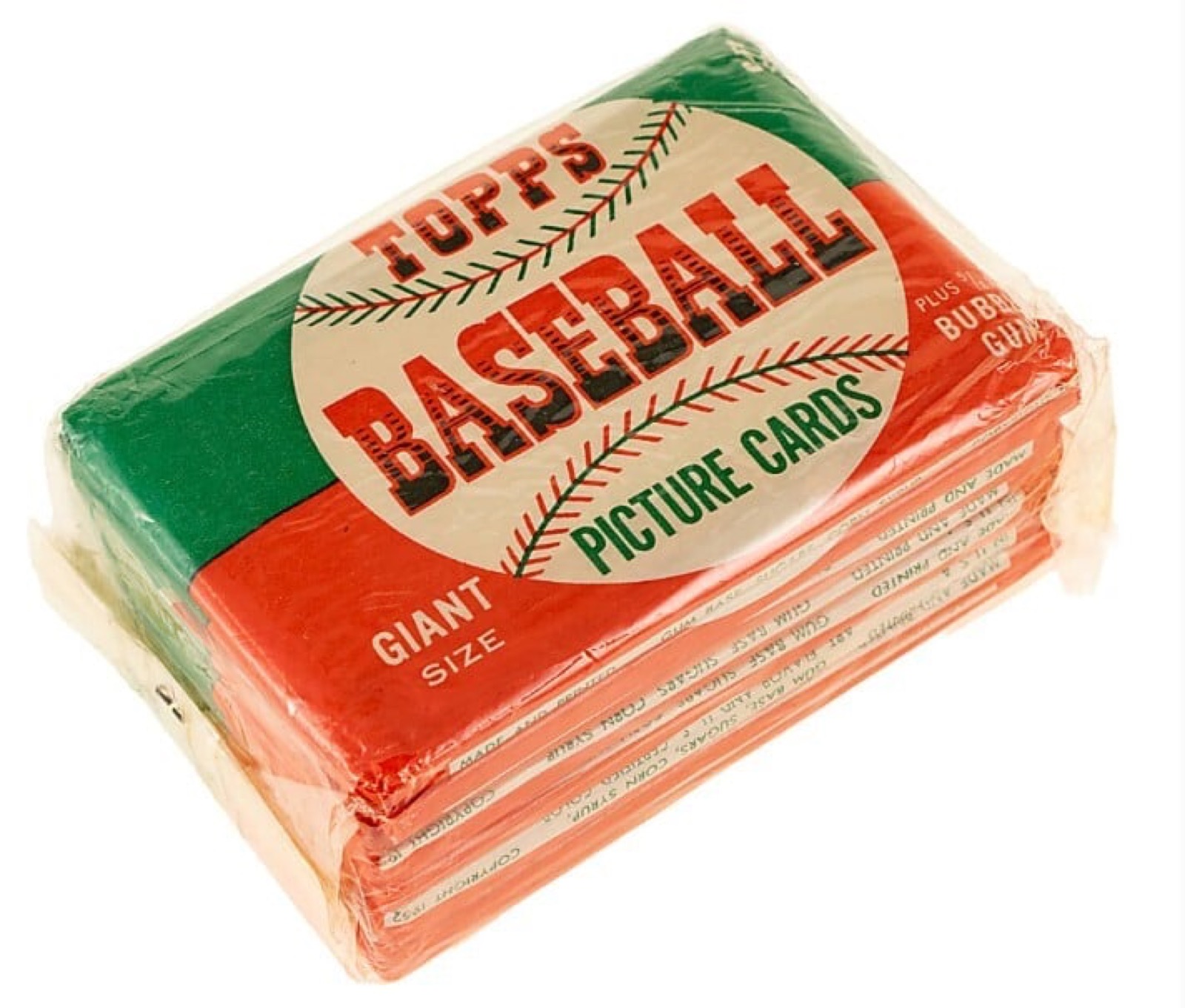
The incentive scales with the size of the sealed unit. That same year, a “brick” of eight unopened 1952 Topps wax packs, still bound in its original cellophane, sold at Robert Edward Auctions for $1,107,000, breaking a record of $852,000 set in 2023. The brick traces back to a hoard of 84 unopened packs found in Seattle in the early 1990s. Only three such bricks are known to survive. Buyers were bidding on the right to find out, not on eight specific cards, and on how few chances remain to do so.
Credit: Robert Edward Auctions
A supply that can only shrink
Every collectibles market has some notion of scarcity, but unopened vintage product has an unusually mechanical one. A sealed 1952 Topps pack cannot be reprinted, and once opened it can never honestly be sold as sealed again. The three known 1952 wax pack bricks are effectively all that will ever exist; each time one is opened, that number drops by one, permanently. The population of certified sealed wax boxes from any given vintage year is a countdown, not a market that can restock itself when demand rises.
That scarcity looks very different from the trading card market’s other extreme. Modern flagship releases now print at an industrial scale: 2025-26 NBA flagship sets from Fanatics and Topps alone produced more than 429 million cards, with over 1.26 million copies of some base cards. The broader US trading card market is now estimated at close to $15 billion a year, and overproduction on that scale is what depressed prices for decades after the late-1980s junk wax boom. Genuinely old, scarce unopened product sits apart from that cycle. A 1961 Fleer basketball box or a 1952 Topps pack was never printed in that kind of volume, and no amount of modern demand can bring more of it into existence.
Where the scams come in
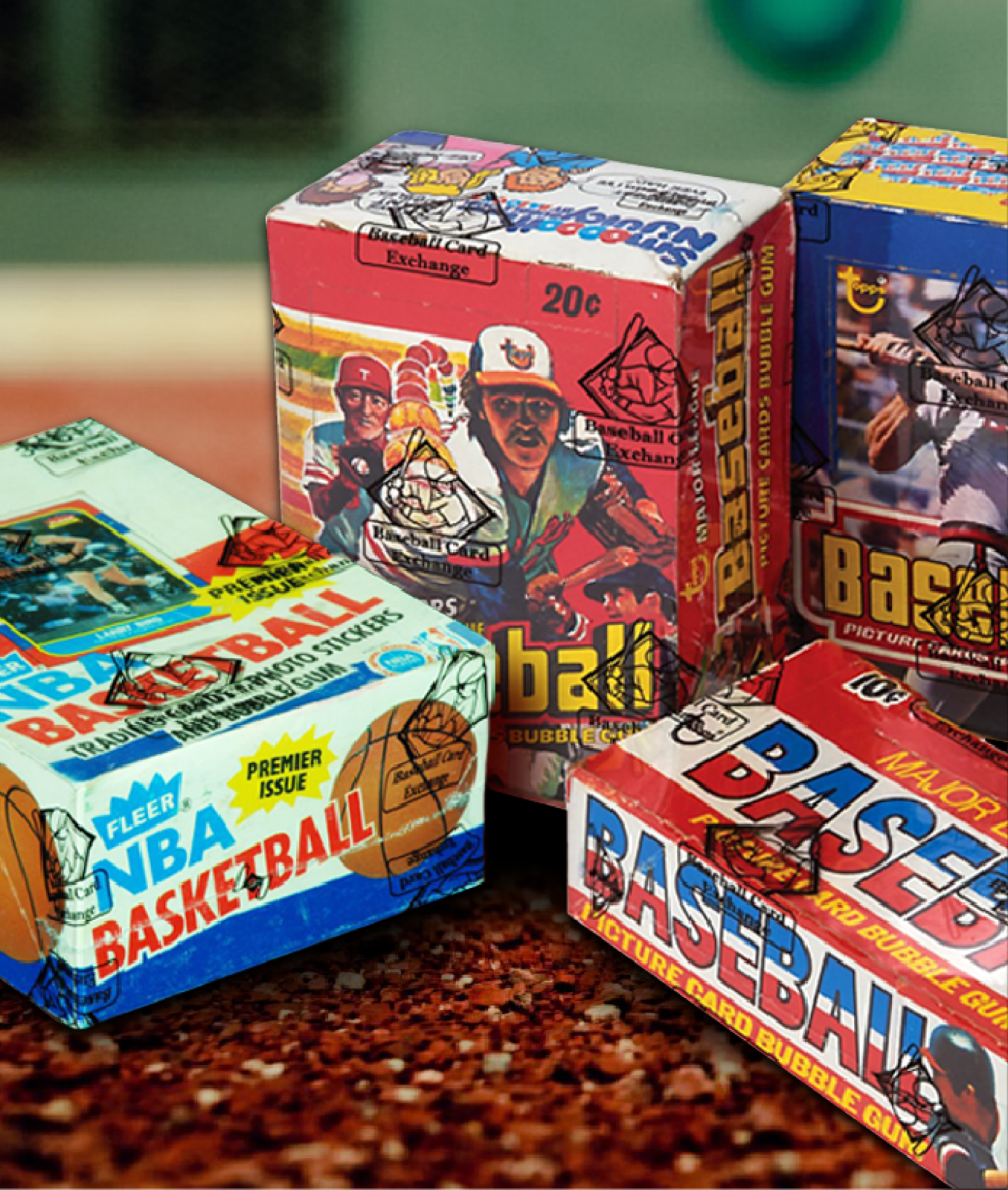
Money chasing a sealed, unverifiable product is an obvious opening for fraud, and the hobby has a long history of it. The most direct scam is resealing: a box or pack is opened, the best cards removed or swapped, and the wrapper closed up again to look untouched. Baseball Card Exchange, the industry’s main third-party wax authenticator, has been blunt about the scale of it. “These criminals are maliciously resealing packs and boxes at an alarming rate,” the company has said. “The number of resealed packs and boxes we see at BBCE is staggering.” Loose or bunched shrink wrap, uneven seams and glue residue near a flap are the usual giveaways, though weight alone is not a reliable test.
Fraud around unopened product sits alongside a wider trust problem in the graded card market. PSA’s 2025 fraud report found more than $200 million in counterfeit and altered cards intercepted that year, with counterfeit submissions up 45.3% on the year before and Pokémon counterfeits up 125%. “It was a conservative number,” Ryan Hoge, PSA’s president of grading, said of the figure. “If you looked at it on the extreme end, that number could be well north of a billion dollars.” In January 2026, a New York jury convicted Anthony Curcio of a scheme that opened genuine PSA holders, swapped in forged higher grades, and defrauded buyers of more than $2 million between 2022 and 2024.
Credit: Baseball Card Exchange (BBCE)
Buying sealed product with your eyes open
None of this means the market is not worth entering, only that it rewards caution. Third-party wax authentication adds a sealed, tamper-evident wrapper of its own and a paper trail back to the box’s origin, which matters more for an unopened box than a grading company’s opinion of a single card. Buying through an established specialist auction house, rather than an unverified private listing, moves the burden of checking a seal onto someone with a reputation to protect. Population reports show how many examples of a box are known to survive, but they are a snapshot, not a guarantee, and the count changes every time another one is authenticated or opened.
The economics that make a sealed box worth more than its contents
The record prices in this market are not really predictions about what is inside any one box. A brick of 1952 Topps packs selling for $1.1 million is a bet on scarcity that keeps compounding on its own, regardless of the cards underneath the wrapper. Every year a small number of sealed boxes are opened, by owners chasing the gamble or simply curious, and each opening makes the boxes that remain sealed rarer still.
That is the quiet asymmetry behind the Schrödinger comparison. A buyer who opens a box either wins or loses on the cards inside. A seller of sealed product is effectively betting on a certainty: that a finite, shrinking supply of genuinely old, unopened cardboard will keep finding buyers willing to pay for the not knowing, for as long as any is left to sell.