




Selling ungraded vs. graded sports cards means choosing between two different transactions. A raw card sale asks a buyer to trust their own eye, or a set of photographs, for condition and authenticity. A graded card sale hands that judgement to a third party, sealed in a tamper-evident holder with a number the buyer takes on trust. Which route suits a card depends on its value, its likely grade, and how much time and money a seller wants to spend before it reaches a buyer.
Grading itself is a relatively recent addition to the hobby. PSA, the largest of the services, was founded in 1991, and it changed how condition was argued over. Before it, a “near mint” card was whatever the seller called it, and a buyer either checked the corners and centring themselves or took it on faith. A numerical grade in a sealed holder replaced that argument with a certificate, and the population report behind it told a buyer roughly how many other examples existed at that grade or better.
That shift did not make raw cards worthless, nor graded cards automatically better. It created a genuine decision, turning on the card’s value, its condition, and what a buyer in that market wants to see before bidding. This guide covers what changes when a card is graded, what that costs, and when skipping the process is still the sounder move.
Discover all in our:
Selling ungraded vs. graded sports cards
Credit: Robert Edward Auctions
What a grade actually certifies
A grade is often read as a condition score, and it is one, but that is not the whole of what a buyer is paying for. Encapsulation also certifies that the card has been examined for alteration: trimming, recolouring, or a re-glued corner that a private buyer working from photographs would have no reliable way to catch.
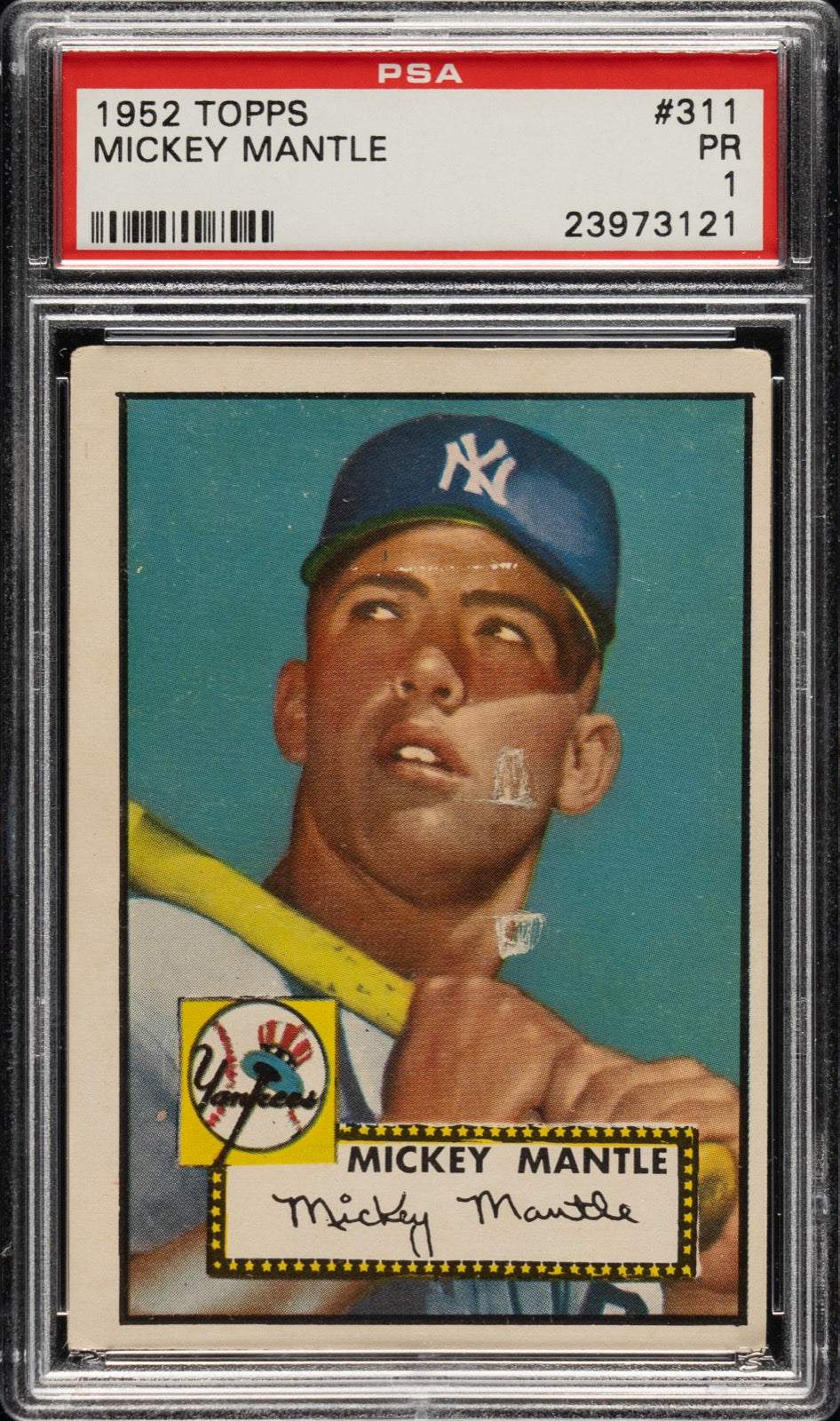
Robert Edward Auctions sold a 1952 Topps #311 Mickey Mantle in its autumn 2023 sale that PSA certified only “Authentic”, not a numerical grade, because it had been trimmed along multiple edges. It still made £33,429 ($40,800). A separate example from the same set and card number, graded PSA POOR 1, the lowest number on the scale, sold for £25,001 ($32,400) in the same house’s October 2024 auction. Neither card is attractive by any conventional measure. Both sold for five figures because the grading company’s name on the holder told the buyer exactly what they were getting, defect and all, with nothing left to their own judgement.
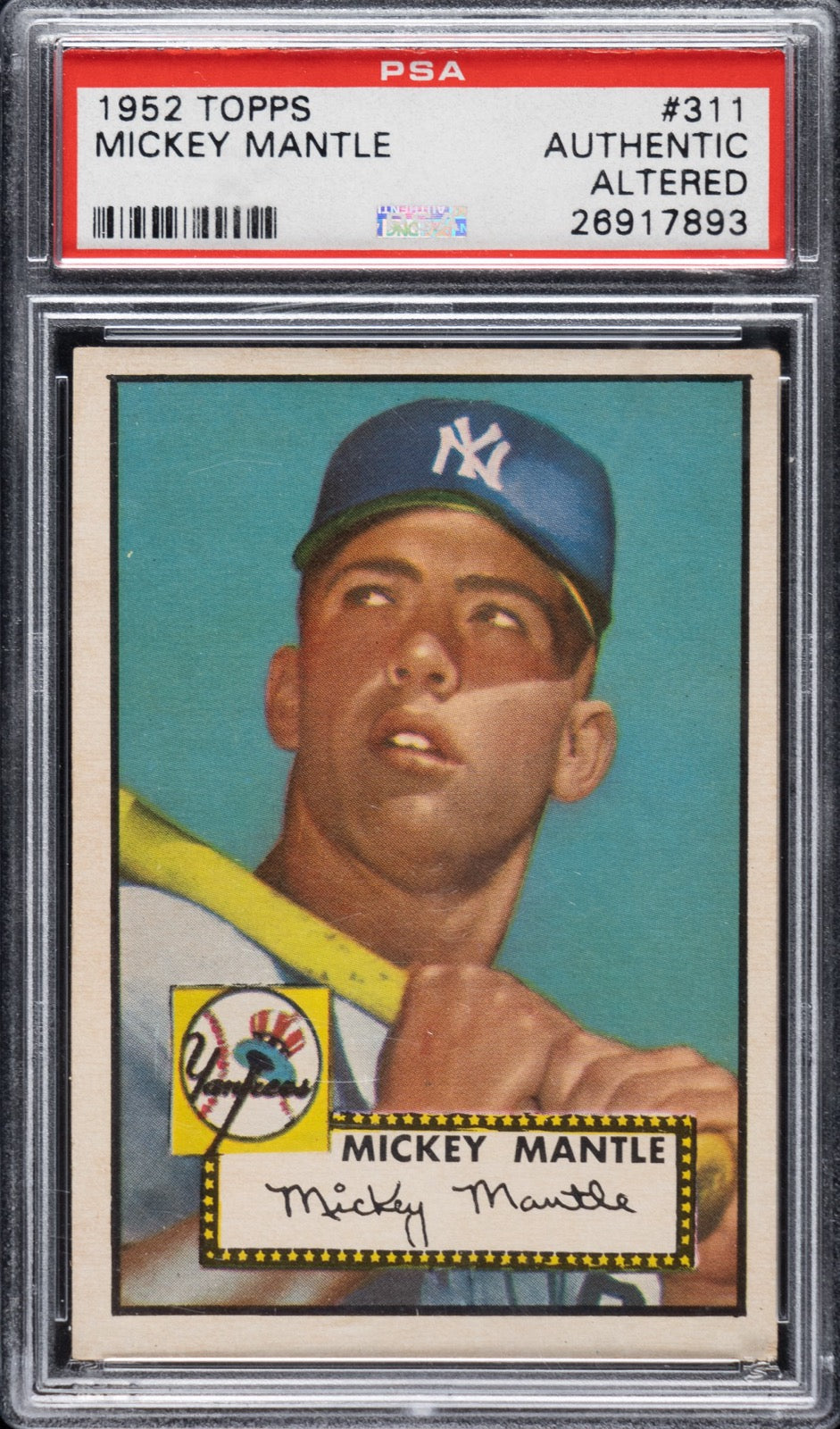
1952 Topps Mickey Mantle, graded PSA Authentic after trimming was found
Credit: Robert Edward Auctions
The cost and the wait
Grading is not free, and the fee scales with how quickly a seller wants the card back and how much it is declared to be worth. PSA’s published tiers for cards run from Value Bulk at £18.43 ($24.99) a card up to Regular service at £59 ($79.99), with turnaround stretching from a matter of weeks to several months depending on the tier. CGC Cards prices similarly by declared value: £12.54 ($17) a card for its Bulk tier, capped at £369 ($500) of declared value, up to £73.76 ($100) for Express service on cards worth up to £7,376 ($10,000), with turnaround ranging from 150 working days at the cheapest tier down to five at the fastest. CGC can also move a submission into a costlier tier if it judges the declared value too low.
None of this is prohibitive for a card worth real money. It is a genuine obstacle for one that is not. A card worth twenty pounds, submitted at Regular service with a two-month wait, has already lost money before a buyer is found, whatever grade it comes back with.
Credit: Robert Edward Auctions
When the raw-to-graded jump pays for itself
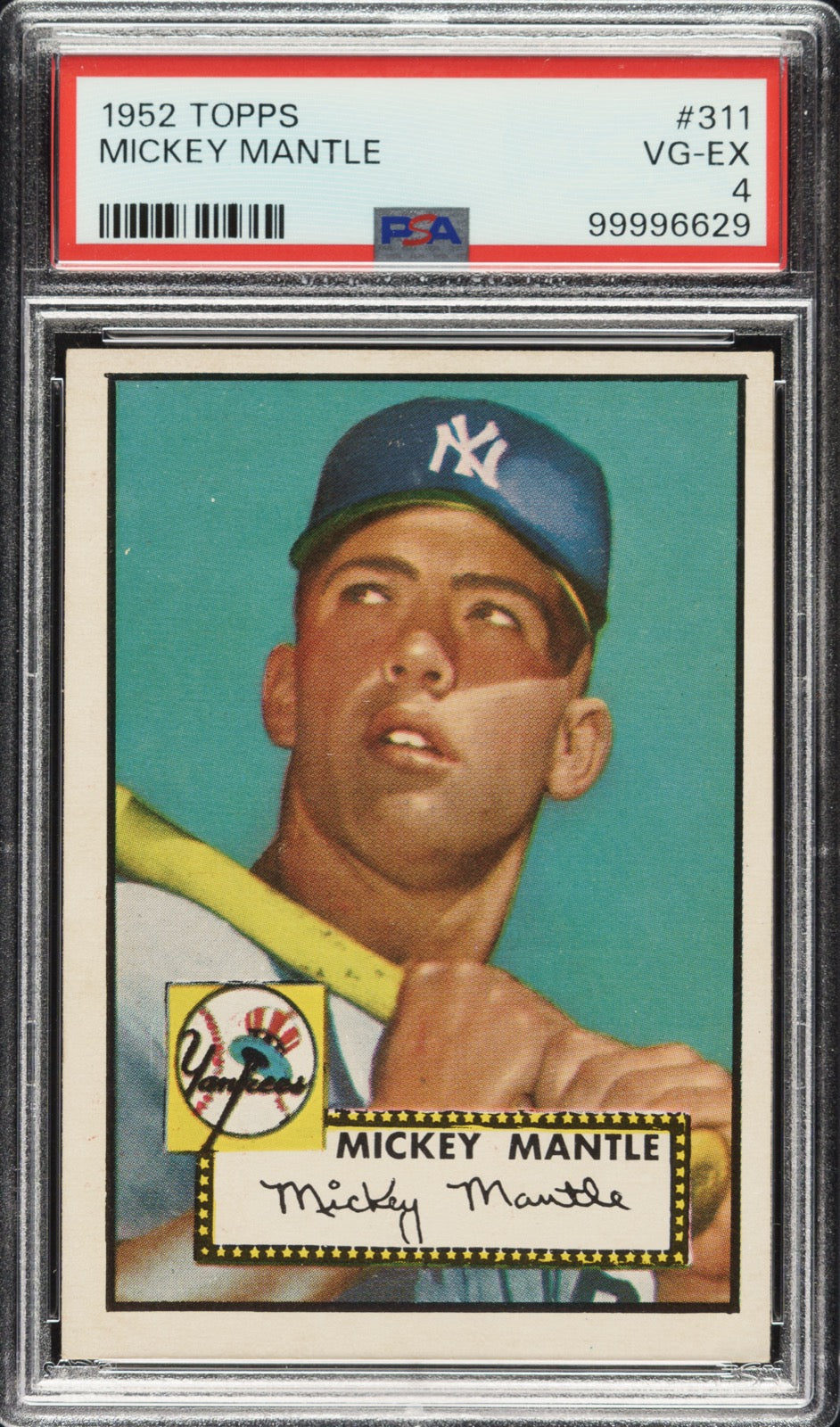
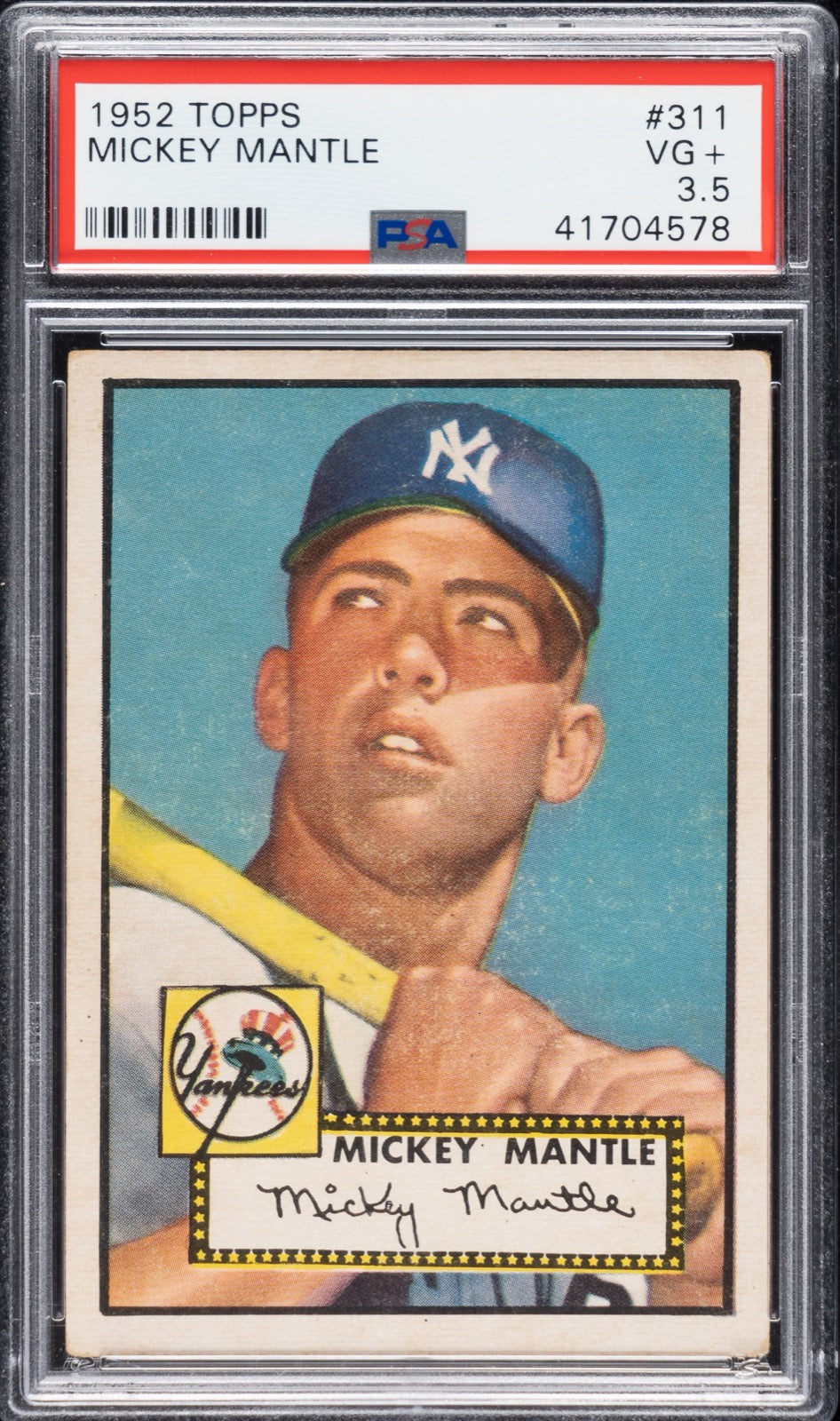
The clearest case for grading is a card that has never been graded at all: something pulled from a pack decades ago and kept in a drawer, a wallet, or a box of family photographs ever since. Robert Edward Auctions sold exactly that kind of card in March 2025, a 1952 Topps Mantle consigned directly by the original owner, who had pulled it from a wax pack in 1952 and kept it raw for more than seventy years. Graded PSA VG-EX 4 once it reached the auction house, it sold for £83,473 ($108,000), comfortably ahead of a PSA VG+ 3.5 example of the same card that made £77,891 ($87,000) at the same house in September 2022.
That gap is the case for grading in miniature. A raw card, however good its story, is an unknown to any buyer who has not held it. The same card in a sealed holder with a number on it is a known quantity, and buyers pay a premium for not having to take the seller’s word.
Credit: Robert Edward Auctions
When selling raw is the sounder call
Grading makes least sense at the bottom of the market. Modern base cards, common inserts, and anything realistically worth less than the submission fee are better sold raw, in bulk if necessary, to dealers or set builders who price that material by the hundred rather than the card. There is no grade that turns a card worth a few pounds into one worth the cost of certifying it.
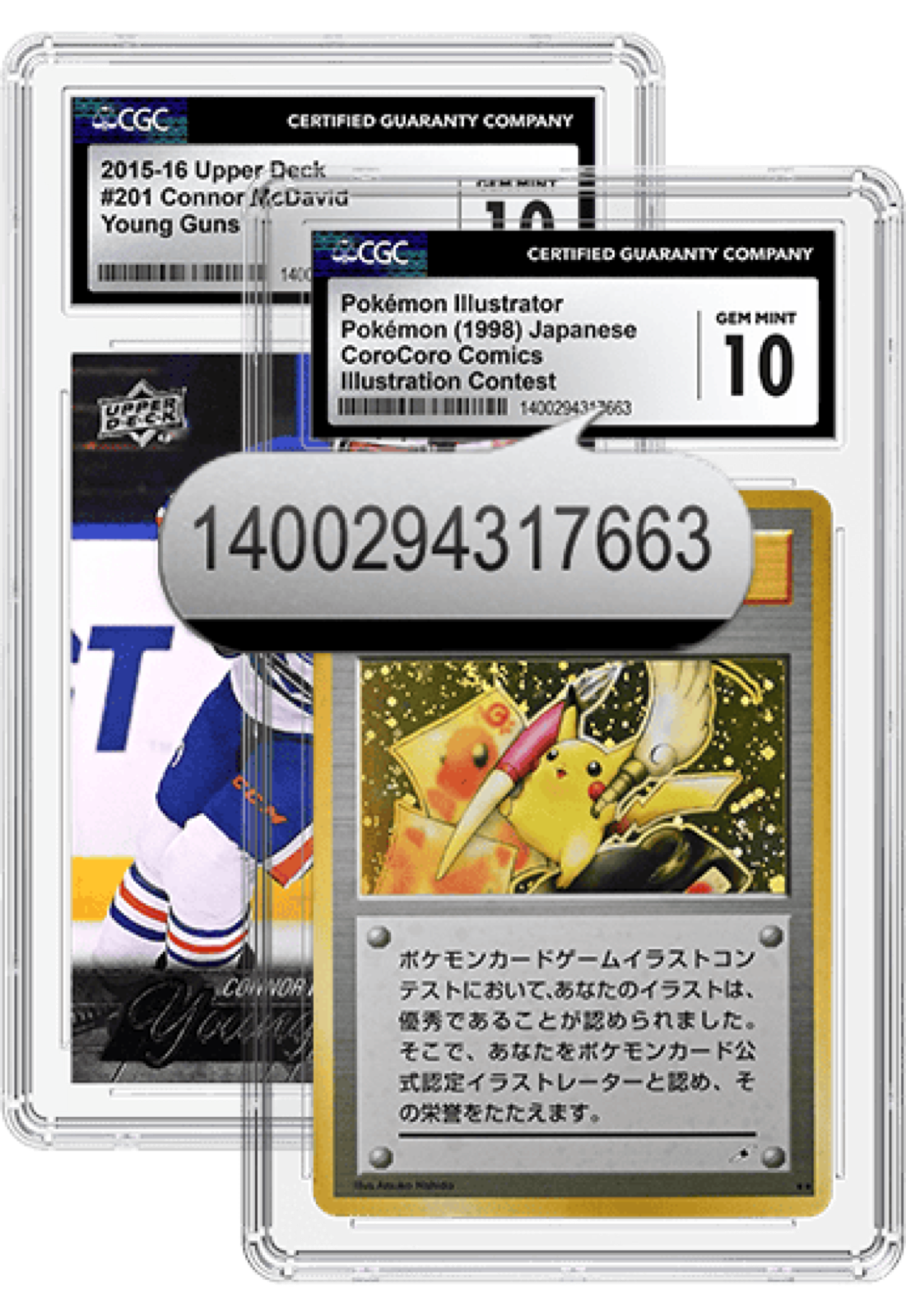
There is also a middle path for a card already graded by one company but better suited, in the seller’s judgement, to another. CGC Cards, for instance, offers a “crossover” service: a card already slabbed by PSA, Beckett, or SGC is evaluated for CGC certification and, if it meets CGC’s standard for the same grade or higher, re-encapsulated in a CGC holder rather than treated as a fresh raw submission. That avoids paying twice for authentication already done once. The underlying question stays the same: does this card’s likely buyer need a third party’s word, or can they judge it alone? High-value, historically significant, or condition-sensitive cards tend to need that word. Everyday cards, bought and sold by people who already know the set cold, usually do not.
Credit: Certified Guaranty Company
One card, four grades, and what they say about the decision to submit
The four Mickey Mantle sales above are the same card, sold by the same house, at four different points on PSA’s scale: Authentic with a disclosed defect, POOR 1, VG+ 3.5, and VG-EX 4. Every one of them found a buyer, and the spread between the lowest and highest sale, £25,001 to £83,473, tracks grade and freshness to market rather than any change in what the card itself depicts.
That is the pattern worth taking away from all four sales. Grading does not manufacture value in a card that was not going to have any. What it does, reliably, is let a buyer act on a number instead of a guess, and for a card with real demand behind it, that certainty is worth paying and waiting for.