



Understanding cubism and collecting Pablo Picasso begins with recognising how one man helped redefine modern art. In the first decade of the twentieth century, Picasso and Georges Braque shattered centuries of artistic convention by depicting subjects from multiple perspectives at once, creating a visual language that would influence nearly every artistic discipline that followed.
The movement they founded evolved from Picasso’s earlier experiments, his engagement with African and Iberian sculpture, and a dialogue with Braque that pushed both toward radical abstraction. For collectors, Picasso’s Cubist works represent some of the most sought-after artworks, with auction records regularly exceeding nine figures.
Discover all in our:
Understanding cubism: a collector’s guide to the world of Pablo Picasso
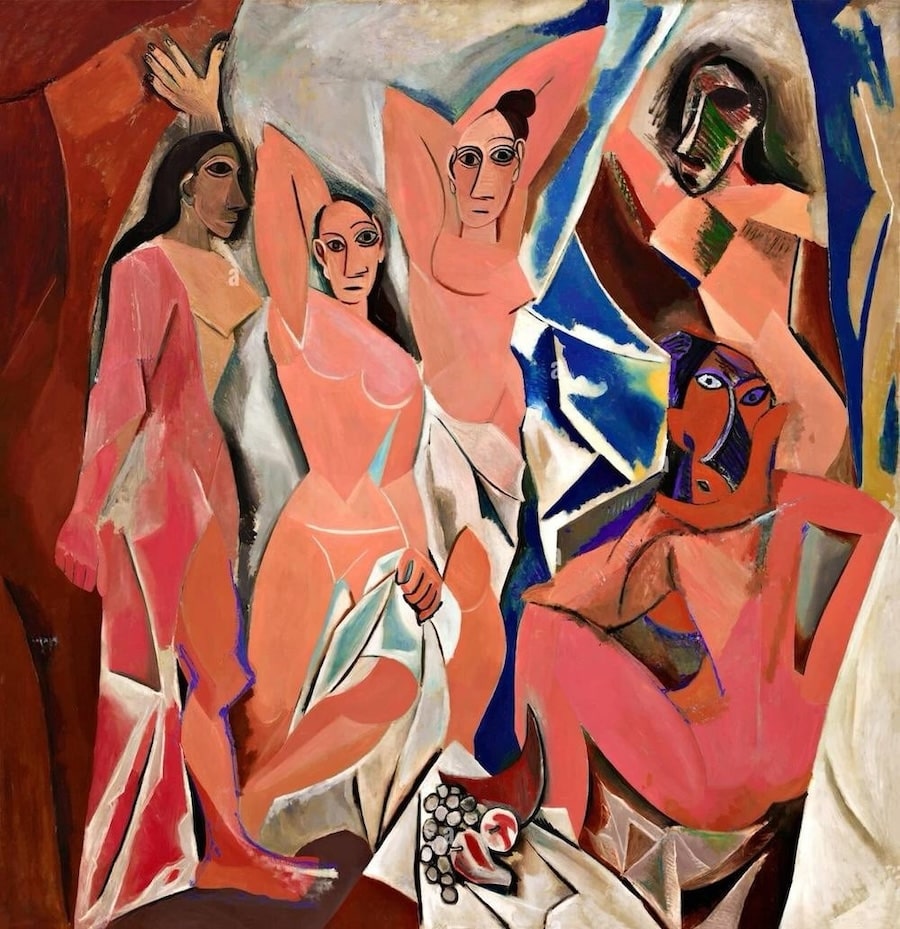
Cubism was born in a Parisian studio around 1907. Picasso’s Les Demoiselles d’Avignon rejected single-point perspective, embracing fragmented form. The painting depicted five women as angular, geometric planes rather than smooth, rounded figures. Critics reacted with shock, yet the work pointed toward a new visual language. By 1908, Picasso and Braque were collaborating closely, developing Analytic Cubism.
Credit: pablopicasso.org
The phases of cubism
Analytic Cubism ran from 1909 to 1912, the movement at its most intellectually rigorous. Picasso and Braque analysed subjects with precision, breaking forms into overlapping planes that suggested multiple viewpoints at once. The palette was restrained: earthy browns, greys and ochres.
Synthetic Cubism followed from 1912 to 1914, introducing brighter colours and simpler forms. The innovation was incorporating actual materials into artworks. Picasso’s Still Life with Chair Caning of 1912 featured oilcloth printed with a chair-caning pattern. These collages marked one of modern art’s most important developments.
Crystal Cubism emerged during World War I, with large, overlapping geometric planes and renewed emphasis on clarity, reflecting a desire for structure during global chaos.
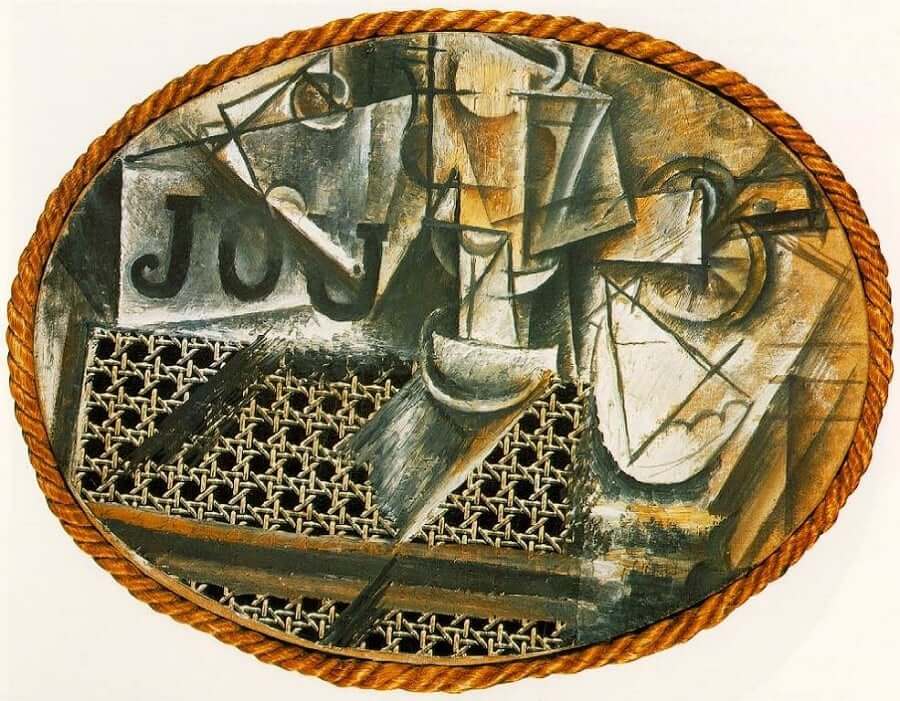
Credit: Musée Picasso, Paris
Picasso as the central figure
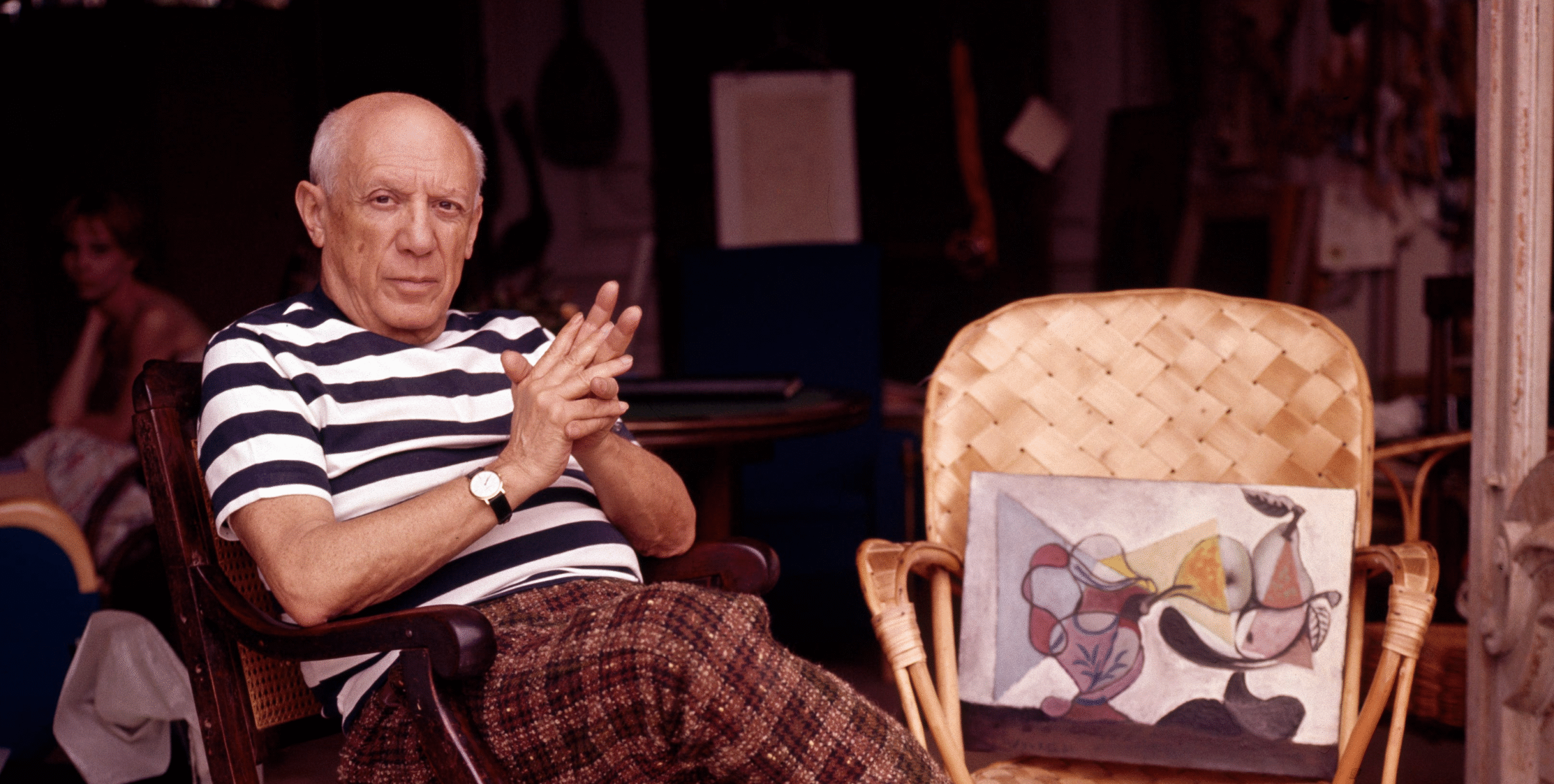
Picasso, born in Malaga in 1881, demonstrated extraordinary talent from childhood. By his early twenties he moved through distinct stylistic phases: the somber Blue Period, the warmer Rose Period, then the African-influenced works that led directly to Cubism.
His relentless experimentation set him apart. During his Cubist years, he produced paintings, sculptures, prints, ceramics and stage designs. His Head of a Woman (Fernande) of 1909 to 1910 used positive and negative space in ways that defied tradition.
By his death in 1973, Picasso had created an estimated 50,000 artworks. Upon his passing, his personal estate still contained approximately 1,885 paintings, 1,228 sculptures, 3,222 ceramics, 7,089 drawings, 150 sketchbooks and thousands of prints. This immense and prolific production means more accessible examples appear at auction, providing entry points for collectors.
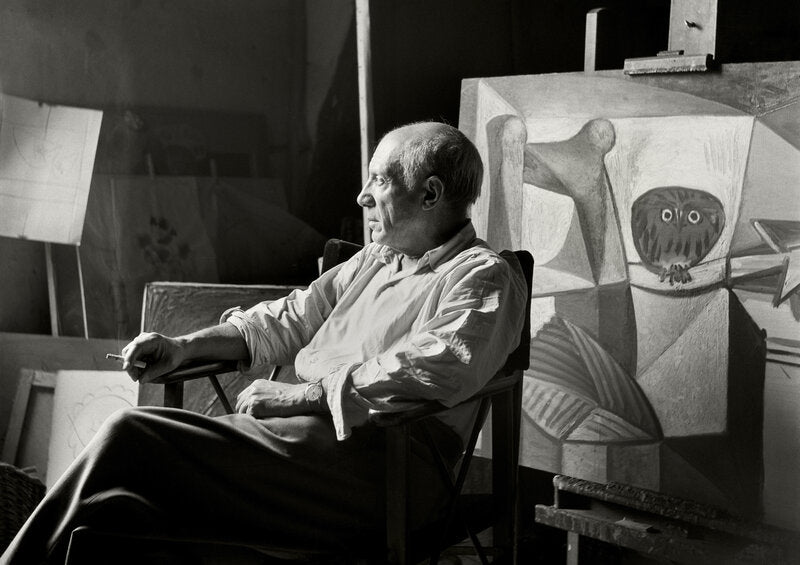
Credit: Musée Picasso, Paris
The market for Picasso
The auction market reflects Picasso’s status as one of history’s most important artists. His paintings consistently achieve the highest prices of any modern artist at auction.
In May 2015, Les Femmes d’Alger (Version O) sold at Christie’s New York for 179,365,000 US dollars (approximately 116,587,250 pounds at the 2015 rate). This established a new world auction record. Other results include Garçon à la Pipe at 104,168,000 US dollars (about 57,292,400 pounds) at Sotheby’s New York in 2004, and Dora Maar au Chat at 95,216,000 US dollars (around 51,416,640 pounds) at Sotheby’s New York in 2006.
In May 2021, Femme assise près d’une fenêtre (Marie-Thérèse) sold at Christie’s New York for 103,410,000 US dollars. In 2010, Nude, Green Leaves and Bust brought 106,482,500 US dollars (approximately 71,309,975 pounds) at Christie’s New York.
Picasso’s drawings typically sell for between 500,000 and 5 million pounds. Ceramics range from 20,000 to 500,000 pounds. Prints offer the most affordable entry, varying from a few thousand pounds to over 100,000 pounds for exceptional examples.
Credit: pablopicasso.org
Collecting Picasso: practical considerations
Provenance is paramount. The artist’s estate established a comprehensive catalogue raisonné, and any work should be cross-referenced with these records. Forgeries exist, making authentication through recognised experts essential.
Condition plays a crucial role in value. Picasso often worked on canvas without varnish, and his paintings can be sensitive to environmental factors. Collectors should request detailed condition reports and have works examined by conservation experts.
The market is global, with major auction houses in London, New York, Paris and Hong Kong regularly offering his works. Specialised dealers in modern art also handle Picasso, often with pieces that do not appear at public auction.
New collectors might start with works on paper or ceramics. His linocuts from the 1950s and 1960s demonstrate his mastery of form and line while being more accessible than major paintings.
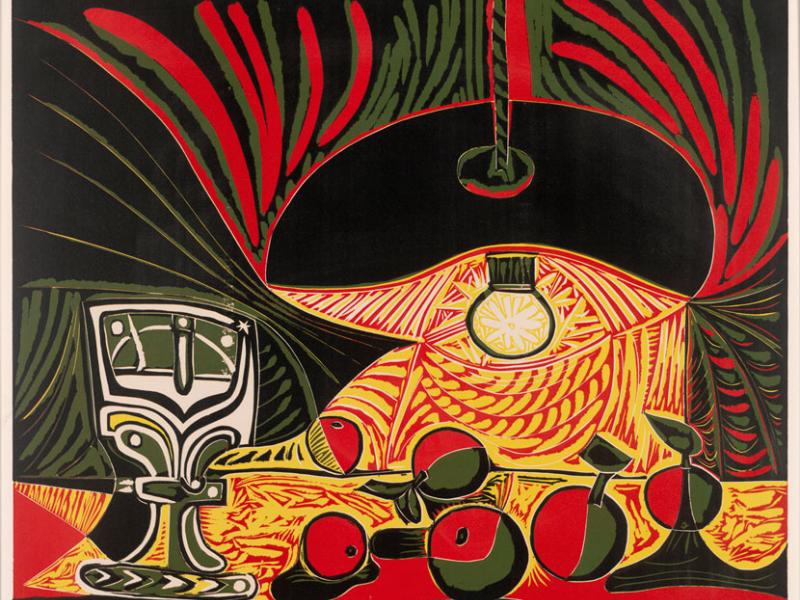
Credit: National Museum Liverpool
Key works and where to see them
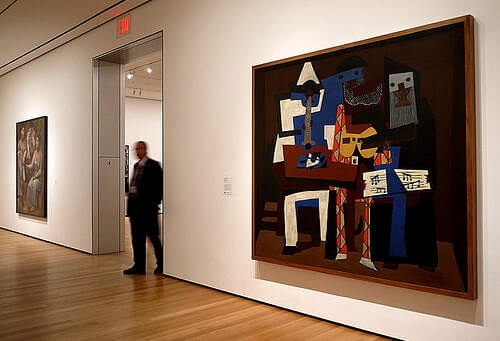
Les Demoiselles d’Avignon (1907) remains at the Museum of Modern Art in New York, as does Three Musicians (1921). The Art Institute of Chicago houses The Old Guitarist, while Tate Modern in London owns Bottle of Vieux Marc, Glass, Guitar and Newspaper (1913).
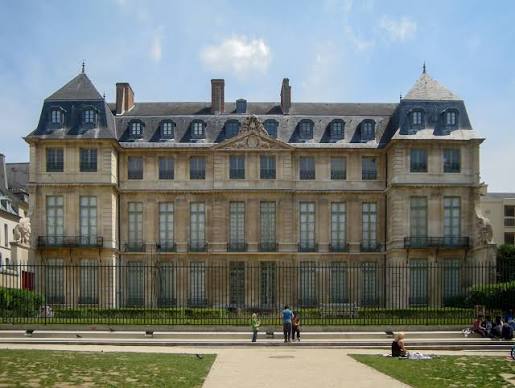
The Musée Picasso in Paris holds over 5,000 pieces spanning all periods. In Barcelona, the Museu Picasso focuses on his early years. These institutions offer collectors and enthusiasts the chance to study his techniques firsthand.
Credit: Wikipedia
The lasting appeal of Cubism
What sustains the market for Picasso’s Cubist works is the same quality that made the movement revolutionary: the ability to see and represent the world differently. Cubism was not merely a style but a new way of thinking about perception, time and space.
Picasso’s genius lay in making this radical approach feel both intellectually rigorous and emotionally powerful. His works do not just challenge perception; they also move, disturb and delight. This combination explains why his art continues to command attention and value.
For collectors, Picasso’s Cubist works represent more than financial investments. They embody a moment when art fundamentally changed.
Credit: Museo Reina Sofia
The investment case for modern art
While past performance never guarantees future results, Picasso’s auction record demonstrates resilience. His works have consistently appreciated over the long term, achieving new records even during economic uncertainty. This track record, combined with finite supply, underpins the investment case for quality Picasso pieces. Yet the most compelling reason to collect remains the art itself.