



Marvel collector essentials covering comics, cards and key issues form the foundation of a hobby that has captivated fans since the company’s first publication in 1939.
What began as Timely Comics with the Human Torch and Namor the Sub-Mariner has evolved into a global phenomenon. The Marvel Cinematic Universe brings these characters to new audiences while the collecting world spans from Golden Age origins through Silver Age classics to modern graded items and premium trading cards.
The distinction between mass-produced merchandise and authentic ephemera is central to value. While replica items have their place, original artefacts with documented provenance command the highest prices. A first appearance comic in near-mint condition or a complete 1990s trading card set carries historical weight that factory-produced items lack.
The market has seen remarkable growth, with record prices across comics, artwork and trading cards. New collectors continue to enter as established enthusiasts expand their holdings, and opportunities remain at every price point.
Discover all in our:
Marvel collector essentials: comics, cards, and key issues
Understanding Marvel comics: from Golden Age to modern
Marvel’s comic history divides into distinct eras. The Golden Age (1939-1956) produced Marvel Comics number one and early characters like Captain America. These books are the rarest, with high-grade copies commanding six and seven-figure sums.
The Silver Age (1956-1970) marked Marvel’s rebirth under Stan Lee and Jack Kirby, introducing Fantastic Four, Spider-Man, X-Men and Avengers. These first appearances form most serious collections.
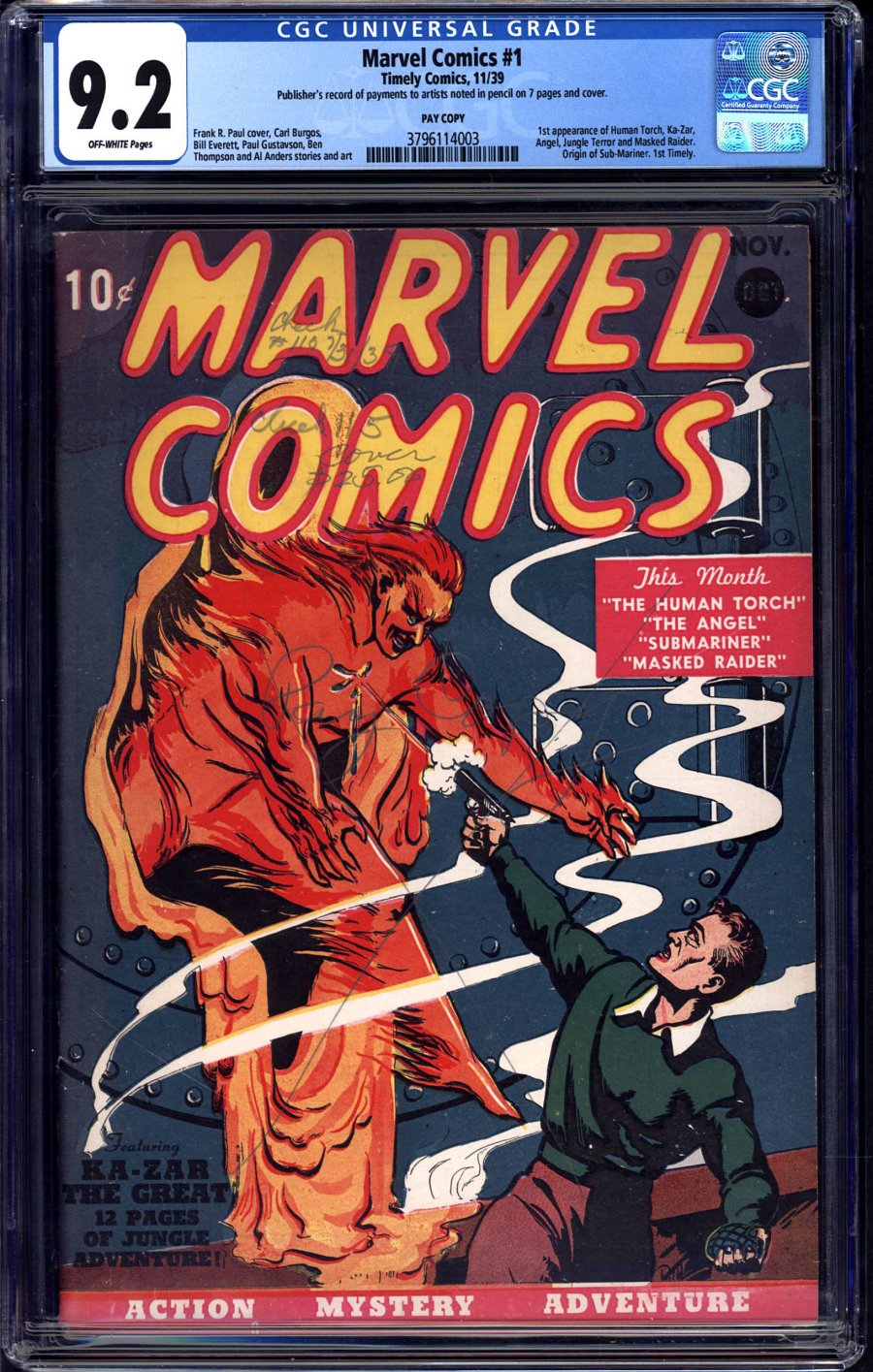
Condition is paramount. CGC assigns comic grades on a scale from 0.5 to 10, while PSA uses a 1 to 10 scale for trading cards that includes half-point increments for precise assessment. For comics, grades of 9.4 and above are considered near-mint to mint (with 9.2 recognised as near-mint minus). The difference between grades can mean tens of thousands of pounds. Pedigree collections like Windy City or Pacific Coast command premiums for their preservation.
Credit: CGC Comics
Key issues every collector should know
Key issues feature major first appearances or events. Marvel Comics number one launched the brand in 1939 and sold for £982,800 at Heritage Auctions in 2019. The book featured early Human Torch and Namor.
Fantastic Four number one from 1961 began Marvel’s Silver Age and introduced the team that would define the company’s direction. A CGC 9.6 copy achieved £1.61 million at Heritage in 2024.
Amazing Fantasy number 15 from 1962 presented Spider-Man’s debut. A CGC 9.6 holds the record at £2.63 million, while a CGC 9.4 sold for £612,150 in 2020.
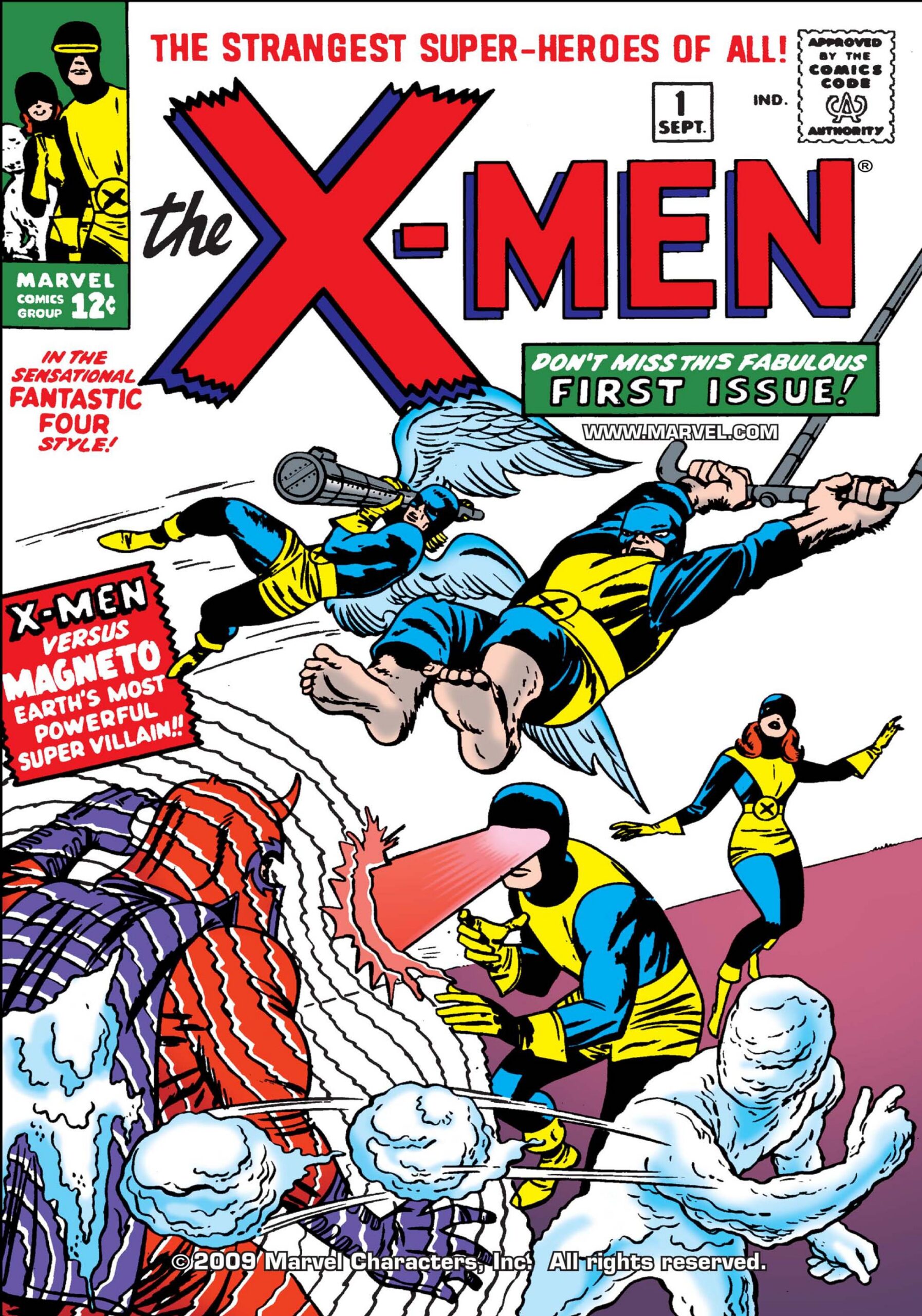
X-Men number one from 1963 sold for £315,480 in CGC 9.8 Pacific Coast pedigree, and Avengers number one from 1963 achieved £175,904 for a CGC 9.6 copy. These books established Marvel’s team-based storytelling.
Credit: Marvel
The world of Marvel trading cards
Trading cards became a major category during the 1990s, with manufacturers like Fleer, Impel and SkyBox producing sets that offered affordable entry points. Unlike comics, cards allowed for complete set collecting.
A near-complete 1992 SkyBox Marvel Masterpieces set, missing only the checklist but with every card graded PSA 10, sold for £51,844 at Heritage in 2026. The set’s iconic character roster and premium condition drove this price.
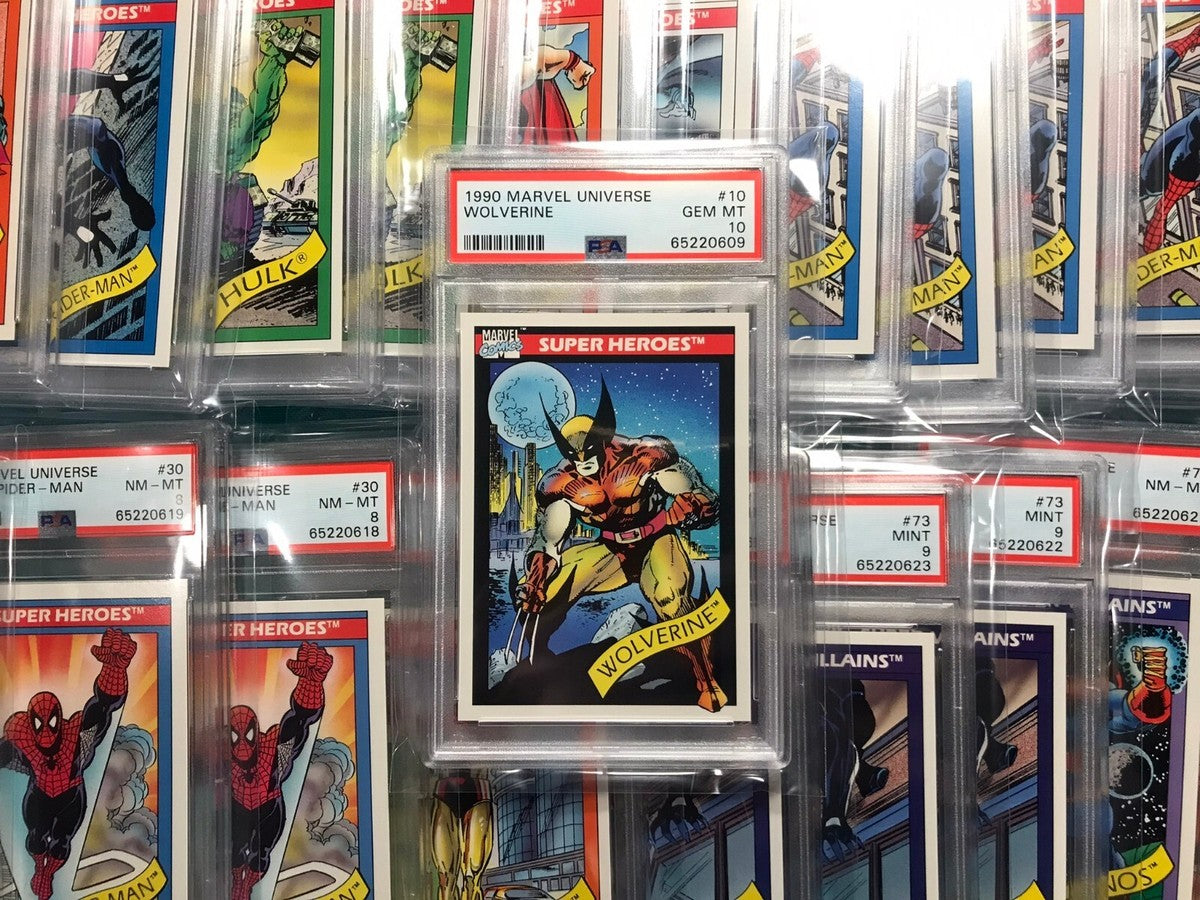
Individual cards can reach high values. For example, a 1990 Marvel Universe Hulk error card graded PSA 9 reached a secondary market asking price of around £11,850 in 2023. Hologram and foil variants command premiums: the 1992 Spider-Man Hologram PSA 10 has sold for over £1,185, and the 1996 Wolverine Holofoil PSA 10 reached £2,844 in 2022.
PSA and CGC now provide grading for trading cards, giving collectors confidence in condition and legitimacy.
Credit: PSA CardFacts
Building your Marvel collection
Establish clear goals. Some focus on a specific character like Spider-Man, while others pursue complete series runs. The key issue approach targets first appearances and major events, creating a more manageable collection.
Budget wisely. While seven-figure comics make headlines, valuable books exist at every price point. Setting realistic limits and distinguishing between investment pieces and personal enjoyment items prevents financial strain.
Diversify across categories. A balanced collection might include key comics, complete 1990s card sets and original artwork. This spreads risk while allowing participation in different markets.
Build relationships with reputable dealers and auction houses. Working with knowledgeable professionals reduces the risk of misrepresented items.
Credit: CGC Comics
Grading and authentication: protecting your investment
Professional grading has transformed collecting by providing objective condition assessment. CGC and PSA are industry leaders, with their scales forming a common language for condition.
The process examines physical state including page quality, centring and wear. The final grade is sealed in a tamper-proof holder, preventing degradation while allowing display.
Authentication extends beyond condition. Provenance verification can be as important as physical state. Pedigree collections command premiums for their documented histories.
Grading has become increasingly commercialised as the market has grown, though it remains accepted as standard, and ungraded high-value items have become harder to sell at top prices.
Market trends and the future
The Marvel collectibles market has grown significantly, as the MCU’s success has introduced new collectors seeking connections to beloved characters and increased demand.
Social media expanded the market: it added transparency and fuelled competitive bidding. Online bidding and live streaming made participation more accessible.
Investment collecting brings benefits and challenges. Liquidity and transparency professionalised the hobby, but speculation concerns exist. Successful collectors balance passion with prudence.
The market shows no signs of slowing. New properties maintain interest, grading companies refine processes, and auction houses set records. Fundamentals remain: focus on condition, understand value drivers and collect what you appreciate.
The heritage of Marvel
Marvel collector essentials connect fans to nearly a century of storytelling. The most valuable items, whether comics, cards or original art, are historical artefacts as well as collectables, each tied to a specific moment in the company’s development.
The collector community remains central to the hobby, with enthusiasts sharing knowledge and the stories behind individual collections. That combination of history, condition and provenance, reflected in record sales from Marvel Comics number one to Amazing Fantasy number 15, continues to draw new collectors to the market.