



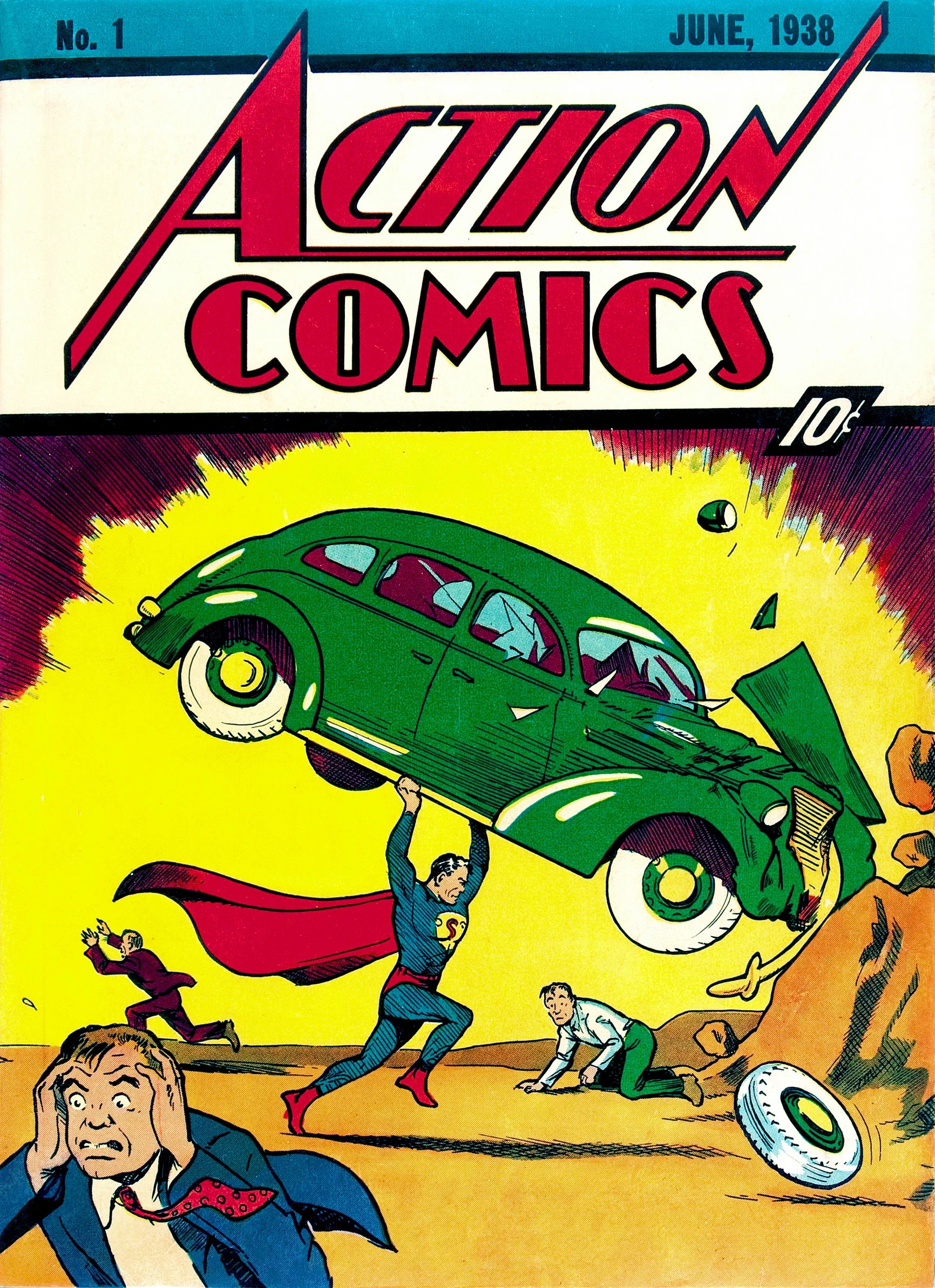
Action Comics #1, the first Superman comic ever published, arrived on newsstands on 18 April 1938 with a cover price of ten cents and no sign that it was about to reshape popular culture. Cover-dated June 1938, the anthology introduced a character who would define an entire genre before anyone involved realised what they had made.
Most owners in 1938 read their copy, passed it around, and eventually threw it away, which is what happened to the great majority of the 200,000 copies printed. A surviving first printing is a different kind of object altogether: a physical link to the birth of the superhero, authenticated by third-party grading and traceable through decades of ownership.
That scarcity has driven a run of sales records spanning sixteen years, from the first million-dollar comic book in 2010 to a private sale that reached fifteen million dollars in January 2026. How the comic came to be, what buyers are paying for, and how its value has climbed all trace back to that scarcity.
Discover all in our:
The first Superman comic: inside Action Comics #1
How two teenagers from Cleveland created Superman
Jerry Siegel and Joe Shuster met at Glenville High School in Cleveland and began collaborating on amateur science-fiction publications. Their first version of the character, a 1933 prose story called “The Reign of the Superman”, cast him as a bald villain with telepathic powers. Siegel later reworked the idea into a hero sent to Earth from a dying world, and the pair spent years pitching the strip to newspaper syndicates without success.
The break came almost by accident. National Allied Publications, the company that became DC Comics, needed material to fill a new anthology title against a tight deadline. Editor Vin Sullivan, prompted by colleague Sheldon Mayer, dug out Siegel and Shuster’s rejected strips and asked whether they could be pasted into thirteen comic-book pages. Publisher Jack Liebowitz later called choosing Superman for the cover “pure accident”, driven by deadline pressure rather than confidence in the character. Siegel and Shuster were paid ten dollars a page, a hundred and thirty dollars in total, for the work that founded the superhero genre.
Credit: DC Comics
What a dime actually bought in 1938
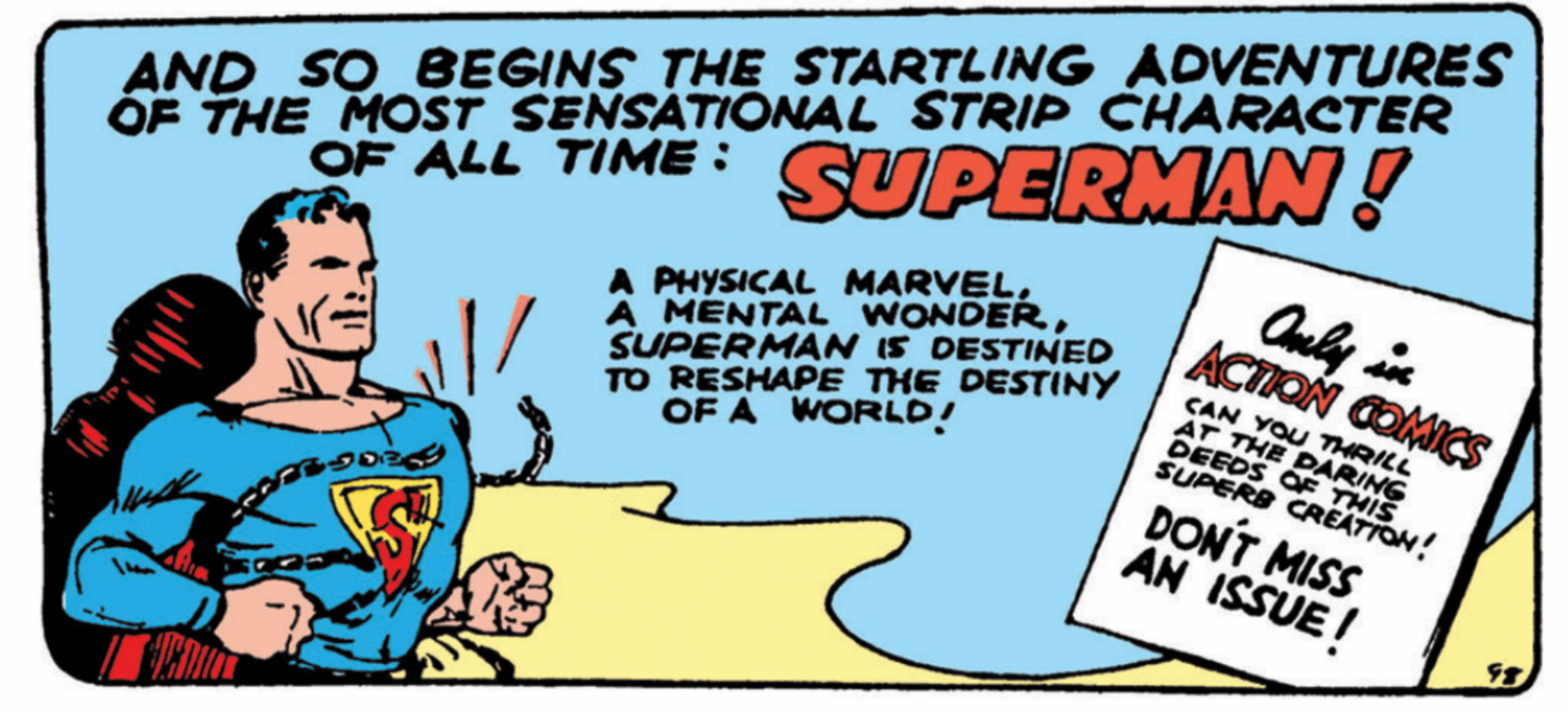
Action Comics #1 was not a Superman solo title. It was a sixty-four-page anthology carrying eleven separate features, and Superman’s story occupied only the first thirteen pages. The rest mixed genres freely: a Western strip called Chuck Dawson, the magician-detective Zatara, a text adventure, a reporter serial, and assorted gag pages. Superman was simply the strongest of several bets the publisher was hedging that month.
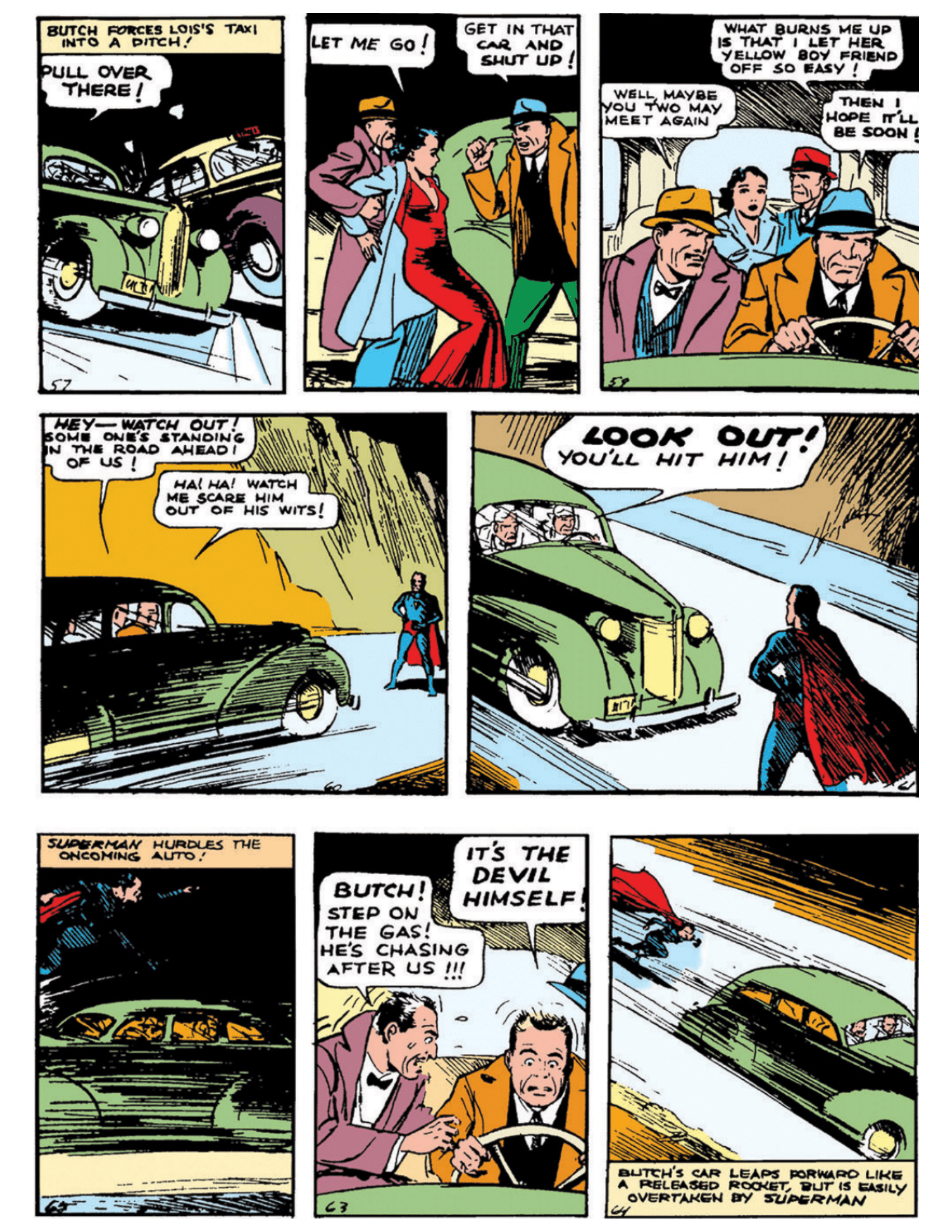
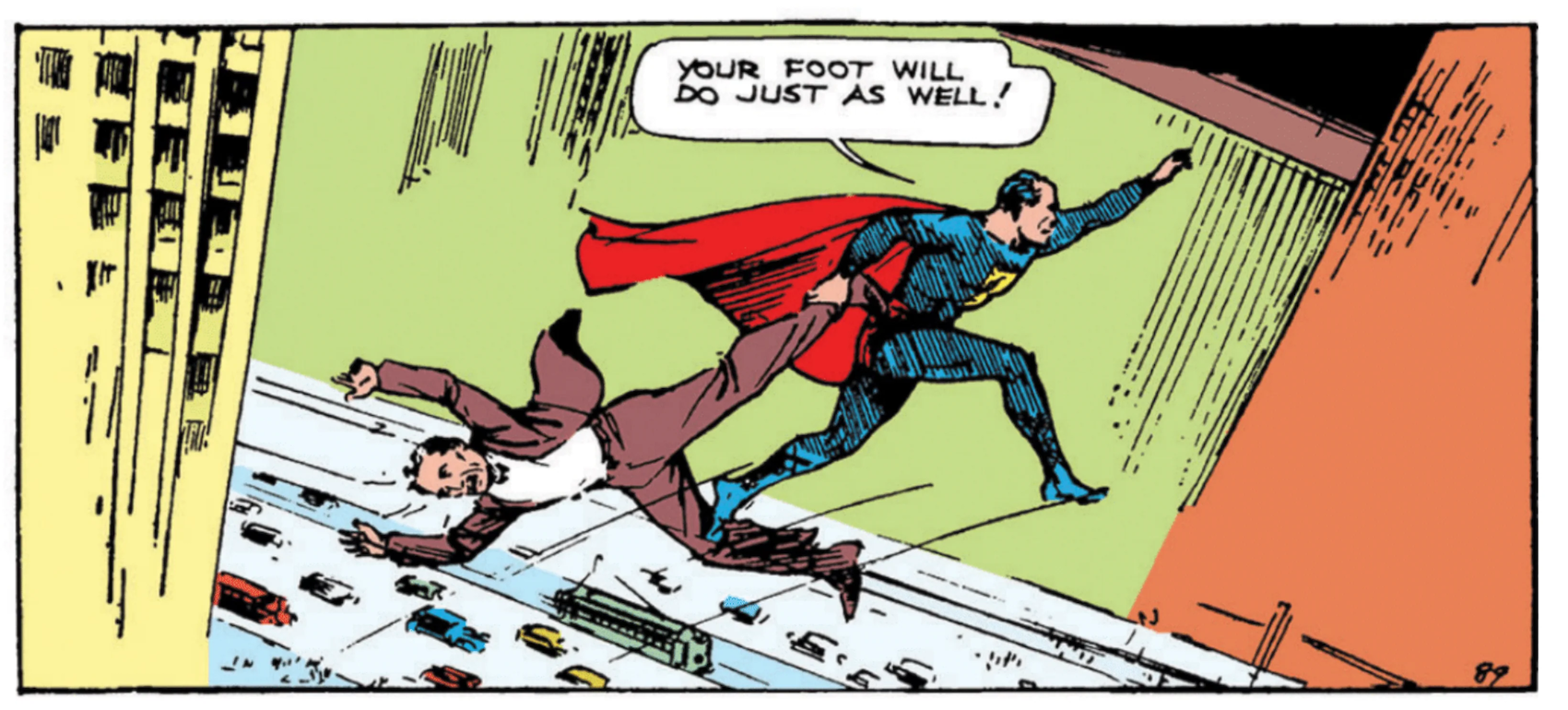
The Superman pages compress an entire mythology into a handful of panels: a scientist father, a doomed home planet, a “hastily-devised space ship”, and a foundling raised to use his strength “in channels that would benefit mankind”. The same issue also introduced Lois Lane. Readers had no way of knowing they were looking at the opening chapter of American popular fiction’s best-known character.
Credit: Action Comics #1 in Archive.org
Why so few copies survive
National Allied Publications printed 200,000 copies, and the entire run sold out, though the publisher took time to realise that Superman, not the Western or detective strips, was driving the numbers. Comics of the period were treated as disposable entertainment rather than collectable objects, so most copies were read to pieces, recycled in wartime paper drives, or binned. Grading service CGC’s census currently records around seventy-eight surviving copies, with the wider hobby estimate putting the true figure at close to a hundred.
Condition among survivors varies enormously, from brittle, browned copies with missing pieces to a handful of “pedigree” copies from a single well-documented collection. Named pedigrees such as the Kansas City copy carry a documented ownership history that collectors treat as a mark of authenticity, on top of the numerical CGC grade.
Credit: Action Comics #1 in Archive.org
A record-breaking sales history
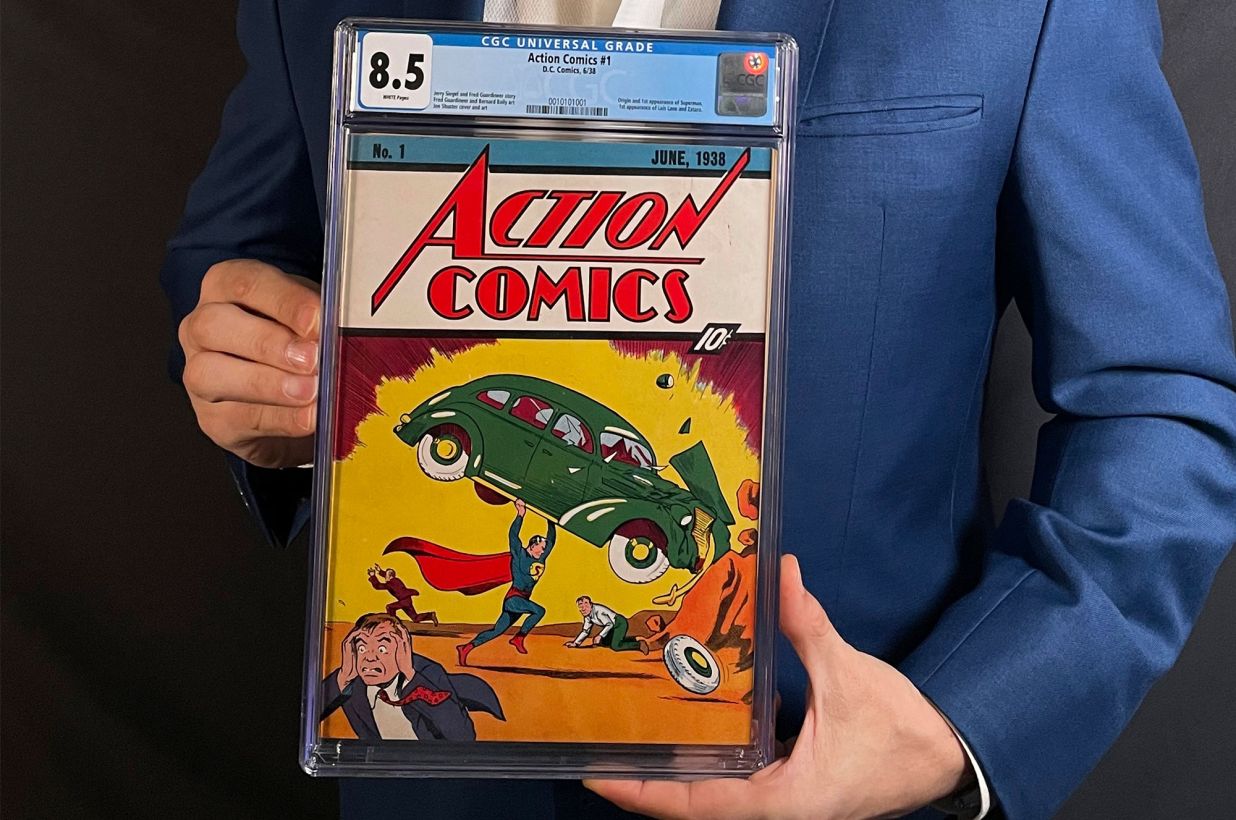
Action Comics #1 has broken its own sales record more often than any other comic book. A CGC 8.0 copy became the first million-dollar comic in February 2010, and a CGC 8.5 copy overtook it weeks later at $1.5 million. A copy stolen from actor Nicolas Cage’s Los Angeles home in 2000 and recovered from a storage locker in 2011 sold that same year for $2.16 million. A CGC 9.0 copy then set a new benchmark on eBay in August 2014 at just over $3.2 million, a record that stood for close to seven years.
The pace accelerated from 2021: a private sale reached $3.25 million that April, a CGC 6.0 “Rocket Copy” realised $3.18 million at Heritage Auctions in January 2022, and even a heavily worn CGC 0.5 copy brought $408,000 at Heritage in September 2023. On 4 April 2024, Heritage Auctions sold a CGC VF+ 8.5 Kansas City Pedigree copy for $6 million, then the highest price paid for any comic book at public auction, with a second, restored copy from the same sale realising $576,000, itself a record for a restored comic.
The current benchmark was set outside the auction room. In January 2026, Metropolis Collectibles and ComicConnect announced the private sale of a CGC 9.0 copy for $15 million: the same one once owned by Cage, stolen in 2000 and recovered in 2011. Months later, Heritage Auctions’ sale from 9 to 11 July 2026 offered two further copies, with a CGC 4.5 example realising $1,525,000 and a restored CGC 6.5 copy bringing $427,000, a reminder that demand runs well beyond the handful of top-graded copies.
Credit: Archive.org
What collectors look for today
Grade drives price more than almost any other factor. CGC’s ten-point scale runs from barely-holding-together examples through to the two known 9.0 copies, and each step up the scale has historically translated into a substantial jump in value, which is why a 4.5 and a 6.5 copy sold months apart in 2026 for such different sums. Restoration, even when disclosed and professionally done, generally caps a copy’s price well below an unrestored example of comparable grade.
Provenance matters almost as much as condition. A documented pedigree, a well-known former owner, or a dramatic recovery story, as with the Cage copy, adds demand that grade alone does not explain. Buyers researching the market are best served by checking a copy’s certification number against the CGC census and buying only through an established auction house or dealer with a verifiable record in Golden Age comics.
Credit: Superman Homepage
The founding document: how Action Comics #1 transcended the hobby
Action Comics #1 occupies a strange position in collecting history: a mass-produced children’s magazine that has become one of the most valuable printed objects on Earth. Its value was never really about the ten cents readers paid in 1938, but about what survived the decades afterwards, and how rarely a genuinely new copy still turns up.
With fewer than a hundred copies believed to exist and the top of the market now measured in eight figures, the comic has moved well beyond the hobby shop and into the same conversation as fine art and rare manuscripts. Whether that trajectory continues depends on the next copy to surface, and on collectors continuing to treat the first Superman story with the same seriousness as any other founding document of the twentieth century.