



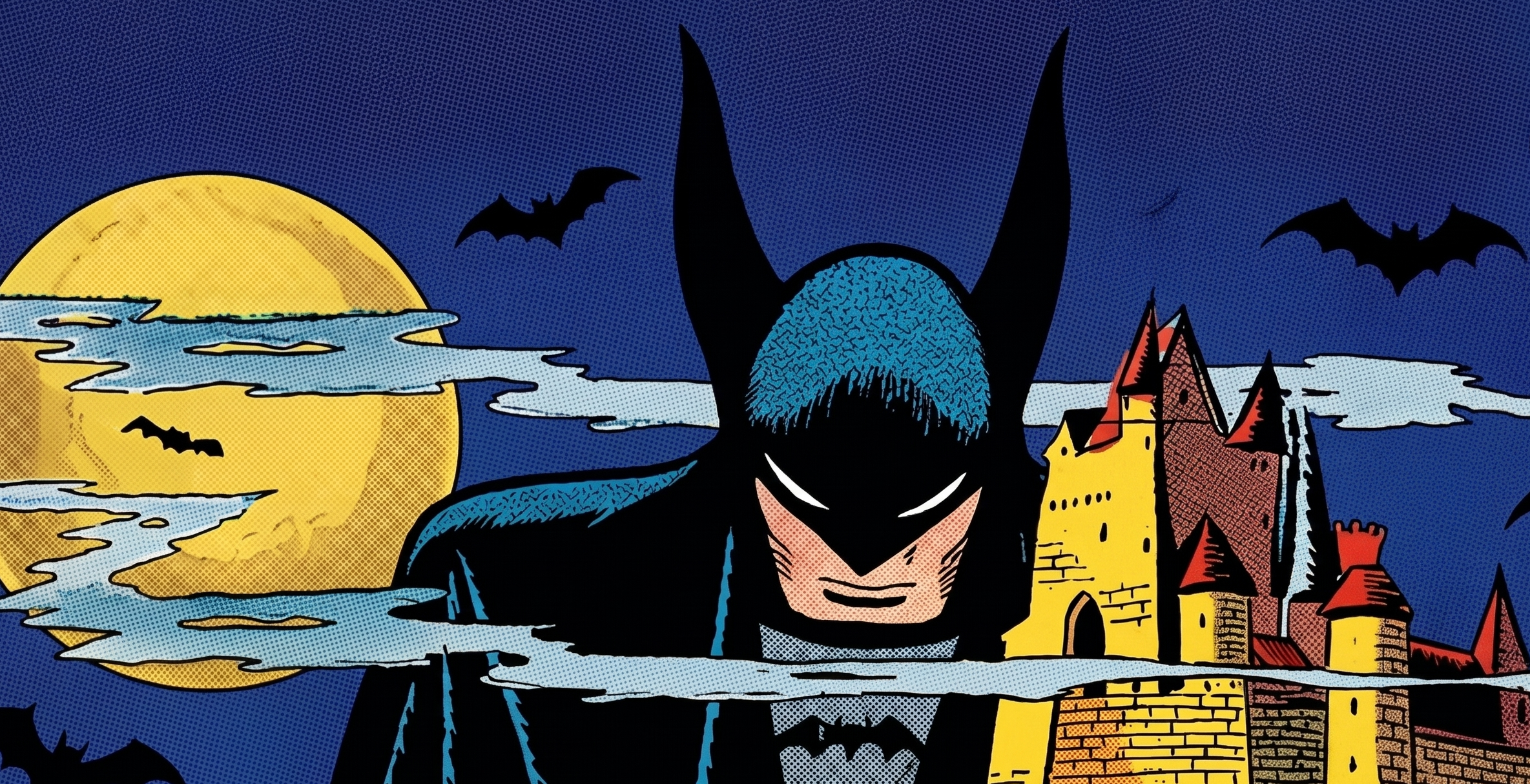
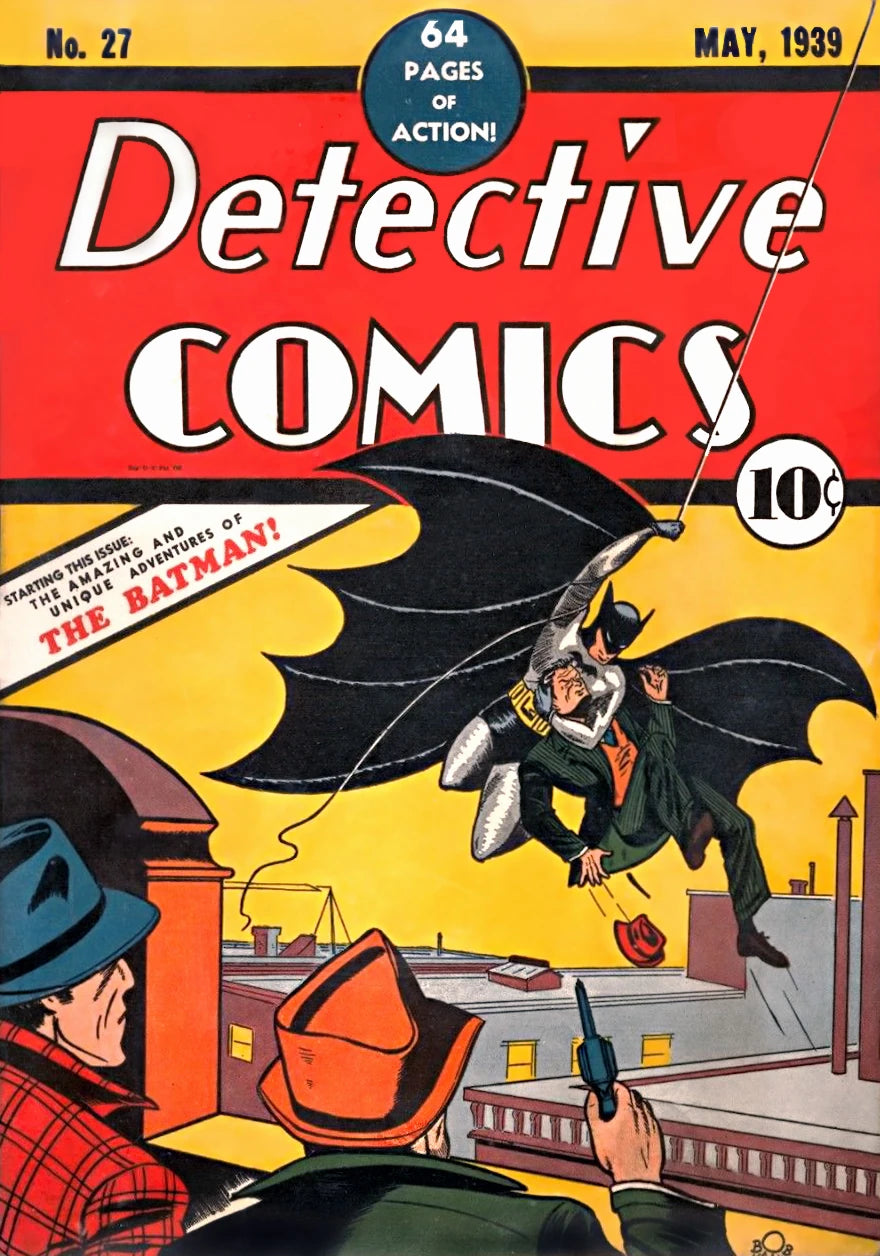
Detective Comics #27 marks the birth of Batman, one of the most iconic characters in comic book history. Published by DC in May 1939, this issue introduced Bruce Wayne as the Dark Knight alongside Commissioner James Gordon. The comic was a defining moment for both DC and the superhero genre.
While Action Comics #1 launched Superman and the superhero genre, Detective Comics #27 established Batman as its natural counterpart. The difference between a reprint and this genuine first appearance is clear: an original copy is the actual comic that first presented Batman to readers, not a later facsimile. As the market matures, the historical importance of this issue continues to grow.
The story behind Detective Comics #27 extends beyond its value. It reveals the creative process behind one of pop culture’s most lasting figures and the evolution of a character who became a legend.
Discover all in our:
The first Batman comic: Inside Detective Comics #27
Detective Comics #27 is one of the most valuable comics in the world, and its story spans a landmark creative partnership, a character’s evolution and a climbing auction record.
The birth of Batman
Detective Comics #27 hit newsstands in May 1939, introducing a new kind of hero. Created by Bob Kane and Bill Finger, Batman was unlike Superman, who had debuted a year earlier. This was a mortal man who relied on intellect, physical prowess and gadgets to fight crime. The character was initially named Bat-Man in the story, with Bruce Wayne revealed as his secret identity at the end.
The issue also marked the first appearance of Commissioner James “Jim” Gordon. While Batman and Gordon debuted here, their city was not yet named Gotham. The Bat-Man’s home was not identified until Detective Comics #33 as New York City, with the name Gotham City adopted later in Batman #4.
Credit: Heritage Auctions
Inside the comic
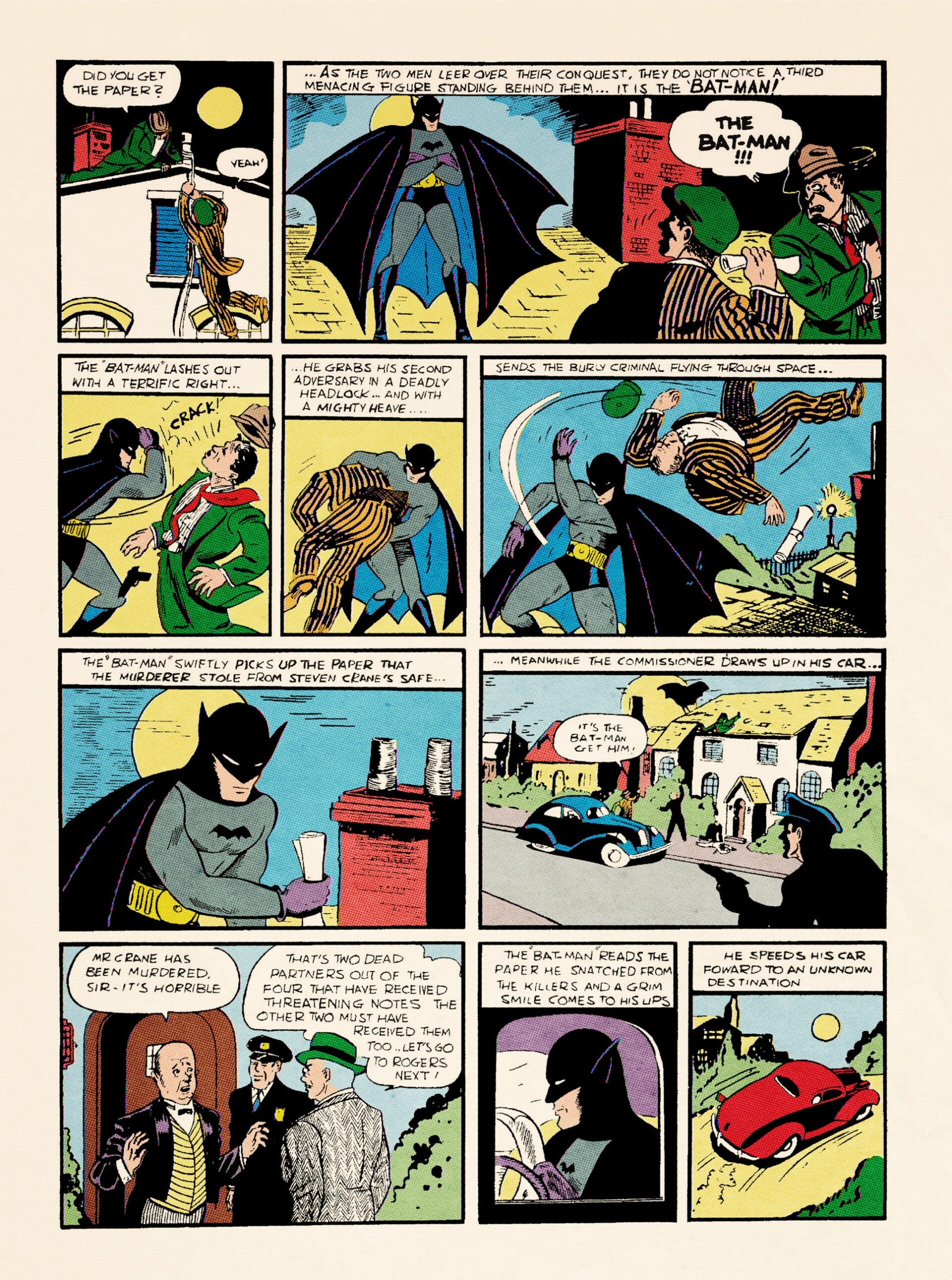
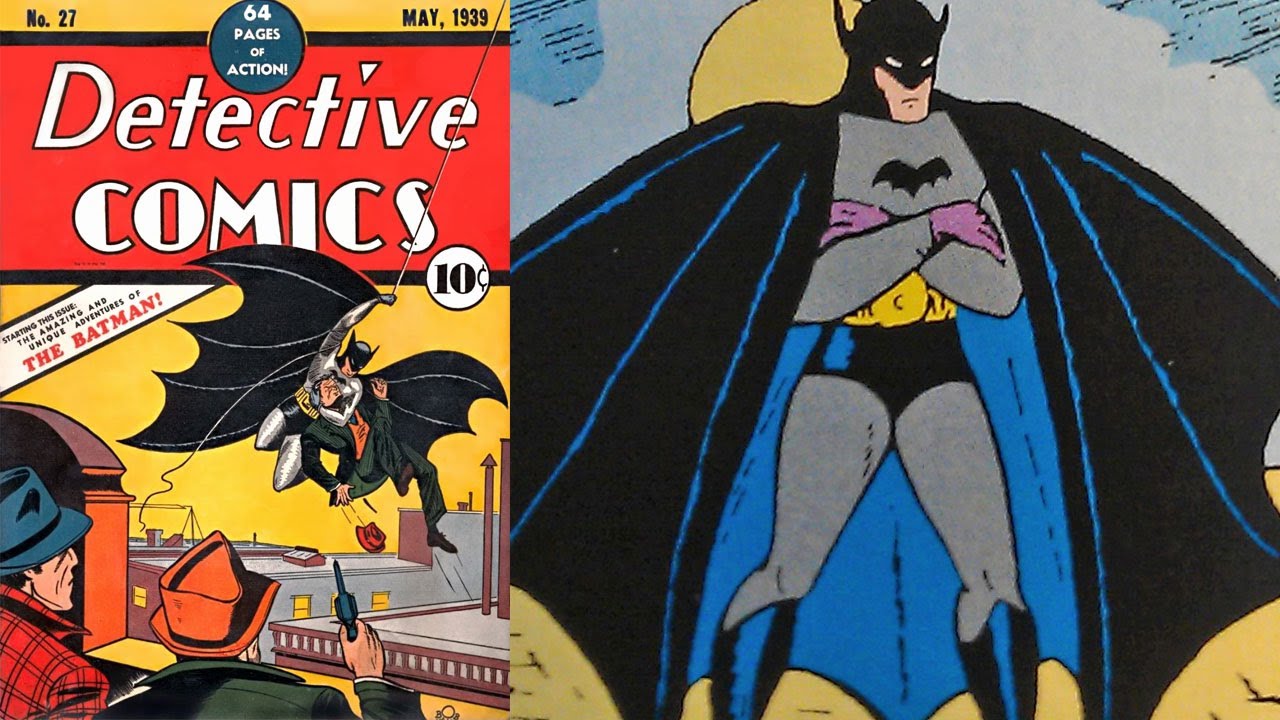
Detective Comics #27 was an anthology containing multiple stories. The Batman feature was one of several, alongside existing characters like Speed Saunders. The six-page Batman story was written by Bill Finger with art by Bob Kane, who signed his work as Rob’t Kane. The iconic cover, also by Kane, featured Batman swinging into action.
Bill Finger’s story was inspired by the 1 November 1936 Shadow novel Partners in Peril by Theodore Tinsley. The art drew from Henry Vallely’s Gang Busters in Action and Tom Lovell’s work. Arlen Schumer identified panel 5 of the 17 January 1937 Flash Gordon Sunday page by Alex Raymond as the source of Batman’s cover pose.
Interior art featured contributions from Joe Shuster, Jim Chambers and Fred Guardineer, with stories by Finger, Jerry Siegel and Chambers. This collaboration produced a comic that defined dark, detective-oriented storytelling.
Credit: Heritage Auctions
The creative team
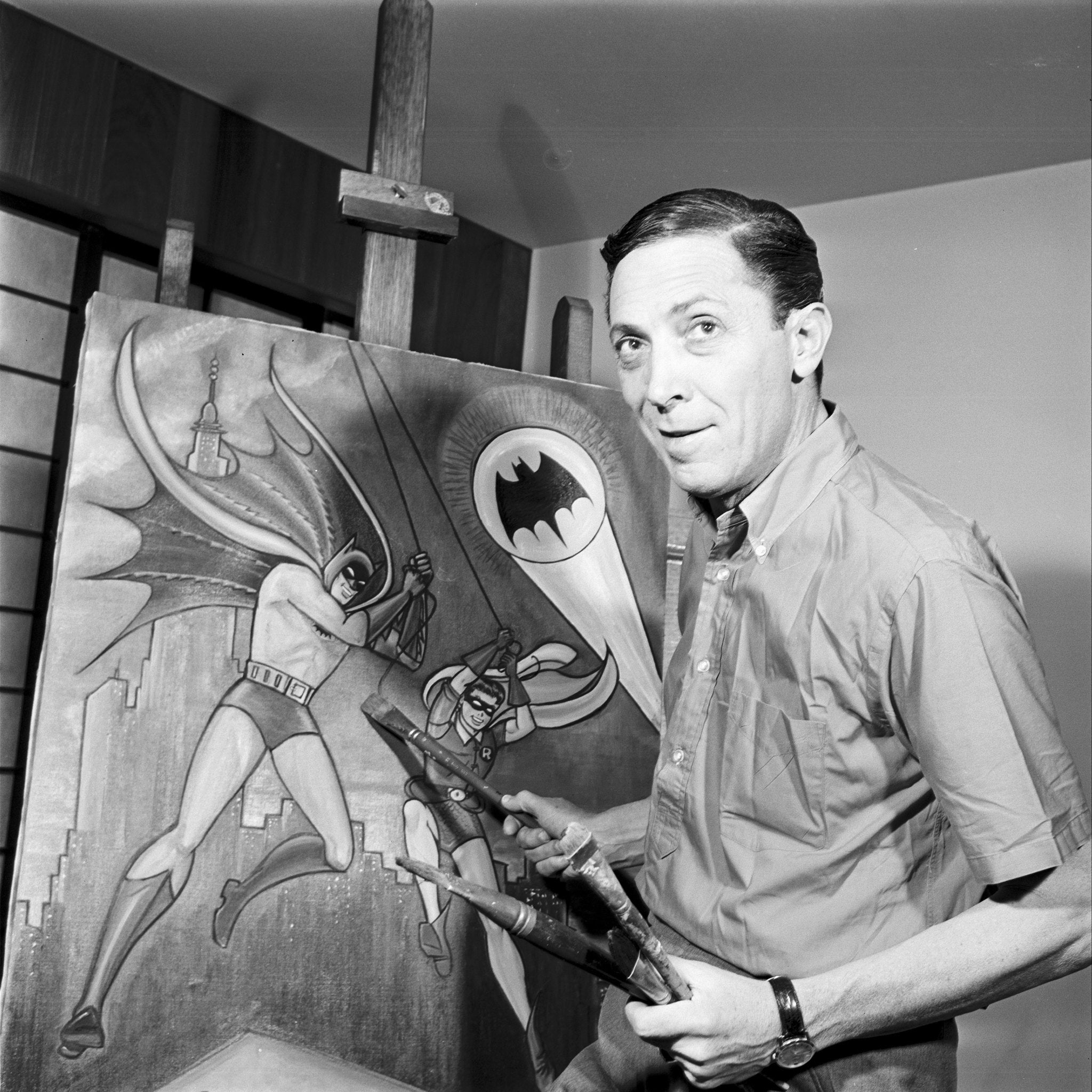
Bob Kane receives official credit for creating Batman, but Bill Finger contributed significantly to the character’s development. Kane handled visual design and cover art, while Finger shaped the backstory, personality and tone. The partnership defined Batman for years, even as their individual contributions were sometimes obscured.
Kane’s cover is one of the most recognisable in comic history. It captures Batman’s dynamic nature and established the visual language that defined the character. The interior art carried the same detail and atmosphere that set Batman apart.
Finger’s script laid groundwork for many Batman elements. The wealthy playboy secretly fighting crime, using fear as a weapon, and detective-oriented storytelling all began here.
Credit: DC Comics
Market value and auction records
Detective Comics #27 is generally considered the second most valuable comic book of all time, second only to Action Comics #1. This status is reflected in its strong auction history, with high-grade copies consistently commanding high prices.
The value of the issue has risen steadily over the years. In 2010, a copy graded CGC 8.0 sold at Heritage Auctions for £840,090. By 2015, the market had grown, with a FN+ 6.5 copy realising £565,500, a VG 4.0 copy bringing £370,500, and even a coverless copy going for £27,300. The most recent milestone occurred on 30/03/2023, when a copy sold for a record-tying £1,359,600 at Heritage Auctions, matching the previous high set by another copy.
According to the Overstreet Comic Book Price Guide, a FN 6.0 copy was valued at £70,200 in 2002, while a GD 2.0 copy was valued at £24,570 in 2005. These guide values have been consistently exceeded at auction, with collectors willing to pay premiums for this historic issue. The CGC census data reveals that less than half of all certified copies have earned the Universal Grade blue label, with only 32 copies graded higher than CGC PR 0.5. This scarcity of high-grade examples contributes significantly to the issue’s value and desirability.
Credit: Heritage Auctions
Collecting Detective Comics #27 and its heritage
For collectors, this issue is a prized acquisition. Its historical significance, rarity in high grades and Batman’s lasting popularity make it one of the most sought-after comics. Most existing copies are low-grade, restored, or both, adding to the challenge.
Condition dramatically affects value. High-grade copies command millions, while even lower-grade examples retain significant worth. The comic has been reprinted in Detective Comics #387 (May 1969), #627 (March 1991), and Famous First Edition #C-28 (June-July 1974), but these lack the provenance of the original.
Detective Comics #27 connects collectors to Batman’s first appearance. This single comic established a character who became one of the most popular superheroes ever created. From its origins to its status as a multi-million pound collectible, this is where a cultural icon began.
The market continues to grow as new collectors recognise its significance. While few can afford a high-grade copy, the issue remains a symbol of comic book history. Condition matters enormously. With only a handful of high-grade copies known and a record price of £1,359,600 set in March 2023, Detective Comics #27 remains one of the most sought-after comics in the hobby.