



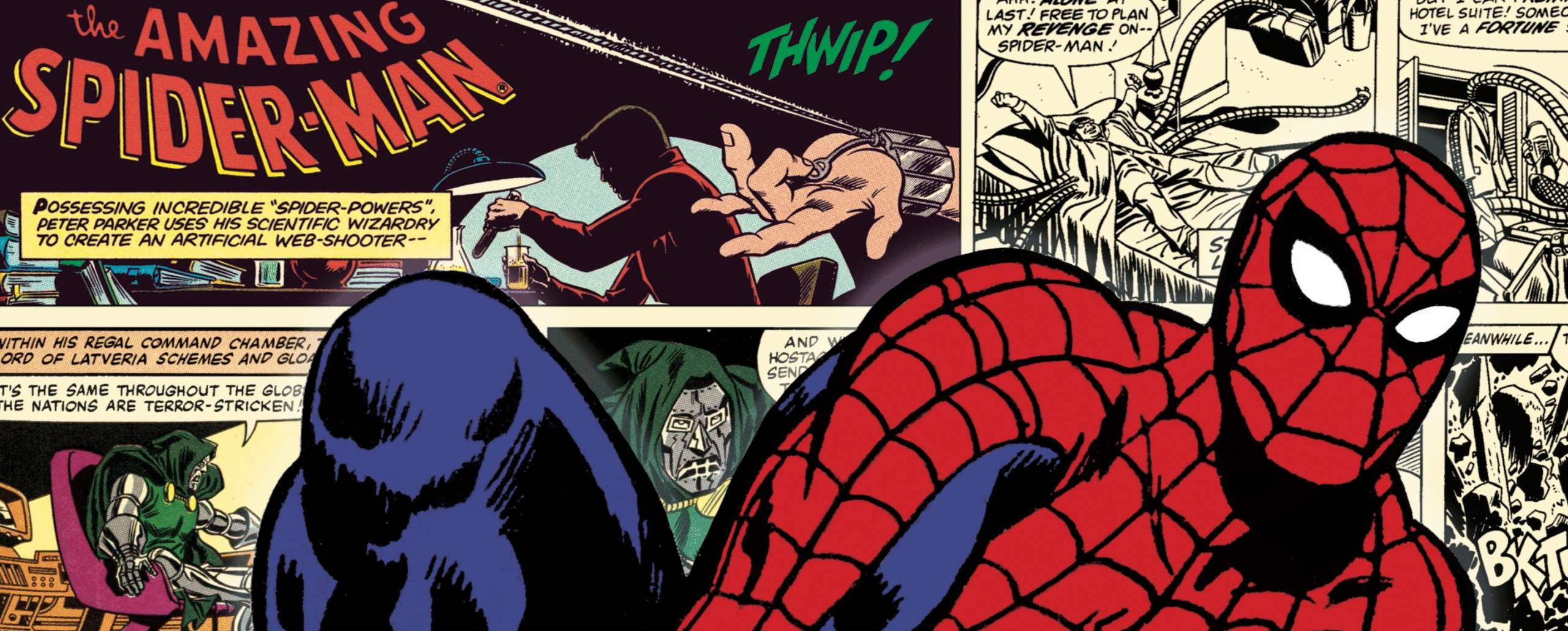
Spider-Man’s first comic appearance came on 10 August 1962, tucked inside the final issue of a science-fiction anthology that Marvel had already marked for cancellation: Amazing Fantasy #15. Nobody at the publisher expected the five-page origin story buried among tales of Martians and mummies to matter much. Sixty years on, that same issue remains one of the most valuable comic books ever sold at auction.
Most people’s first encounter with Spider-Man is a poster, a t-shirt or a modern reprint, and there is nothing wrong with that. But an original, first-printing copy of Amazing Fantasy #15 is a different object entirely: a piece of newsprint that was on sale for twelve cents in the summer of 1962, graded and certified today by independent authorities, and traceable back through named owners to the newsstand. Authenticity and condition, not the image on the cover, are what separate a keepsake from a six or seven-figure artefact.
Demand for the book has only accelerated as Spider-Man’s films and games have introduced the character to new generations, and the comic’s market history now reads like a chart of the hobby’s own growth.
Discover all in our:
Spider-Man’s first comic appearance: the story behind Amazing Fantasy #15
A dying title with nothing to lose
Amazing Fantasy #15 was not a new launch. The book had begun life in 1961 as Amazing Adventures, became Amazing Adult Fantasy from issue seven, and ran quirky, twist-ending science-fiction shorts written by Stan Lee and drawn by Steve Ditko under the tagline “the magazine that respects your intelligence”. Sales were poor, and publisher Martin Goodman had decided to cancel the title. With nothing left to lose, Goodman let Lee use the final issue to try something different: a teenage superhero with real-world money problems and self-doubt, rather than a sidekick or a flawless adult icon. As later recounted, Goodman “reluctantly agreed to allow him to introduce Spider-Man, a new kind of superhero”, one with everyday doubts rather than the polish of Marvel’s existing adult heroes.
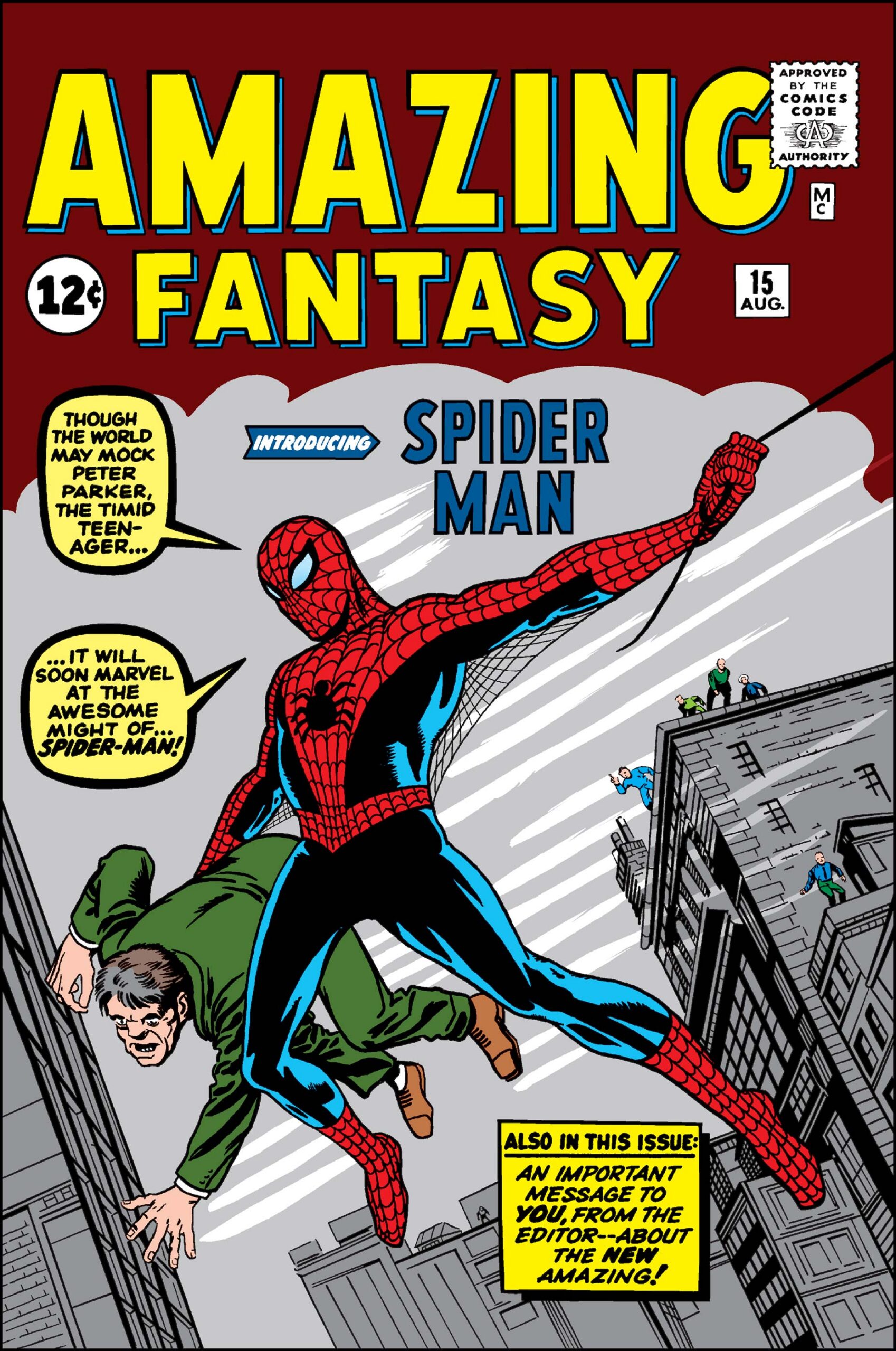
The story itself was drawn entirely by Ditko, working from Lee’s plot outline in the loose, collaborative shorthand the Marvel bullpen used at the time. The cover, though, was not Ditko’s. Lee rejected Ditko’s original artwork and instead had Jack Kirby pencil the now-famous image of Spider-Man swinging into frame with a helpless figure in his grip, which Ditko then inked. That mix of hands, Kirby’s composition and Ditko’s line, is part of why the issue is so recognisable, and why the split credit between Lee and Ditko for creating the character has been debated by historians and collectors for decades.
Credit: Marvel
Inside the issue
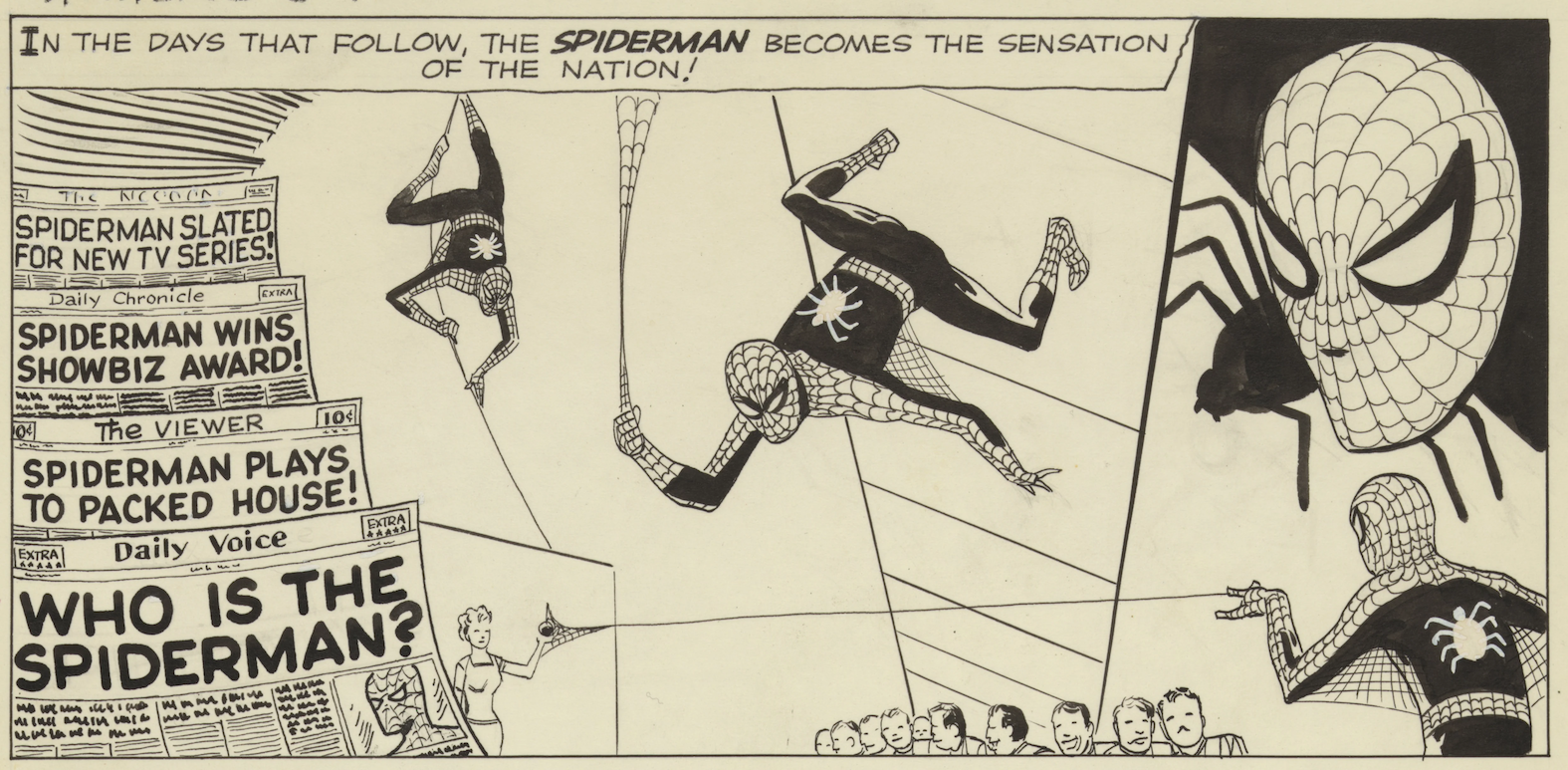
The Spider-Man story runs just eleven pages, but it does an enormous amount of work: it introduces Peter Parker, his Aunt May and Uncle Ben, the radioactive spider bite, and the costume and web-shooters he builds himself. It also lays out the moral, born from Peter’s failure to stop a burglar who later kills his uncle, that would define the character for the next six decades. Amazing Fantasy #15 was an anthology issue rather than a dedicated Spider-Man comic, so the rest of the book is filled out with three unrelated short stories, including a tale of a bell-ringer, one set in an Egyptian tomb, and a Martian invasion strip, all in the same twist-ending style the title had built its reputation on.
Credit: The Tom Brevoort Experience
From cancelled anthology to a spin-off of his own
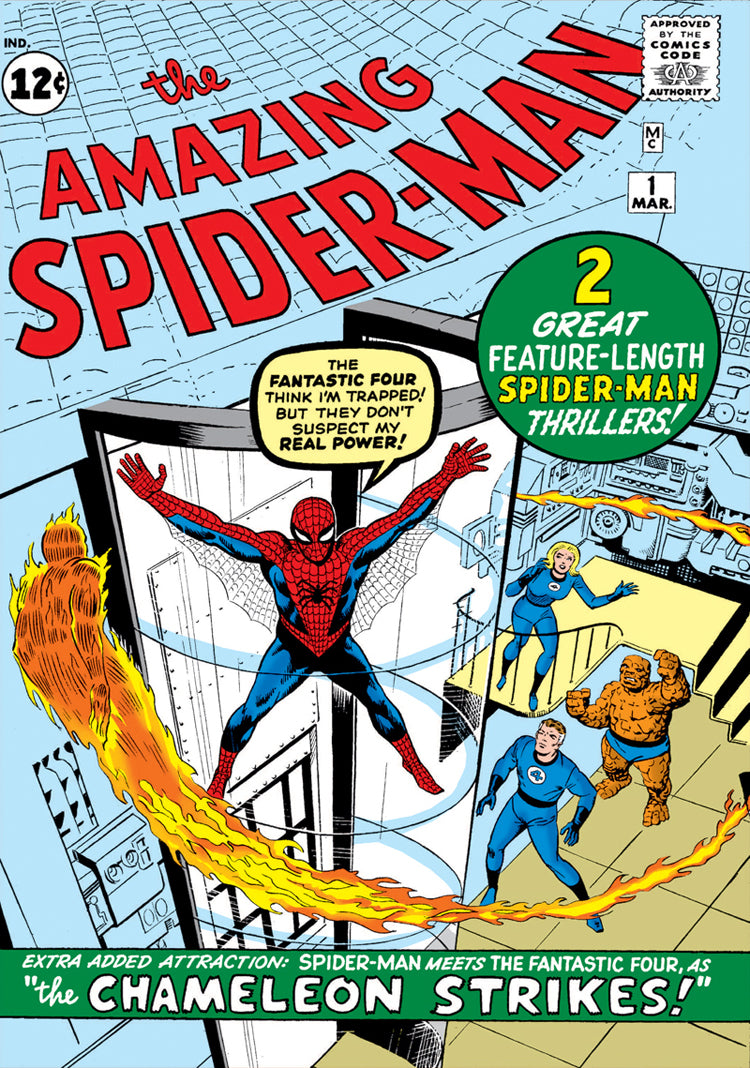
Goodman cancelled Amazing Fantasy before its final sales figures were even in, convinced the gamble had not paid off. When those figures did arrive, Spider-Man’s debut turned out to be one of the best-selling comics Marvel had put out that year. Goodman reversed course immediately and greenlit a dedicated title, and seven months later The Amazing Spider-Man #1 hit newsstands, beginning a series that continues to this day. Amazing Fantasy #15 therefore occupies an unusual place in comics history: a cancelled anthology that accidentally launched a franchise.
Credit: Marvel
What collectors pay for Amazing Fantasy #15 today
Condition and certification, usually via CGC, drive value more than almost any other factor. A CGC 9.4 copy once owned by New York collector Walter Yakaboski, bought for around $1,200 in 1980 and kept in a safe deposit box for 35 years, sold at Heritage Auctions in Dallas in February 2016 for $454,100, then a record for the book at public auction (roughly £320,000 at the time). Grade alone can move the price sharply: a CGC 8.5 copy sold at Heritage in November 2022 for $552,000, the highest price ever paid for that particular grade (around £465,000). The high-water mark remains a CGC 9.6 copy, the finest of only four known at that grade with none certified higher, which Heritage sold in Dallas in September 2021 for $3.6 million (around £2.6 million), a price Heritage’s own auctioneer has since called a career-defining moment and which remains one of the highest prices ever paid for a comic book at auction.
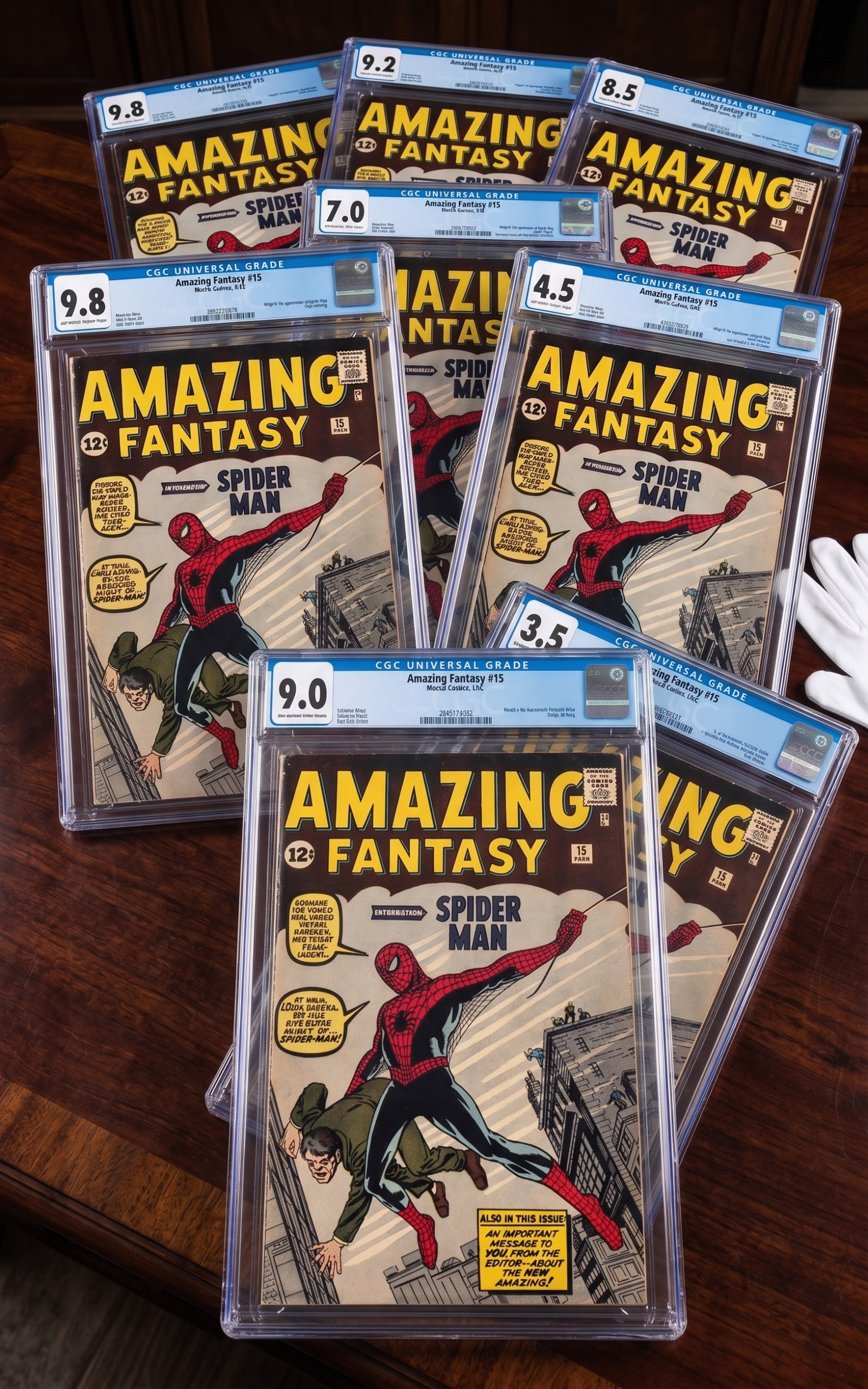
Credit: AI Generated
Amazing Fantasy #15 collecting
Amazing Fantasy #15 has long since outgrown its origins as filler for a cancelled anthology. Marvel placed it top of its own 100 Greatest Marvels of All Time list in 2001, and in 2008 an anonymous donor gave Ditko’s original 24 pages of art for the issue, including the Spider-Man story and its three companion tales, to the Library of Congress, where it is preserved as a document of American popular culture rather than simply a comic book.
For collectors, that dual status, industry landmark and cultural artefact, is exactly what keeps demand high across every condition grade, from well-read reading copies to the handful of near-perfect examples that now change hands for seven figures. As with any book at this level, provenance and independent certification are what separate a genuine first printing from a reprint, so buyers should always verify a copy’s grading and sale history before parting with significant sums.