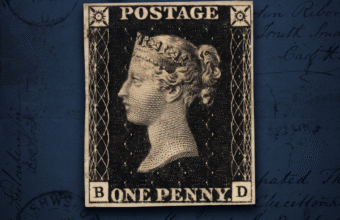




The Penny Black was the world’s first adhesive postage stamp used in a public postal system, and 68,808,000 of them were printed. Many were saved, and in used condition they remain readily available to stamp collectors. That gives this guide two price stories to tell: one for the ordinary used stamp, and one for unused stamps, blocks and covers.
Before 1840 the recipient normally paid the postage, and a typical single letter from Dublin to London cost 1s 3d. Rowland Hill suggested a low uniform rate of postage based on weight and prepaid. On 10 January 1840 rates were reduced to 1d for half an ounce, and all free privileges were abolished.
The change worked. Chargeable letters numbered only about 76 million in 1839, and by 1850 the figure had risen to almost 350 million. Below, we cover how the stamp came about, how to recognise a Penny Black, and what individual stamps have made at auction.
Discover all in our:
Penny Black
How the world’s first stamp was designed
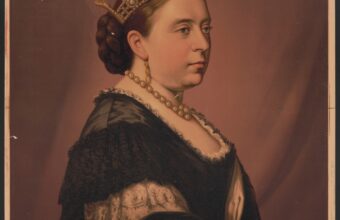
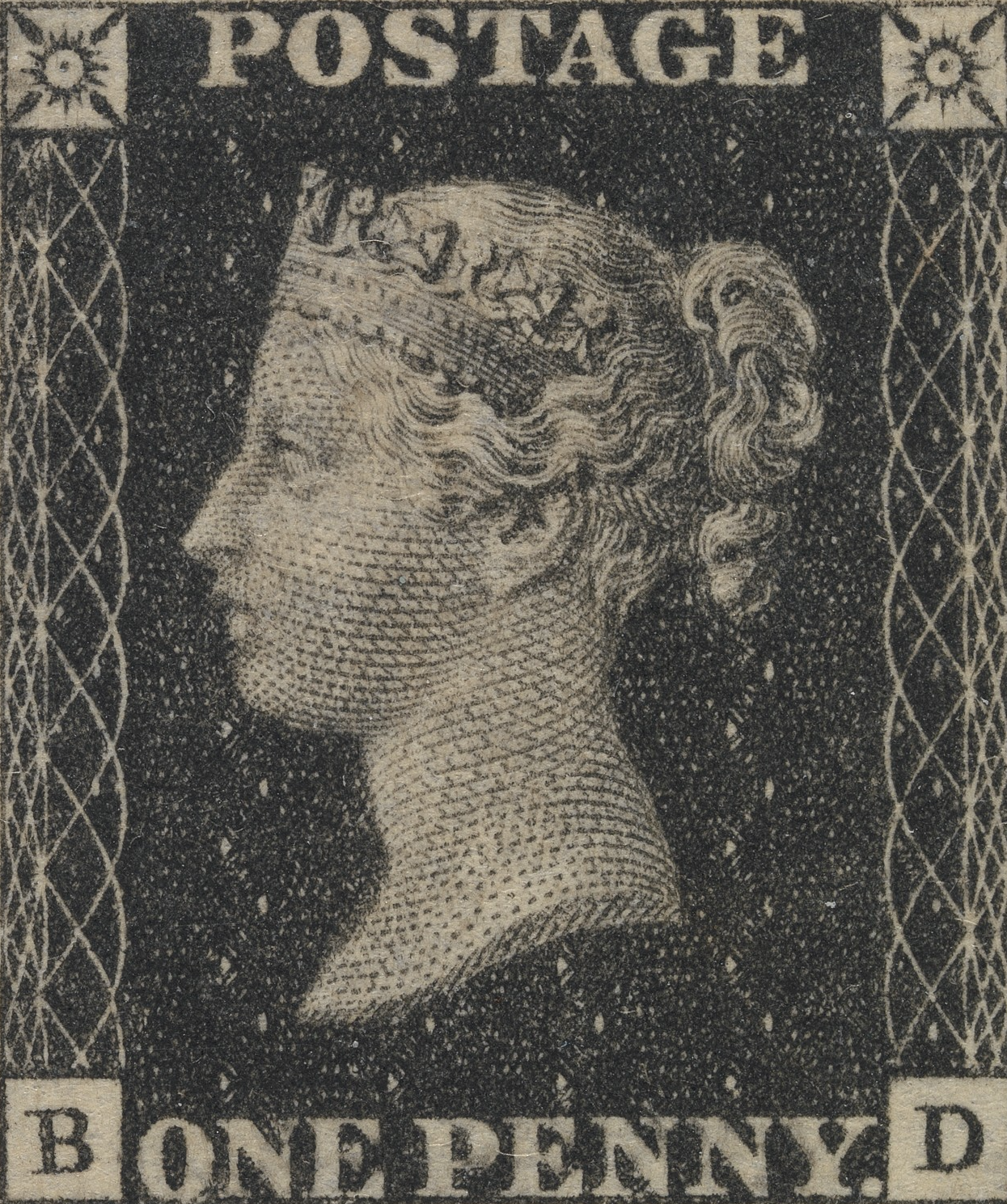
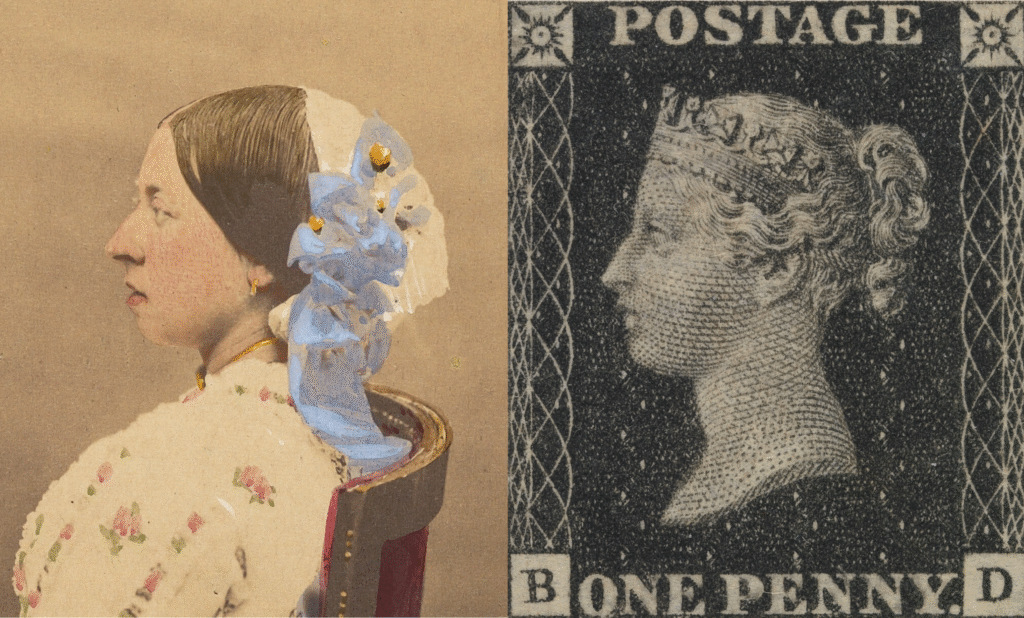
The design for the adhesive labels was based on the head of Queen Victoria sculpted by William Wyon for his City Medal. It does not look like the Queen most people picture, because she is shown at 15, not as the widow in black. Wyon, the Chief Engraver, worked from a sketch he made in 1834, three years before she came to the throne, and used it for the medal that marked her visit to the City of London in 1837. He gave her the profile of a head on an ancient coin, so the portrait is idealised rather than lifelike.
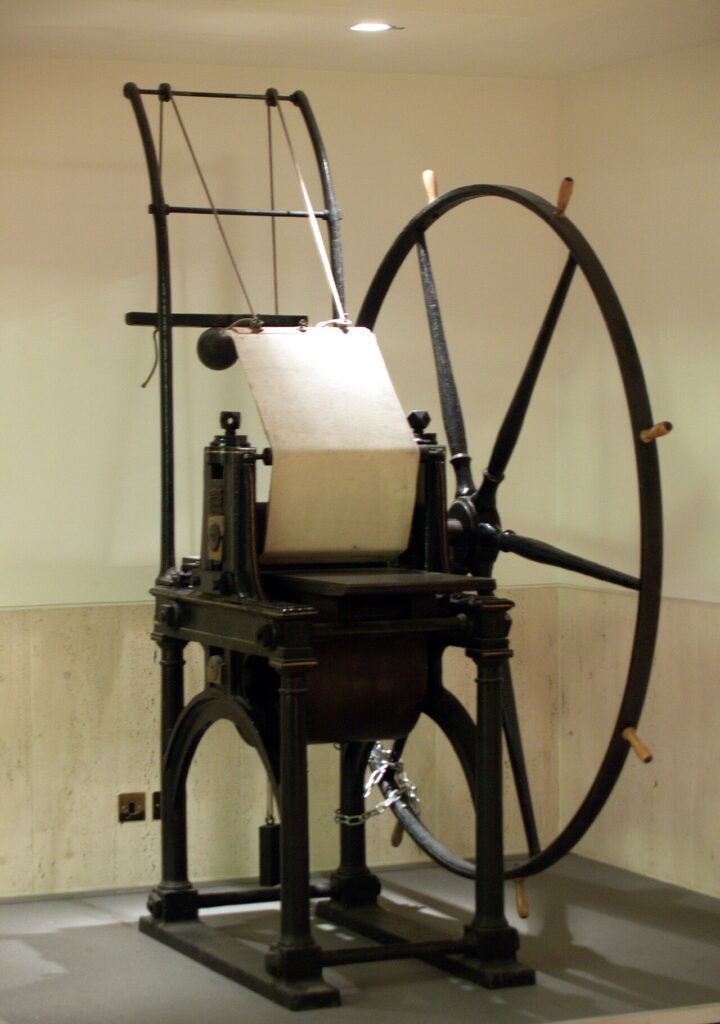
The stamp’s designers worked from the medal, not from the Queen. Henry Corbould made a detailed watercolour of the relief so its shading could be printed flat. Charles and Frederick Heath then engraved the drawing onto a small steel plate, which flattened her features further.
Each sheet held 240 impressions, because 240 pennies made a pound. The Postal Museum records that the classic design took only five months from concept to issue, and its R M Phillips Collection includes the world’s very first first day cover, that of the Penny Black.
The stamp was first issued in the United Kingdom on 1 May 1840 but was not valid for use until 6 May. The Mulready stationery went on sale in London the same day. The Penny Black had a short life. In February 1841 the Treasury switched to the Penny Red and began using black ink for cancellations instead, and the total print run stood at 286,700 sheets.
How to identify a Penny Black
Start with the edges. The stamps were printed in imperforate sheets, to be cut with scissors for sale and use, so a genuine Penny Black has no perforations and its margins vary from one stamp to the next. Stamps with badly cut margins or no margins are common and worth very little, while examples with four clear margins are rare and expensive.
Then read the lower corners. Each stamp carries a pair of letters that show its position in the printed sheet. The Postal Museum holds a complete proof sheet of the Penny Black where the different check letters had not yet been inserted into each stamp. For a collector, the letters also provide an aid in assigning a stamp to its correct plate.
Eleven plates were used to print the Penny Black, though plate 1 is generally considered two separate plates, 1a and 1b. Plate 11 was originally intended solely for the printing of red stamps, but a small number were printed in black.
The cancellation is a further clue. The Maltese Cross was devised to prevent re-use and was applied in red ink. It proved possible to remove this without damaging the label, so within a year the colour of the printing ink had to be changed to red-brown and the cancellation to black. The stamp that followed was the Penny Red.
Certificates matter on the scarcer pieces. The Wallace Document, which carries a Penny Black, has certificates of authenticity from The Royal Philatelic Society, London (2016) and The British Philatelic Association (2015). One of the Spink lots described below carried a Royal Certificate dated 2001.
What a used Penny Black is worth
Used stamps with a red Maltese Cross make up most of what comes to sale. A Spink copy tied to small piece by a complete, crisp, red Maltese Cross sold for £290. A second Spink copy, with a Royal Certificate (2001), sold for £500. At Grosvenor, an example with wide margins and a virtually complete strike of a bright red Maltese Cross made £880, and a greyish example with good margins and a superb red Maltese Cross made £320. At Bonhams in December 2006, a fine used copy with good to large even margins sold for £188 including buyer’s premium.
The three houses report their figures differently. Bonhams states that its price includes the premium, while the Spink and Grosvenor pages give a price realised without saying, so the five figures should not be set against one another to the pound. The pattern in these sales is still plain: used copies with good margins and a clear cross made hundreds of pounds, and none of the five made more than £880. Condition explains part of the spread: the £880 example is described as having wide margins, while the £320 example has good margins and a greyish shade.
Unused stamps, blocks and covers
Unused material sits in another bracket. At Spink, a mint 2 x 2 block of four, with its original gum and the lower pair remaining unmounted mint, achieved £60,000. The same sale included an 1840 Mulready with a franked Penny Black, which realised £72,000. That is the price of a cover, not of the stamp on it.
Sothebhy’s offered the Wallace Document in London on 7 December 2021, describing it as the earliest securely dated example of the very first postage stamp. The house printed the estimate as “£4 – 6 million”. That is a pre-sale estimate, not a result, and it is quoted here only to show the top of the range collectors talk about.
Margins, gum and form decide a Penny Black’s price
The sales above show a Penny Black priced less by its age than by what survives of it: its margins, its gum, its cancellation, and whether it is a single stamp, a block or a cover. In the sales above, a used single made between £188 and £880, and a mint block made £60,000.
Before buying, count the margins, read the corner letters, look at the cancellation and ask whether the stamp has a certificate. Each of those points comes straight from the lots above, and each is something the auction houses describe when they list a Penny Black. Because used copies remain readily available to stamp collectors, a buyer can compare several before committing to one.