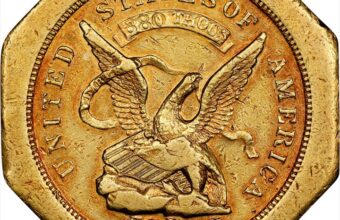





Several coins worth over $1 million each will be sold in one of the most significant auctions in numismatic history later this year.
The James A Stack Sr collection is described by auctioneers Stack’s Bowers as “one of the most comprehensive and distinguished collections of United States coins ever formed.”
Two selections from this collection will be sold in auctions in December this year and February 2026 by the salehouse, founded by a Stack who was no relation to the James Stack of this collection.
Highlights from the sale are being released.
This month, the sellers have focused on an unpublished 1804 dollar, a 16th example of this incredibly rare coin.
“No American coin has been more thoroughly researched and published than the 1804 dollar,” say Stack’s Bowers, who have previously sold a Class 1 example for $7.7 million.
The coin that will be auctioned this December is a new discovery for most in the numismatic world. “This piece took us all by surprise,” said Stack’s director of numismatic Americana, John Kraljevich.
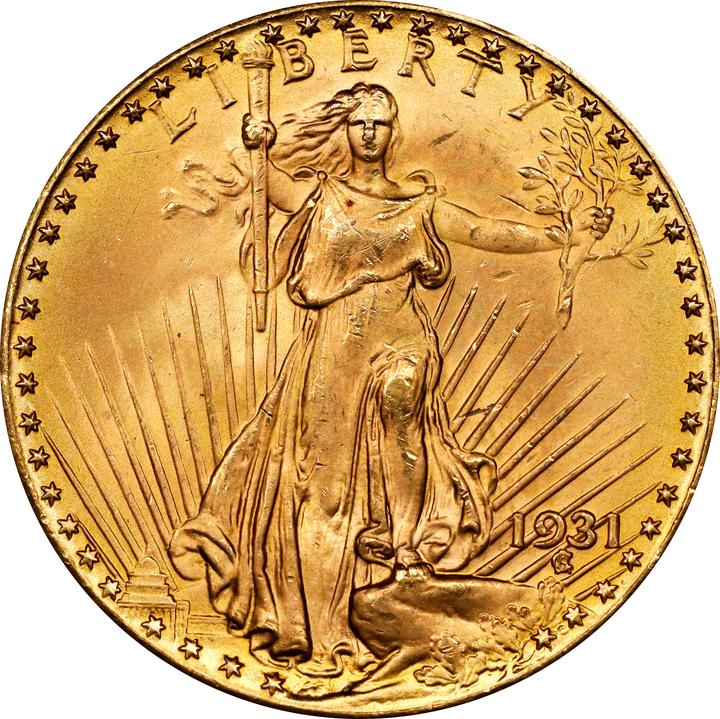
A 1931 Saint-Gaudens Double Eagle from the sales, a doppelganger for the 1933 coin that Stack had to hand back to the US Secret Service. Image courtesy of Stack’s Bowers Galleries.
Also being sold are an 1899 Liberty Head half eagle, an 1854 large date Liberty Head Double Eagle and a 1795 Flowing Hair silver dollar.
Full catalogues have yet to be published, but several coins are expected to realise over $1 million each, with the whole collection, of around 200 items, predicted to realise over $20 million.
The first sale will be held on December 9, 2025. Highlights from the sale will be shown at the American Numismatic Association’s World’s Fair of Money from August 19-23, 2025, and other shows before December.
The Stack Collection sales should be a landmark in the numismatic world.
Not for sale will be one of James Stack’s greatest treasures, a legendary 1933 double eagle, which he bought in 1944 and was forced to hand over to the Secret Service the following year to comply with a destruction order on the coin. It was one of a few that had originally escaped the 1933 meltings, that marked the end of US gold coinage.
Stack, who died in 1951, was not a big character and built his collection quietly. His will kept it together for a good time after his death, but some sales were held in the 1970s, with subsequent auctions in the 1980s and 1990s.