



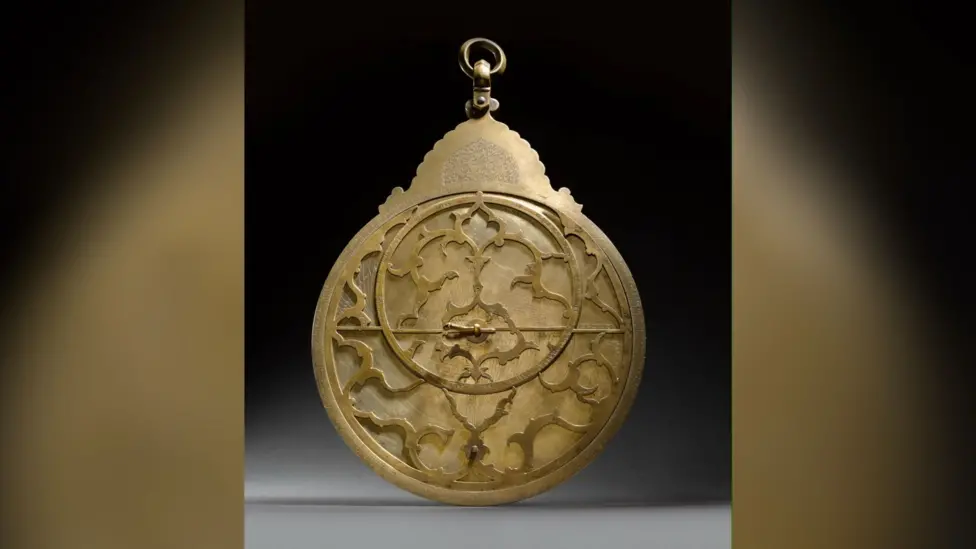
An astrolabe from an Indian royal collection will be sold at Sotheby’s tomorrow, April 29.
The brass object, dated May 1612, was used to calculate the position of the stars, the time and the location of Mecca for Islamic prayer. They have been called the supercomputers of their times.
Astrolabes were first made by the Ancient Greeks. They were taken up enthusiastically in the Islamic world, and this example was made by two brothers in Lahore, in modern Pakistan.
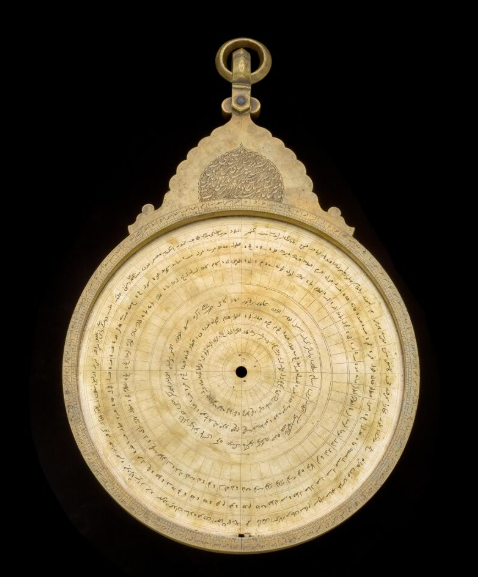
One of the plates from the astrolabe. Image courtesy of Sotheby’s.
The machine is an extremely large (about four times the usual size) and fine example and was made for a nobleman who administered Lahore for the Mughal emperor.
It was more recently in the collection of Maharaja Sawai Man Singh II of Jaipur who gave it to his wife Maharani Gayatri Devi. Both were high-profile, glamourous, international figures in sport, politics and diplomacy.
Sotheby’s list the piece with an estimate of £1.5 million to £2.5 million. If it makes even the lower figure it will become the most valuable astrolabe ever sold, taking the record from a £1 million Ottoman astrolabe made for Sultan Bayezid II.