




Vermeer’s lost works fall into two categories: paintings taken within living memory, and paintings that vanished from the written record before photography could prove they existed. Of the roughly seventy-four paintings the French critic Théophile Thoré-Bürger attributed to Johannes Vermeer when he revived the artist’s reputation in 1866, only thirty-four are now firmly accepted by scholars, with three more still disputed. The gap between those two numbers is where the hunting happens.
Part of that gap is ordinary over-attribution, paintings by other Dutch genre painters labelled Vermeer while his reputation was hot, then quietly relabelled once it cooled. A smaller, stranger group is different: paintings described in seventeenth and eighteenth-century sale catalogues and inventories in enough detail to be unmistakably his work, yet never matched to a picture that still exists.
Add one confirmed theft, unsolved for three decades, and it is clear why historians and collectors keep watch on the same short list. What follows sets out what is documented about each painting, and what it would take for any to resurface.
Discover all in our:
Vermeer’s lost works: the rarest fine art paintings collectors are still hunting for
Vermeer died in December 1675, aged forty-three, leaving his widow to petition the courts for relief from his creditors’ debts while raising eleven children alone. His reputation stayed minor until the French critic Théophile Thoré-Bürger published a catalogue raisonné of his work in 1866, crediting him with more than seventy paintings, several he regarded as uncertain himself.
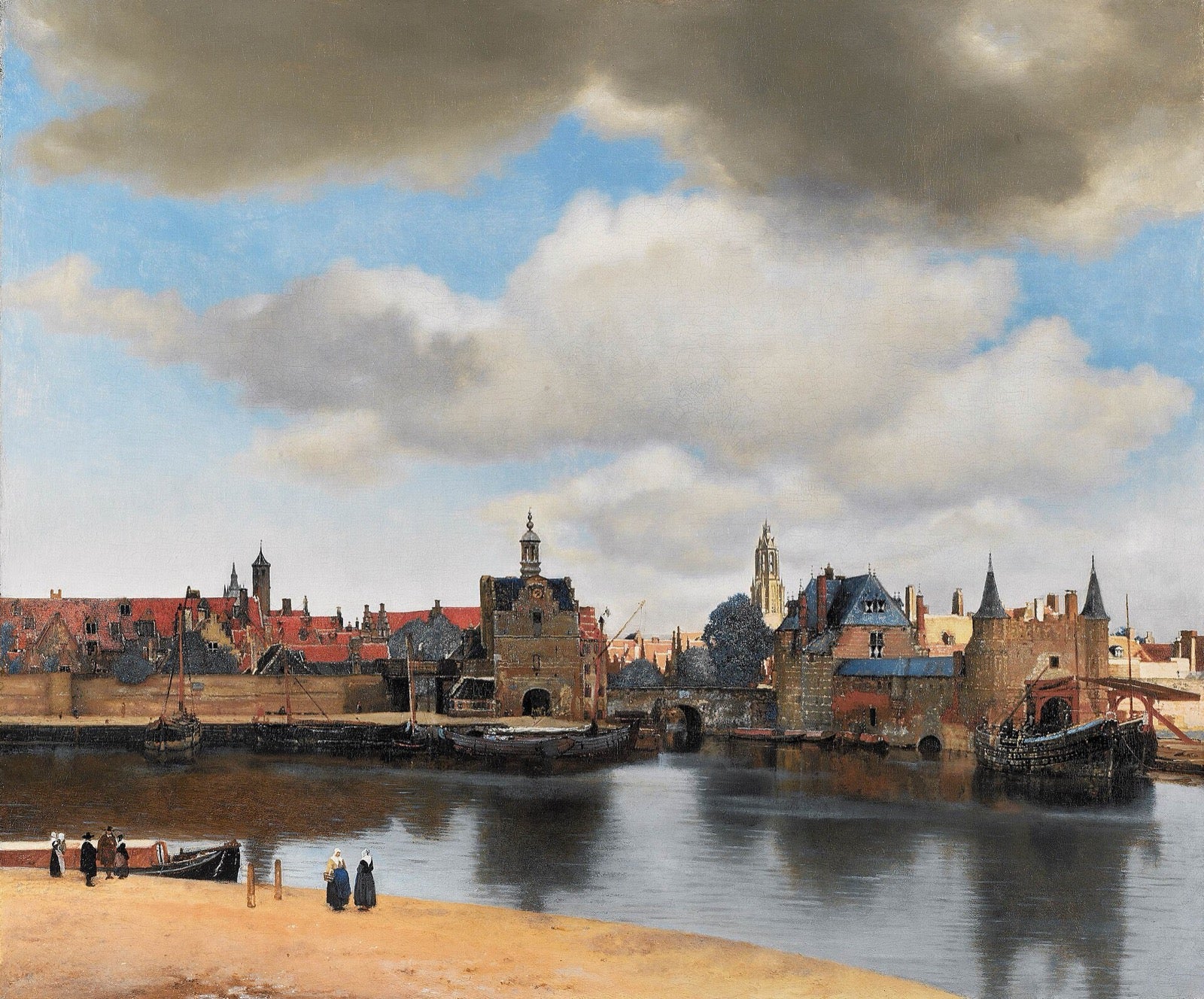
Modern scholarship is far more restrictive: only thirty-four paintings are now universally attributed to Vermeer. Three more, Girl with a Flute, Saint Praxedis and A Young Woman Seated at the Virginals, were long disputed before the Rijksmuseum accepted the last two ahead of its 2023 retrospective. Girl with a Flute alone remains contested, proof that the line between accepted and lost can shift either way.
Credit: Johannes Vermeer, public domain via Wikimedia Commons
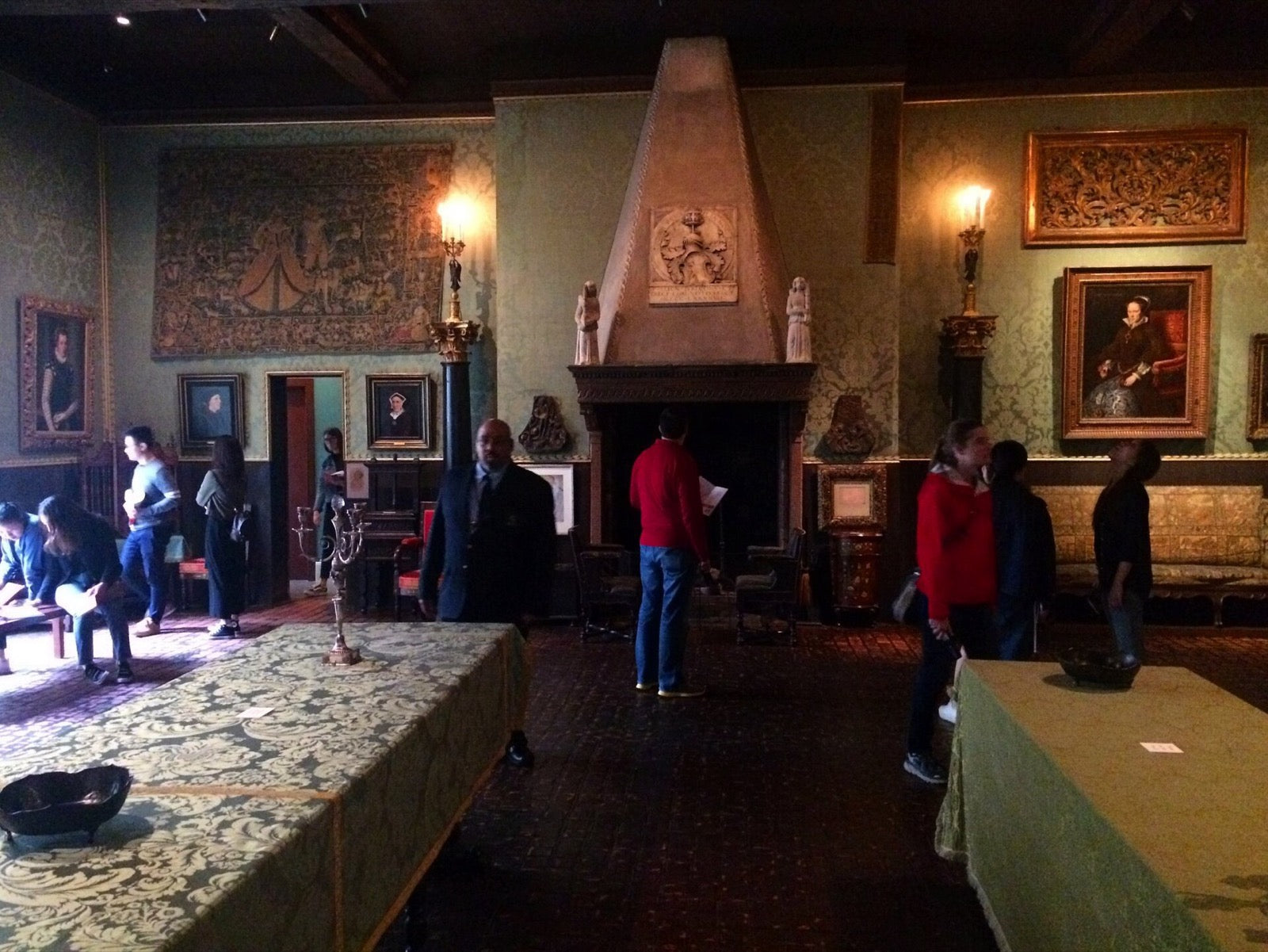
The Concert: still missing after the Gardner Museum heist
The best-documented missing Vermeer was not lost to history. It was stolen. In the early hours of 18 March 1990, two men disguised as police officers talked their way into the Isabella Stewart Gardner Museum in Boston and spent eighty-one minutes removing thirteen works, among them paintings by Rembrandt, Manet and Degas, and Vermeer’s The Concert.
No arrest has ever followed. The FBI said in 2013 it had identified the thieves with a high degree of confidence, and by 2015 believed both were dead. None of the thirteen works has surfaced. The Gardner Museum still offers a $10 million reward, about £7.4 million, calling itself “the only buyer” it will deal with. The Concert alone was valued at around $250 million as of 2015, roughly £184 million, about half the stolen collection’s worth.
Credit: Andre Carrotflower via Wikimedia Commons (CC BY-SA 4.0)
The paintings that never made it into any museum at all
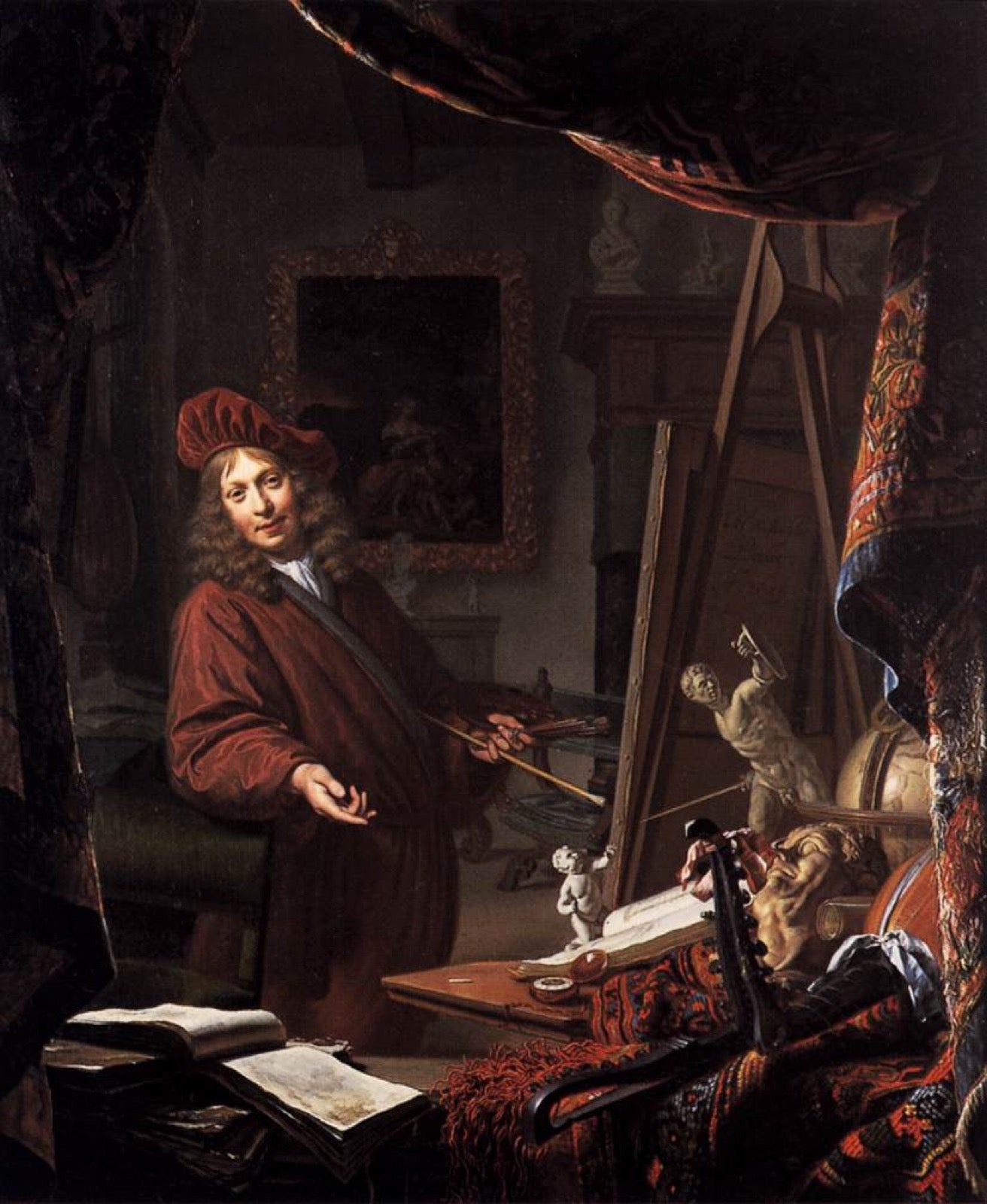
A stranger category of loss shows up in the 1696 Amsterdam sale catalogue of Jacob Dissius, a Delft printer whose twenty-one Vermeers went under the hammer. One lot was described as “a portrait of Vermeer in a room with various accessories”, noted as “uncommonly beautifully painted by him”. No self-portrait by Vermeer survives today, and the Rijksmuseum’s Pieter Roelofs has suggested that Michiel van Musscher’s 1670 self-portrait may echo that lost picture.
The same catalogue and later eighteenth-century inventories list more paintings unmatched to anything surviving: a second street scene besides The Little Street, a domestic study of “a gentleman washing his hands, in a perspective room, with statues”, a woman combing her hair, a visit to a tomb, a mythological scene of Jupiter, Venus and Mercury, a painter playing a violin, and a woman eating oysters. An earlier reference survives from 1664, when a Hague collector named Johannes Larson died owning “a face by Vermeer”. None of these has ever turned up.
Credit: Michiel van Musscher, public domain via Wikimedia Commons
Why forgery makes the search harder, not easier
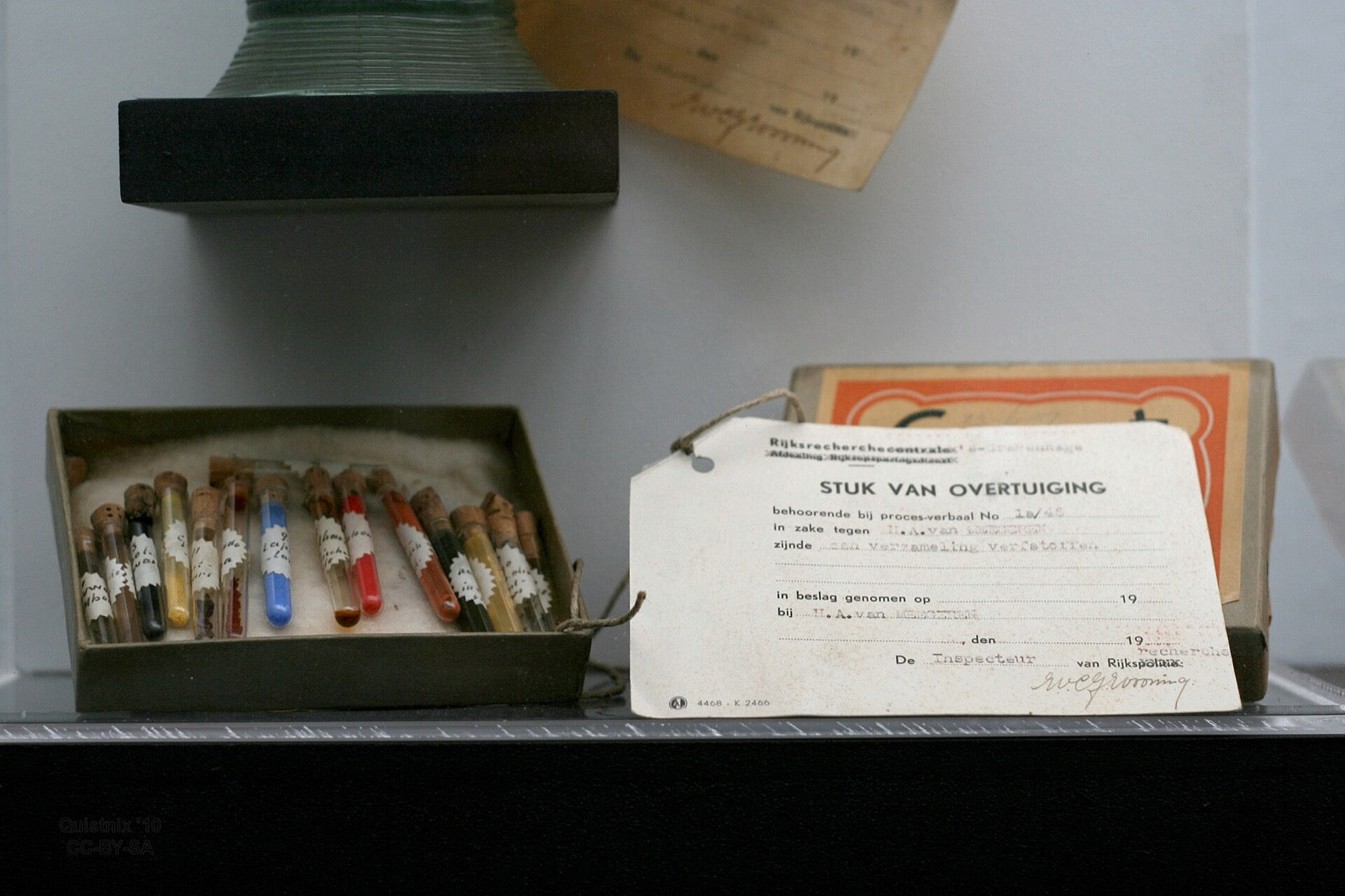
Vermeer’s small, scattered output made him an obvious target for the Dutch painter Han van Meegeren, who spent the 1930s perfecting a technique for faking seventeenth-century craquelure before selling invented “Vermeers”. His masterwork, The Supper at Emmaus, went to Rotterdam’s Museum Boijmans for 520,000 to 550,000 guilders in 1937, about £3 million in today’s money. Hermann Göring later traded 137 looted paintings for a single forgery, Christ with the Adulteress, believing it a genuine Vermeer.
Van Meegeren was arrested on 29 May 1945 for fraud and aiding the enemy. The scandal is a direct reason A Young Woman Seated at the Virginals spent fifty years dismissed as fake, and why new Vermeer attributions now take years of analysis to settle. The Rijksmuseum and the National Gallery of Art in Washington still disagree over Girl with a Flute: the Gallery concluded in 2022 it was painted by “an associate of Vermeer, not by the Dutch artist himself”, while the Rijksmuseum’s Pieter Roelofs said it would hang in Amsterdam’s 2023 retrospective “as a real Vermeer” regardless.
Credit: Quistnix via Wikimedia Commons (CC BY-SA 3.0)
What happens when a lost Vermeer is confirmed genuine
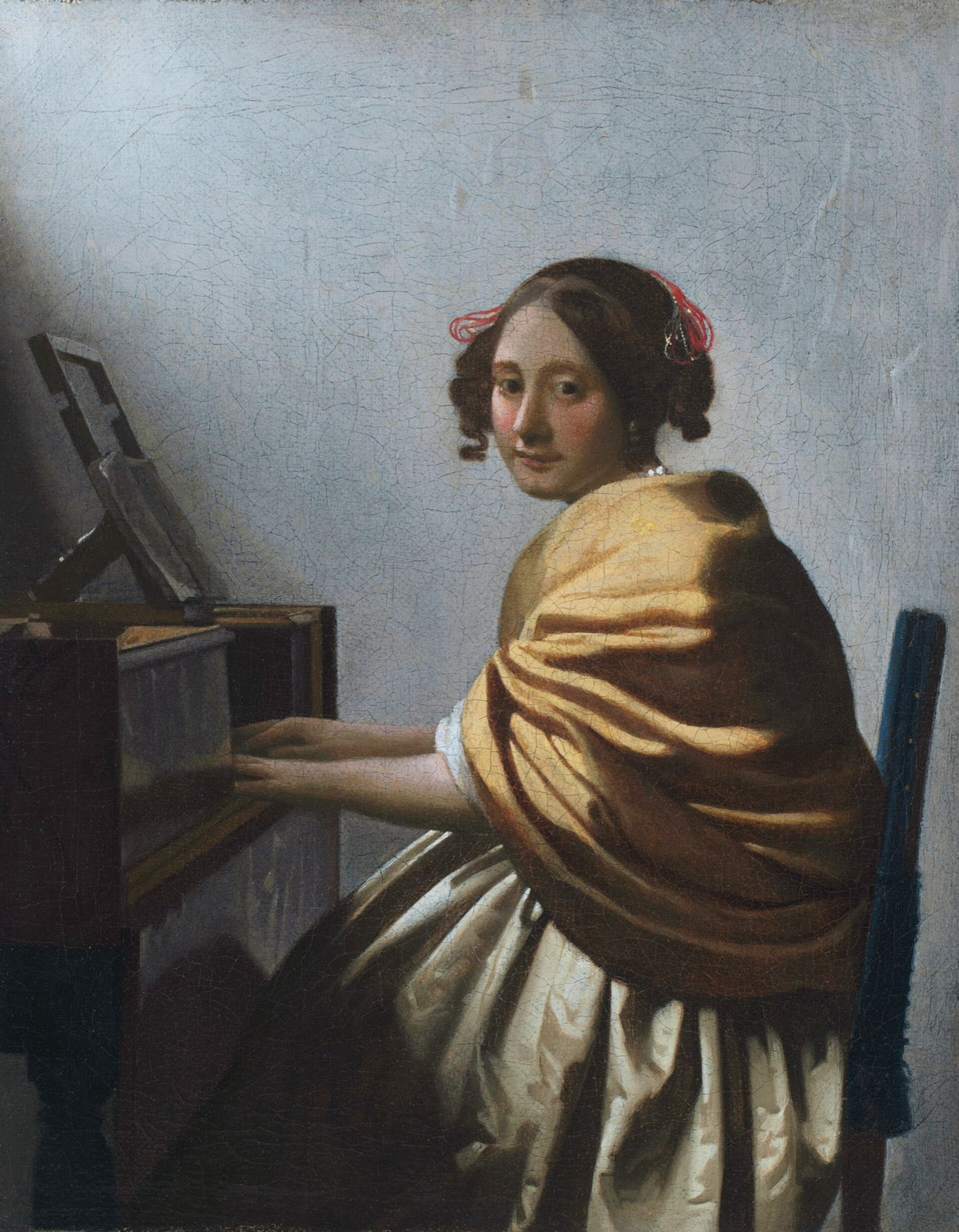
A Young Woman Seated at the Virginals shows what is at stake if any of the paintings above were ever authenticated. Its owner, Baron Rolin, began technical research through Sotheby’s in 1993 after decades of doubt. Examiners matched its canvas to the same bolt of cloth used for Vermeer’s The Lacemaker in the Louvre and found consistent pigments, persuading most specialists of its authenticity.
Rolin’s heirs sold it at Sotheby’s Bond Street on 7 July 2004, the first Vermeer to reach public auction in eighty years. Sotheby’s had given it a cautious pre-sale estimate of £3 million, reflecting lingering doubts about its authorship. Seven bidders competed anyway, and it sold for £16.2 million (about $30 million) to the casino owner Steve Wynn. It now belongs to the Leiden Collection.
Credit: Johannes Vermeer, public domain via Wikimedia Commons
Why the next Vermeer is more likely to be reattributed than rediscovered
The Concert could not be legally sold even if recovered, since stolen property belongs back at the Gardner Museum. The 1696 inventory paintings are a different kind of hunt. If any survive, they are more plausible sitting under someone else’s name in a museum storeroom, or catalogued as “manner of Vermeer”, than turning up as a dramatic new find, as van Musscher’s self-portrait may already suggest.
That is why pigment analysis and canvas comparison now do more of this work than detective stories. A Young Woman Seated at the Virginals went from written off to £16.2 million once the science caught up with it, and the accepted catalogue is still moving. The next confirmed Vermeer, if there is one, is more likely to come from a laboratory reassessing a painting already on a wall than from anyone finding a canvas in an attic.