



Inside the mind of Basquiat sits an artist who worked professionally for barely eight years before he died in 1988, yet whose contemporary artwork still commands millions every time a major canvas reaches the saleroom. A single painting from that short period can now outsell most artists’ entire estates. That is down to an unusually tight combination: a short working life, a small surviving body of work, and decades of validation from the world’s biggest auction houses.
He began as a teenage graffiti writer using the tag SAMO, moved through Andy Warhol’s circle within a few years, and ended his life as the most expensive American artist ever sold at auction. Understanding how that happened means looking past the prices at his working life: how quickly he moved from the street to the gallery wall, how few paintings he actually left behind, and what has gone wrong since his death whenever demand for his name has outrun the supply of genuine paintings.
The sums involved can obscure the artist behind them: a biography that explains the market, a verified auction record that still defines it, and the authentication problems that have followed Basquiat’s rising prices.
Discover all in our:
Inside the mind of Basquiat: why his contemporary artwork sells for millions
From SAMO to the gallery wall
Basquiat was born in Brooklyn on 22 December 1960, to a Haitian father and a Puerto Rican mother who encouraged his early drawing. In May 1978, while still at school, he and his friend Al Diaz began spray-painting cryptic, aphoristic slogans across Lower Manhattan under the shared tag SAMO, short for “same old shit”. By 1980 he had dropped the pseudonym to work under his own name, and what followed was fast even by the standards of downtown New York’s art scene. His first painting sold for just $200, to the musician Debbie Harry, in 1981. He exhibited internationally that same year, and at 21 became the youngest artist included in Germany’s Documenta exhibition; at 22 he appeared in the Whitney Biennial. By the mid-1980s his income had grown to around $1.4 million a year.
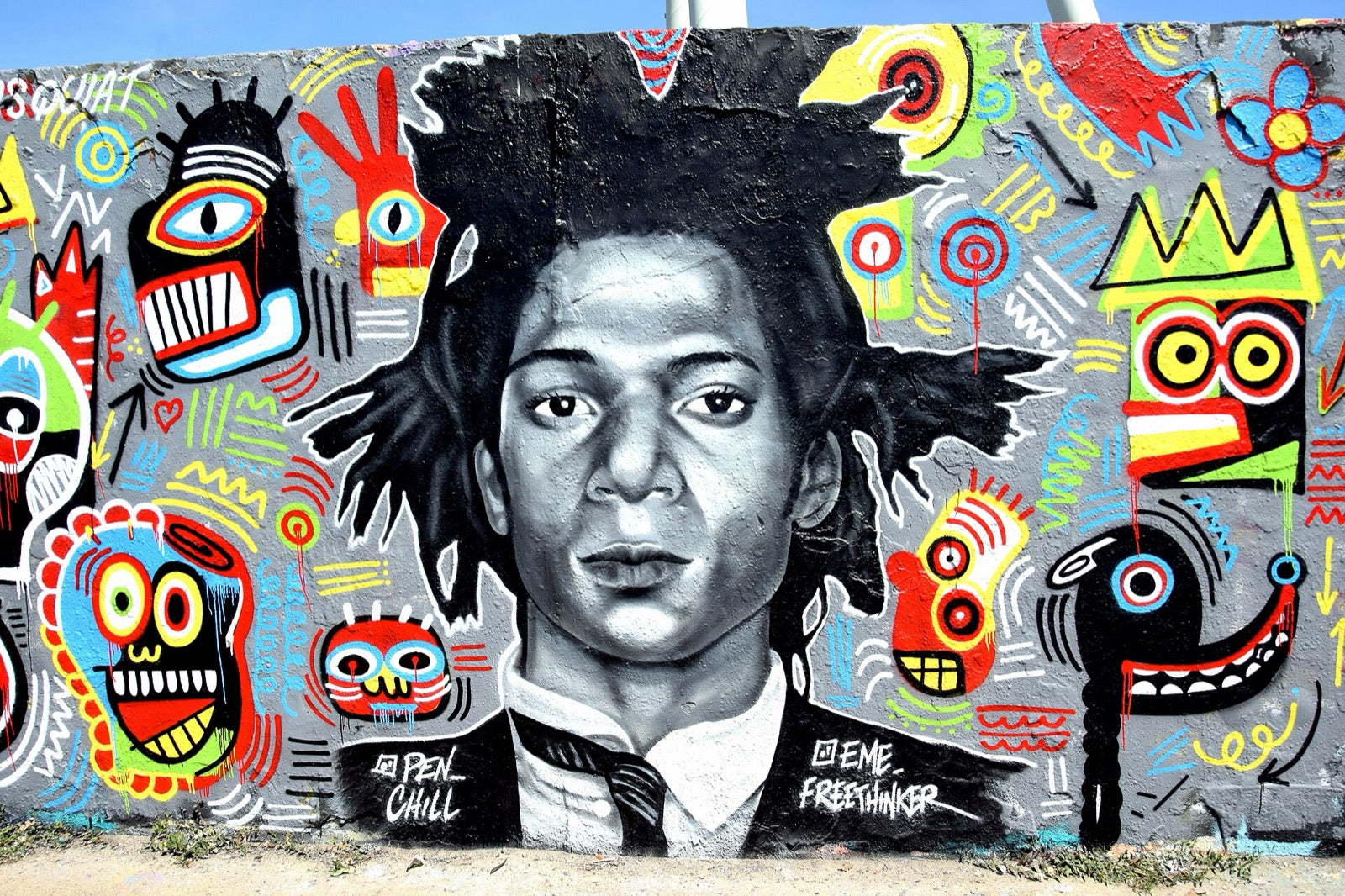
Credit: Singlespeedfahrer, public domain via Wikimedia Commons
The Warhol years
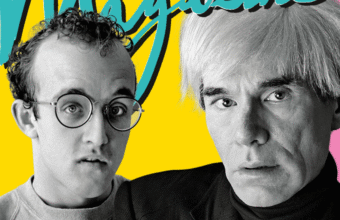
Basquiat’s dealer, Bruno Bischofberger, introduced him to Andy Warhol on 4 October 1982, and the two became close, working side by side and painting each other’s portraits. Warhol later described the speed of it: “I took a Polaroid and he went home and within two hours a painting was back.” Over the following two years the pair produced around 150 collaborative works. The friendship mattered to Basquiat’s market as much as to his art: an association with Warhol, already the most recognised name in American post-war painting, gave a young artist working with graffiti, text and street imagery a level of institutional credibility that galleries and collectors found hard to ignore.
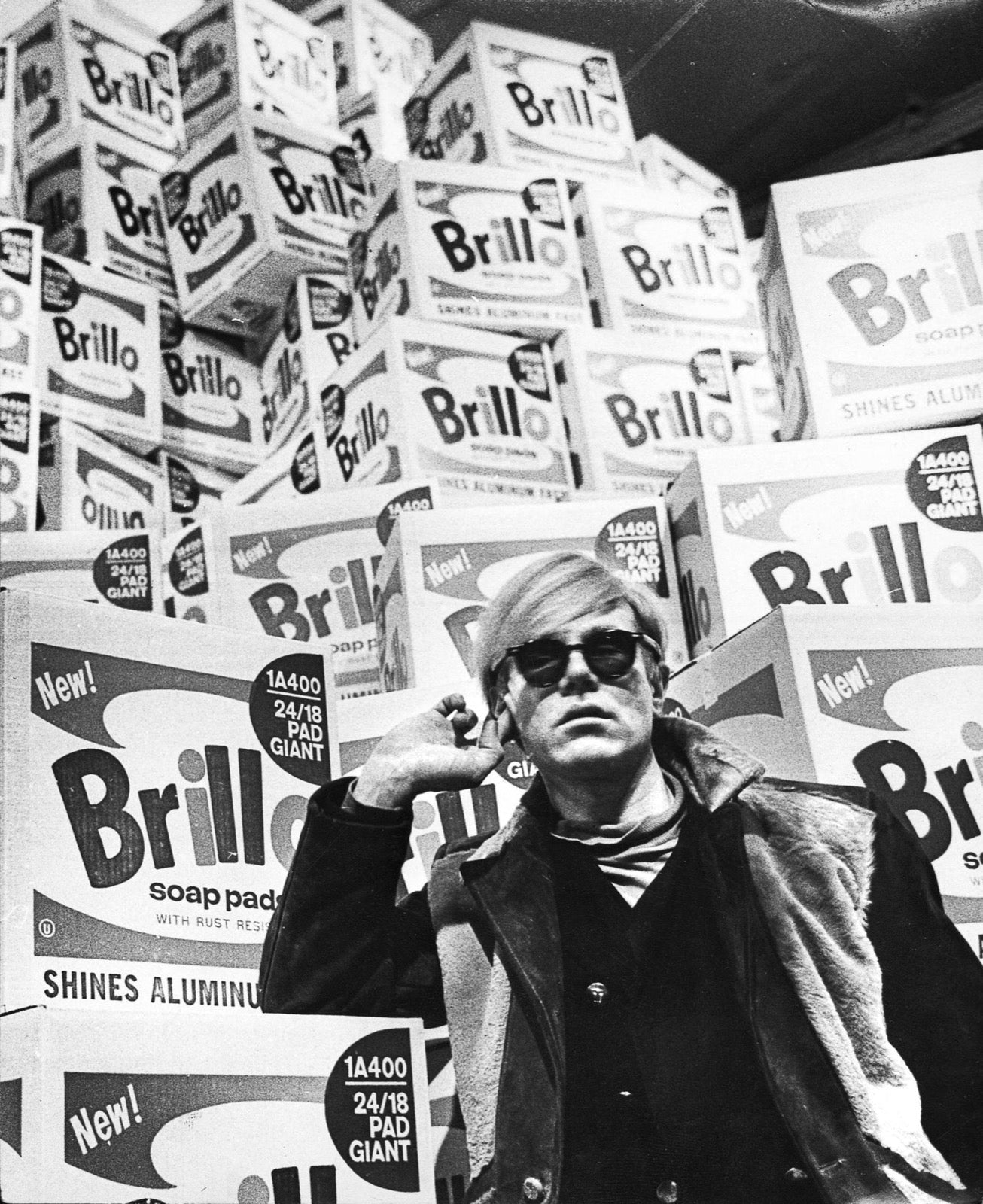
Credit: Lasse Olsson / Pressens bild, public domain via Wikimedia Commons
A short career, a small body of work
Basquiat died on 12 August 1988, of a heroin overdose, at his home on Great Jones Street in Manhattan. He was 27. In the roughly eight years between abandoning SAMO and his death, he produced an estimated 600 paintings and 1,500 drawings, a body of work that is fixed in a way few working artists’ output ever is. No new Basquiat paintings will reach the market; every canvas in circulation is one of a finite and slowly shrinking pool, since museums and long-term private collectors keep taking individual pieces out of circulation for good. That scarcity, combined with decades of retrospectives and museum acquisitions since his death, is the basic mechanism behind the prices his work now commands.
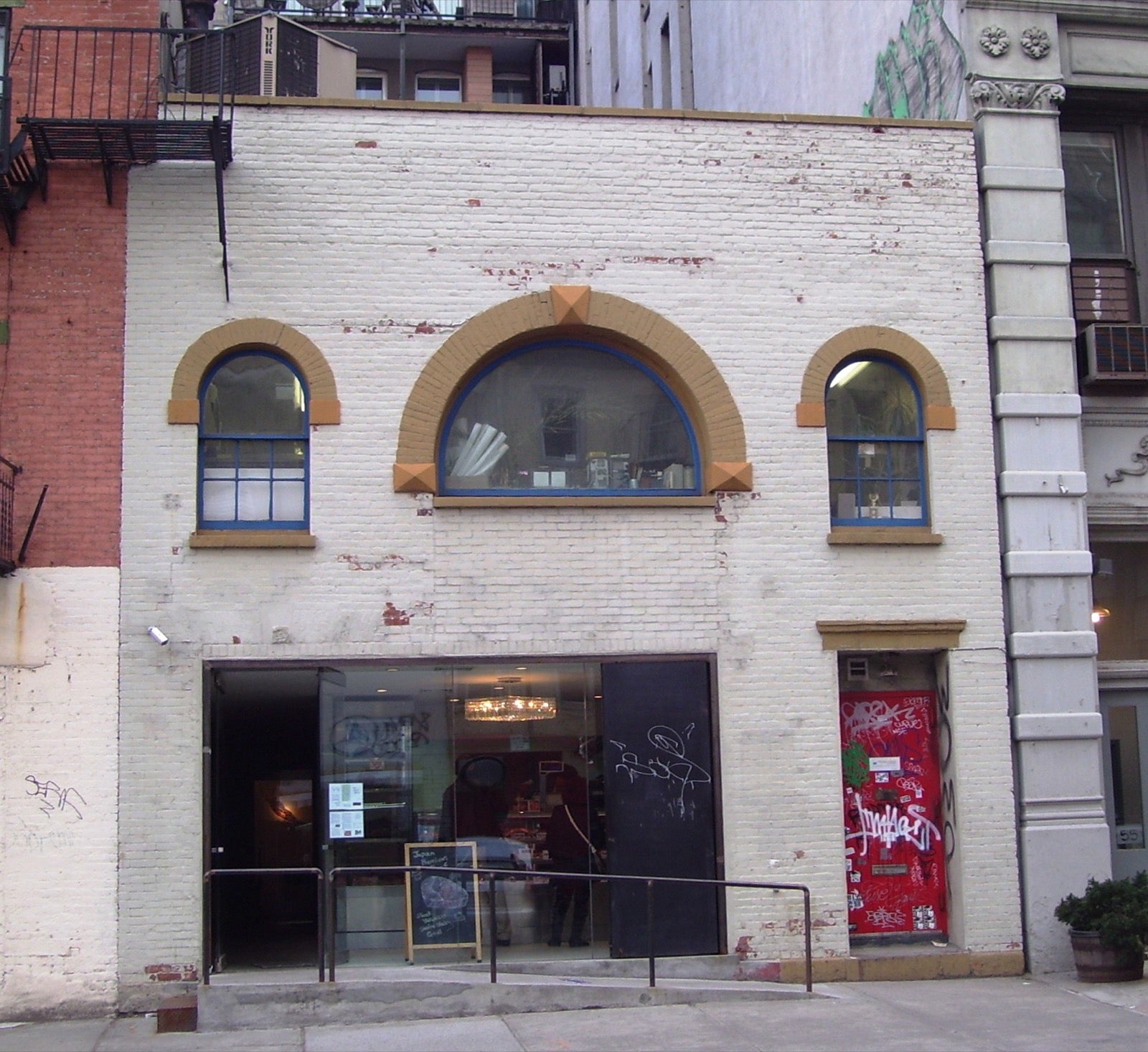
Credit: Beyond My Ken via Wikimedia Commons (CC BY-SA 4.0)
What the auction record actually shows
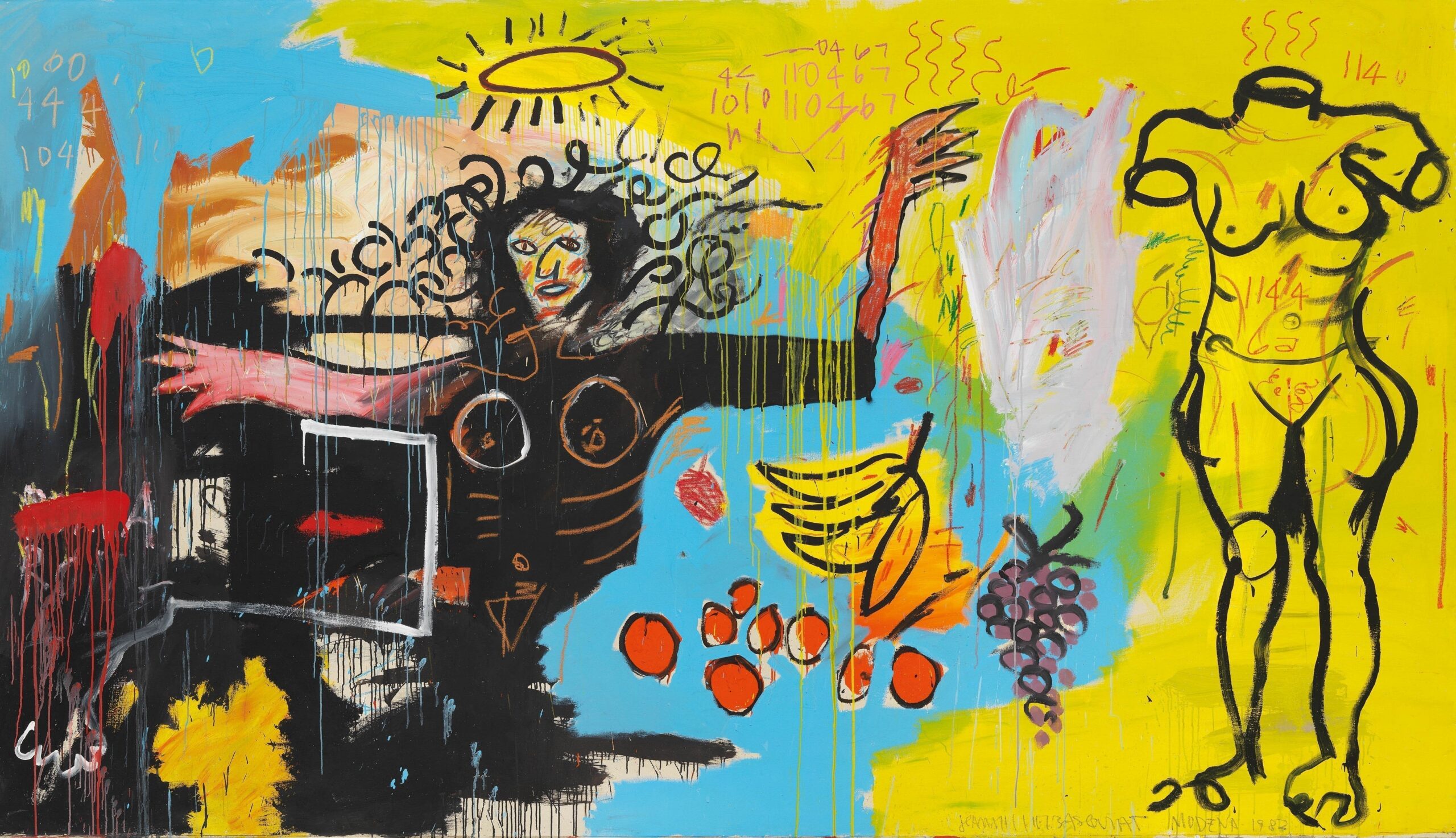
The clearest evidence of that mechanism is the sale of Untitled, a 1982 painting of a black skull that Basquiat made at 21. It sold at Sotheby’s in New York on 18 May 2017 for £84.0 million ($110.5 million), bought by the Japanese entrepreneur Yusaku Maezawa. The price was the highest ever paid at auction for a work by an American artist, and made Untitled the first work made after 1980 to pass the $100 million mark at auction, ahead of the $105 million record Andy Warhol had held for Silver Car Crash (Double Disaster). Basquiat’s market did not rest on that one sale: five of his paintings sold at the same evening auction for a combined £98.3 million ($129.3 million). Seven years on, the market had not cooled. At Phillips in New York on 14 May 2024, Basquiat’s 1982 painting Untitled (ELMAR) made £36.8 million ($46,479,000), while two much smaller works from the same sale, Untitled (Portrait of Famous Ballplayer) and Untitled (Grain Alcohol), added a further £6.2 million ($7,892,500) and £1.6 million ($1,996,000).
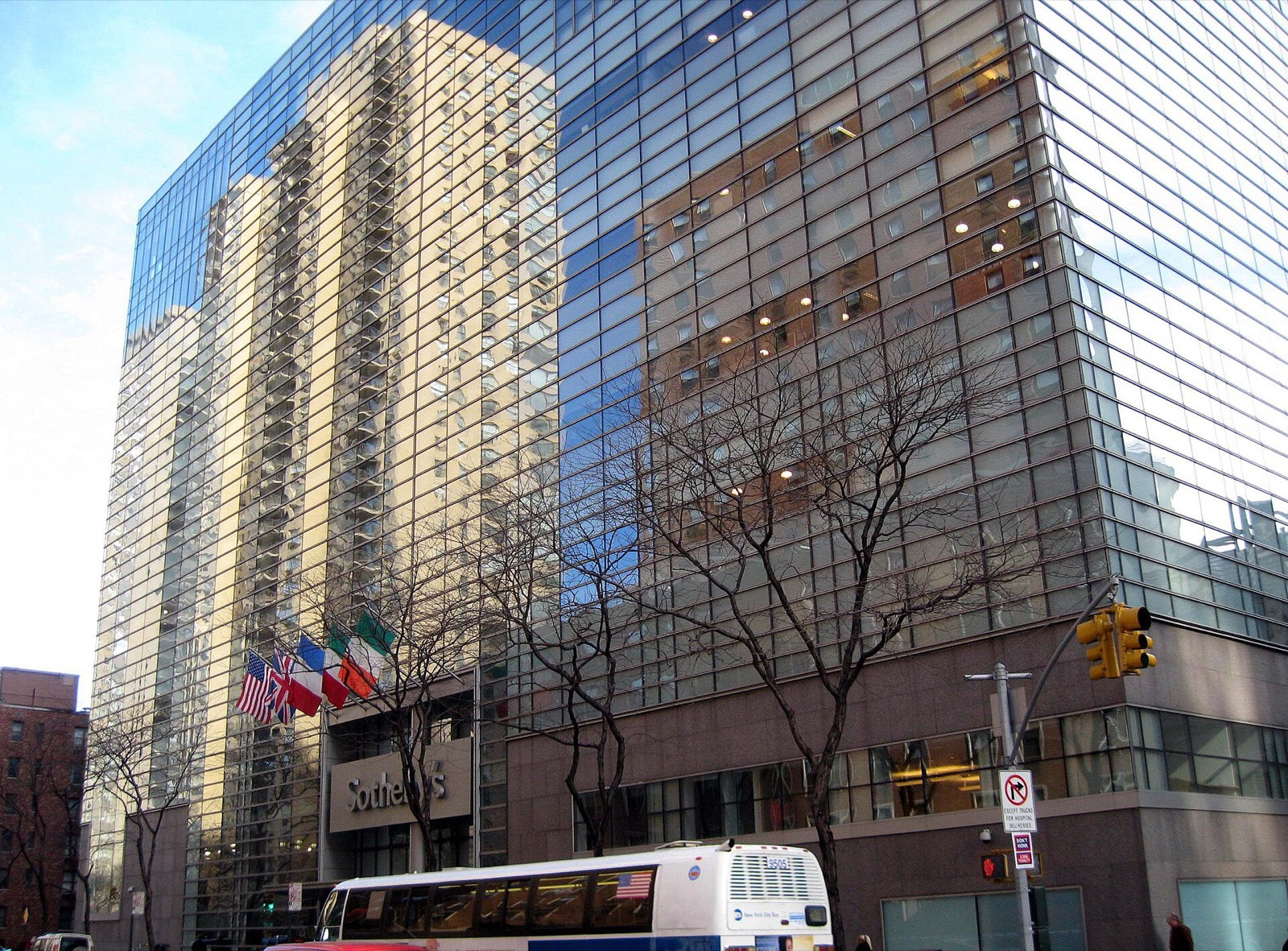
Credit: Jim.henderson, public domain via Wikimedia Commons
The authentication problem
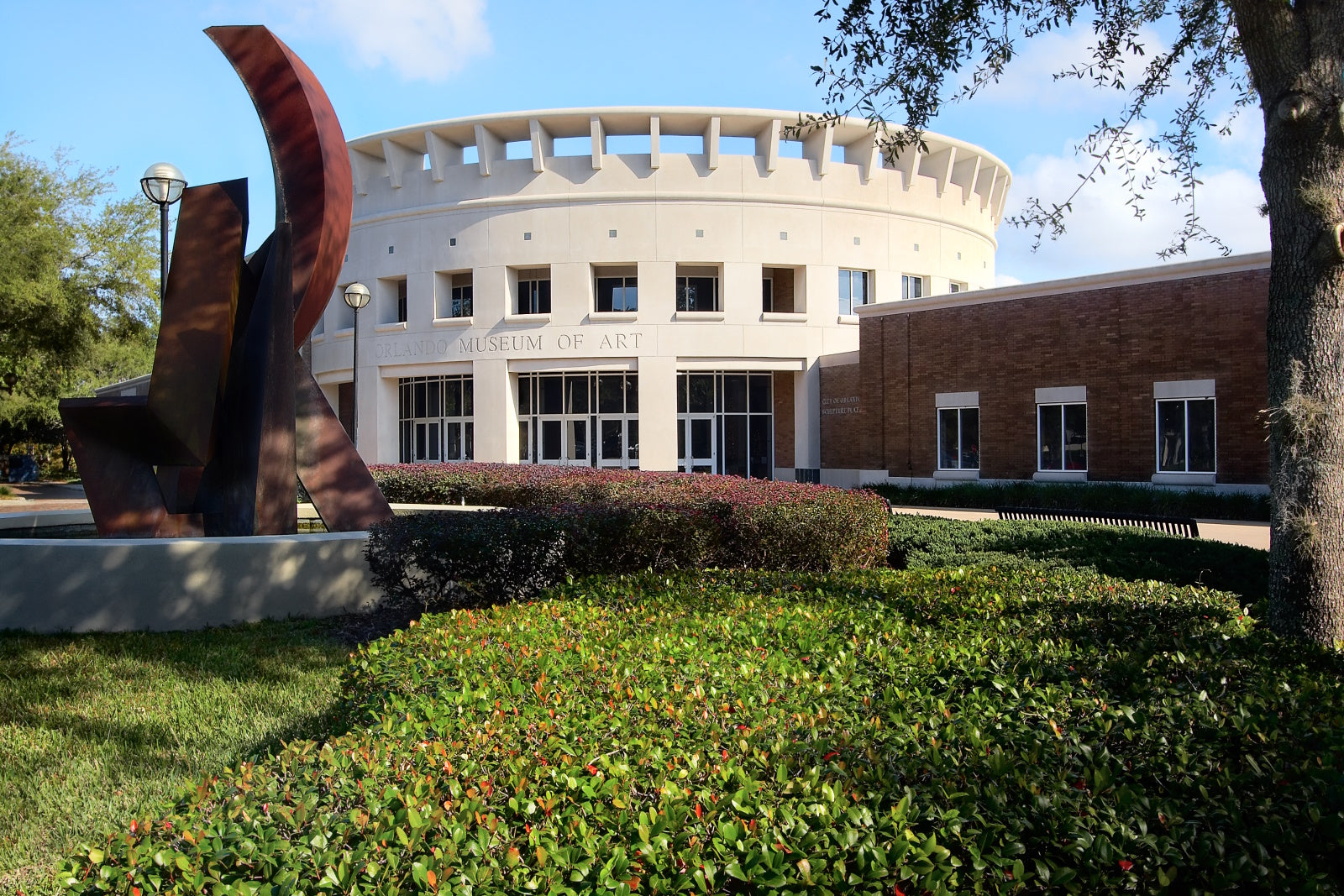
Rising prices have created an incentive to fake Basquiat’s work, and the largest known case is recent. In 2022 the FBI seized twenty-five paintings from Heroes & Monsters, an exhibition at the Orlando Museum of Art that presented them as newly discovered Basquiats. A Los Angeles auctioneer, Michael Barzman, later admitted that he and an accomplice had painted the works on cardboard and aged them outdoors to look decades old, then invented a story that they had been found in a television writer’s storage locker. The fakes were exposed partly through a small technical detail: the cardboard on one painting carried a FedEx typeface that was not introduced until 1994, six years after Basquiat died. Barzman pleaded guilty to lying to the FBI and faced up to five years in prison. The case is a reminder that, at these prices, verified provenance from an established auction house is not a formality. It is a large part of what a buyer is actually paying for.
Credit: User:MrX via Wikimedia Commons (CC BY-SA 3.0)
Why Basquiat’s quieter sales matter as much as his record price
Basquiat’s prices are no longer explained by one record sale. The £84.0 million paid for Untitled in 2017 could have been a one-off, the kind of figure a single collector is occasionally willing to pay for a trophy lot. The Phillips sale in 2024 suggests otherwise: a less famous Basquiat painting, not one of his best-known images, still made £36.8 million seven years after the record, while two much smaller works from the same evening sold for millions each. That spread of demand across several paintings, in a market with a fixed and shrinking supply, says more about lasting value than any single headline figure.
The forgery case in Orlando points the same way from the opposite direction. Forgers do not go to the trouble Barzman and his accomplice went to, ageing cardboard outdoors and inventing a storage-locker provenance, for an artist whose work is not worth pursuing. Every verified sale, and every exposed fake, adds to the same picture: a small, finite body of work by an artist who died at 27, now sitting permanently among the most expensive names in contemporary art.