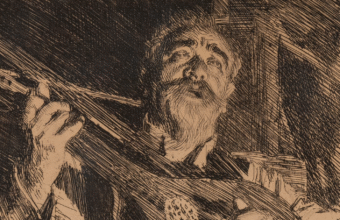





Goya’s etchings did something no printmaker had tried before. They took a commercial medium, sold from ordinary shops by subscription, and used it to record cruelty, superstition and state violence. Francisco de Goya y Lucientes was first painter to the Spanish king when he started work on copper, a court insider with much to lose.
He produced four series over roughly thirty years. Two reached the public while he lived, and the first of those was pulled from sale within a fortnight. The other two stayed unprinted until decades after his death in 1828, when the Real Academia de Nobles Artes de San Fernando in Madrid finally printed them.
That publishing history is why the market behaves as it does. A complete set of the same 80 images can make more than £100,000 or carry an estimate under £10,000, depending on which printing it came from and how early the impression is.
Discover all in our:
Goya’s etchings: inside the dark, radical prints that shocked Europe
Fourteen days on sale
Los Caprichos, 80 plates made in 1797 and 1798, was announced in the Diario de Madrid on 6 February 1799. A set cost 320 reales, sold from a perfume shop on Calle del Desengaño, Disillusion Street. Goya described the subject as human faults and vices in general rather than particular people, a defence he plainly needed.
It did not work. The series was withdrawn 14 days after going on sale, and only 27 sets had been bought out of roughly 300 printed. The prints had been denounced to the Inquisition for what they said about priests, inquisitors and the nobility. In 1803 Goya handed the copper plates and 240 unsold sets to Charles IV in return for a pension of twelve thousand reales a year for his son.

Credit: The Metropolitan Museum of Art, New York
How the darkness was made
Auction catalogues describe these sheets as etching with burnished aquatint, drypoint and engraving. The etched line carries the drawing. Aquatint carries the shadow: powdered resin is dusted onto the plate, heated so it sticks, then bitten by acid around each grain, holding ink as continuous tone rather than line. A burnisher pushes that tone back to light where a face needs to emerge.
Aquatint grain is shallow and wears under the press faster than an etched line. Every printing flattens the blacks further, which is the mechanism behind almost every price difference below.

Credit: The Metropolitan Museum of Art, New York
The series he did not dare publish
Los Desastres de la Guerra was made between 1810 and 1820, out of the Peninsular War. The 82 plates fall into three parts: 1 to 47 on the fighting and its effect on soldiers and civilians, 48 to 64 on the famine in Madrid in 1811 and 1812, and 65 to 82 as political allegory aimed at the restored Bourbon monarchy and the clergy. Goya never published it. Under Ferdinand VII the risk was obvious.
He did give a complete proof album, titled and signed in his own hand, to his friend Juan Agustín Ceán Bermúdez, now in the British Museum. The first edition of 500 copies appeared in 1863, 35 years after he died, carrying 80 of the 82 plates. Lucia Tro Santafe, head of prints and multiples at Bonhams, has called Goya’s etchings “more dramatic and varied in narrative, more savagely beautiful, and more humanly moving than anything that came before”.

Credit: The Metropolitan Museum of Art, New York
Los Disparates and the Quinta del Sordo
The last series was made between about 1815 and 1823, while Goya was living at the Quinta del Sordo and painting the Black Paintings onto the walls of the house. Scholars generally read the prints as belonging with those murals rather than with his earlier work.
The Real Academia published 18 of them in 1864 under the title Los Proverbios. Goya’s own working proofs use the word disparates, follies, which is the name that stuck. Bonhams sold a complete first edition set, bound in late nineteenth-century calf, in London on 18 December 2018 for £35,000 including premium.

Credit: The Metropolitan Museum of Art, New York
La Tauromaquia, the one that sold
La Tauromaquia is the outlier: 33 plates on the history of bullfighting, issued in 1816, and the only major series after Los Caprichos that Goya published himself. Seven plates were rejected from that printing. They first appeared in 1876, when Loizelet in Paris issued the first complete edition of 40 plates; Bonhams estimated a copy at £20,000 to £30,000 in November 2011. Individual 1816 sheets are more accessible. Five of them, plates 5, 9, 10, 19 and 24, were estimated at US$6,000 to US$8,000, about £4,700 to £6,200, at Bonhams Los Angeles on 15 October 2019.

Credit: The Metropolitan Museum of Art, New York
Editions, and why they decide the price
The standard reference is the Harris catalogue, which counts twelve editions of Los Caprichos, and the gap between the first and the rest decides everything. Sotheby’s estimated a complete first edition set at £80,000 to £120,000 in 2019, an album carrying a bookplate that suggests it belonged to Vincent van Gogh, cousin of the Dutch painter. A complete fifth edition of 210 copies, printed for the Real Academia between 1881 and 1886, made £6,875 including premium at Bonhams on 18 December 2017. The eleventh edition of 1929 was estimated at £5,000 to £7,000 at Sotheby’s in 2016.
Los Desastres shows the pattern more sharply. A complete set from Harris’s First Edition Ia, before the corrections to the plate titles, sold at Bonhams in London on 13 June 2019 for £100,062.50 including premium. A copy from the Richard Harris collection, First Edition Ib, took US$73,455 including premium at Bonhams New York on 9 May 2023, roughly £58,800. A first edition with corrected letters made £22,500 at Bonhams Knightsbridge in June 2012, and a fourth edition portfolio of 1906 carried a Sotheby’s estimate of £7,000 to £9,000.

Credit: The Metropolitan Museum of Art, New York
Buying a single plate
Most collectors start with one sheet, and the June 2019 Bonhams sale gives a clean ladder. El sueño de la razón produce monstruos took £12,562.50 including premium. Mala Noche made £4,812.50, the self-portrait that opens the series £3,562.50, and Pobrecitas! £3,187.50. In December 2019 three lots, each pairing two first edition Caprichos etchings, made £4,437.50 apiece.
Cheaper entry points exist. Que Pico de Oro!, plate 53, from the first edition of 300, sold for US$3,125 including premium at Bonhams Los Angeles in October 2012, about £1,940 at the rate then. Check the edition before the image: the same design from a later printing costs a fraction of the 1799 price, and it looks it.
Why an 1863 impression is worth more than ten times a 1906 one
Those two Desastres figures belong together. The same 80 images, the same copper, the same publisher in Madrid: £100,062.50 under the hammer for the 1863 printing, against a £7,000 to £9,000 estimate for the 1906 one. Nothing about the subject accounts for that. The market is paying for the state of the aquatint on the day the sheet was printed, and for the 43 years of printing that separate the two.
Goya withheld the Desastres and the Disparates because publishing them would have been dangerous, and both waited until he had been dead for more than three decades. The work he was most careful about is now the work his name rests on.